


Why This RBI Move Matters to Your Money
A technical RBI liquidity move can quietly affect your EMI, fixed deposit choices, and NRI savings options. RBI’s FCNR(B) and ECB swap windows aim to bring more foreign currency into India, support the rupee, and ease funding pressure for banks. For households, the impact may appear slowly through loan pricing, deposit offers, and the overall availability of bank funds.
For a regular Indian family, the terms may sound like treasury-market jargon. The practical link is simple: if banks can raise foreign-currency funds and hedge them at a lower effective cost, they may get more room to lend competitively. Borrowers should not expect automatic rate cuts, but they should watch how banks price home loans, business loans, personal loans, and balance-transfer offers over the next few quarters.
What Are FCNR(B) Deposits?
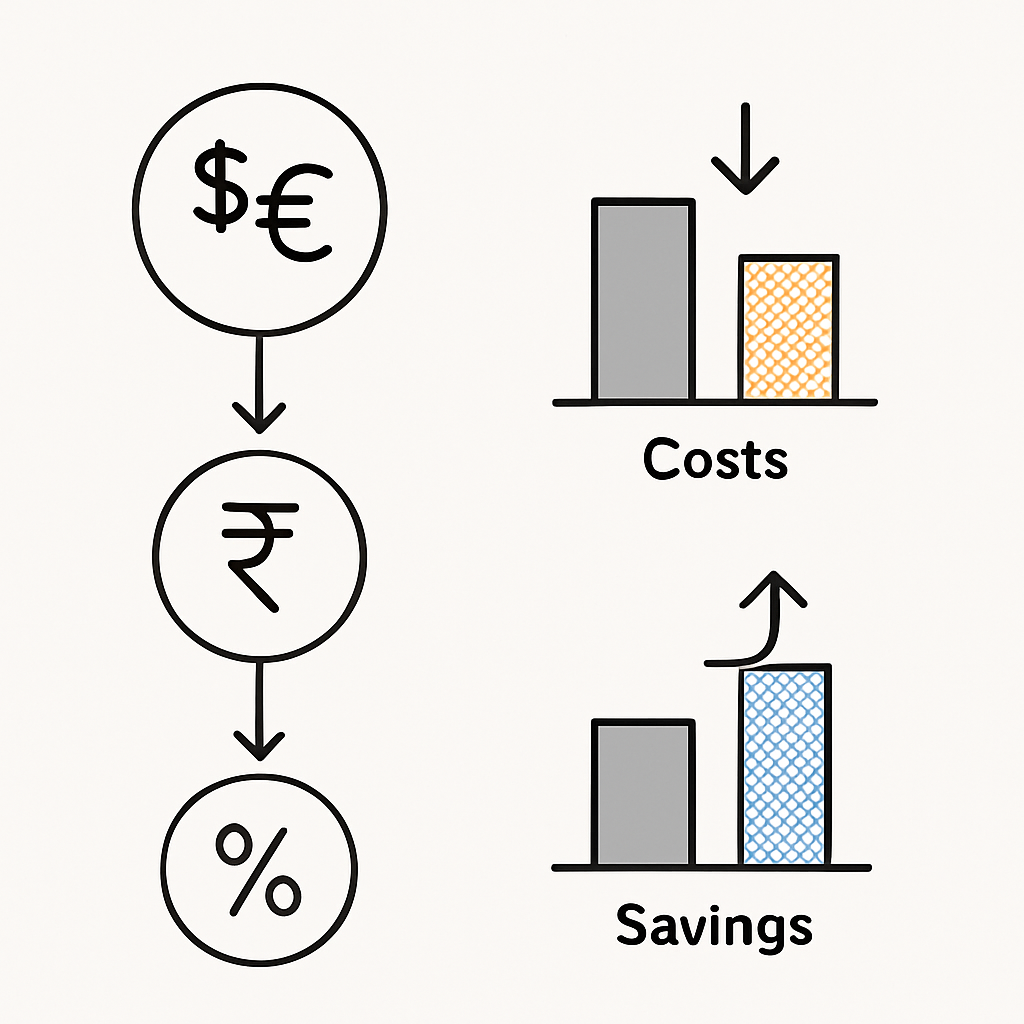
FCNR(B) stands for Foreign Currency Non-Resident Bank deposit. It allows eligible NRIs to keep money in foreign currency with an Indian bank, earn interest, and receive the principal back in the same foreign currency at maturity. This matters because the depositor does not take rupee exchange-rate risk on the deposit itself.
For example, an NRI earning in dollars may keep a dollar FCNR(B) deposit in India instead of converting the money into rupees. As reported by Business Standard on RBI’s FCNR(B) swap window, interest earned on FCNR(B) deposits is generally tax-free in India for eligible non-resident depositors. NRIs should still check their tax position in their country of residence because cross-border taxation can vary.
Banks like FCNR(B) deposits because they bring foreign currency into the Indian banking system. At the same time, these deposits create foreign-exchange exposure for banks, so banks usually hedge the currency risk. When hedging is expensive, banks may hesitate to chase such deposits aggressively, but a swap window can make the economics more attractive.
What Are ECBs and Why Do They Matter?
ECB means External Commercial Borrowing. Indian companies and eligible entities use ECBs to borrow money from overseas lenders for permitted purposes such as projects, growth, or balance-sheet funding. ECBs matter because they can add an overseas funding channel when domestic borrowing costs remain high or when large borrowers need long-tenure funds.
The latest RBI facility focuses on specific eligible borrowers and lenders rather than every company in the market. According to The Hindu BusinessLine report on RBI’s swap window for ECBs and FCNR(B) deposits, the ECB swap facility targets public sector undertakings under government ownership or law, and Authorised Dealer Category-I banks raising overseas foreign currency borrowings. Eligible borrowings must carry a minimum maturity of three years, so the facility is designed around relatively stable funding rather than very short-term money.
The facility will remain open until January 15, 2027. It covers drawdowns and flows received up to December 31, 2026. The report also says the scheme extends to undrawn portions of existing eligible borrowings, which may help eligible entities plan funding with more clarity.
How a Swap Window Works in Plain English
A swap is a financial exchange between two sides. In this context, a bank or eligible entity can bring foreign currency and swap it with RBI under a defined framework. The purpose is to reduce the cost and uncertainty of managing currency risk while supporting foreign-currency inflows into the system.
Think of a bank that receives dollars through FCNR(B) deposits. The bank may need rupees to lend in India, but it also needs protection from currency movements between the dollar and the rupee. A swap window helps the bank manage that conversion and hedging process in a more orderly way.
This is the key link between RBI’s FCNR(B) and ECB swap windows and your loan costs. If banks spend less on hedging, their total cost of funds may fall. When funding pressure eases, banks get more flexibility on loan rates, deposit products, and liquidity planning, although each bank may use that flexibility differently.
Why Banks Care About Hedging Costs
For banks, money has a cost before it becomes a loan. They pay interest to depositors, manage regulatory requirements, maintain liquidity, and hedge foreign-exchange exposure where needed. If hedging becomes cheaper, FCNR(B) deposits and overseas borrowings can become more attractive sources of funding.
That can help banks with strong NRI networks, overseas branches, and established relationships with foreign-currency depositors. Such banks may try to mobilise more FCNR(B) deposits if the overall economics improve. Still, deposit rates will depend on each bank’s funding need, market outlook, currency mix, and competitive strategy.
The RBI move also gives banks a clearer path to mobilise foreign currency. A note covered by ETBFSI on expected forex inflows from RBI swap windows said Motilal Oswal expects these facilities could attract $40-50 billion in FY27. The same report says the measures may support deposit mobilisation, strengthen forex reserves, and ease liquidity pressure.
How This Could Lower Your Loan Costs
Loan rates depend on many moving parts. The repo rate, inflation, credit growth, bank liquidity, borrower risk, and competition between lenders all play a role. RBI’s FCNR(B) and ECB swap windows may help by improving liquidity and lowering some funding costs for banks.
If a bank can raise funds at a lower effective cost, it may price loans more competitively. This can matter for a home loan, loan against property, business loan, or even a personal loan, but the benefit is not guaranteed. Borrowers should compare offers carefully and consult a financial advisor before making a major refinancing or borrowing decision.
Home loan borrowers can read our deeper explainer on why RBI’s new swap window could lower your home loan. It explains how bank funding costs can flow into lending rates over time. Rate changes can take weeks or months, and banks may first use cost relief to protect margins or strengthen their balance sheets.
Why NRIs May See Better Savings Choices
NRIs may benefit if banks push harder to attract FCNR(B) deposits. Lower hedging costs can allow banks to consider more competitive foreign-currency deposit rates. This can make FCNR(B) deposits more appealing for people who earn or save in dollars, pounds, euros, or other permitted currencies.
Still, an NRI should compare FCNR(B) deposits with other options. Currency needs, tax residency, deposit tenure, family expenses, and future use of funds all matter. Before moving large sums, consult a financial advisor who understands cross-border taxation and Indian banking rules.
A Moneycontrol discussion titled Good News for NRI Investors on RBI absorbing hedging costs for FCNR deposits focused on whether banks could offer better FCNR(B) rates. Such commentary can help investors understand the debate, but final decisions need personal review. NRI depositors should also check bank-specific terms, premature withdrawal rules, currency options, and tax documentation before locking money.
Impact on the Rupee, Inflation, and Markets
Foreign-currency inflows can support the rupee when global markets turn volatile. A steadier rupee can also help reduce imported inflation pressure, especially for items linked to oil, commodities, and imported inputs. This does not mean the rupee will move in only one direction, because global rates, crude prices, trade flows, and investor sentiment still matter.
The move may also help market sentiment. When liquidity improves and the rupee looks more stable, investors often feel more confident about Indian assets. That can influence the Nifty, Sensex, BSE, and NSE over time, though stock prices will still follow earnings, valuations, global cues, and risk appetite.
For investors tracking rupee stability and foreign flows, our article on RBI’s new FPI reforms and rupee stability adds useful context. SEBI rules, global fund flows, and RBI liquidity tools all interact in the market. Equity investors should avoid reacting to one policy move alone and should consult a financial advisor before changing an investment plan.
What Borrowers Should Watch Now
Borrowers should track bank lending rates, festive offers, processing fees, and spread changes over the next few quarters. A lower funding cost does not always lead to an immediate EMI cut. Banks also consider credit score, income stability, loan type, collateral quality, and risk conditions in the wider economy.
If you have a floating-rate home loan, review your loan spread and external benchmark. Many retail loans are linked to benchmarks influenced by RBI policy rates, but the spread charged by the bank can also make a big difference. If your rate looks high compared with new borrowers, ask your bank about repricing charges and consult a financial advisor before choosing a balance transfer.
Credit card debt and personal loan debt deserve extra caution. These loans usually carry higher rates than secured loans, so even small pricing differences can affect your monthly budget. If liquidity improves in the banking system, compare offers, but do not borrow only because credit appears easier.
What Savers Should Watch Now
Indian resident savers should not confuse FCNR(B) deposits with regular fixed deposits. FCNR(B) products are meant for eligible non-residents, while residents usually choose rupee FDs, mutual funds, PPF, EPF, NPS, or other local products. Each option carries a different risk, tax treatment, liquidity profile, and return expectation.
If bank liquidity improves, deposit rates may not rise sharply for resident savers. Banks may face less pressure to chase some deposits if foreign-currency inflows support funding. That is why savers should match products with goals, time horizon, liquidity needs, and risk capacity rather than reacting only to headlines.
For long-term goals, SIPs in mutual funds, PPF, NPS, EPF, and term insurance planning may still remain relevant depending on the household. Section 80C, income tax slabs, ITR reporting, and inflation also affect real returns. Consult a financial advisor before shifting savings only because RBI’s FCNR(B) and ECB swap windows are in the news.
What Investors Should Not Assume
Do not assume every bank will cut loan rates quickly. Some banks may use the benefit to improve margins, strengthen balance sheets, or attract select customer segments. Others may pass on benefits faster if competition rises in specific loan categories.
Do not assume the stock market will rally only because liquidity improves. The Nifty and Sensex also depend on earnings growth, crude prices, global yields, currency trends, and foreign investor mood. You can track related market risks in our piece on why the critical Nifty 23,800 level affects your gains.
Also avoid treating FCNR(B) deposits as a universal answer for every NRI. They may suit some goals better than others, especially when the saver wants to keep money in foreign currency. Currency plans, country of residence, tax rules, family expenses, and future India-linked needs should guide the choice.
How RBI’s Move Fits Into Your Financial Plan
RBI uses many tools to manage liquidity and financial stability. The repo rate affects borrowing costs more directly, while swap windows support the system through currency and funding channels. Together, these tools can influence loan pricing, rupee movement, bank behaviour, and market sentiment.
RBI’s FCNR(B) and ECB swap windows aim to boost liquidity, stabilise the rupee, and lower funding costs for banks. For households, the benefit may show up as better loan competition or stronger NRI deposit options. The timing and size of the benefit will vary across banks, borrowers, currencies, and market conditions.
Keep your plan simple while watching these developments. Compare loans, maintain a good credit score, avoid high-cost debt, and keep emergency savings ready. For investment or deposit decisions, consult a financial advisor instead of chasing policy headlines.
FAQ: RBI’s FCNR(B) and ECB Swap WindowsWhat is the main purpose of RBI’s FCNR(B) and ECB swap windows?
The main purpose is to attract foreign-currency inflows and ease liquidity pressure. RBI also aims to support the rupee and reduce hedging costs for banks. If banks benefit from lower costs, borrowers and NRI depositors may see better offers over time, but the benefit is not automatic.
Will my home loan EMI fall because of this move?
Your EMI will not fall automatically because of the swap windows. Banks must first decide whether to pass any funding-cost benefit to borrowers. Check your loan benchmark, spread, refinancing costs, and overall financial position, then consult a financial advisor before acting.
Are FCNR(B) deposits available to Indian residents?
FCNR(B) deposits are meant for eligible non-resident depositors. Resident Indians usually use rupee deposits, mutual funds, PPF, NPS, EPF, and other local products. If your residential status changed recently, ask your bank and tax advisor before opening, continuing, or closing any account.
Can this move strengthen the rupee?
Higher foreign-currency inflows can support the rupee and improve forex liquidity. Still, the rupee also depends on crude oil prices, global interest rates, trade flows, and foreign investor sentiment. RBI’s FCNR(B) and ECB swap windows can help, but they cannot remove all currency risk.
Should NRIs move money into FCNR(B) deposits now?
NRIs should compare rates, tenure, currency needs, liquidity rules, and tax rules before moving funds. FCNR(B) deposits can suit people who want foreign-currency savings in India, but they may not suit every goal. Since cross-border money choices can get complex, consult a financial advisor before making a large deposit.
Final Takeaway for PocketPlanGuru Readers
RBI’s FCNR(B) and ECB swap windows may look like banking-sector tools, but they can affect daily money decisions. Lower hedging costs can make FCNR(B) deposits more attractive and may help banks price loans better. The real impact will depend on bank strategy, inflation, repo rate moves, currency trends, and market conditions.
For borrowers, this is a good time to review loan rates and credit health. For NRIs, it is a good time to compare FCNR(B) deposit terms with clear tax and currency planning. For investors, the right response is patience, research, and goal-based action with guidance from a financial advisor where needed.
Want simple, India-focused money explainers without jargon? Subscribe to PocketPlanGuru and explore more guides on loans, savings, markets, and RBI policy. Your next smart money move starts with one clear article at a time.
Disclaimer: The information above is for educational purposes only and does not constitute financial advice.
2 Comments