


What the RBI swap window changes for borrowers
The Reserve Bank of India’s new swap window matters to home loan borrowers because it can improve liquidity in the banking system. When banks have easier access to funds, their short-term borrowing costs can soften, and that can eventually reduce the pressure on lending rates. The impact is not as direct as a repo rate cut, but it can still create conditions in which home loan rates move lower over time.
A swap window is a liquidity tool, not a retail loan scheme for individual borrowers. In simple terms, it allows banks to exchange one form of funding for another under terms set by the central bank, usually to smooth liquidity and reduce stress in money markets. If the window makes funds cheaper or more available for banks, lenders may have more room to offer competitive home loan rates, especially when overall monetary policy is also supportive.
For borrowers, the key point is that lower banking-system funding costs can feed into lower lending rates, but the pass-through is not automatic. Banks consider the repo rate, their cost of deposits, market liquidity, credit risk, competition, and internal margins before changing home loan rates. This is why borrowers may hear about RBI liquidity action today but see the effect on their EMI only after a reset date, a lender review, or a broader change in benchmark rates.
Why a swap window can influence home loan rates
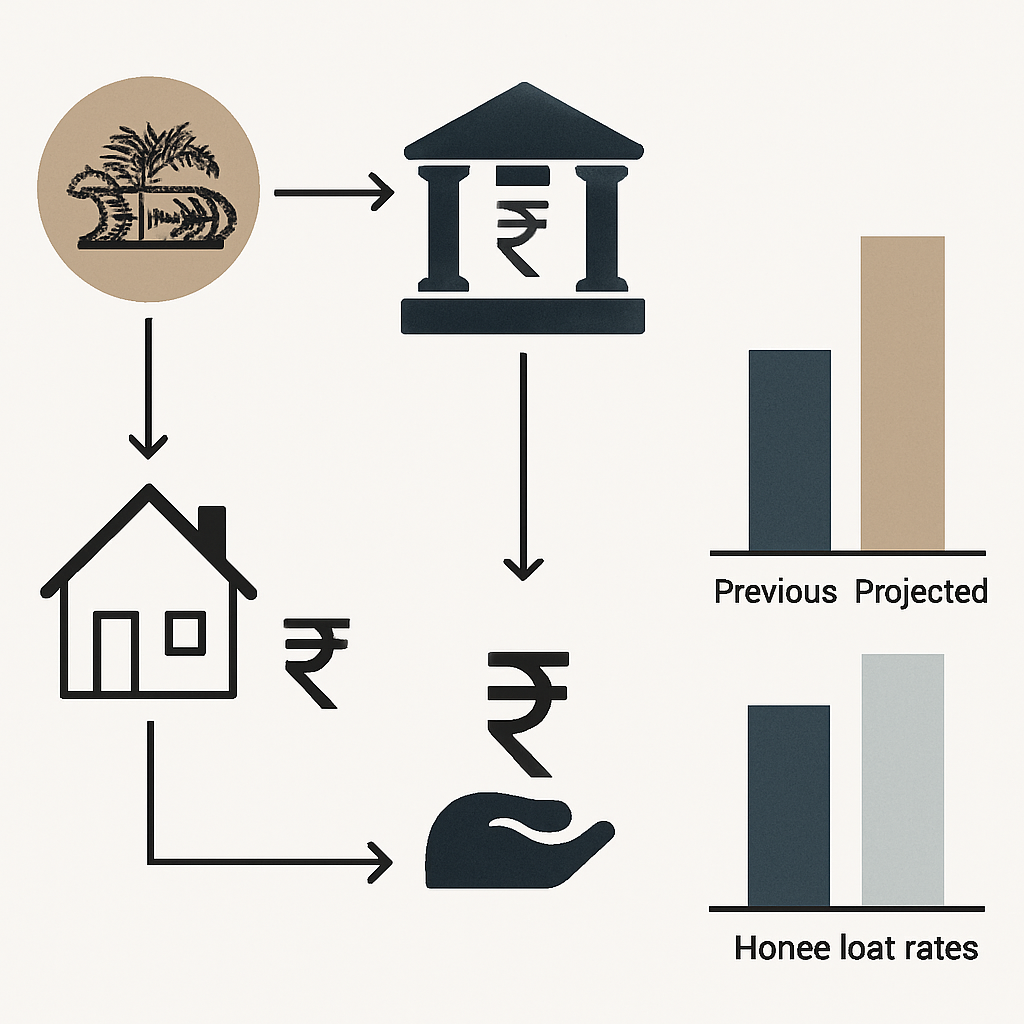
Home loan rates depend heavily on how cheaply banks can raise money and how easily they can maintain liquidity. If banks are competing aggressively for deposits or borrowing at elevated short-term rates, they may be reluctant to cut home loan rates even when borrowers expect relief. A swap window can help by easing the availability of funds and reducing stress in the money market, which may lower the pressure on banks to keep lending rates high.
The mechanism is indirect but important. A bank that faces lower funding pressure may be more willing to reduce spreads for new borrowers, offer sharper rates to high-quality customers, or transmit policy easing more smoothly. Existing borrowers may benefit when their floating-rate loan resets, provided their loan benchmark or lender’s internal pricing framework reflects the improved conditions.
This does not mean every borrower will immediately get a lower EMI. Lenders have different policies, and some loans are linked to external benchmarks while older loans may be linked to systems that move more slowly. The benefit is most likely to appear first in new floating-rate offers, repo-linked loans, or special balance transfer offers from lenders trying to capture good borrowers.
Repo rate still remains the main signal for home loans
The repo rate remains the most visible policy rate for home loan borrowers because many floating-rate loans are now linked to the repo-linked lending rate. When the RBI cuts the repo rate, banks borrowing from the RBI becomes cheaper, and repo-linked home loan rates usually move down after the reset mechanism applies. When the RBI raises the repo rate, the same link can raise EMIs or extend loan tenures for floating-rate borrowers.
Research on repo-linked loans shows that transmission is faster today than it was under older benchmark systems. Many floating-rate home loans are linked to an external benchmark such as the repo rate, which means changes in policy rates tend to reach borrowers more clearly. Still, lenders usually add a spread over the benchmark, and that spread can depend on the borrower’s credit profile, loan-to-value ratio, income stability, and lender policy.
A swap window works alongside this repo-rate channel rather than replacing it. If liquidity improves while the repo rate is stable or moving lower, banks may find it easier to pass on lower rates or reduce promotional rates for new customers. If liquidity improves but inflation risks keep the repo rate high, the benefit may be smaller and slower for home loan borrowers.
How existing floating-rate borrowers may benefit
Existing floating-rate borrowers should check the benchmark linked to their loan before expecting an EMI cut. If the loan is repo-linked, the rate generally changes according to the reset schedule mentioned in the loan agreement. Some lenders pass through changes quickly, while others apply them at the next reset date, and borrowers should verify the exact reset cycle with their bank.
RBI rules require reset intervals for external benchmark-linked loans, and many lenders reset rates at least once every three months. This means a borrower may not see the benefit on the very next EMI even if market conditions improve. The change may appear after the reset date, and the lender may adjust either the EMI amount, the remaining tenure, or both depending on the loan terms and borrower preference.
If the rate comes down, borrowers should not focus only on the immediate EMI reduction. They can ask the lender how much interest may be saved if they keep the EMI unchanged and allow the tenure to reduce. For major refinancing, balance transfer, or prepayment decisions, borrowers should compare costs carefully and consult a financial advisor before acting.
What new home buyers should watch
New home buyers may see the impact of improved liquidity through more competitive rate offers from banks and housing finance companies. When lenders feel comfortable about funding costs, they may reduce headline rates, offer lower spreads to eligible borrowers, or make balance transfer pricing more attractive. However, the best advertised rate is usually available only to borrowers who meet specific credit, income, property, and documentation conditions.
Buyers should compare the final loan rate, not just the promotional number shown in advertisements. Processing fees, legal charges, insurance bundling, conversion fees, and reset terms can affect the real cost of the loan. A slightly lower interest rate may not always be the cheapest option if the upfront costs are high or the rate is available only for a limited period.
Before selecting a lender, borrowers should ask whether the loan is linked to the repo rate, how often the rate resets, and whether the spread can change later. They should also confirm whether part-prepayment is allowed without penalty and how rate reductions are passed on to existing customers. If the loan structure is complex or the borrower is comparing several offers, it is better to consult a financial advisor.
Why the benefit may take time
Borrowers often expect RBI actions to reduce EMIs immediately, but rate transmission usually takes time. A swap window first affects liquidity conditions for banks, then short-term funding rates, and only later retail loan pricing. Even after lenders decide to revise rates, existing customers receive the benefit according to their loan reset dates and contract terms.
Another reason for delay is that banks price loans based on more than one input. Deposit rates, competition for quality borrowers, asset-liability management, credit risk, inflation expectations, and profitability all matter. If banks are still paying high rates to attract deposits, they may be slower to reduce lending rates even when market liquidity improves.
Older home loans can also react more slowly than newer repo-linked loans. Borrowers on older benchmarks may need to ask the lender whether switching to a repo-linked rate is possible and what conversion fee applies. The switch can be useful in some cases, but it should be evaluated after comparing the new rate, remaining tenure, fees, and long-term savings.
How EMI savings usually work
When a floating home loan rate falls, the borrower usually benefits in one of two ways. The lender may reduce the EMI while keeping the remaining tenure broadly similar, or it may keep the EMI unchanged and shorten the remaining loan tenure. Many lenders default to changing the tenure first, but the exact treatment depends on the loan agreement and borrower instructions.
A simple example helps show why even a modest rate cut matters. Research indicates that for a ₹50 lakh home loan at 8.5% over 20 years, a 0.5 percentage point reduction can lower the EMI by roughly ₹1,569 per month and save nearly ₹3.8 lakh over the full tenure. Actual savings will differ based on outstanding principal, remaining tenure, reset date, and how the lender applies the rate change.
Borrowers should request an updated amortisation schedule after any rate change. This schedule shows how much of each EMI goes toward principal and how much goes toward interest. It also helps borrowers decide whether to keep the lower EMI for cash-flow relief or maintain the EMI and reduce the tenure faster.
Steps borrowers can take now
The first step is to identify the benchmark on the home loan. Borrowers should check whether the loan is linked to the repo rate, an external benchmark, MCLR, base rate, or another older system. This information is usually available in the sanction letter, loan agreement, interest rate reset notice, or online loan account statement.
The second step is to compare the current loan rate with the rates available to new borrowers with similar profiles. If there is a wide difference, the borrower can ask the existing lender for a rate conversion or spread reduction. The borrower should ask for the total cost of conversion, the revised rate, the reset date, and the expected savings before agreeing.
The third step is to review refinancing or balance transfer options carefully. A balance transfer can reduce the rate, but it may involve processing fees, legal verification, valuation charges, insurance requirements, and time-consuming documentation. Borrowers should calculate the break-even point and consult a financial advisor before making a final decision.
Risks and limits borrowers should remember
A swap window can improve liquidity, but it does not guarantee a rate cut for every home loan borrower. Banks may use lower funding pressure to strengthen margins, improve balance sheets, or selectively price loans rather than reduce rates across the board. Borrowers with weaker credit profiles may see smaller benefits because lenders price their risk differently.
There is also a difference between new-loan pricing and existing-loan pricing. Lenders may offer attractive rates to new customers while existing borrowers remain on older spreads until they request a review or reach a reset date. Existing borrowers should not assume that lower advertised rates automatically apply to them without action.
Macroeconomic conditions can also limit the effect of liquidity measures. If inflation remains a concern or global financial conditions tighten, the RBI may keep policy rates steady even while using liquidity tools. In such a situation, the swap window may reduce stress in the system without causing a large immediate drop in home loan rates.
Frequently Asked Questions
Will the RBI swap window directly reduce my home loan EMI? No, the swap window does not directly change your EMI because it is a liquidity tool for banks. It can lower funding pressure in the banking system, which may create room for lenders to reduce rates later. Your EMI will change only if your lender revises your loan rate according to the loan benchmark and reset schedule.
Is a swap window the same as a repo rate cut? No, a repo rate cut directly changes the policy rate that influences repo-linked loans, while a swap window mainly affects liquidity and funding conditions. Repo-linked borrowers generally see clearer transmission from repo rate changes. A swap window can still support lower rates indirectly if it reduces banks’ cost of funds.
How soon can existing borrowers see a lower rate? The timing depends on the loan benchmark and reset cycle. Some repo-linked loans may adjust quickly, while others change at the next scheduled reset, often within a quarterly cycle. Borrowers should check their loan agreement or ask the lender for the exact reset date.
Should I transfer my home loan if another lender offers a lower rate? A lower rate can be attractive, but the decision should include processing fees, legal charges, valuation costs, documentation effort, and the remaining tenure of the loan. The savings should be large enough to justify the transfer cost and time involved. For a final decision, consult a financial advisor.
Can I ask my current bank to reduce my spread? Yes, borrowers can ask their existing lender for a rate conversion, spread reduction, or migration to a more transparent benchmark if available. The lender may charge a conversion fee and may reassess the borrower’s profile before offering a lower rate. Borrowers should request written details of the revised rate, total charges, and expected savings before accepting.
What borrowers should expect next
The RBI’s swap window can be positive for home loan borrowers because it may make banking-system liquidity more comfortable. If banks face lower funding pressure, they may become more willing to price home loans competitively. The strongest benefit is likely when liquidity support is combined with stable or falling repo rates.
Borrowers should track three signals in the coming months. These are the RBI’s repo rate decisions, the movement in new home loan rates offered by major lenders, and any reset notice from their own bank. Together, these signals will show whether liquidity support is turning into actual retail rate relief.
The practical approach is to stay prepared rather than react hastily. Keep loan documents ready, monitor the current outstanding amount, ask for an updated rate comparison, and calculate savings before changing lenders or loan terms. If the swap window helps bring down bank funding costs, informed borrowers will be better placed to capture the benefit when lenders begin passing it on.
Disclaimer: The information above is for educational purposes only and does not constitute financial advice.
5 Comments