

Understanding the Manipal Health IPO Buzz
Manipal Health Enterprises is drawing attention because reports point to a large public issue in July 2026. ETHealthworld reported that the hospital chain was planning an IPO of about $1 billion and targeting a valuation of around $10 billion. Reuters later reported a valuation target closer to $8 billion, with the offer including fresh shares and a secondary sale by existing investors.
For Indian retail investors, the size of the IPO is only one part of the story. A mega issue can attract strong interest from mutual funds, insurance companies, high-net-worth investors, and foreign institutions. The more useful question is whether the final price band, business growth, debt position, and hospital operating metrics support the valuation being asked from public market investors.
Key IPO Details and Offer Structure
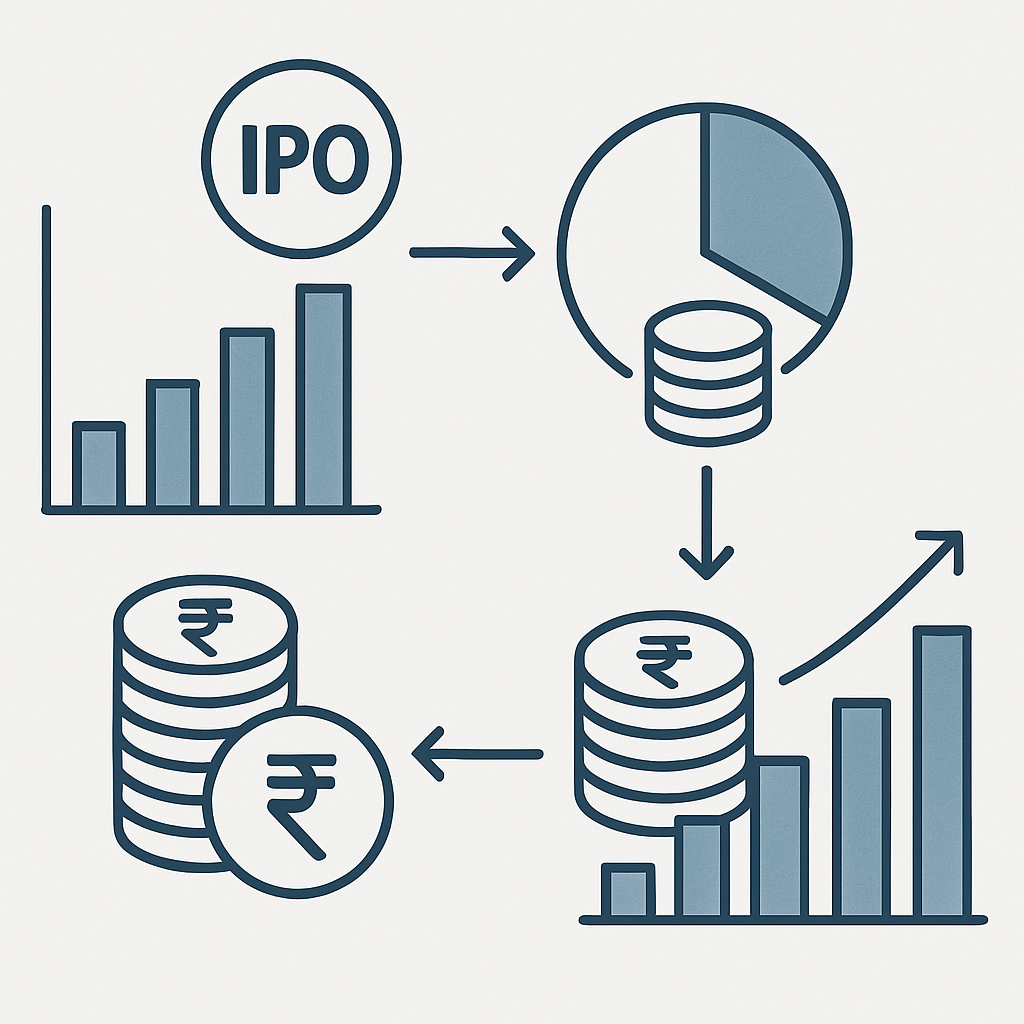
The Manipal Health IPO is expected to include both a fresh issue and an offer-for-sale. Reuters reported that the company plans to issue new shares worth ₹80 billion, or ₹8,000 crore. Existing investors, including Temasek Holdings’ Imperius Healthcare Investments, TPG Capital, and others, are expected to sell shares worth ₹12.10 billion, or about ₹1,210 crore.
This structure matters because fresh issue proceeds go to the company, while offer-for-sale proceeds go to selling shareholders. Reuters reported that the company plans to use the IPO proceeds to repay borrowings and invest in a step-down subsidiary. Investors can review the red herring prospectus and final offer documents under SEBI rules, and they can consult a financial advisor to understand whether the IPO fits their risk profile.
The reported valuation range also needs context. ETHealthworld cited a possible valuation of around $10 billion, while Reuters and WMBD reported a target of up to about $8 billion. That difference shows why investors should rely on the final prospectus and price band rather than early market buzz alone.
Valuation Context in the Indian Healthcare Market
Manipal Health competes with listed hospital companies such as Apollo Hospitals Enterprise, Max Healthcare, and Fortis Healthcare. These companies already trade on public markets, so they provide useful benchmarks for valuation. Investors can compare metrics such as P/E, EV/EBITDA, revenue growth, margins, debt levels, and operational bed capacity using updated market data from the NSE, BSE, or brokerage platforms.
A premium valuation can be justified only if the business delivers strong and consistent execution. Hospital chains require large investments in land, buildings, medical equipment, doctors, nurses, and technology before new capacity starts contributing meaningfully to profits. If the IPO price leaves little margin for error, even a good company can face weak post-listing returns if earnings take longer to catch up.
Comparing Manipal with Apollo, Max, and Fortis can help separate sector optimism from realistic expectations. Apollo has a broader listed track record and business mix, while Max and Fortis provide additional reference points for hospital margins and market appetite. A financial advisor can help interpret these comparisons in relation to an investor’s portfolio size, time horizon, and ability to handle equity volatility.
Financial Health and Operating Metrics to Watch
Hospital businesses are capital-intensive, so operating performance cannot be judged only by revenue. EBITDA margins, interest costs, cash flow, debt reduction, and return on invested capital all matter when evaluating a healthcare IPO. The final prospectus should provide updated financial statements, risk factors, related-party details, and management discussion that help investors assess the quality of earnings.
EBITDA shows operating profit before interest, tax, depreciation, and amortisation. For hospitals, it is useful because depreciation and interest can be significant after large expansion programmes or acquisitions. However, EBITDA alone is not enough, because investors also need to assess cash generation, working capital, repayment obligations, and the cost of maintaining high-quality medical infrastructure.
Bed utilization is another major factor for hospital chains. One IPO analysis video highlighted that around 48% of licensed beds were operational, which suggests that headline capacity may not fully represent current earnings potential. Since this point comes from analysis rather than the final offer document, investors should verify the latest licensed beds, operational beds, occupancy levels, and revenue per occupied bed in official IPO filings.
Underused capacity can become an opportunity if management can bring beds into operation profitably. It can also create pressure if new beds require staffing, equipment, maintenance, and marketing before patient volumes mature. The best outcome depends on disciplined expansion, doctor availability, patient demand, and the ability to maintain service quality while scaling.
Use of Funds and Expansion Strategy
Reuters reported that IPO proceeds are planned for repayment of borrowings and investment in a step-down subsidiary. WMBD reported that Manipal Health plans to spend $414.4 million to expand capacity. The Bengaluru-based chain operates 49 hospitals across India, giving it a wide base from which to pursue future growth.
Debt repayment can improve financial flexibility if it reduces interest costs and strengthens the balance sheet. Expansion spending can support future revenue, but it may take time before new capacity produces healthy margins. This balance between deleveraging and growth investment will be important for investors assessing the IPO’s long-term potential.
Healthcare demand in India has structural drivers such as rising incomes, increasing insurance penetration, and demand for specialty care. These trends can support hospital chains, but they do not remove execution risk. Families balancing SIPs, term insurance, emergency funds, home loan EMIs, income tax planning, PPF, EPF, and NPS goals can consult a financial advisor before deciding how much exposure, if any, is appropriate.
Growth Potential Over Five to Ten Years
Healthcare can be a long-term theme because demand for quality treatment, diagnostics, and specialty services continues to rise in India. Manipal’s network gives it scale, brand recall, and presence across multiple markets. The long-term case depends on whether the company can convert capacity, doctor networks, and patient trust into sustainable earnings growth.
Revenue growth may come from higher occupancy, additional operational beds, better case mix, and specialty services such as oncology, cardiology, orthopaedics, transplants, and critical care. Earnings growth may take longer if new hospitals or added capacity require upfront spending before reaching mature utilization. Investors should avoid assuming a fixed growth rate unless management provides clear guidance in official documents.
A five to ten year equity investor needs to look beyond listing-day excitement. Post-listing quarterly results, management commentary, debt trends, occupancy data, and margin stability will matter more than initial subscription numbers. If the IPO receives heavy demand, the final decision should still depend on valuation discipline and personal financial suitability, preferably after consultation with a financial advisor.
Competitive Position and Market Risks
Manipal’s competitive strengths include its hospital network, brand presence, and ability to operate at scale. Large hospital chains can attract doctors, negotiate with vendors, invest in technology, and build referral systems across locations. These advantages can support growth, but they do not guarantee high returns for shareholders at any price.
Competition remains intense in metro and tier-1 healthcare markets. Apollo, Max, Fortis, Narayana Health, and regional hospital groups compete for patients, doctors, nurses, land, and insurance partnerships. If expansion depends on expensive acquisitions or high-cost locations, returns may take time to materialize.
Regulation is another risk for hospital operators. Pricing rules, state-level approvals, compliance requirements, health-sector policies, and insurance claim dynamics can influence revenue and margins. SEBI governs the IPO process, but the operating business also faces healthcare regulations that investors should review in the risk-factor section of the prospectus.
Sector Outlook for Indian Healthcare Stocks
India’s healthcare sector has gained investor attention since the pandemic, as households have become more aware of hospital quality, insurance coverage, and preventive care. Private healthcare spending continues to grow in many urban markets. At the same time, healthcare stocks can fall if valuations move far ahead of earnings delivery.
Macroeconomic conditions can also affect hospital companies. Inflation may raise salary, equipment, consumable, and maintenance costs, while higher interest rates can increase financing pressure for expansion. If market sentiment weakens, even fundamentally strong IPOs can list flat or trade below issue price.
For broader market context, investors who track growth IPOs may also compare this story with other sector fundraises. PocketPlanGuru has covered valuation discipline in themes such as the Juniper Green Energy IPO and investor timing around Wipro and UltraTech ex-dates. These comparisons can help investors think about process rather than chasing any single market buzz.
Risk and Reward for Indian Retail Investors
The reward story rests on India’s rising healthcare demand, Manipal’s hospital network, potential capacity expansion, and possible debt reduction after the IPO. A successful listing may also improve the company’s visibility and public-market access. Long-term investors could benefit if earnings compound and valuation remains reasonable over time.
The risk story includes valuation pressure, execution delays, debt servicing, competition, regulation, and cost inflation. New beds may take time to generate revenue, while staffing and equipment costs can start earlier. If operating performance disappoints after listing, the stock may face pressure even if the broader healthcare theme remains attractive.
Listing gains are not guaranteed in any IPO. Large issues can list weakly if market liquidity tightens, foreign flows slow, or the Nifty and Sensex turn cautious. Investors can consult a financial advisor to assess whether the Manipal Health IPO aligns with their financial goals, risk appetite, tax situation, and existing equity exposure.
Frequently Asked Questions
What makes the Manipal Health IPO attractive for investors?
The IPO offers exposure to a large hospital chain in a sector with long-term demand drivers. Manipal operates 49 hospitals across India, according to WMBD, and competes with major listed names such as Apollo Hospitals Enterprise, Max Healthcare, and Fortis Healthcare. The attraction depends on the final valuation, use of funds, debt reduction plan, and the company’s ability to improve operational performance after listing.
How large is the Manipal Health IPO expected to be?
Reports indicate that the issue is close to the $1 billion range. Reuters reported fresh shares worth ₹80 billion and an offer-for-sale of ₹12.10 billion by existing investors. ETHealthworld reported an IPO plan of about $1 billion, while Reuters and WMBD reported a valuation target of up to about $8 billion.
What financial metrics should investors review before investing?
Investors can review EBITDA margins, debt levels, interest costs, cash flow, bed utilization, operational beds, and revenue per occupied bed. They can also compare Manipal’s valuation with listed peers such as Apollo, Max, and Fortis using current market data. A financial advisor can help interpret these metrics in the context of personal goals and portfolio risk.
How will Manipal Health use the IPO proceeds?
Reuters reported that the company plans to use the IPO proceeds to repay borrowings and invest in a step-down subsidiary. WMBD also reported that Manipal Health plans to spend $414.4 million to expand capacity. Investors should confirm the final use of funds in the official prospectus before making any decision.
Does the IPO fit a diversified long-term portfolio?
Healthcare can be part of a diversified long-term portfolio, but an IPO remains an equity investment with market risk. It should not replace emergency savings, insurance protection, retirement planning, or goal-based investing. Investors can consult a financial advisor before deciding whether the Manipal Health IPO is suitable for their circumstances.
Disclaimer: The information above is for educational purposes only and does not constitute financial advice.