

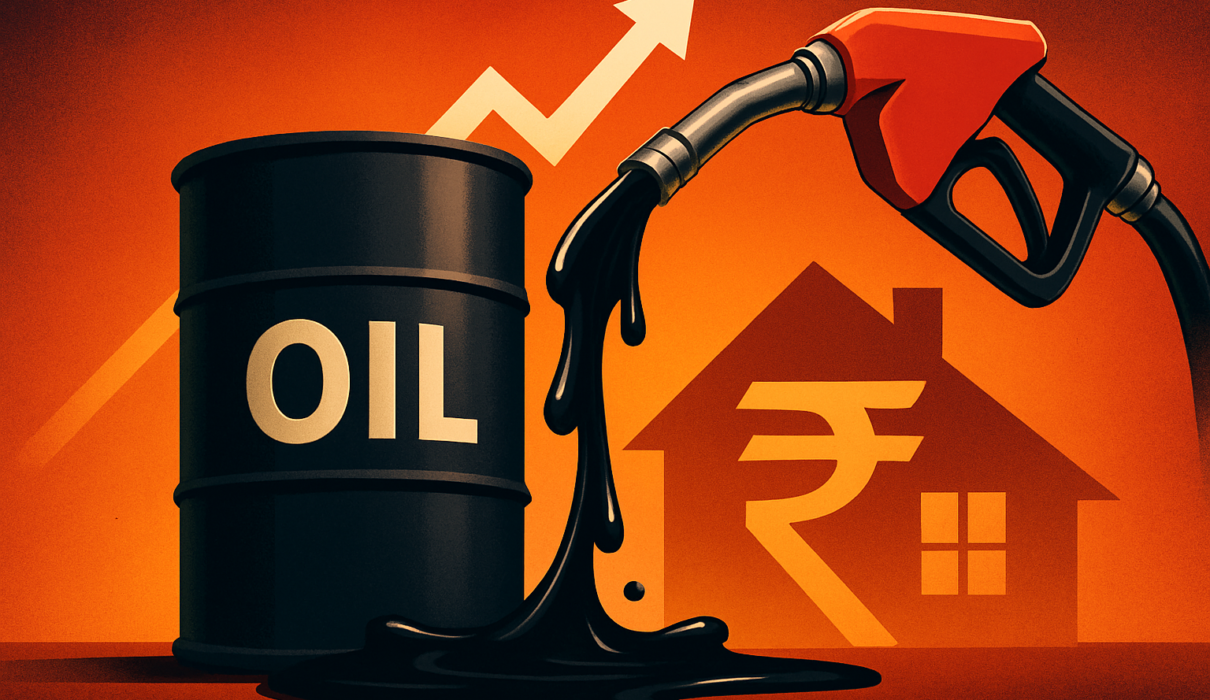
Why $100 Crude Matters for Indian Households
When crude oil tops $100 per barrel, Indian households can feel the pressure before the next salary cycle arrives. Petrol, diesel, cab fares, delivery charges, and grocery bills may all move higher when global oil remains expensive. The practical response is not panic, but a quick budget reset, smarter travel planning, and small spending changes that protect essential goals.
Oil is not just a fuel used by private vehicles. It powers transport, logistics, aviation, farming supply chains, and many services that households use every week. That is why a crude price spike can move from the petrol pump to the kitchen, the monthly commute, and even online delivery bills.
How Rising Global Crude Oil Prices Affect Indian Fuel Costs
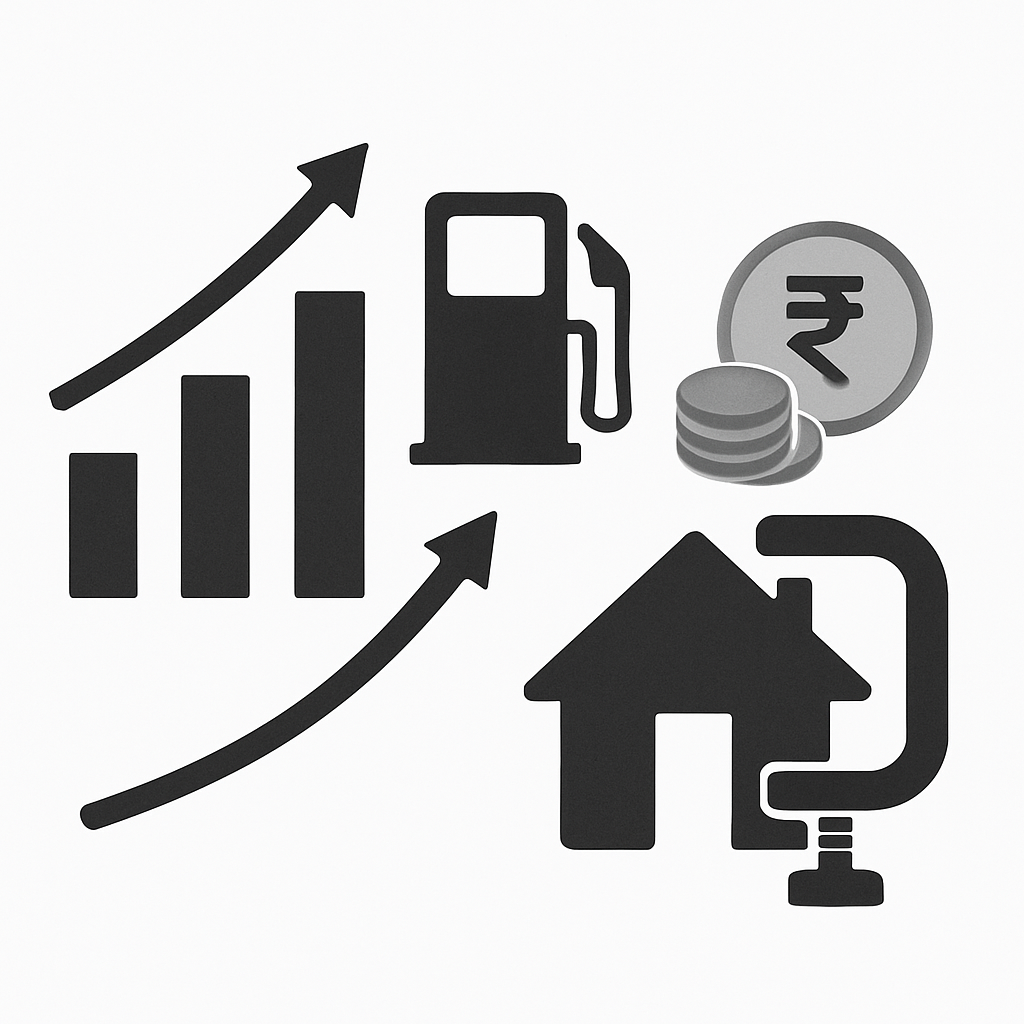
India depends heavily on imported crude oil, so global price swings can affect local fuel costs. Retail petrol and diesel prices also include excise duty, state VAT, dealer commission, freight, and other charges. This means a rise in crude can feel more painful at the pump because taxes and margins sit on top of the base fuel cost.
Research on oil prices crossing $100 per barrel shows that consumers often feel the first impact through fuel, commuting, deliveries, and travel. Indian households face a similar chain effect, although local taxes and state-wise VAT can make prices differ across cities. For a deeper household view, read our guide on why the oil price surge matters for your household budget.
India’s Fuel Pricing Mechanism Explained
India’s fuel pricing starts with crude oil and refining costs, then adds freight, dealer margin, and taxes. The central government charges excise duty, while each state adds VAT at its own rate. That is why petrol and diesel prices can differ between Mumbai, Delhi, Bengaluru, Kolkata, and other cities on the same day.
Fuel prices are influenced by international oil trends and the rupee-dollar exchange rate. When crude rises and the rupee weakens, import costs can become more difficult to manage. For macro context, readers can track policy updates from the Reserve Bank of India, especially when inflation trends affect borrowing costs and household confidence.
How $100 Crude Can Drive Inflation
When crude oil stays near or above $100, inflation risk can rise because diesel powers a large part of goods transport. Trucks move vegetables, grains, medicines, packaged goods, and construction materials across states. When freight costs climb, sellers may pass part of that increase to consumers through higher retail prices.
The AP News coverage on $100 oil and consumer prices explains how higher oil costs can affect fuel, shopping, groceries, and services. A discussion on Brent crude returning to $100 also highlights the inflation threat for households already facing cost pressure. In India, the effect can be felt through commuting, food prices, transport charges, and wider expectations about future expenses.
Direct Impact on Indian Household Budgets
Most families do not need an economics lecture to notice fuel inflation. They notice it when a two-wheeler refill costs more, cab fares rise, or vegetable prices become harder to ignore. Daily expenses can change quickly, while long-term financial goals such as insurance, emergency savings, EPF, PPF, NPS, or SIPs still need attention.
Two-wheelers and small cars dominate everyday road travel for many Indian families, so petrol prices matter deeply. Even households without a private vehicle can feel the impact through higher auto-rickshaw fares, bus pass revisions, or delivery charges. A fuel shock can also increase credit card usage if families begin swiping more to manage monthly cash flow.
Commuting Costs for Two-wheelers, Autos, and Public Transport
A daily office or college commute can become expensive when petrol and diesel move up together. A student riding a scooter, a sales worker on a bike, or a small business owner using a car may see costs rise quickly. People living far from metro lines, suburban rail, or reliable bus routes usually face sharper pressure.
Auto-rickshaw drivers and cab operators also depend on fuel, so fares may move higher during prolonged spikes. Public transport may remain cheaper for many routes, but transport bodies can also face diesel cost pressure over time. If your commute consumes a large share of income, compare your monthly fuel spend with bus, metro, train, carpool, and hybrid work options.
Ripple Effects on Groceries and Utility Bills
Fuel affects your kitchen because food often travels long distances before it reaches your local shop. Vegetables, milk, packaged goods, and household supplies usually depend on diesel-powered transport at some stage. When logistics costs rise, retailers may raise prices even if farm output or factory production remains stable.
The Britannica Money analysis on gas price spikes explains how fuel shocks can reset household budgets quickly. Indian families may also see higher delivery fees on grocery apps, food apps, and e-commerce orders. To understand this chain better, see our related article on how rising oil prices drive up your monthly expenses now.
Personal Finance Strategies to Manage Rising Fuel Expenses
When fuel costs rise, the first step should be a simple budget review. Check the last two or three months of petrol, diesel, cab, auto, toll, parking, and delivery spending. Then set a monthly transport limit that fits your income without disturbing rent, EMIs, insurance premiums, emergency savings, and essential household bills.
A fuel shock should not automatically lead to cutting important financial protections. Term insurance, health cover, and emergency savings can protect your family when expenses rise unexpectedly. If you are considering changes to SIPs, mutual funds, or long-term investments, consult a financial advisor before making decisions.
Budgeting Tips for Indian Households
Set a clear monthly fuel limit and review it every week. Use a notes app, UPI history, bank statement, or personal finance app to track every refill and ride payment. This habit helps you spot avoidable spending such as extra trips, poor mileage, repeated delivery orders, or unnecessary cab use.
Prioritise essential trips over weekend drives and impulse outings when crude prices remain high. Combine grocery shopping, bank work, school errands, and family tasks into one planned route. If income tax, ITR filing, or Section 80C planning already feels heavy, fuel tracking can still create quick breathing room in the monthly budget.
Reducing Fuel Consumption and Travel Costs
Carpooling with colleagues can cut fuel use without forcing you to change your home or job. Apartment groups, office teams, and neighbourhood WhatsApp groups often make shared rides easier to arrange. Even a few shared trips each week can reduce pressure on your wallet during a prolonged fuel spike.
Use public transport where it is safe, reliable, and affordable. Metro, suburban rail, and buses can work well for fixed routes in many cities. If you run a small business, plan deliveries more carefully, avoid half-empty trips, and group orders by location whenever possible.
Government Schemes and Relief Measures to Check
Government support can soften some household energy costs, especially cooking fuel and electricity. LPG-linked schemes may help eligible families reduce the burden of cylinder prices. State electricity tariff slabs or targeted subsidies can also lower bills for low-use or eligible households.
Check official portals before believing social media claims about fuel rebates or discounts. Some states may adjust VAT or offer relief during sharp fuel spikes, but rules and timing differ widely. For wider market and investor awareness, SEBI’s official website can be useful when fuel-driven volatility affects listed companies on BSE and NSE.
LPG and Cooking Fuel Subsidies
PMUY and PAHAL are important schemes linked to LPG access and subsidy delivery. Eligible households should keep bank accounts, Aadhaar details, and LPG customer records updated. Timely updates can help avoid payment delays or confusion when cooking gas prices put pressure on the monthly budget.
Households can also reduce LPG use through careful cooking habits. Pressure cooking, batch cooking, soaking pulses before cooking, and using lids can save fuel over time. Alternative cooking energy may help in some homes, but safety, ventilation, appliance quality, and local availability should come first.
State-Level Relief and Tariff Discounts
State governments may offer power subsidies, tariff slabs, or targeted relief for certain users. These benefits can offset part of the broader rise in household expenses when fuel-driven inflation spreads. Check your electricity bill, state energy portal, and local announcements for accurate eligibility details.
Fuel tax changes can affect state revenue, so relief may not always arrive quickly. Families should avoid building their entire budget around expected tax cuts or subsidies. Keep a small buffer for fuel, groceries, home loan EMI, personal loan payments, and school expenses when oil remains costly.
Exploring Alternative Fuels and Vehicles in India
Rising petrol and diesel prices often push families to explore EVs, CNG, and other alternatives. The right choice depends on commute distance, charging access, vehicle cost, resale value, and maintenance. Do not switch only because headlines look scary, because the total cost of ownership matters more than one month of fuel prices.
Markets can also react to oil shocks, and sectors on Nifty, Sensex, NSE, and BSE may move differently. Oil marketing companies, airlines, logistics firms, and auto companies can face changing investor expectations during such periods. If you invest during volatile markets, consult a financial advisor and read our explainer on why rising bond yields are a hidden opportunity now.
Electric Vehicles and Cost Benefits
EVs can offer lower running costs than petrol or diesel vehicles for regular city use. Government incentives and state policies may reduce the purchase burden for some buyers. Charging access is also improving in many Indian cities, especially for electric two-wheelers.
An EV still needs a practical check before purchase. Review your daily distance, home charging option, battery warranty, service network, insurance cost, and expected resale value. For many families, an electric two-wheeler may be more practical than an immediate electric car.
CNG, LPG, and Biofuel Options
CNG can be cheaper than petrol in many cities and may work well for frequent drivers. It suits some four-wheelers and commercial users, but availability varies by location. Long queues at CNG pumps can also reduce convenience during office hours or busy travel periods.
LPG and biofuels may support India’s broader fuel mix, but not every vehicle can use them safely. Vehicle compatibility, authorised conversion kits, insurance rules, and safety standards matter a lot. Always compare upfront cost, running cost, maintenance, convenience, and warranty impact before changing fuel type.
Behavioural Changes That Can Protect Your Budget
Small driving changes can protect your budget without major lifestyle cuts. Smooth acceleration, steady speeds, and less idling can improve fuel efficiency. Regular servicing also keeps your vehicle from burning extra fuel and turning a small maintenance issue into a larger repair bill.
Oil price headlines can feel outside your control, but daily habits remain within your control. Plan routes, avoid peak traffic where possible, and reduce repeated short trips. These steps work best when every family member follows the same plan instead of treating fuel savings as one person’s responsibility.
Driving and Vehicle Use Habits
Maintain correct tyre pressure and service your vehicle on time. Under-inflated tyres, clogged filters, and poor engine health can reduce mileage. A well-maintained two-wheeler or car saves money over many refills and also improves safety.
Avoid rapid acceleration, sudden braking, and unnecessary idling at long stops. Use air-conditioning wisely, especially in slow traffic, because it can increase fuel use. On highways, steady driving usually helps more than speeding, braking, and accelerating again.
Using Technology and Apps
Fuel price tracker apps can help you compare nearby pump rates where reliable data is available. Mileage tracking apps can show whether your vehicle efficiency is falling over time. Personal finance apps can group fuel, toll, parking, auto, and cab costs in one place.
Ridesharing and route planning apps can reduce individual fuel use. They can also help you avoid traffic-heavy roads, repeated detours, and poor route choices. If you use a credit card for fuel, check surcharge rules, rewards, and caps before assuming that every transaction saves money.
Frequently Asked Questions
Fuel price shocks create practical doubts for Indian households. The answers below cover common questions in simple terms. Use them as a starting point for your monthly budget review and adjust the numbers to your own income, city, and travel needs.
Why does global crude oil affect Indian fuel prices so strongly?
Global crude sets the base cost because India imports a large share of its oil needs. Taxes, duties, dealer commission, freight, and state VAT then add to the retail price. That is why a global rise can strongly affect what you pay locally, even though the exact pump price differs by state and city.
How can I reduce my monthly fuel expenses effectively?
Start by tracking every fuel refill, cab ride, toll, parking payment, and delivery charge. Then try carpooling, public transport, route planning, and fuel-efficient driving. Prioritise essential trips and combine errands so that you reduce wasted travel without cutting necessary work, school, or medical visits.
Are there government schemes to help with rising fuel or cooking gas costs?
Eligible households may benefit from LPG-linked schemes such as PMUY and PAHAL. Some states may also offer electricity tariff relief or local subsidy support for specific users. Always check official government portals, distributor records, and state announcements for the latest eligibility rules.
Is switching to an electric vehicle cost-effective in India?
EVs can be cost-effective for regular city users with access to reliable charging. Lower running costs and eligible incentives can improve the value case over time. Still, compare purchase cost, battery warranty, insurance, service support, charging convenience, and resale value before deciding.
How often should I review my budget when crude oil stays above $100?
Review your transport and grocery spending weekly when fuel prices are volatile. A short review helps you catch rising costs before they disturb EMIs, rent, insurance, and savings. If higher fuel prices continue for several months, rebuild your monthly budget with a larger transport buffer and consult a financial advisor before changing long-term investments.
Take Action Before Fuel Costs Take Over
Start tracking your fuel expenses today and check whether any official schemes can soften the impact of rising energy costs. Review your commute, cut waste, group errands, and protect core goals such as insurance, emergency savings, EPF, and planned investments. For more practical money guides made for Indian households, subscribe to PocketPlanGuru and explore our latest budgeting insights.
Disclaimer: The information above is for educational purposes only and does not constitute financial advice.
6 Comments