


Understanding Rising Bond Yields in the Indian Economic Context
Rising bond yields often make investors nervous because bond prices and yields usually move in opposite directions. When yields rise, the market value of many existing bonds can fall, especially bonds with longer maturities. For Indian investors holding debt mutual funds, G-Secs, corporate bonds, EPF, PPF, fixed deposits, or bond ETFs, this shift can affect both short-term valuations and future income opportunities.
The hidden opportunity is that higher yields may allow fresh investments and reinvested maturities to earn better income over time. This does not remove risk, and it does not mean every bond product becomes attractive immediately. Investors should review duration, credit quality, taxation, liquidity, and personal goals with a qualified financial advisor before making changes.
Bond yields move with inflation expectations, interest rates, liquidity, investor confidence, and government borrowing. In India, the RBI, Union Budget borrowing plans, crude oil prices, fiscal policy, and domestic savings flows all influence the bond market. A useful global overview from Verso Wealth Management explains how sticky inflation and economic uncertainty can contribute to rising yields.
RBI’s Role in Bond Yield Movements
The RBI influences bond yields through the repo rate, liquidity operations, and policy commentary. When the RBI signals tighter monetary conditions to manage inflation, bond investors may demand higher yields as compensation. Investors can follow official updates on the Reserve Bank of India website, especially after Monetary Policy Committee meetings.
Even when the RBI does not change the repo rate, its guidance can move market expectations. Comments on inflation, liquidity, growth, and financial stability can affect how traders price government securities and debt funds. This is why bond investors should track policy tone rather than looking only at the headline rate decision.
Inflation, Fiscal Deficit, and Bond Supply
Inflation is one of the most important drivers of bond yields because it affects the real return investors receive after prices rise. If inflation remains sticky, investors may seek higher yields to protect purchasing power. Higher crude oil prices can also affect India’s inflation and fiscal position, which makes our guide on why the oil price surge matters for your household budget relevant for bond investors too.
Government borrowing also matters because a larger supply of bonds can pressure prices if demand does not keep pace. When bond prices fall, yields rise, and the effect can be stronger during uncertain market conditions. Fiscal discipline, steady demand from institutions, and foreign investor participation can help improve market confidence, but outcomes are never guaranteed.
How Indian Bonds Differ from Global Bonds
Indian bonds do not always behave like US Treasuries, UK gilts, or other global fixed income markets. Currency movements, RBI policy, SEBI rules, domestic liquidity, and local investor behaviour make India’s bond market distinct. Investors should avoid copying global bond strategies without understanding how they fit Indian taxation, product structures, and risk controls.
The Indian market also has different levels of liquidity across central government securities, state development loans, corporate bonds, money market instruments, and debt mutual funds. Some securities may be easier to buy and sell than others, while some may have wider bid-ask spreads. Retail investors should understand these practical details and consult a financial advisor before choosing between direct bonds, funds, ETFs, and deposits.
How Higher Yields Affect Fixed Income Instruments in India
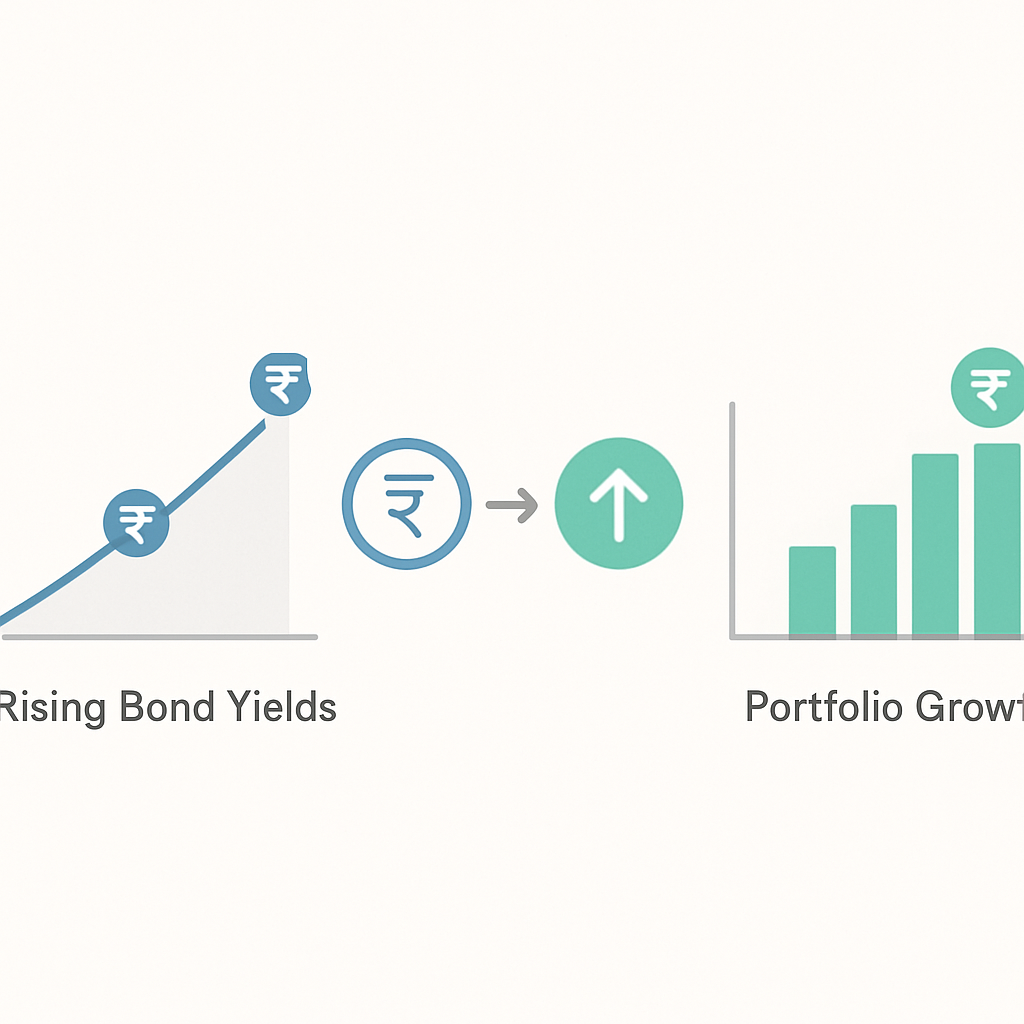
Higher yields do not affect every fixed income product in the same way. Long-duration bonds and gilt funds usually show greater price sensitivity, while short-duration products may see smaller mark-to-market swings. The inverse relationship between bond prices and yields is explained in this risk-focused note by Runnymede Capital Management.
Investors should separate temporary price movement from long-term return potential. Rising yields can create short-term capital losses, but they can also improve the income available on new bonds and reinvested cash flows. This is why the impact depends on time horizon, product type, tax treatment, and whether the investor needs liquidity soon.
Government Securities and Gilt Funds
Government securities, or G-Secs, carry sovereign backing, but they still carry interest rate risk. Gilt funds offer retail investors access to government bonds without directly buying individual securities. Since many gilt funds hold longer maturity papers, their net asset values can move sharply when market expectations about rates change.
G-Secs can be useful for investors seeking high-quality fixed income exposure, but quality does not eliminate volatility. A bond backed by the government can still fall in market value before maturity if yields rise. Investors using gilt funds should check portfolio maturity, duration, expense ratio, and suitability with a financial advisor.
Corporate Bonds and Credit Risk
Corporate bonds are affected by both interest rate movements and issuer-specific credit risk. A financially strong issuer may borrow at a lower spread, while a weaker issuer may need to offer a higher yield to attract buyers. A high yield can sometimes signal opportunity, but it can also signal higher risk.
Investors should review ratings, balance sheets, cash flows, and issuer quality before considering corporate bonds. They should also remember that ratings can change and that lower-rated securities may be difficult to sell during stress. For most retail investors, diversified debt funds or carefully reviewed portfolios may be more practical, but the final decision should be made after consulting a financial advisor.
Debt Mutual Funds and Bond ETFs
Debt mutual funds can spread exposure across many securities and issuers. Active fund managers may adjust duration, credit exposure, and liquidity positioning when rates look uncertain. However, debt funds still carry market risk, credit risk, and taxation considerations that investors must understand.
Bond ETFs can offer exchange-traded access to fixed income, but they also require attention to tracking error, liquidity, and trading volumes. Investors should check scheme documents, factsheets, and exchange data before assuming an ETF will behave exactly like its benchmark. Platforms such as the NSE can help investors review market information, but product suitability should be discussed with a financial advisor.
Practical Strategies for Rising Yield Phases
Investors do not need to panic when bond yields rise, but they should avoid careless buying as well. A structured approach can help manage short-term volatility while positioning the portfolio for better future income. The goal is not to predict every rate move, but to build resilience across changing interest rate cycles.
Duration, laddering, asset allocation, liquidity, and tax treatment are central to this process. A rising-yield phase may suit gradual deployment for some investors, while others may need to protect capital for near-term goals. Because needs differ widely, investors should consult a financial advisor before changing allocations.
Duration and Laddering
Duration measures how sensitive a bond or debt fund is to changes in interest rates. A higher-duration portfolio typically moves more when yields rise or fall. Shorter-duration funds may reduce interest rate sensitivity, but they may also offer different return potential depending on the market environment.
A laddering approach spreads maturities across different time periods instead of concentrating everything in one maturity bucket. This can reduce reinvestment risk and create more regular cash flow opportunities. Investors can use the concept across deposits, bonds, and certain debt products, but the exact structure should match their goals and risk profile.
Tax Awareness and Product Selection
Taxes can significantly affect the return that finally reaches an investor’s bank account. Some instruments may qualify for Section 80C benefits, while some older tax-free bonds may offer tax-exempt interest under applicable rules. Product names should not be mixed casually because tax treatment, holding periods, and reporting requirements can differ.
ELSS funds offer equity exposure and Section 80C benefits, but they are not fixed income products. PPF, EPF, NPS, eligible fixed deposits, and certain bond products may play different roles in tax and retirement planning. Investors should check current income tax rules and consult a financial advisor or tax professional before filing returns or making tax-driven investments.
Balancing Fixed Income with Equities
Higher bond yields can influence equity valuations because investors may compare risky assets with safer income options. When borrowing costs rise, rate-sensitive sectors such as banks, real estate, automobiles, and capital-intensive businesses can become more volatile. The relationship between rising yields and stock portfolios is discussed in this market note by SECsense.
A balanced portfolio may include equities, fixed income, cash, and selected alternatives depending on the investor’s needs. Younger investors with long horizons may tolerate more equity volatility, while retirees may prioritise income stability and capital preservation. The right mix depends on age, goals, emergency funds, insurance cover, debt obligations, and comfort with market declines.
Hidden Opportunities in Rising Bond Yields
Rising yields can feel uncomfortable at first because existing bond prices may fall. Yet long-term investors may benefit as new bonds and reinvested cash flows begin earning higher yields. This is the core opportunity in a rising-rate environment, especially for disciplined investors who do not need to sell during short-term volatility.
Bonds can provide income, stability, and diversification when used properly within a broader portfolio. A related explanation from Verso Group highlights how bonds can support a portfolio through lower-risk characteristics, regular income potential, and diversification benefits. These benefits depend on issuer strength, maturity, valuation, and the investor’s holding period.
Improving Future Income Potential
When yields rise, investors may be able to buy new bonds or debt products with better income potential than before. This can gradually improve portfolio yield as old holdings mature or as fresh money is deployed. The benefit is usually more visible over time rather than immediately after yields rise.
Investors should avoid chasing the highest available yield without checking risk. A higher yield may reflect longer duration, lower credit quality, lower liquidity, or market stress. A careful review with a financial advisor can help separate genuine opportunity from avoidable risk.
Diversifying Beyond Equities
Bonds can reduce dependence on equity markets when they are selected with care. Fixed income may provide regular income and help stabilise a portfolio, even though it is not risk-free. Diversification works best when the debt allocation includes appropriate duration, credit quality, and liquidity for the investor’s needs.
Debt funds and direct bonds can have different risk labels, portfolio disclosures, and expense structures. Investors should review SEBI risk labels, scheme documents, and monthly factsheets before investing. Our article on why SEBI’s curbs matter for your bond investments can help investors stay alert to marketing risks and disclosure standards.
Using Volatility with Discipline
Market volatility can create entry points, but it should not encourage aggressive rate bets. Staggered purchases or systematic allocations may help investors avoid putting all money to work at one yield level. This approach can be useful when RBI policy, inflation data, and government borrowing updates are uncertain.
Investors using SIPs in debt funds or phased purchases in bonds should still understand product risk. A staggered approach does not guarantee profits or prevent losses. It simply reduces the pressure of making one large decision at the wrong time, and the plan should be reviewed with a financial advisor.
Monitoring RBI and Market Signals
Bond investing requires regular monitoring, but it does not require daily panic. Investors should track RBI policy, CPI inflation, WPI inflation, GDP expectations, liquidity conditions, and government borrowing plans. Regulatory updates and investor education resources on the SEBI website can also help investors understand market safeguards.
Fund factsheets are especially useful for debt mutual fund investors. They show portfolio maturity, duration, credit exposure, expense ratio, and issuer concentration. Reviewing these disclosures regularly can help investors notice whether a fund still matches their risk tolerance and financial goals.
Key RBI Signals
The repo rate is the most visible RBI signal for bond markets. Liquidity operations, open market actions, inflation projections, and policy language can be just as important. A steady rate decision can still move yields if the RBI’s tone changes market expectations.
Investors should also watch whether policy commentary suggests patience, caution, or a shift in inflation concerns. Bond markets often respond before retail investors notice changes in fund returns. This makes it useful to follow reliable sources instead of reacting only to social media commentary.
Inflation and Growth Indicators
CPI inflation matters because it reflects consumer price pressure across the economy. WPI inflation can show producer-side trends, while GDP expectations shape views on growth and borrowing. Together, these indicators influence how investors judge future interest rates and bond yields.
A strong economy can support risk assets, but stubborn inflation can keep bond yields elevated. Slower growth may eventually reduce rate pressure, but the timing can be uncertain. Investors should treat macro indicators as decision inputs, not as guaranteed predictions.
Government Borrowing and Foreign Flows
The Union Budget and borrowing calendar can influence the supply of government bonds. Higher borrowing may pressure bond prices if demand is insufficient. Strong demand from banks, insurers, mutual funds, pension funds, and foreign investors can help absorb supply.
Foreign flows into Indian debt may improve liquidity, but they can also be sensitive to global rates and currency movements. A stronger or weaker rupee can affect foreign investor behaviour. Retail investors should understand that domestic bond yields are shaped by both local fundamentals and global financial conditions.
FAQs on Rising Bond Yields for Indian Investors
Many Indian investors hear about bond yields only when markets become volatile. That is understandable because fixed income often appears calm until interest rates start moving. These answers address common questions, but they are educational and should not replace guidance from a qualified financial advisor.
How do rising bond yields affect my existing bond investments?
Your existing bond prices may fall in the short term when yields rise. This happens because older bonds with lower coupons become less attractive compared with newer bonds offering higher yields. If you hold suitable bonds until maturity or invest through a well-managed fund, higher reinvestment yields may improve long-term income potential.
Which fixed income products may handle rising yields better?
Short-duration products usually face less price sensitivity than long-duration products when yields rise. Gilt funds offer government bond exposure, but they can still be volatile if they hold long maturity securities. Corporate bonds, debt funds, deposits, and tax-free bonds should be compared on risk, tax treatment, liquidity, and suitability with a financial advisor.
Can ELSS help during a rising yield phase?
ELSS can complement a portfolio because it offers equity exposure and potential Section 80C benefits. However, ELSS is not a fixed income product, and its returns depend on stock market performance. Investors should use ELSS only if it suits their equity allocation, tax planning needs, lock-in period, and risk tolerance.
Should I change my equity and bond allocation when yields rise?
You can review your asset allocation, but sudden changes may create new risks. Some investors may gradually increase fixed income exposure, while others may continue equity SIPs for long-term goals. The right decision depends on income stability, emergency funds, insurance cover, loan obligations, retirement goals, and advice from a financial advisor.
What signals should I watch before investing in bonds?
Watch RBI policy, inflation data, liquidity conditions, government borrowing plans, and global rate trends. Also review fund factsheets, credit quality, duration, expense ratios, and SEBI disclosures before investing through mutual funds or ETFs. These signals cannot guarantee market direction, but they can help you ask better questions before taking action.
Make Rising Yields Work for Your Financial Plan
Bond yield cycles can look scary, but they can also create opportunities for patient investors. Higher yields may improve future income, support diversification, and reduce overdependence on equities. The benefit is most likely to come from discipline, suitability, and time rather than from trying to time every market move.
Before acting, review taxes, duration, credit risk, liquidity, and your full financial picture with a qualified financial advisor. Compare bonds with other income options such as deposits, PPF, EPF, NPS, and debt mutual funds based on your goals. You can also read how falling FCNR deposit rates affect your savings now if you compare Indian and foreign currency income choices.
Rising yields are not automatically good or bad for every investor. They are a signal to reassess risk, expected income, and the role of fixed income in your portfolio. Subscribe to PocketPlanGuru for simple, India-focused money guides that help you invest with more confidence.
Disclaimer: The information above is for educational purposes only and does not constitute financial advice.
6 Comments