


Understanding Yotta’s IPO Plans and India’s AI Infrastructure Push
Yotta Data Services is preparing for a major expansion in AI infrastructure at a time when India wants more local cloud, data centre, and high-performance computing capacity. Verified reports say Yotta plans to build a $2 billion AI hub with 85,000 Nvidia GPUs and is preparing for an IPO to raise up to $1.5 billion. Some market discussions may refer to a large rupee-denominated IPO size, but investors should wait for the DRHP and final SEBI filings for the confirmed issue size, price band, dates, and risk factors.
The company’s plans matter because AI infrastructure is becoming a foundation layer for digital businesses, government services, fintech platforms, and manufacturing automation. Yahoo Finance reported on Yotta’s Nvidia-backed AI hub plans, while CNBC reported that Yotta is planning an IPO as part of its larger AI compute build-out in India. This places Yotta in a competitive market where global firms such as Microsoft and Alphabet are also investing heavily in data centres and cloud infrastructure.
What Indian Investors Should Know Before the IPO
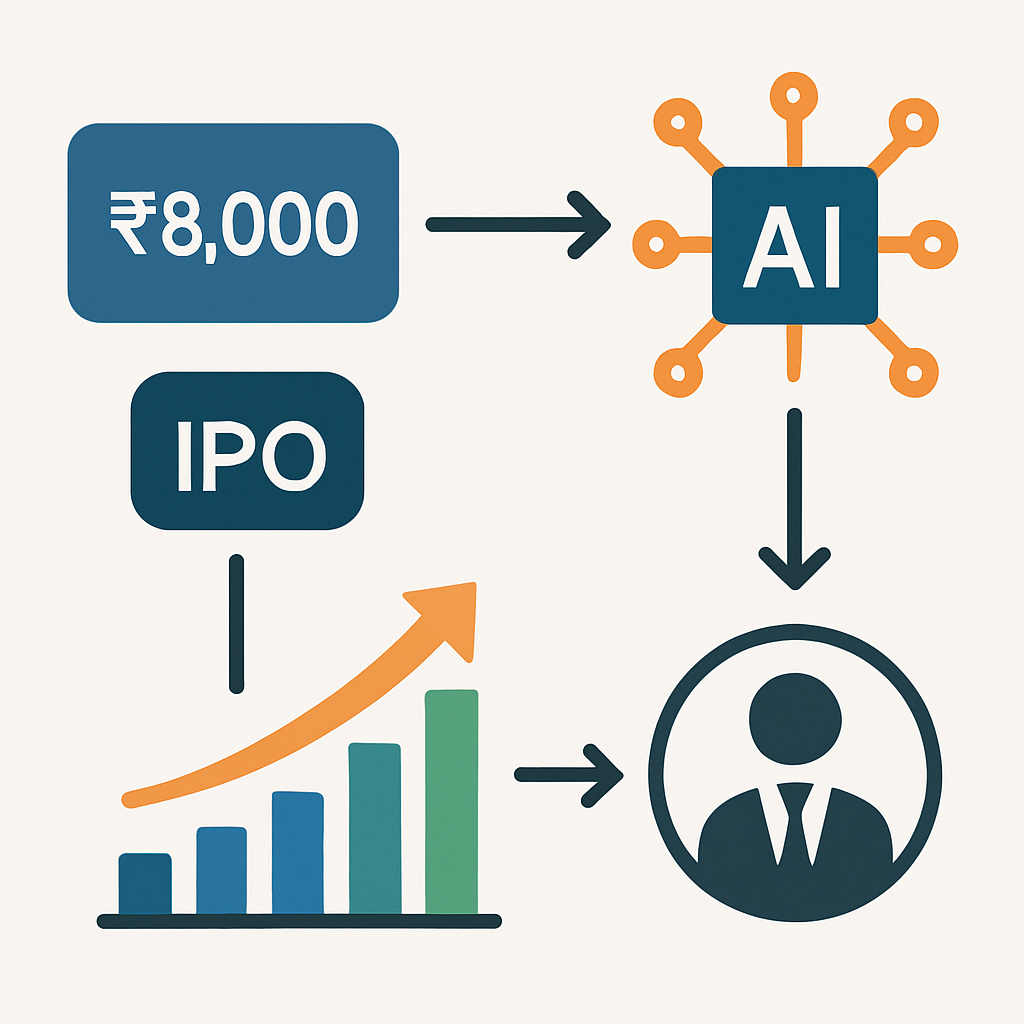
Yotta has drawn investor attention because it is positioning itself as a domestic AI infrastructure provider rather than only a traditional data centre company. Dealroom reported that Yotta raised $150 million at a $4.4 billion valuation to support its India AI build-out. That valuation can attract attention, but valuation alone does not guarantee stock market returns, so investors should consult a financial advisor before applying for any IPO.
Retail investors should focus on verified documents rather than market buzz, grey market chatter, or social media claims. The offer document will show revenue trends, profitability, debt, customer concentration, capital expenditure plans, and legal risks. These details are more useful than headlines because AI infrastructure businesses can require large upfront investment before steady cash flows emerge.
IPO Basics for Retail Investors
Most Indian resident retail investors can apply for an IPO if they have a PAN, bank account, demat account, and trading account. Applications usually happen through broker apps, bank ASBA, or UPI-based IPO flows linked to NSE and BSE systems. Investors who are new to IPOs can review basic education material on the NSE investor education portal before applying.
Once Yotta files its IPO documents and receives regulatory clearance, the company will announce the bidding window, price band, lot size, allotment date, refund date, and listing date. If the IPO is oversubscribed, retail applicants may receive fewer shares than they applied for or may receive no allotment. Investors should avoid borrowing money for IPO applications and should consult a financial advisor before committing funds.
Financial Outlook and Key Risks
Yotta wants to position itself as a domestic alternative to global cloud and AI compute providers, according to Dealroom’s note on its funding round. The company’s focus on sovereign AI compute may appeal to Indian enterprises, startups, developers, and public sector users that want local infrastructure. This opportunity is meaningful, but it depends on execution, power availability, cooling efficiency, chip supply, and long-term customer contracts.
AI-linked IPOs can be volatile because markets often price in future growth before earnings become visible. Nifty and Sensex sentiment, global chip availability, interest rates, inflation, and technology cycles can all affect listing performance. Investors should not treat any AI IPO as a guaranteed listing gain and should consult a financial advisor before deciding allocation size.
How India’s AI Infrastructure Push Can Affect Traditional Sectors
India’s AI story is no longer limited to software exporters or early-stage startups. CNBC reported that large investment plans for AI infrastructure in India are expected to direct a major share of capital toward data centres. This can affect manufacturing, fintech, logistics, healthcare, retail, and government services as more organisations need local compute capacity.
AI infrastructure works like a digital foundation for future business tools. Once computing power becomes more available, companies can build faster analytics, automation, customer service, risk management, and productivity systems on top of it. For investors, this means the impact of Yotta’s expansion may spread beyond one company and into several listed and unlisted sectors.
Manufacturing and Automation
Factories can use AI for quality checks, predictive maintenance, demand forecasting, energy optimisation, and supply chain planning. These applications need secure data storage, reliable cloud systems, and strong compute infrastructure. Yotta’s GPU and data centre capacity could support Indian manufacturers that want AI tools without depending fully on overseas compute resources.
New startups may also build tools for plant monitoring, robotics, inventory planning, and industrial safety. Listed industrial firms that use AI effectively may improve productivity and margins over time, although the benefits may vary by company. Investors should study business fundamentals carefully and consult a financial advisor before changing their portfolio based on any single AI theme.
Fintech and Digital Services
Fintech companies already use AI for fraud detection, credit scoring, customer support, transaction monitoring, and payment risk control. Better local AI infrastructure can help these firms process data faster while staying closer to Indian compliance needs. The MarketsandMarkets overview of Yotta’s sovereign infrastructure highlights Yotta’s cloud, AI cloud, cybersecurity, data centre hosting, and managed IT services.
Digital payments, lending apps, insurance platforms, and wealth technology companies may benefit from stronger local infrastructure. AI may improve service speed in credit card support, personal loan screening, home loan processing, and insurance claim assessment. If you follow payments policy, you can also read PocketPlanGuru’s guide on why the MDR return on UPI matters for your wallet.
Job Market Impact from Yotta’s Expansion
Large AI hubs need more than software developers. They need data centre technicians, cloud engineers, GPU specialists, cybersecurity teams, project managers, cooling experts, network administrators, and power management staff. Yotta operates cloud regions across hyperscale data centre parks in Panvel and Greater Noida, according to MarketsandMarkets, which gives the job opportunity a regional angle.
India’s large developer base gives the country a strong starting point, but AI infrastructure needs a wider skill mix. Young workers who prepare early may gain from roles that combine software, hardware, networking, security, and operations. Job seekers should track opportunities in Navi Mumbai, Delhi NCR, Bengaluru, Hyderabad, Pune, Chennai, and other technology and data centre hubs.
AI and Cloud Roles to Watch
Demand may rise for machine learning engineers, data scientists, MLOps engineers, cloud infrastructure specialists, GPU cluster administrators, and AI application developers. Data centre firms also need network engineers, Linux administrators, database specialists, facility technicians, and cybersecurity analysts. These roles support enterprise clients, startups, government-backed digital services, and developers building AI products.
Yotta’s expansion plans connect with India’s push for sovereign AI compute, which means more work may happen within local infrastructure environments. Indian talent may get opportunities to work on large-scale AI systems instead of only supporting overseas projects. For IT investors, this links with the broader market theme discussed in PocketPlanGuru’s article on why smart investors watch FPIs return to IT stocks.
How Young Professionals Can Prepare
Students can start with Python, statistics, SQL, cloud fundamentals, machine learning basics, and cybersecurity awareness. Working professionals from non-tech backgrounds can learn data analytics, product operations, AI tool workflows, or domain-specific automation. A finance graduate, for example, can combine credit analysis knowledge with AI tools used in lending and fraud detection.
Learners should prefer practical projects over certificate collection. A small portfolio using Indian examples, such as UPI fraud checks, credit risk models, logistics delays, or customer support automation, can make interviews stronger. Career switchers should target internships, apprenticeships, freelance projects, and entry-level roles before chasing high salaries.
How AI Infrastructure Can Affect Your Investment Portfolio
Yotta’s proposed IPO may attract investors who want exposure to AI infrastructure rather than only IT services or software exports. This exposure can behave differently from broad index funds, diversified mutual funds, fixed deposits, PPF, EPF, NPS, or tax-saving instruments under Section 80C. Investors should understand that infrastructure-heavy technology companies can have different risks from asset-light software firms.
A balanced portfolio should not depend on one company, one sector, or one market theme. AI infrastructure may grow quickly, but it can also face high debt, power costs, chip shortages, regulatory requirements, and customer concentration risks. Before allocating money to IPOs, SIPs, sector funds, or direct stocks, investors should consult a financial advisor.
Balancing Risks and Rewards
Emerging technology stocks can be volatile because investors often value them based on expected future growth. If sentiment weakens, even promising companies can list flat or fall after listing. This risk increases when valuations rise faster than revenue visibility, profit growth, or cash flow generation.
Retail investors can reduce pressure by using only surplus money and avoiding borrowed funds. Conservative investors may prefer diversified mutual funds or phased SIP routes instead of chasing every IPO. You can also compare risk lessons from other corporate actions, such as PocketPlanGuru’s guide on how Berkshire Hathaway’s $20B buybacks shape your portfolio.
Spillover Effects on Non-Tech Investments
AI adoption may support logistics, industrial automation, fintech, telecom, power equipment, cooling systems, and data centre real estate. Some non-tech companies may gain as customers spend more on digital tools and automation. Investors who only track software stocks may miss these second-order effects across the economy.
Every company using the word AI will not become a winner. Investors should check cash flows, debt levels, promoter quality, client concentration, governance standards, and competitive position before investing. For listed securities, SEBI filings, exchange disclosures, and audited financial statements can help verify company claims.
Navigating the IPO Process in India
When Yotta files its final IPO documents, investors should read the risk factors, financial statements, use of proceeds, litigation details, and related-party transactions. The SEBI public issues section is a useful place to track offer documents and market rules. Broker notes can help with summaries, but original filings should guide your understanding.
You can usually place IPO bids through broker apps, bank ASBA, or supported UPI mandates. After you apply, your bank blocks the amount until allotment is finalised. If you do not receive shares, the blocked amount is released according to the IPO timeline.
Regulatory Framework for Retail Investors
SEBI regulates IPO disclosures, while NSE and BSE manage listing and trading processes. Retail investors usually apply under the retail category, subject to limits mentioned in the offer document. These safeguards improve transparency, but they do not remove business risk or market risk.
If you face issues with allotment, refunds, UPI mandates, or broker conduct, you can use exchange grievance systems and SEBI’s SCORES platform. Keep application numbers, mandate screenshots, bank messages, and broker emails saved. This record-keeping habit can also help during income tax and ITR checks if you later sell listed shares.
From Application to Listing
The IPO window generally stays open for a few working days. You choose the lot size, bid price, and application category before confirming payment. Many retail investors bid at the cut-off price, but they should understand the price band and valuation before doing so.
On listing day, prices can rise, fall, or swing sharply. Grey market premium chatter may create excitement, but it is not an official indicator and can change quickly. A patient investor should focus on business quality, valuation, financial strength, and personal risk capacity.
Training and Resources for AI-Driven Career Changes
Yotta’s AI build-out shows that India needs job-ready talent across AI, cloud, cyber, networking, and data centre operations. This can benefit freshers and mid-career professionals who begin learning before demand becomes crowded. You do not need to become a research scientist to gain from AI-related employment opportunities.
Practical skills matter more than buzzwords. Learn how AI tools solve business problems in banking, factories, logistics, healthcare, retail, and public services. A person from operations, finance, HR, sales, or customer support can still move into AI-adjacent roles with the right project experience.
Recommended Courses and Certifications
Learners can explore programs from NASSCOM FutureSkills, AICTE-linked initiatives, IIT online courses, universities, and major MOOC platforms. Good starting topics include Python, Excel analytics, SQL, cloud fundamentals, machine learning, cybersecurity basics, and data visualisation. For cloud careers, hands-on labs are often more useful than theory-heavy videos.
Students should build projects using Indian examples such as UPI fraud checks, supply chain delays, regional demand forecasting, or credit risk models. These projects can make interviews more practical and easier to discuss. If fees are a concern, compare scholarships, free audit options, employer-sponsored training, and low-cost government-backed programs.
Government and Private Initiatives
Skill India, Digital India programs, NASSCOM initiatives, university courses, and private bootcamps can support job preparation. Many companies also run internships, apprenticeships, and campus hiring programs for cloud, cyber, and data roles. Candidates should track official websites rather than rely only on social media posts.
AI jobs will reward people who keep learning as tools change. Build a habit of reading documentation, testing tools, improving communication, and explaining technical ideas in simple business language. Employers value candidates who can connect technology with measurable business outcomes.
Frequently Asked QuestionsWho can invest in Yotta’s proposed IPO?
Indian residents with a PAN, demat account, trading account, and bank account can usually apply for IPOs. The final eligibility details will appear in Yotta’s offer document once the company files with SEBI. Retail investors should also check the lot size, price band, application limits, and risk factors before applying.
Is the IPO size officially confirmed?
Verified reports say Yotta is preparing for an IPO to raise up to $1.5 billion. Any specific rupee issue size should be treated as unconfirmed until it appears in official offer documents. Investors should rely on the DRHP, RHP, SEBI updates, and exchange notices for final details.
What are the main risks of AI infrastructure IPOs?
The main risks include market volatility, high capital costs, chip supply constraints, technology change, and uncertain customer adoption. AI infrastructure companies may need large spending on GPUs, data centres, power, cooling, security, and skilled staff. Investors should consult a financial advisor before investing in any IPO.
How can Yotta’s AI hub create jobs in India?
Yotta’s AI hub can create roles in AI engineering, cloud operations, data centre management, cybersecurity, networking, and technical support. It may also create indirect jobs in construction, power systems, facility management, cooling, and enterprise consulting. Job growth may be stronger around major data centre hubs and technology cities.
Can non-tech investors benefit from India’s AI push?
Non-tech investors may benefit through sectors that adopt AI, such as manufacturing, fintech, logistics, telecom, power, and services. They can also consider diversified mutual funds or SIP routes if direct stock selection feels risky. Portfolio choices should match goals, income stability, insurance cover, time horizon, and risk appetite.
Final Takeaway for Your Money and Career
Yotta’s proposed IPO could become an important marker in India’s AI infrastructure journey, but investors should wait for official filings before making decisions. The opportunity may spread beyond one IPO into data centres, fintech, manufacturing, cloud services, cybersecurity, and job markets. Stay informed, verify sources, consult a financial advisor, and keep your portfolio diversified.
If you are a student or working professional, start building AI, cloud, data, and cybersecurity skills before the hiring wave becomes more competitive. If you are an investor, study the business model, valuation, risks, capital needs, and market cycle before applying for any IPO. Subscribe to PocketPlanGuru and explore more practical guides to stay ahead in India’s fast-changing money and career landscape.
Disclaimer: The information above is for educational purposes only and does not constitute financial advice.
2 Comments