

Understanding MDR and Its Possible Return on UPI
The government may allow Merchant Discount Rate, or MDR, on select UPI payments above ₹2,000 made to large merchants. For most daily users, the key reassurance is that person-to-person transfers and small routine payments are expected to remain outside the proposed charge. That means sending money to family, paying a friend, buying vegetables, or making small kirana payments is unlikely to become expensive overnight.
The phrase “MDR may return for UPI payments” sounds technical, but it can affect how merchants price goods, offer discounts, and choose payment options. Reports suggest the proposed fee may apply only to certain business payments, not to every QR scan or UPI transfer. The final rules have not been announced, so users and merchants should treat the current details as a proposal rather than a confirmed change.
What MDR Means and Why It Matters
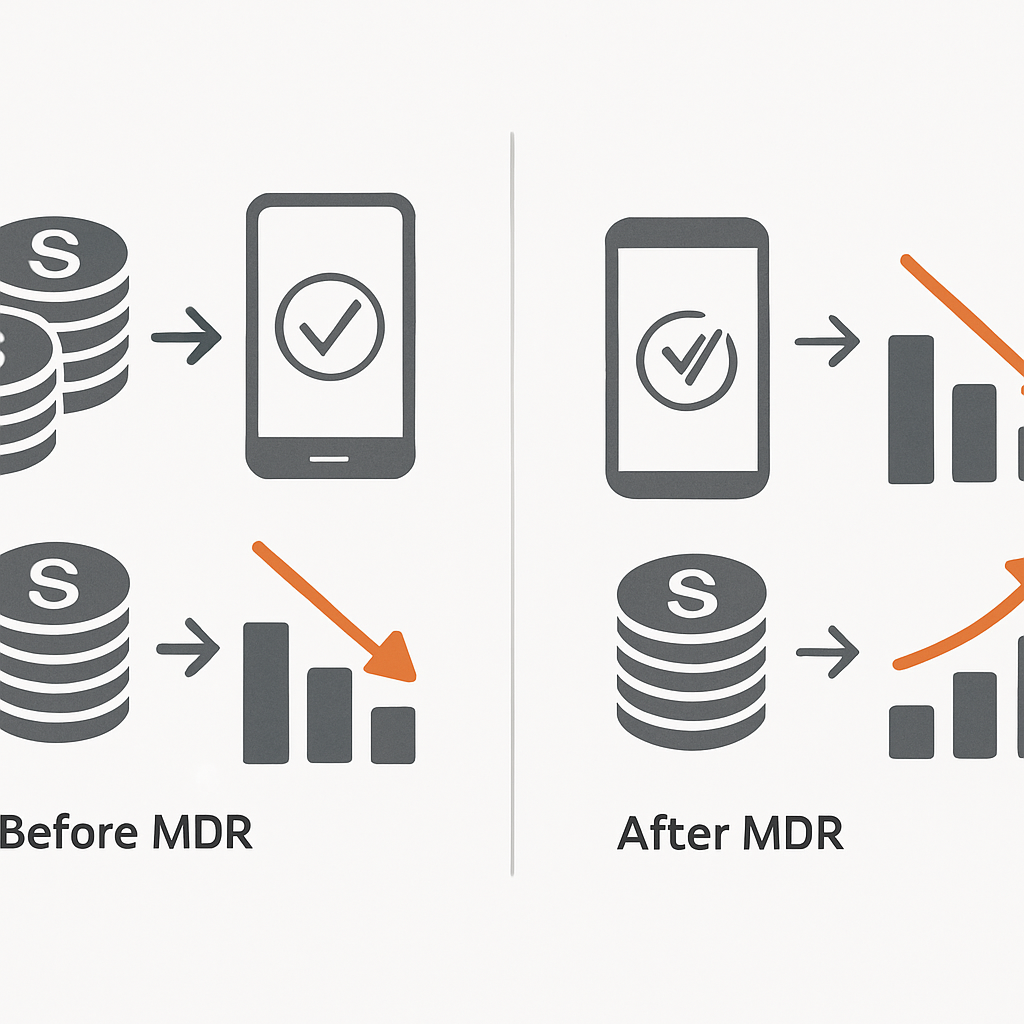
MDR is a fee paid by merchants when they accept digital payments. Banks, payment processors, and payment service providers use such fees to support transaction processing, settlement, fraud checks, dispute handling, and technology systems. According to this EnKash guide on Merchant Discount Rate, MDR is a core part of digital payment economics.
UPI became widely popular partly because many merchants could accept payments without paying a direct MDR on everyday transactions. That helped small shops, kiranas, street vendors, and local service providers adopt QR payments quickly. The trade-off is that banks and payment firms have limited direct revenue from a payment system that needs constant investment in reliability, security, and support.
The current discussion is about allowing MDR on select UPI transactions above ₹2,000 made to businesses, especially large merchants. The Times of India reported that the likely MDR range could be between 0.25% and 0.4%. Person-to-person UPI payments, such as sending money to a friend, roommate, or family member, are likely to remain outside the proposed levy.
Current Proposal and Expected Scope
The proposal reportedly focuses on UPI payments above ₹2,000 made to large merchants. A news report on possible UPI MDR changes said proposed legal amendments could give the government flexibility to levy merchant charges on notified digital payment modes. No final decision has been announced yet, so the exact coverage, exemptions, and limits may still change.
The suggested MDR range of 0.25% to 0.4% may look small on a single transaction, but it can matter for merchants with high-value sales. On a ₹5,000 transaction, that range would translate to ₹12.50 to ₹20 as a merchant-side cost if applied. A large retailer, travel platform, electronics seller, or online marketplace could feel the impact more than a neighbourhood shop that mainly handles smaller payments.
Small merchants and low-value payments may remain protected if the ₹2,000 threshold stays central to the final framework. Routine spending such as milk, vegetables, small grocery runs, auto rides, and cab payments often falls below that level. This is why MDR may return for some UPI payments without changing most everyday payment habits for ordinary users.
How Different Merchants May Experience MDR
Merchants will not experience MDR in the same way because their average bill sizes differ. A kirana store with many ₹100 to ₹800 transactions may see limited impact if low-value payments remain exempt. A large electronics store, premium supermarket, online marketplace, or travel booking platform may face more exposure because many payments can cross ₹2,000.
E-commerce sellers may also see mixed effects depending on what they sell. Sellers of low-value products may remain mostly unaffected, while sellers of phones, appliances, furniture, fashion bundles, and travel services may need to treat MDR as a recurring operating cost. Platforms may respond by negotiating with banks, modifying offers, adjusting checkout incentives, or absorbing the cost to protect customer experience.
Small merchants should still monitor the final rules instead of assuming there will be no effect at all. Some businesses may occasionally handle bills above ₹2,000, especially during festive shopping, monthly grocery purchases, or bulk orders. A clear understanding of ticket size, payment mix, and settlement cost will help merchants avoid sudden pricing confusion.
Impact on Your Everyday Spending
Consumers typically do not pay MDR directly because it is charged to merchants. However, merchant costs can still influence the final price, discount, cashback, or payment option offered to the customer. If MDR is allowed on select high-value UPI payments, the impact may show up indirectly rather than as a separate fee line on your bill.
Daily spending should remain mostly unchanged under the reported proposal. Small grocery purchases, chai, vegetables, milk, local transport, and person-to-person transfers are expected to remain outside the charge. The main area to watch is high-value UPI payments made to large businesses, especially where the bill crosses ₹2,000.
You may notice some merchants encouraging payment modes that cost them less. For larger bills, a store may ask whether you prefer UPI, card, cash, net banking, or a wallet option. The best choice for you should depend on the final payable amount, convenience, safety, and any genuine offer available at checkout.
Practical Examples for Indian Users
Imagine buying groceries worth ₹900 from a neighbourhood kirana and paying through UPI. If the final framework keeps small-value payments exempt, this transaction should not attract MDR for the merchant. Your payment experience would likely remain the same as it is today.
Now imagine buying a ₹45,000 phone from a large retailer and paying through UPI. If the proposed MDR applies to that merchant and transaction type, the retailer may have to bear a processing cost. The retailer could absorb that cost, reduce a discount, promote another payment method, or adjust prices over time.
For an online order worth ₹5,000, the outcome may depend on whether the seller or platform falls within the covered merchant category. Some platforms may continue to promote UPI because it remains fast and familiar for users. Others may compare UPI with card networks, wallets, net banking, and internal prepaid balances before deciding which option to push at checkout.
Payment Behaviour Changes You Might Notice
One likely change is more attention to payment method at the billing counter or checkout page. Stores may display different offers for UPI, credit cards, debit cards, wallets, or net banking depending on their costs and partnerships. Customers should compare the final amount payable instead of assuming one method is always cheaper.
Credit cards may look attractive when rewards, cashback, or no-cost EMI offers are available. However, unpaid credit card balances can become expensive, and EMI choices should not be made only to avoid a small merchant-side fee. If a payment decision affects borrowing, debt, or investments, consult a financial advisor before acting.
Some merchants may quietly reduce discounts rather than mention MDR separately. This means the effect may not always appear as a visible “UPI charge” on the invoice. Users should compare prices across sellers and payment modes, especially for high-value purchases such as electronics, travel, furniture, and appliances.
Money Tips for Consumers
Start by tracking UPI payments above ₹2,000 in your monthly budget. This does not mean you should avoid UPI, but it helps you understand where large digital payments are happening. A simple spending review can also support household cash flow planning and record-keeping.
Choose the payment method that gives the best final value after considering price, convenience, safety, and repayment discipline. UPI may remain the easiest option for many purchases, while another mode may occasionally offer a better deal. Do not borrow through a personal loan, credit card rollover, or unnecessary EMI only to chase small payment benefits.
Keep long-term financial planning separate from short-term payment choices. A small merchant-side MDR should not drive major decisions about insurance, investments, tax planning, or retirement savings. For investment-linked decisions, market products, or borrowing choices, consult a financial advisor.
What Merchants Should Do Now
Merchants should not wait until final rules arrive to understand their payment costs. Start by reviewing average ticket size, monthly UPI volume, and the share of transactions above ₹2,000. This will show whether the proposed MDR framework could affect margins meaningfully.
Large merchants should speak with banks, payment aggregators, and UPI service providers early. They should ask how charges may apply, whether any caps or exemptions could exist, and how settlement timelines may work. Clear answers will help businesses price products, train staff, and avoid customer confusion.
Small merchants should avoid informal or confusing practices just to bypass a possible fee. Splitting bills may not always be practical, transparent, or suitable for proper accounting. Clean invoices, clear receipts, and compliant payment practices are better for customer trust and long-term business stability.
How MDR Could Shape Fintech Competition
MDR may return for select UPI payments because the ecosystem needs a sustainable funding model. UPI runs at a very large scale, and that scale needs continued investment in uptime, cybersecurity, dispute resolution, and merchant support. Revenue from select large merchant payments could help banks and payment firms improve the infrastructure behind digital transactions.
UPI apps may use any additional revenue opportunity to build better tools for merchants. These could include improved invoices, faster refunds, dashboards, loyalty features, fraud alerts, and settlement support. Large merchants may be willing to pay for better services if those services reduce disputes and improve customer experience.
Competition may shift from only “free acceptance” to a broader comparison of service quality and total cost. One provider may focus on low-cost acceptance, while another may offer analytics, working capital tools, insurance, or accounting integrations. Merchants should compare the full package rather than looking only at the headline MDR rate.
Regulatory Context and What to Watch
The Reserve Bank of India plays a central role in payment systems, safety, and financial stability. Any final MDR framework will need to balance digital adoption, merchant costs, consumer protection, and payment infrastructure funding. Users should rely on official announcements from the government, RBI, banks, or payment apps rather than rumours on social media.
The Economic Times also reported that proposed changes could allow MDR on select UPI transactions, especially involving large merchants and payments above ₹2,000. This matches the broader reporting that everyday payments and person-to-person transfers are expected to remain free. A short explainer by The Bean Media also highlights that no final decision has been taken yet.
Merchants and users should watch for the final notification, exact merchant category definitions, transaction threshold, fee range, exemptions, and implementation date. These details will decide whether the change is narrow or more widely felt. Until then, the safest reading is that the proposal targets large merchant payments, not everyday UPI usage.
FAQ About MDR on UPI PaymentsWill I have to pay MDR directly on UPI transactions?
Consumers typically do not pay MDR directly. MDR is usually paid by merchants to banks or payment providers for processing digital payments. However, some merchants may adjust prices, discounts, or payment offers if their costs increase.
Which UPI transactions may attract MDR?
Reports suggest the proposal may cover UPI payments above ₹2,000 made to large merchants. Small-value payments and routine purchases are expected to remain outside the proposed charge. The final rules will become clear only after an official decision is announced.
Will person-to-person UPI transfers remain free?
Person-to-person UPI transfers are likely to remain outside the proposed MDR scope. Sending money to friends, family members, roommates, or relatives should not attract MDR under the reported proposal. Users should still watch official updates from banks, UPI apps, and regulators.
How can small merchants reduce confusion?
Small merchants should review how many payments cross ₹2,000 and speak with their bank or payment provider. They should explain payment terms clearly to customers if any change affects billing or offers. They should also avoid informal billing practices that create tax, accounting, or customer trust issues.
Could MDR improve UPI services?
If MDR applies to select large merchant payments, banks and payment firms may get more revenue to support UPI infrastructure. That could help fund better uptime, fraud checks, refunds, dispute handling, and merchant tools. The challenge will be keeping everyday UPI affordable while improving the system for users and businesses.
Final Takeaway for Your Wallet
MDR may return for some UPI payments, but your daily chai, vegetables, kirana purchases, and family transfers are unlikely to become costly overnight. The bigger impact may be felt by large merchants, e-commerce platforms, and high-value business payments above ₹2,000 if the proposal is implemented. Stay informed, compare final costs, and follow PocketPlanGuru for simple updates on UPI, banking fees, and everyday money decisions.
Disclaimer: The information above is for educational purposes only and does not constitute financial advice.
4 Comments