

Berkshire Hathaway’s 2026 Buybacks and Investments: An Overview
Berkshire Hathaway’s return to large stock purchases has caught global investors’ attention, including many in India. If you track the Nifty, Sensex, mutual funds, or US stocks through global investing platforms, the shift offers useful portfolio lessons. The main takeaway is not to copy Berkshire, but to understand how patient capital can move when value appears.
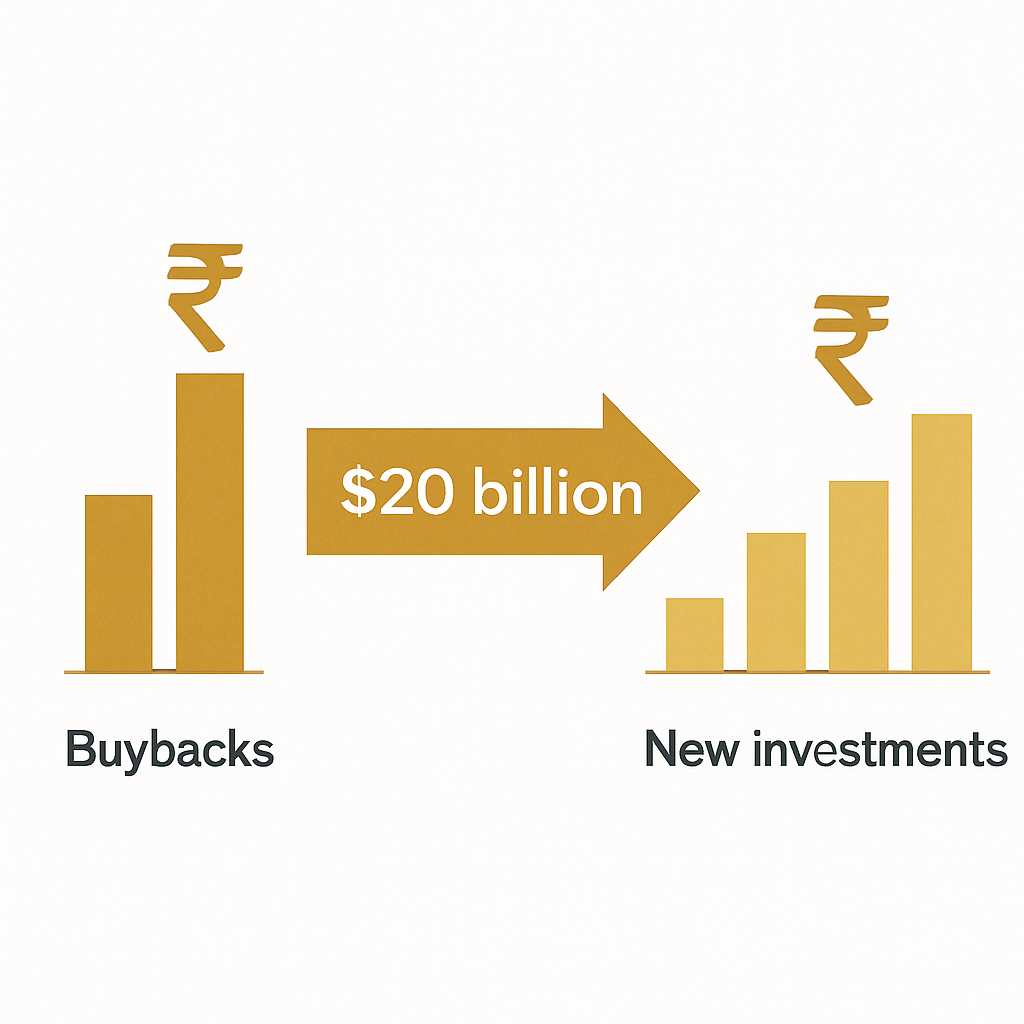
According to Pluang’s report on Berkshire Hathaway ending 14 quarters of stock selling, the company became a net buyer again in Q2 2026. The report said Berkshire bought about $20 billion more in stocks than it sold after a long defensive phase. It also referred to a record cash pile of $397.4 billion, which helps explain why investors watched the change so closely.
The same research summary says Berkshire reduced its Bank of America stake and increased its investment in Alphabet. That move suggests a shift away from some traditional financial exposure and toward large technology-led growth. For Indian readers, Berkshire Hathaway’s buybacks and investments matter because they show how even disciplined long-term investors can change course when opportunity, valuation, and capital availability meet.
Why Berkshire Returned as a Net Buyer
Berkshire had spent many quarters selling more shares than it bought, so the Q2 2026 shift stood out. The move under Greg Abel’s leadership suggests a more active stance, although it does not mean Berkshire has abandoned value investing. The company still appears to be using cash selectively rather than chasing every market rally.
Market conditions likely played a role in the renewed buying. When prices become attractive, disciplined investors may decide that cash should be deployed rather than kept idle. Indian investors can connect this lesson with their own portfolios by reviewing allocation, valuation, and risk with a financial advisor.
Details of Recent Buybacks and Stock Moves
Berkshire also increased share repurchases during this period, according to the research summary. In a CNBC interview clip shared on YouTube, Greg Abel discussed resuming Berkshire’s buyback program and said the company had spoken with Warren Buffett about the decision. The clip also referred to a $20 billion buyback, which added to investor interest in Berkshire’s capital allocation approach.
Berkshire’s selective trimming and buying changed the character of its listed equity exposure. A lower Bank of America position and a higher Alphabet investment point to a more modern portfolio tilt. Indian investors should not treat this as a signal to buy or sell any specific stock, and they should consult a financial advisor before making portfolio changes.
Leadership Transition: Warren Buffett to Greg Abel and Its Strategic Implications
Greg Abel’s move into Berkshire’s CEO role in 2026 is a major event for long-term shareholders. Warren Buffett built Berkshire around patience, cash discipline, and value-led buying. Abel now has to preserve that culture while making decisions in a faster and more technology-influenced market.
The recent activity suggests a more active capital allocation style than Berkshire showed during its long net-selling phase. Berkshire Hathaway’s buybacks also signal confidence in the company’s own value when management believes repurchases make sense. For Indian investors, this resembles watching a trusted promoter or capital allocator use cash carefully during changing market cycles.
Comparing Buffett’s and Abel’s Investment Philosophies
Buffett is famous for buying strong businesses at sensible prices. He has often preferred holding cash instead of making poor deals. That discipline helped Berkshire avoid overpaying during overheated markets and gave it flexibility when better opportunities appeared.
Abel appears more open to opportunistic growth exposure, based on the reported Alphabet increase. This does not make the approach reckless or inconsistent with Berkshire’s history. It may simply reflect evolving business needs, technology trends, and the challenge of investing a very large cash base.
What Indian Investors Should Watch in Berkshire’s Next Phase
Indian investors should watch whether Berkshire continues repurchasing shares over time. A one-time buyback differs from a long-term capital return policy. The frequency, scale, and price discipline behind future repurchases will matter more than headline numbers.
Succession also affects investor trust because Berkshire’s culture has been closely linked with Buffett for decades. If Abel keeps risk controls strong while deploying cash intelligently, long-term holders may feel reassured. Indian investors with overseas exposure through mutual funds or direct global platforms should track such shifts, but they should consult a financial advisor before acting.
Impact of Berkshire’s Buybacks on Indian Equity Markets and Investors
Buybacks reduce the number of shares available in the market when completed. If a company buys its own stock below intrinsic value, remaining shareholders may benefit over time. This is why Berkshire Hathaway’s buybacks attract attention from global investors who study capital allocation.
Indian markets may feel indirect effects through global sentiment rather than direct mechanical impact. When large US companies deploy cash confidently, risk appetite can improve across asset classes. That can influence discussions around foreign flows into the NSE, BSE, Nifty, and Sensex, although interest rates, earnings, valuations, currency moves, and domestic liquidity also matter.
How Berkshire’s Moves Relate to FII Activity
Foreign institutional investors move capital across countries based on growth, rates, valuations, currency trends, and perceived risk. If US markets look attractive, some money may remain there. If India offers stronger growth at reasonable valuations, FIIs may increase exposure to Indian equities.
Indian investors should track FII flows alongside domestic mutual fund inflows and broader macro data. The NSE website offers market data that can help investors follow broad trends. Short-term FII movement should not become the only basis for portfolio decisions, and investors should consult a financial advisor for allocation choices.
Lessons from Berkshire Buybacks for Indian Retail Investors
A buyback can support shareholder value, but only when the underlying business remains strong and the price paid is sensible. Weak companies can also announce buybacks to improve sentiment, so the announcement alone is not enough. Investors should study debt, cash flows, governance, and valuation before drawing comfort from any buyback.
Many Indian investors focus mainly on dividends when thinking about shareholder returns. Buybacks can also reward shareholders, but they work differently and depend heavily on price and execution. A balanced view helps investors compare income needs, capital growth, taxation, and long-term compounding with help from a financial advisor.
Applying Berkshire’s Buyback Lessons to Indian Personal Portfolios
Indian investors can use Berkshire’s approach as a framework, not as a template. The key lesson is to act selectively when value is clear and risk is understood. The same discipline can apply across direct stocks, equity mutual funds, PPF, NPS, EPF, fixed income, and emergency savings.
Before acting on any investment idea, investors should check their goals and risk capacity. A person saving for a home loan down payment may need a different plan from someone investing for retirement. For deeper context on rate cycles, read PocketPlanGuru’s guide on the RBI rate pause and its impact on loans and savings.
Selecting Indian Stocks with Buyback Discipline
Investors who study buybacks should look at whether management repurchases shares only when valuations appear sensible. Management credibility matters because buybacks use shareholder capital. A company with high debt, weak cash flow, or poor governance may not deserve trust even if the headline buyback price looks attractive.
Useful factors to review include return on equity, free cash flow, debt levels, promoter behaviour, and capital allocation history. Investors should also compare the buyback price with a reasonable estimate of business value. Since valuation can be complex and personal risk levels differ, they should consult a financial advisor before making stock decisions.
Building a Balanced Growth and Income Portfolio
A practical Indian portfolio may include equity mutual funds, fixed income, emergency savings, and tax-saving options under Section 80C. Some investors also use PPF, EPF, NPS, and term insurance as part of a wider financial plan. Stocks with buybacks can fit only after basic protection, liquidity, and goal planning are addressed.
RBI policy can also affect asset allocation. Repo rate changes may influence loan EMIs, bond yields, savings rates, and equity valuations. If inflation remains high or household debt rises, investors should review growth and income assets with a financial advisor rather than reacting only to market headlines.
How Global Buyback Trends Influence Indian Regulations and Market Behaviour
Global buyback trends often shape how investors judge Indian companies. When US firms use buybacks effectively, Indian shareholders begin asking similar questions about cash use and capital discipline. They want to know whether companies can return cash without hurting future growth.
SEBI plays a key role in keeping Indian buybacks fair and transparent. The regulator sets rules on disclosures, timelines, pricing, and shareholder protection. Investors can review the SEBI website for official updates, circulars, and regulatory documents.
SEBI’s Framework for Share Buybacks in India
SEBI regulates buybacks to protect minority shareholders and market integrity. Companies must follow rules on size, funding, pricing, and process. These checks reduce the chance of unfair treatment during corporate actions and help investors compare offers more clearly.
Indian investors should read buyback announcements carefully before participating. They should check the record date, acceptance ratio, tender route, funding source, and tax impact. If the process feels unclear, they should wait, read official filings, and consult a financial advisor.
Global Buyback Insights Helping Shape Indian Corporate Actions
Indian companies increasingly understand that capital return policies affect valuation and shareholder trust. A thoughtful buyback can show confidence in future cash flows. A poorly timed buyback can destroy value if the company overpays or weakens its balance sheet.
US examples also influence investor sentiment in India. When Berkshire Hathaway’s buybacks make news, local investors start asking sharper questions about capital allocation. For regulation-linked investing themes, PocketPlanGuru’s article on SEBI’s rules for REITs and InvITs is a useful read.
Translating Berkshire’s Success into Practical Indian Investing Rules
Berkshire’s long-term success comes from patience, valuation, and discipline. The same ideas can help Indian investors avoid chasing hot tips or reacting to every market swing. Whether they use SIPs or direct equities, process should matter more than excitement.
Barron’s shared that Berkshire’s biggest stock holdings added more than $20 billion in value during a quarter, while Apple sales still affected the portfolio’s upside. This shows that portfolio results depend on both what an investor buys and what an investor sells. Indian investors can apply the same thinking while reviewing Nifty funds, Sensex funds, sector funds, and global equity exposure.
Rule 1: Focus on Intrinsic Value and Margin of Safety
Intrinsic value means what a business may be worth based on future cash flows, quality, competitive position, and risk. Buffett’s approach has long focused on buying below a reasonable estimate of that value. A Yahoo Finance article explains how Berkshire has historically bought back stock below intrinsic value.
Indian investors can use valuation tools such as earnings yield, peer comparison, and cash-flow analysis as part of their research. These methods are imperfect, but they reduce pure guesswork. Investors should consult a financial advisor before deciding whether a buyback-linked stock suits their goals and risk profile.
Rule 2: Evaluate Buybacks and Dividends Carefully
Dividends give cash income, while buybacks may improve per-share value when done at sensible prices. The better outcome depends on the business, valuation, holding period, and tax position. Investors should not assume that one method is always superior.
Retirees may focus more on predictable cash flow, while younger investors may focus more on long-term compounding. Even then, the right mix depends on income stability, liabilities, medical needs, and family goals. For gold allocation ideas outside equities, read PocketPlanGuru’s article on why smart investors watch gold’s seven-week surge.
Rule 3: Manage Portfolio Risk in Indian Market Conditions
India has its own market features, including liquidity gaps, sector swings, policy changes, and valuation cycles. RBI actions, inflation trends, government borrowing, and currency movement can affect equity and debt returns. Household factors such as credit card debt, personal loan EMIs, and home loan rates also shape an investor’s real risk capacity.
Diversification can reduce the impact of one poor decision. Investors can spread money across sectors, asset classes, and time horizons based on a written plan. Before changing allocations after global market news, they should consult a financial advisor who understands their income, liabilities, tax profile, and long-term goals.
FAQ: Berkshire Hathaway Buybacks and Indian Investor Impact
Many Indian investors follow Berkshire because it offers a clear lesson in patience and capital discipline. Yet Berkshire operates in the US market, under US rules, and at a scale that most investors cannot copy. The answers below explain how to apply the ideas without blindly following a global investor.
How do Berkshire’s buybacks affect Indian investors directly?
The direct impact is usually limited unless an Indian investor owns Berkshire shares or US-focused funds with Berkshire exposure. The indirect impact can come through global market sentiment, foreign equity flows, and broader risk appetite. Investors with international mutual funds should review portfolio exposure and consult a financial advisor.
Should Indian investors mimic Berkshire’s buyback strategy?
Indian investors should not mimic any global investor blindly. They can adopt principles such as valuation discipline, patience, management quality, and capital allocation awareness. Local rules, taxes, liquidity, time horizon, and personal goals must guide every decision.
What does the leadership change mean for Berkshire’s risk profile?
The leadership change may bring a more active and growth-aware style. The reported Alphabet increase and Bank of America reduction suggest a portfolio tilt toward new opportunities. Investors should watch whether Berkshire keeps its long-standing discipline while making fresh capital allocation decisions.
How does SEBI regulate stock buybacks in India?
SEBI sets rules for buyback procedures, disclosures, pricing, funding, and timelines. These rules aim to protect minority shareholders and maintain fair markets. Investors should read official filings carefully before participating in any Indian buyback.
Are buybacks better than dividends for Indian retail investors?
Buybacks are not always better than dividends. Dividends may suit income needs, while buybacks may support long-term compounding when done at fair prices. The right choice depends on goals, tax rules, valuation, and the investor’s wider financial plan.
Berkshire Hathaway’s buybacks remind investors that great capital allocators act when value and opportunity meet. Indian investors can use this lesson to review portfolios with care instead of panic. Subscribe to PocketPlanGuru and explore more practical guides to build a smarter Indian money plan today.
Disclaimer: The information above is for educational purposes only and does not constitute financial advice.
2 Comments