

Understanding Too-Big-To-Fail Risk in the AI Sector
India’s AI surge can create wealth, better tools, and new jobs, but it can also bring sharp market shocks. “Too big to fail” means a company has become so connected to the wider economy that its collapse could hurt markets, lenders, workers, suppliers, and customers. In AI, this risk grows because a small group of firms can control key models, chips, cloud systems, data-centre capacity, and the software workflows used by millions of people.
The AI industry boom has lifted expectations around future productivity and profits, but expectations can become dangerous when they run ahead of real cash flows. AI companies may face large commitments for chips, servers, cloud contracts, data centres, energy, and talent. As analysis on OpenAI’s scale and risks explains, fast growth can leave little room for failure when revenue targets, infrastructure obligations, and investor expectations rise together.
If a major AI firm stumbles, the damage may not stay inside one company. Lenders, suppliers, listed technology stocks, private credit funds, retirement portfolios, and businesses using AI tools can all feel pressure. This is why Indian investors should not treat AI only as a theme stock, a short-term market story, or a guaranteed path to easy returns.
What Too-Big-To-Fail Risk Means for Investors
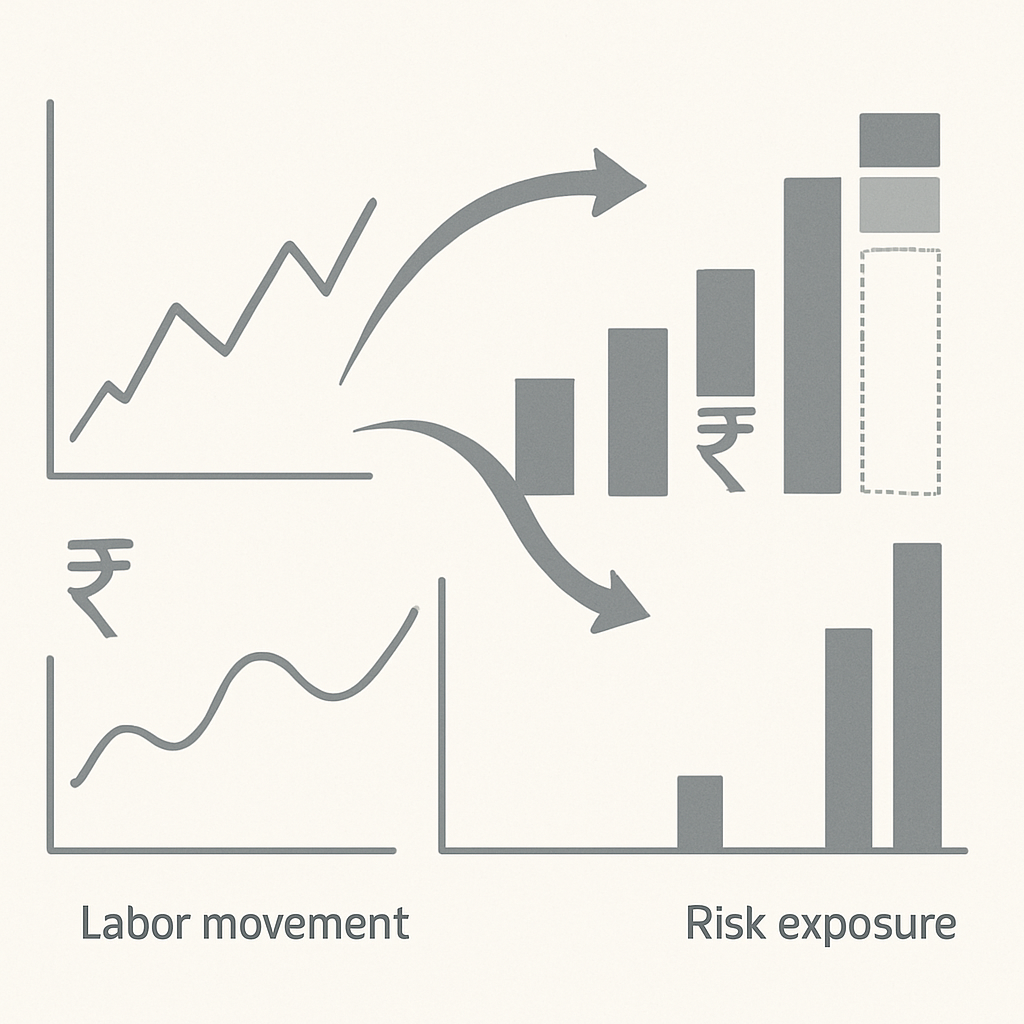
For investors, the phrase “too big to fail” can sound reassuring because it suggests that a large firm may receive support in a crisis. Yet it also warns that risk may have become concentrated in a few companies whose valuations depend on continued growth. If revenue does not grow fast enough, or if costs remain too high, high valuations can fall quickly and hurt portfolios that appear diversified on the surface.
Indian investors may hold global AI exposure through international funds, feeder funds, ETFs, or Indian technology companies that benefit from AI demand. They may also have indirect exposure through index funds, pension-linked products, or diversified mutual funds that own large technology and platform businesses. Before adding more AI-linked exposure, investors should review their existing portfolio and consult a financial advisor.
AI-linked investing can also create hidden concentration through popular stocks and passive funds. A household may believe it owns a broad global fund, but the fund may still depend heavily on a few large technology names. This does not mean investors should avoid AI completely, but it does mean they should understand the risks before chasing momentum.
Global AI Examples and Lessons for India
OpenAI shows how a widely used AI product can become central to business, education, software development, and everyday productivity. Nvidia offers another example because its chips sit at the heart of AI infrastructure, as discussed in this overview of Nvidia’s role in AI and the economy. These examples show that AI risk can sit in both software platforms and hardware supply chains.
The boom also invites comparisons with past technology cycles, where strong ideas did not always protect investors who paid inflated prices. The Engelsberg Ideas analysis of the AI trade warns that AI can raise productivity, but it may also destroy jobs, concentrate wealth, and increase the power of those who own the technology. India should learn from global markets before retail investors chase every AI-linked story.
The AI Now Institute has also highlighted how the sector depends on chips, data centres, energy, policy support, and large capital spending. Its research on infrastructure and capital push argues that the current model rewards scale and pushes firms toward huge infrastructure build-outs. For India, the lesson is clear: AI growth can be valuable, but it should not create fragile systems that depend on a few global suppliers or funding channels.
AI Investment Risks and Opportunities in India
India has fewer pure AI-focused listed companies than the United States, so most investors get exposure through broader technology, cloud, data-centre, semiconductor, automation, and digital platform themes. Some exposure may come through mutual funds, SIPs, ETFs, or companies listed on NSE and BSE. This makes the AI industry boom more indirect for most Indian households, but indirect exposure can still affect wealth when global sentiment changes.
Valuation risk matters because Indian technology and digital stocks can move with global narratives. If major overseas AI stocks correct sharply, foreign institutional flows and risk appetite may shift, which can affect Indian indices and market mood. PocketPlanGuru readers can also track global flow risks through our guide on why smart investors watch FII outflows.
AI can also create real opportunities for Indian companies that improve productivity, reduce costs, or build useful tools for global clients. IT services firms, cloud providers, electronics manufacturers, financial technology platforms, and data-centre operators may benefit if demand grows steadily. However, investors should separate companies that use AI as a marketing label from companies that can show durable revenue, strong governance, and clear business value.
How Indian Retail Investors Can Balance AI Exposure
A balanced portfolio should not depend on one theme, even if that theme sounds historic. Indian investors can combine technology exposure with other sectors and asset classes, depending on their risk profile and long-term goals. The right mix varies by age, income stability, liabilities, time horizon, and family needs, so investors should consult a financial advisor before making major changes.
Mutual funds and ETFs can spread risk across many companies instead of concentrating money in one stock. They can still fall when an entire sector corrects, so investors should check fund factsheets, portfolio concentration, expense ratios, and strategy before investing. SIP investors should also understand that regular investing reduces timing pressure but does not remove market risk.
Direct stock picking in AI-linked companies needs time, skill, and emotional discipline. Investors should read annual reports, exchange filings, risk factors, and management commentary before assuming that a company is an AI winner. The NSE website and BSE filings can help readers track announcements, price moves, and company disclosures.
AI’s Impact on Jobs in India
AI can help Indian firms sell more, serve customers faster, and automate routine work. The same shift can also reduce hiring in roles where tasks follow fixed steps or can be handled by software with limited human supervision. The job impact will likely vary across cities, sectors, company sizes, and skill levels.
IT services, customer support, manufacturing, content operations, and back-office work may face early pressure because many tasks in these areas are repeatable. Informal workers can also feel indirect stress if small businesses adopt cheaper automated tools and reduce labour demand. At the same time, new roles may grow in AI testing, data quality, cybersecurity, compliance, product management, model monitoring, and domain-led AI use.
The risk is not only that jobs disappear, but also that job descriptions change faster than workers expect. A basic coding role may require more system design and review skills, while a customer support role may require managing AI-assisted responses. Workers who combine domain knowledge with digital fluency may be better positioned than those who rely only on routine tasks.
Upskilling and Reskilling for India’s Workforce
Workers can prepare by learning digital tools, basic data skills, AI prompts, spreadsheet automation, cybersecurity basics, and sector-specific software. A finance worker can learn AI-assisted analysis, while a teacher can learn AI-based lesson planning and student support tools. A small business owner can learn customer support automation, online marketing workflows, and inventory tools that improve efficiency.
Government and private platforms now offer more technology courses, but quality can vary widely. The best approach is to connect skills with real work, not just certificates or short-term trends. A worker should ask whether a course helps solve workplace problems, improve output, or qualify for a better role.
Financial preparation also matters because job transitions can take time. Emergency funds, insurance, controlled debt, and steady saving habits can reduce panic if a role changes or income becomes uncertain. Lifelong learning may become as important as regular investing, because both help households stay resilient during economic shifts.
India’s Regulatory Landscape on AI-Driven Market Risks
India’s regulators already watch financial stability, market integrity, consumer protection, and investor behaviour. AI adds new challenges because models can influence credit decisions, trading systems, investment advice, fraud detection, disclosures, and consumer behaviour. RBI and SEBI will likely play larger roles as AI-backed financial products, advisory tools, and market systems grow.
Regulation is still developing, so investors should not assume that every AI risk has already been solved. If financial firms rely too much on opaque models, borrowers and investors may struggle to understand why decisions were made. Stronger governance, audits, disclosures, and accountability can help reduce harm without stopping useful innovation.
RBI focuses on financial stability, credit quality, consumer protection, and systemic risk across the banking system. AI can affect these areas when lenders use automated models for loans, fraud checks, collections, and customer decisions. Readers can follow official updates through the Reserve Bank of India.
SEBI, Market Integrity and AI Hype
SEBI’s role becomes vital when AI enters trading, research, advisory tools, mutual fund products, and market disclosures. If AI hype inflates valuations, retail investors may buy late and carry larger losses when expectations reset. Investors can track circulars and official updates on the SEBI website.
Better disclosure can help investors understand risks in mutual funds, listed companies, and market products. For a related regulatory change, read our explainer on why SEBI’s new PRIM route matters for your portfolio. Disclosure cannot remove market risk, but it can help investors ask better questions before committing money.
AI can also create risks through automated trading, synthetic media, misleading promotions, and low-quality investment content. Retail investors should be cautious about viral stock tips that use AI language without explaining revenue, margins, debt, and governance. If a recommendation sounds urgent, guaranteed, or emotionally driven, investors should pause and consult a financial advisor.
Strategic Portfolio Management in the AI Investment Era
The AI industry boom can be part of a long-term investment discussion, but it should not become the entire plan. Households still need emergency savings, insurance, debt management, tax planning, and goal-based investing. A portfolio that looks exciting but cannot handle a job loss, medical bill, or market correction is not truly resilient.
Traditional assets can act as shock absorbers when high-growth sectors fall. Debt funds, fixed deposits, high-quality bonds, provident fund products, and pension-linked investments may suit some investors, but returns, liquidity, and tax rules differ. Before changing allocations, investors should consult a financial advisor who understands their goals and risk capacity.
Investors should also check whether their job income and investments are exposed to the same risk. A technology employee who also holds heavy technology exposure may face pressure on both salary and portfolio during a sector downturn. Diversification should consider income source, liabilities, family needs, and investment holdings together.
The Future of AI in India
India can become a major AI innovation hub because it has talent, digital public infrastructure, a large market, and a growing technology ecosystem. AI can improve healthcare access, financial services, education, farming support, logistics, and small business productivity. The challenge is to build these gains without creating fragile financial or social systems.
The AI industry boom will likely push more money toward data centres, cloud systems, chips, energy infrastructure, and software platforms. That can support jobs in construction, engineering, power systems, cybersecurity, and digital services. It can also increase power demand, wealth concentration, and market dependence on a small number of firms.
Industry should invest in AI research while improving governance, audits, worker communication, and user safety. Government can support innovation through clear rules, public-private partnerships, skill programmes, and responsible data policies. A stable AI economy needs trust as much as it needs capital and computing power.
Preparing Indian Society for AI’s Economic Transformation
Schools, colleges, and training centres need to treat AI skills as basic career tools rather than optional extras. Labour policy should help workers move into new roles instead of leaving them behind when automation changes old ones. Families should also plan finances with more care as job paths become less predictable.
Wealth concentration is another risk because AI rewards owners of data, models, chips, platforms, and infrastructure. Wider access to skills, credit, digital tools, and affordable connectivity can help spread benefits more fairly. India’s goal should be simple: grow with AI, but keep households, workers, and markets resilient.
Public debate should avoid both blind hype and fear-driven rejection. AI can be useful when it solves real problems, improves access, and creates productivity gains that are shared widely. It becomes dangerous when financial markets assume perfect growth, workers are ignored, and risks are hidden behind complex technology language.
FAQs: AI Industry Risks and Your Investments and Jobs in IndiaWhat does too big to fail mean for Indian AI-linked companies?
It means a large AI-linked company could become so connected to markets, lenders, customers, suppliers, and jobs that its failure hurts the wider system. In India, this risk may appear through technology platforms, data-centre firms, financial technology companies, or large service providers. Government support may be discussed in extreme cases, but investors should never build a plan around expected bailouts.
How can Indian investors reduce AI sector volatility risks?
Investors can reduce risk by diversifying across sectors, asset classes, and regulated products that match their goals. They should avoid putting too much money into one AI stock, one global technology name, or one theme that depends on perfect growth. A financial advisor can help align AI exposure with income, age, liabilities, investment horizon, and risk comfort.
Which Indian jobs are most exposed to AI automation?
Routine IT work, customer support, data entry, basic content tasks, and repeatable manufacturing roles face higher automation pressure. Informal workers may also face insecurity if firms cut costs through automated tools and reduce contract work. Workers can improve resilience by learning digital tools, AI workflows, communication skills, and domain-specific capabilities.
What are RBI and SEBI likely to focus on as AI grows?
RBI is likely to focus on financial stability, consumer protection, credit decisions, fraud systems, and model risk in regulated financial entities. SEBI is likely to focus on market integrity, disclosures, investment advice, trading systems, and investor protection. Both regulators may refine rules as AI tools become more common in finance and markets.
What steps can workers take now to prepare for AI impact?
Workers can start with digital literacy, basic AI tool use, data handling, problem-solving, and communication skills. They should connect learning with their current field, such as finance, sales, teaching, coding, healthcare, or operations. Reskilling early, keeping emergency savings, and staying alert to industry changes can protect income better than waiting for disruption.
Final Takeaway for Indian Readers
The AI industry boom is real, but real growth can still come with real risk. Indian investors should stay diversified, read disclosures, avoid borrowed money for speculative bets, and consult a financial advisor before making major portfolio changes. Workers should build skills early, track changes in their industry, and keep financial buffers ready.
Your best move is to stay informed and adjust both your investments and skills as India’s AI economy evolves. AI may improve productivity and create new opportunities, but households should prepare for volatility in markets and job paths. For more practical guides on markets, loans, tax, insurance, and long-term planning, explore PocketPlanGuru and make smarter money decisions with confidence.
Disclaimer: The information above is for educational purposes only and does not constitute financial advice.