


Understanding Long-Dated Government Securities in India
Government securities, or G-Secs, are debt instruments issued by the Government of India to borrow money from the market. According to the overview of government securities by The Fixed Income, these instruments carry sovereign backing and are widely used by banks, institutions, and investors. This backing makes them one of the safest options in India’s fixed income market because repayment depends on the government rather than on a private company’s balance sheet.
The Reserve Bank of India explains that G-Secs can have maturities ranging from 91 days to as long as 40 years. Long-dated G-Secs usually refer to securities with longer maturity periods, often 10 years and above. Investors can hold them in dematerialized or book-entry form, which reduces the risk and inconvenience of handling physical certificates.
What Are G-Secs and Their Types
G-Secs can be short-term or long-term, based on maturity. Treasury bills, or T-bills, are short-term instruments with maturities such as 91 days, 182 days, and 364 days. Longer-dated government securities usually pay periodic interest and may suit investors who want predictable income over many years.
Short-term instruments usually carry lower duration risk but may need frequent reinvestment. Long-term G-Secs offer a way to lock into prevailing yields for a longer period, subject to market price movements if sold before maturity. This feature can help conservative savers, retirees, and long-term investors plan cash flows more clearly after they consult a financial advisor.
Why Sovereign Backing Ensures Safety
The biggest comfort in G-Secs comes from the government’s obligation to pay interest and repay principal. Unlike corporate bonds, repayment does not depend on a company’s profits, cash flow, or credit rating. This makes default risk far lower than most private debt instruments, although market price risk still exists.
For Indian households familiar with PPF, EPF, and bank fixed deposits, G-Secs offer another government-backed route for fixed income allocation. They do not replace every savings product, because tax treatment, liquidity needs, and investment horizon still matter. Investors should consult a financial advisor before committing large sums or choosing long maturities.
Current Indian Macroeconomic Environment Favoring Long-Dated G-Secs
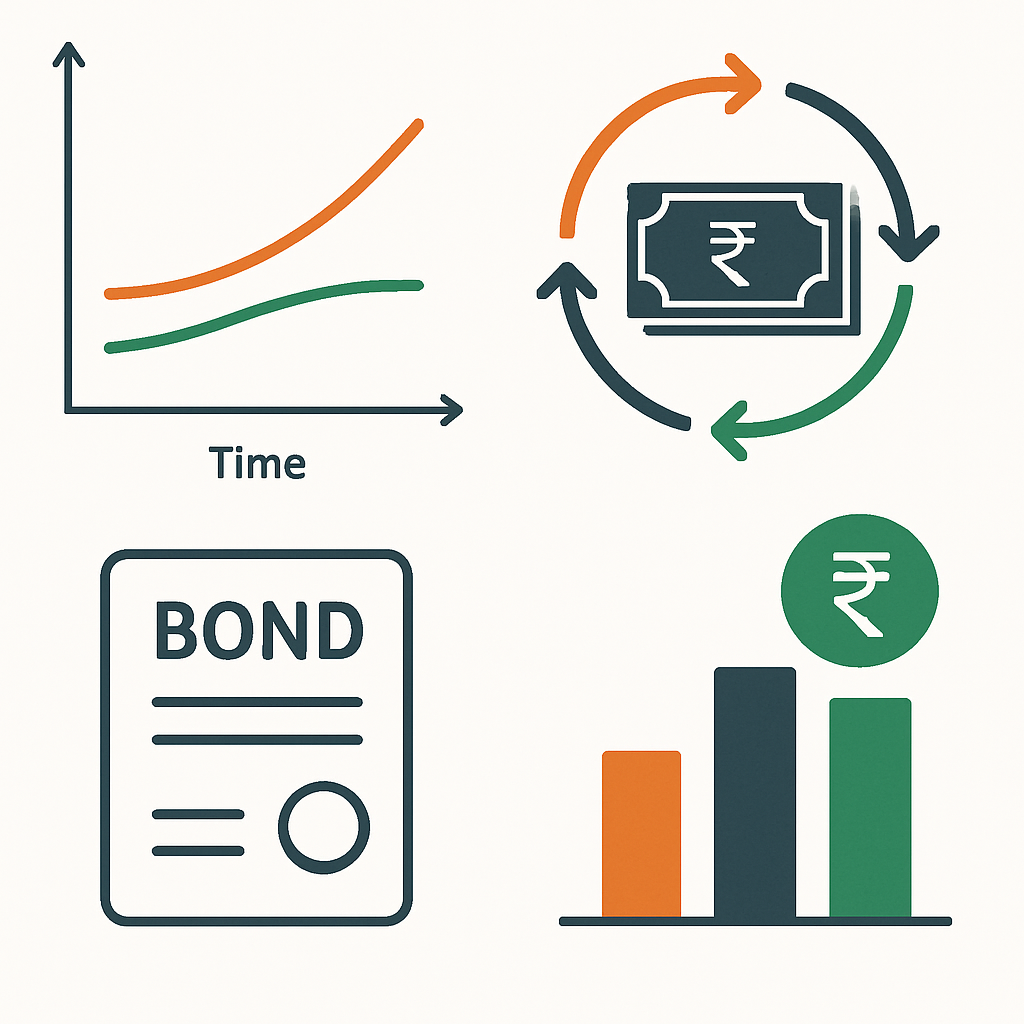
India’s interest rate cycle has made fixed income more relevant for many households. RBI’s repo rate decisions influence bond yields, bank lending rates, home loan EMIs, and deposit returns. When yields become attractive, investors often revisit government bonds as part of a safer income plan.
Inflation also shapes the case for long-dated G-Secs. If inflation cools after a period of higher rates, bonds bought at attractive yields may see price support because bond prices generally rise when yields fall. This is why many fixed income investors track RBI policy commentary, inflation data, and broader market sentiment along with equity market movements.
Impact of RBI’s Monetary Policy on G-Sec Yields
RBI’s monetary policy influences the entire yield curve. When RBI raises rates or signals tight liquidity, yields on new bonds can move higher, while prices of older bonds may fall. When markets expect rate cuts, long-duration bonds often see stronger price support because their cash flows are locked in for longer.
This rate sensitivity is not a flaw, but it needs planning. Investors with short horizons may feel uncomfortable with price swings if they need to sell before maturity. Those with long horizons may be better placed to hold through cycles, but they should still consult a financial advisor to match duration with goals and liquidity needs.
Role of Fiscal Deficits and Government Borrowing Programs
Government borrowing affects the supply of G-Secs in the market. Higher borrowing can increase the number of available securities, which may influence yields and prices depending on demand from banks, insurers, mutual funds, and other investors. Even so, the sovereign nature of repayment gives investors more confidence than many corporate alternatives.
India’s fiscal path also matters for investor trust. When markets believe the government can manage borrowing responsibly, demand for G-Secs generally remains healthier. For deeper bond-market context, you can also read PocketPlanGuru’s coverage of NABARD’s cancelled bond issue.
Comparing Long-Dated G-Secs with Other Fixed Income Instruments in India
Indian investors have many fixed income choices, including bank FDs, PPF, EPF, NPS, corporate bonds, and debt mutual funds. Each product has a role, but each carries different risks related to credit, liquidity, taxation, and reinvestment. Long-dated G-Secs stand apart because they combine sovereign backing with tradability in the secondary market.
Investopedia’s guide to fixed-income securities explains that such instruments generally provide income through interest payments or maturity value. In India, the safety of the issuer becomes a key difference when comparing fixed income options. A government bond and a corporate bond may both pay coupons, but their risk levels can differ sharply.
Corporate Bonds vs Long-Dated G-Secs
Corporate bonds often offer higher yields than G-Secs. That extra yield is not free money because it usually reflects credit risk, liquidity risk, or both. If the company faces stress, investors may face delays, rating downgrades, or capital loss.
Government bonds do not carry the same company-specific risk. Their prices can still move with interest rates, especially when the maturity is long. This makes long-dated G-Secs useful for investors who want to prioritize safety over chasing the highest yield, provided they understand duration risk.
Bank Fixed Deposits and Their Limitations
Bank FDs remain popular because they are simple and familiar. They offer fixed returns, easy account opening, and predictable maturity dates. Yet FD returns can fall short after inflation and income tax, especially for investors in higher tax slabs.
Premature withdrawal can also reduce FD returns. Some banks charge penalties or apply a lower rate when investors break deposits early. G-Secs trade in the secondary market, which can offer flexibility, although selling before maturity may lead to gains or losses depending on market yields.
Portfolio Construction: Integrating Long-Dated G-Secs for Indian Investors
A strong fixed income portfolio should not depend on one product. Investors can combine short-term deposits, PPF, NPS, EPF, debt mutual funds, and G-Secs based on their goals. This mix can help balance safety, liquidity, tax planning, and return expectations.
For an equity-heavy investor, G-Secs can reduce overall portfolio stress. During periods of weak growth or market uncertainty, high-quality bonds may provide stability because investors often seek safer assets. This matters for people running SIPs in mutual funds while also saving for goals such as education, home purchase, or retirement.
Duration Management and Risk Mitigation
Duration measures how sensitive a bond is to interest rate changes. Long maturities carry higher duration, so their prices can move more when rates change. This is why investors should not buy long bonds only because the coupon looks attractive.
A laddered approach may help manage this risk. Investors can spread money across short, medium, and long maturities instead of relying on one maturity point. This reduces the pressure of getting the interest rate cycle perfectly right, but investors should consult a financial advisor before building a ladder.
Tactical Allocation Tips for Retail and HNI Investors
Retail investors should link G-Sec choices to real goals. A person saving for a near-term bill, loan repayment, or house purchase may need more liquid and shorter-duration instruments. A retiree or HNI with a longer horizon may consider a larger allocation to high-quality bonds after consulting a financial advisor.
Reviewing allocations once or twice a year can help investors stay aligned with changing conditions. RBI policy, inflation, liquidity needs, and tax rules can all change the return picture. If you want to understand rate decisions better, read PocketPlanGuru’s explainer on the RBI rate pause and its impact on loans and savings.
How Inflation and Interest Rate Trends Strengthen the Case for Long-Dated G-Secs
Inflation reduces the real value of fixed returns. If a fixed deposit earns a rate close to inflation, the investor’s purchasing power may barely grow after tax. Long-dated G-Secs can help when yields are attractive and the investor has enough time to ride price cycles.
The case becomes stronger when markets expect rates to soften. Bond prices move opposite to yields, so falling yields can lift prices. Long-duration holders may benefit more from this move than short-duration investors, although the reverse can also happen when yields rise.
Inflation’s Effect on Fixed Income Returns
Inflation affects every saver, not just bond investors. Grocery bills, school fees, insurance premiums, and medical costs can rise faster than expected. Fixed income products must therefore be judged after considering tax, inflation, and the investor’s real cash flow needs.
G-Sec yields can sit close to or above inflation during certain phases. That does not guarantee inflation-beating returns every year. Investors should compare options after income tax, reporting requirements, liquidity needs, and personal risk comfort.
Interest Rate Cycles and Bond Price Movements in India
Bond prices and yields move in opposite directions. When yields rise, existing bond prices usually fall. When yields fall, existing bond prices usually rise, and long bonds tend to react more sharply because of higher duration.
This inverse relationship makes timing feel tempting. However, most investors should avoid making large allocation calls based only on headlines. A financial advisor can help match duration to goals, risk comfort, tax position, and liquidity requirements.
Liquidity and Ease of Trading Long-Dated G-Secs in Indian Markets
G-Secs are not locked away like many traditional savings products. RBI notes that government securities can be sold in the secondary market to meet cash requirements. They can also be used as collateral, which adds practical value for investors with broader liquidity planning needs.
Trading access has improved through demat accounts and regulated market platforms. Retail investors can use available routes connected to exchanges and other market systems. They should still check bid-ask spreads, settlement rules, platform charges, and issue-level liquidity before trading.
Secondary Market Dynamics for G-Secs
Investopedia’s explanation of government securities notes that investors may hold bonds to maturity or sell them in the secondary market. In India too, many G-Secs trade in the market, though liquidity varies by issue and maturity. Benchmark securities usually attract more buyers and sellers than less actively traded securities.
Liquidity helps investors handle unexpected cash needs. Still, selling before maturity can create gains or losses depending on how market yields have moved since purchase. For investors who track broader market flows, PocketPlanGuru’s piece on FPIs returning to IT stocks shows how capital movement can affect sentiment across asset classes.
Using G-Secs as Collateral in the Indian Financial Ecosystem
G-Secs can serve as collateral with banks and financial institutions. This feature increases their usefulness beyond coupon income. Investors who hold high-quality securities may find them valuable while planning liquidity, although collateral terms depend on the institution involved.
Demat holding also improves safety and convenience. It reduces paperwork and makes transfers easier compared with physical certificates. As with any financial asset, investors should keep nominee details updated, monitor statements, and store account records safely.
Frequently Asked Questions
Many readers want to know whether long bonds suit ordinary households. The answer depends on goals, time horizon, liquidity needs, and comfort with price movements. These FAQs cover common doubts before you speak with a financial advisor.
What makes long-dated G-Secs safer than corporate bonds?
Long-dated G-Secs carry sovereign backing from the Government of India. Corporate bonds depend on the issuing company’s financial strength, cash flow, and repayment capacity. This is why corporate bonds may offer yield premiums, while G-Secs are usually preferred for lower default risk.
How does RBI’s rate policy impact G-Sec investments?
RBI’s repo rate and policy signals affect market yields. When yields rise, bond prices usually fall, and when yields fall, bond prices usually rise. Long maturities react more strongly because they have higher duration and longer cash-flow timelines.
Can retail investors buy and sell long-dated G-Secs?
Yes, retail investors can access G-Secs through demat-linked platforms and regulated market routes. Availability, costs, settlement rules, and liquidity can differ across platforms and specific securities. Investors should compare these factors and consult a financial advisor before placing trades.
Why include long-dated G-Secs in a diversified portfolio?
They can add stability to portfolios that rely heavily on equities, mutual funds, or higher-risk debt. During downturns, investors often prefer high-quality bonds, which may reduce overall portfolio volatility. They also help diversify duration exposure when combined with shorter-term instruments.
What is the tax treatment on interest from G-Secs?
Interest income from G-Secs is generally taxable as per the investor’s applicable income tax slab. Capital gains taxation can differ based on holding period and the way the investment is made. Tax rules may change, so investors should consult a financial advisor or tax professional before acting.
Build a Safer Fixed Income Core
Long-dated G-Secs are not magic products, and they do carry interest rate risk. Yet their sovereign backing, predictable income, market liquidity, and diversification value make them a strong fixed income option for many Indian portfolios. They can help investors create a calmer fixed income core in a noisy market environment.
The right allocation depends on age, goals, income needs, tax position, and tolerance for price movements. Investors should consult a qualified financial advisor before investing, especially if their goals involve retirement, tax planning, or regular income. Subscribe to PocketPlanGuru and explore more practical guides to build a smarter and safer money plan.
Disclaimer: The information above is for educational purposes only and does not constitute financial advice.
6 Comments