

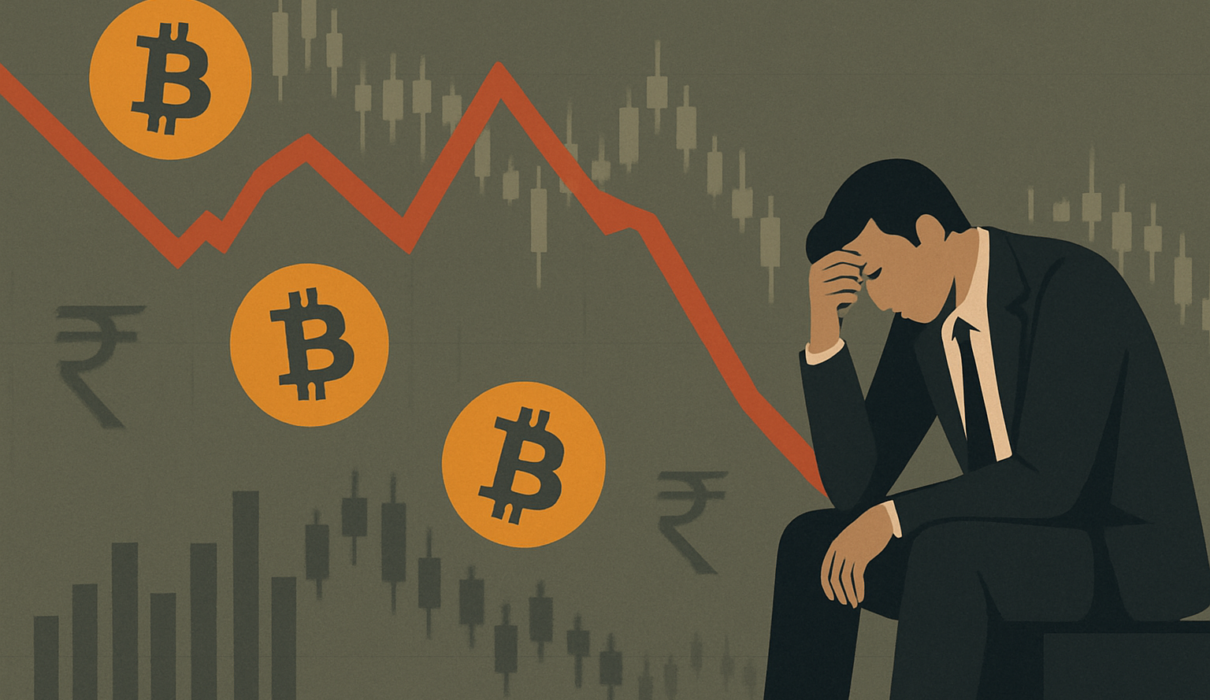
Understanding Crypto Treasury Firms and Their Recent Struggles
Falling Bitcoin prices have put crypto treasury firms under heavy pressure, and that pressure can affect investors who hold crypto-linked stocks, funds, or digital assets. For Indian investors, this struggle is a reminder that public-market crypto exposure can fall faster than Bitcoin itself. A company that holds Bitcoin on its balance sheet adds business risk, debt risk, and market sentiment risk on top of normal crypto price risk.
Many investors watch Bitcoin like they watch the Nifty or Sensex, but crypto treasury companies work differently from a simple price chart. These firms often hold large digital-asset balances, raise capital from public markets, and trade at stock-market valuations. When Bitcoin falls sharply, their shares, borrowing ability, and investor confidence can weaken at the same time.
A Bloomberg report on Bitcoin treasury firms said the combined market value of fully diluted Bitcoin treasury company stocks fell by about $62 billion. The same report said their value dropped from nearly $134 billion at a recent peak to about $72 billion. This shows how listed crypto-linked companies can suffer deeper losses than the assets they were built to hold.
What Are Crypto Treasury Firms?
Crypto treasury firms are companies that hold large amounts of Bitcoin or other digital assets on their balance sheets. Some use crypto as part of a broader treasury strategy, while others build their full market story around digital assets. Investors may see them as an indirect way to get crypto exposure through listed shares rather than through a private wallet.
This route can feel familiar because it uses stock accounts, brokerage platforms, and company disclosures. However, a share in a crypto treasury firm is not the same as owning Bitcoin directly. The investor also takes exposure to management decisions, funding costs, accounting volatility, and the company’s ability to survive a market downturn.
The model became popular when Bitcoin prices were rising and risk appetite was strong. According to Investing.com’s analysis of overleveraged treasury firms, digital asset treasury companies poured an estimated $42.7 billion into crypto during 2025. The same analysis said $22.6 billion was deployed in Q3 alone, when the strategy looked attractive as Bitcoin climbed from about $60,000 in early 2025 to above $126,000 in early October.
How Falling Bitcoin Prices Hit Treasury Companies
When Bitcoin falls, these firms can record unrealised losses on their crypto holdings. The Charles Schwab guide to Bitcoin treasury companies explains that public companies may use mark-to-market accounting for crypto investments. This means changes in crypto values can create balance sheet and earnings volatility even before the company sells its assets.
Falling prices can also create liquidity stress if lenders, shareholders, or market makers lose confidence. A Bitcoin Foundation report on treasury wipeouts described crypto treasuries as public-market vehicles that can behave like leveraged Bitcoin exposure. It also noted pressure on these companies when Bitcoin traded near $62,000 after a sharp weekly fall.
The biggest risk is that falling prices can create a feedback loop. Lower Bitcoin prices reduce asset values, weaker asset values hurt share prices, and falling share prices can make it harder for the company to raise fresh capital. If a firm depends heavily on market confidence, that cycle can quickly become a liquidity problem.
What This Means for Indian Digital Investors
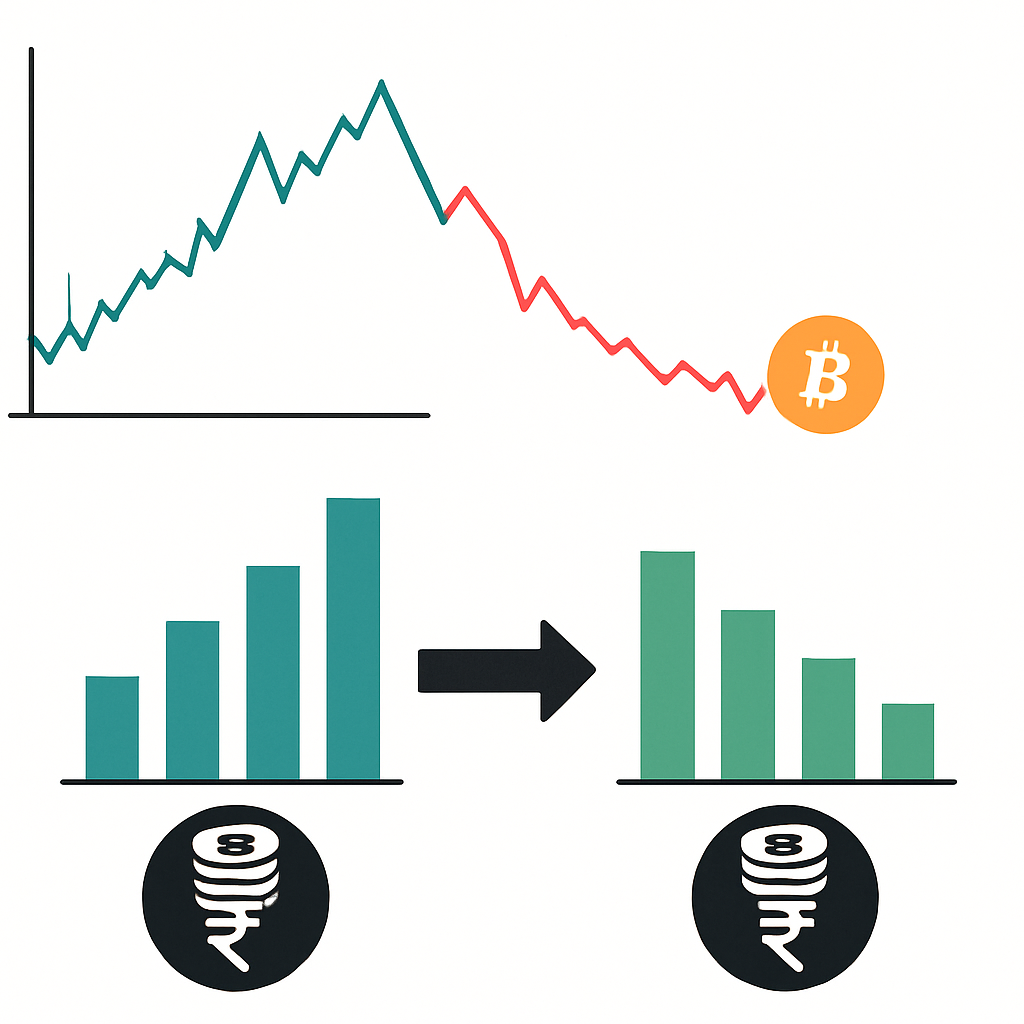
Crypto Treasury Firms’ Struggle: What Falling Bitcoin Prices Mean for Your Digital Investments — Key Concepts
Indian retail investors may not see many direct crypto treasury firms listed on the NSE or BSE. Still, exposure can enter portfolios through overseas stocks, global ETFs, thematic funds, fintech platforms, or crypto-linked products. This makes the crypto treasury firm struggle relevant even for investors who mainly use Indian investment apps.
Many Indian investors now combine SIPs, mutual funds, US stocks, gold, and small crypto allocations. That mix can work only when each risk layer is understood clearly. For a wider view of global market flows, readers can explore why foreign investors withdraw billions and what it means.
The key issue is not just whether Bitcoin rises or falls. The issue is whether the investor owns a direct crypto asset, a listed company with crypto holdings, or a fund that owns such companies. Each structure carries different risks, tax treatment, liquidity conditions, and investor protections.
How Exposure Can Enter an Indian Portfolio
Exposure can come through overseas shares bought under the Liberalised Remittance Scheme, also known as LRS. It can also come through global ETFs, international funds, or platforms that provide access to foreign markets. Investors who are unsure about the structure of a product should consult a financial advisor before making decisions.
Some Indian-listed companies may mention blockchain, Web3, or digital-asset themes in their business descriptions. That does not automatically mean they are crypto treasury firms. Annual reports, exchange filings, and product factsheets are better sources than promotional claims or social media posts.
For Indian-listed securities, investors can review disclosures through the NSE website and BSE filings. For overseas stocks, they may need to read company reports and regulatory filings in the relevant foreign market. If the company’s value depends heavily on crypto holdings rather than operating profits, its risk profile may be closer to a crypto-linked bet than a normal business investment.
Warning Signs That Deserve Attention
A sharp fall in net asset value can be an early sign of stress in a crypto treasury firm. Other warning signs include rising debt, weak cash reserves, falling market capitalisation, and announcements about refinancing. Forced asset sales may also indicate that the firm is struggling to manage liquidity.
High leverage can make a Bitcoin downturn more painful for shareholders. If a company bought crypto near a market peak and funded purchases with debt or convertible instruments, the pressure can intensify when prices fall. Investors should consult a financial advisor before buying, holding, or exiting exposure to such firms.
Stock prices can also fall below the value of the crypto assets a company holds. That discount may look attractive at first glance, but it can reflect concerns about debt, governance, taxes, custody, or future dilution. A low valuation alone does not prove that the investment is safe.
India’s Regulatory Environment and Investor Protection
India’s crypto rules are still evolving, which affects investor comfort and product design. RBI has repeatedly warned users about crypto-related risks, while SEBI focuses on securities-market protection. This divided regulatory landscape can confuse investors who expect a clear framework like the one used for mutual funds or listed shares.
Indian investors must also consider tax and compliance obligations. Crypto-related gains and transactions may create reporting duties, and errors can complicate an income tax return. Unlike PPF, NPS, EPF, or Section 80C-linked products, crypto investments do not offer familiar tax-saving comfort.
The regulatory position matters even when the crypto treasury company is based outside India. An Indian investor may have limited local support if a foreign company fails, suspends trading, or faces enforcement action. The available grievance channel depends on the product, the platform, and the jurisdiction involved.
Current Rules That Matter to Investors
RBI rules and banking practices can affect liquidity for crypto-linked businesses and platforms. If banking access tightens during market stress, companies may find it harder to move funds or support customer activity. Investors can track official updates through the Reserve Bank of India website.
SEBI has not created a complete crypto-asset framework similar to the rules for equity and debt markets. However, it regulates listed securities, brokers, mutual funds, and disclosures within India. Investors can use SEBI’s investor portal to understand grievance channels for regulated products.
The challenge is that crypto treasury exposure may sit between different regulatory systems. A global stock may be regulated abroad, a local platform may follow Indian rules, and the underlying asset may remain outside a traditional securities framework. This makes due diligence more important than it is for simpler products.
Regulatory Risks for Indian Investors
A sudden tax change, banking restriction, or enforcement action can affect liquidity and pricing quickly. Global rules also matter because many crypto treasury firms are listed outside India. A change in the United States or another major market can influence sentiment in Indian portfolios that hold global assets.
Investor rights may be limited when a product is not covered by Indian securities rules. If an overseas crypto-linked company collapses, Indian investors may need to rely on foreign processes. That can be slower, costlier, and harder to navigate than a grievance involving a regulated Indian mutual fund or broker.
This risk differs from a home loan, personal loan, or credit card rate change, where the legal and regulatory channels are clearer. Crypto-linked products can involve custody, exchange, tax, and jurisdictional risks at the same time. A financial advisor can help assess whether these risks fit an investor’s goals and capacity for loss.
Alternative Routes to Digital Asset Exposure
Some investors may still want digital-asset exposure despite the volatility in crypto treasury firms. Alternatives such as direct crypto ownership, DeFi, staking, blockchain funds, or Web3 startups may appear attractive. None of these options removes risk, and each requires careful assessment with a financial advisor.
Diversification across traditional assets can reduce dependence on one high-risk theme. Equity mutual funds, debt funds, gold, PPF, NPS, and EPF serve different purposes in a financial plan. To understand equity portfolio balance, readers can explore why proven midcap stocks matter for your portfolio.
The main question is not whether crypto will exist in the future. The better question is how much uncertainty an investor can handle without disturbing essential goals. Retirement planning, emergency savings, insurance, education costs, and home loan commitments should be considered before taking speculative exposure.
DeFi Platforms
DeFi platforms allow users to lend, borrow, trade, or earn yields without a traditional bank. They may reduce dependence on listed Bitcoin treasury firms, but they introduce smart-contract, custody, and liquidity risks. Platform hacks, weak audits, and sudden changes in market depth can cause significant losses.
Yield figures on DeFi platforms can change quickly and may not reflect the full risk of the product. A high advertised return can come with token-price volatility, counterparty concerns, or technical vulnerabilities. Investors should consult a financial advisor before shifting money from regulated products into DeFi.
Indian users also need to understand tax reporting and record-keeping requirements. Transactions across wallets, bridges, and protocols can become difficult to track. Poor records may create problems during income tax filing even when the investment amount is small.
Staking and Yield Farming
Staking lets investors earn rewards by supporting certain blockchain networks. It can reduce dependence on pure price gains, but the underlying token price can still fall sharply. Lock-in periods may also make exits difficult during market stress.
Yield farming is usually riskier because returns depend on changing incentives, liquidity pools, and platform rules. A strategy that looks profitable in one market phase can become risky when liquidity dries up. These structures should not be treated as substitutes for bank deposits, debt funds, or other lower-risk products.
Investors often compare staking rewards with SIP discipline in mutual funds, but the risk profiles are very different. Mutual funds are regulated products with defined disclosure norms, while many crypto yield products operate in less predictable environments. A financial advisor can help compare the role of each product in a wider financial plan.
Indian Crypto and Web3 Startups
Indian crypto and Web3 startups work in areas such as wallets, analytics, security tools, compliance systems, and payment infrastructure. Some may benefit from India’s strong technology talent and digital public infrastructure. However, startup investing can be illiquid, complex, and unsuitable for many retail investors.
A company is not automatically safer because it is Indian or technology-focused. Investors need to understand funding quality, founder background, audits, revenue strength, custody processes, and regulatory compliance. If these factors are hard to assess, a financial advisor can help evaluate whether the exposure is appropriate.
Startup investments may also lock money for long periods. Unlike listed shares, they may not provide easy exit opportunities when market sentiment turns negative. This can be especially risky if the investor needs money for near-term goals.
Risk Checks During a Crypto Treasury Downturn
The crypto treasury firm struggle shows why risk checks matter before returns. A falling Bitcoin price can quickly turn a growth story into a liquidity concern. Investors who hold crypto-linked exposure should understand whether the company owns enough cash, has manageable debt, and can survive extended volatility.
Accounting treatment is also important because unrealised losses can affect reported earnings. Schwab’s explanation of mark-to-market accounting shows why crypto holdings can create visible volatility in company statements. These changes may influence investor sentiment even before any asset sale happens.
Portfolio concentration is another major risk. A small crypto allocation can become meaningful if it is spread across coins, overseas stocks, ETFs, and fintech themes without being noticed. A financial advisor can help identify overlapping exposure across accounts and products.
How to Read a Treasury Firm’s Financial Health
Quarterly reports can show crypto valuations, cash balances, debt ratios, and funding sources. Investors may also review whether the company funded purchases through equity, loans, or convertible debt. High debt can increase pressure when Bitcoin prices fall and market confidence weakens.
Auditor comments, earnings calls, and exchange filings can provide additional clues. Sudden changes in risk disclosures or repeated capital-raising announcements may deserve closer attention. For overseas holdings, investors may need to read filings in the company’s home market rather than relying only on platform summaries.
Market capitalisation should be compared with the firm’s asset value and liabilities. A discount to asset value may reflect legitimate concerns rather than a simple bargain. A premium may also be risky if it depends mostly on bullish sentiment instead of operating strength.
Protective Measures to Discuss With an Advisor
Risk protection starts with understanding how much of the portfolio is linked to crypto prices. This includes direct coins, crypto funds, overseas treasury stocks, blockchain themes, and high-risk yield products. A financial advisor can help decide whether that exposure is suitable for the investor’s age, goals, income stability, and loss tolerance.
Emergency money, insurance, and essential goal-based assets should be considered before speculative exposure. Borrowing through a personal loan or credit card to invest in crypto-linked assets can create serious financial stress. Investors should seek professional guidance before using leverage or concentrated positions.
Planned reviews can reduce panic during sharp market moves. Tax records, transaction histories, and product documents should be maintained carefully. For rate-sensitive assets and global risk appetite, readers can also follow why smart Indian investors watch Fed rate hikes now.
What Indian Investors Should Watch Next
Bitcoin and crypto treasury stocks may remain volatile as markets digest the recent losses. Inflation trends, the US rate path, and India’s repo rate can influence global risk appetite. When liquidity tightens, speculative assets often face sharper selling than diversified traditional portfolios.
Regulatory clarity may improve over time, but the timeline remains uncertain. India’s digital rupee work may also influence how users view private crypto assets. Investors should be prepared for policy changes that affect taxation, banking access, disclosures, and platform operations.
Global shocks will continue to affect Indian digital portfolios. A Bitcoin downturn can hurt sentiment in tech stocks, fintech names, thematic funds, and crypto-linked listed companies. The recent stress in treasury firms shows that linked assets can move together when fear rises.
Preparing for Future Crypto Cycles
Crypto rallies can make risky structures look safer than they are. A written investment plan can help investors define review dates, tax record practices, and risk limits with professional support. The plan should also clarify how crypto exposure fits alongside retirement, education, insurance, and housing goals.
Clean record-keeping is essential for Indian investors using multiple platforms. Wallet transfers, overseas stock purchases, ETF holdings, and crypto trades can create reporting complexity. A tax professional or financial advisor can help reduce errors in income tax filing.
The lesson from crypto treasury firms is simple but important. A listed company holding Bitcoin is not the same as Bitcoin, and it is not the same as a regulated Indian mutual fund. Understanding that difference can protect investors from taking risks they did not intend to take.
FAQs on Crypto Treasury Firms and Indian Digital Investments
Indian investors often have similar questions about crypto treasury exposure, regulation, and portfolio risk. These answers are meant for general awareness and should not be treated as personal investment advice. Investors should consult a financial advisor before making decisions based on their own financial situation.
How can Indian investors identify crypto treasury firm exposure?
Indian investors can review overseas stock holdings, ETF factsheets, fund documents, and company filings to see whether a product owns crypto treasury firms. They can also check NSE and BSE disclosures if an Indian-listed company claims blockchain or crypto exposure. If the structure is unclear, a financial advisor can help assess the actual level of risk.
What regulations protect Indian investors in crypto treasuries?
RBI banking rules, SEBI securities rules, tax laws, and foreign-market regulations may apply in different ways. India does not yet have a complete crypto treasury framework similar to the framework for listed shares or mutual funds. Investor protection can be limited when products sit outside regulated Indian markets or are issued overseas.
How can falling Bitcoin prices affect crypto treasury stocks?
Falling Bitcoin prices can reduce the value of a treasury firm’s digital assets and create unrealised losses. They can also weaken investor confidence, hurt share prices, and make refinancing harder. If a company uses debt or depends heavily on market sentiment, the fall in its stock can be sharper than the fall in Bitcoin.
Are DeFi, staking, or Web3 startups safer than Bitcoin treasury firms?
DeFi, staking, and Web3 startups offer different types of exposure, but they are not automatically safer. They can involve smart-contract failures, token volatility, illiquidity, tax complexity, and regulatory uncertainty. Investors should consult a financial advisor before replacing one crypto-linked risk with another.
What signs may indicate financial trouble in a crypto treasury firm?
Warning signs include rapid asset-value declines, forced crypto sales, refinancing pressure, weak cash reserves, and repeated capital-raising plans. Falling market capitalisation, auditor concerns, and high debt levels can also point to stress. These signs do not guarantee failure, but they suggest the company needs closer review.
Stay Smart With Your Digital Portfolio
Falling Bitcoin prices can hurt more than coin holders. They can shake listed treasury firms, ETFs, thematic funds, and investor confidence across markets. Indian investors should understand where their crypto-linked exposure sits before reacting to the next rally or crash.
PocketPlanGuru focuses on practical, India-focused money insights for investors who want clarity without hype. Readers can keep learning about crypto, stocks, tax, insurance, loans, and personal finance through our guides. For major portfolio decisions, consult a financial advisor and build a plan that matches your goals and risk capacity.
Disclaimer: The information above is for educational purposes only and does not constitute financial advice.
6 Comments