


How term and whole life insurance work
Term life insurance and whole life insurance both provide a death benefit to beneficiaries if the insured person dies while the policy is active. The main difference is how long the coverage lasts and what else the policy is designed to do. Term life insurance is temporary coverage for a set period, while whole life insurance is permanent coverage designed to last for life as long as required premiums are paid.
Term life insurance is often chosen because it is straightforward and usually less expensive upfront than whole life insurance. A policyholder selects a coverage amount and a term length, commonly tied to a major financial responsibility such as raising children, paying off a mortgage, or replacing income during working years. If the insured person dies during the term, the policy pays the death benefit, but if the insured outlives the term, the coverage usually ends unless the policy includes renewal or conversion options.
Whole life insurance is designed to provide lifelong protection and includes a cash value component. Premiums are typically higher than term premiums because the policy is meant to remain in force permanently and build value over time. The cash value may be accessible through policy loans or withdrawals, but using it can reduce the death benefit or create other costs, so policyholders should understand the rules before relying on it.
Key differences between term and whole life insurance
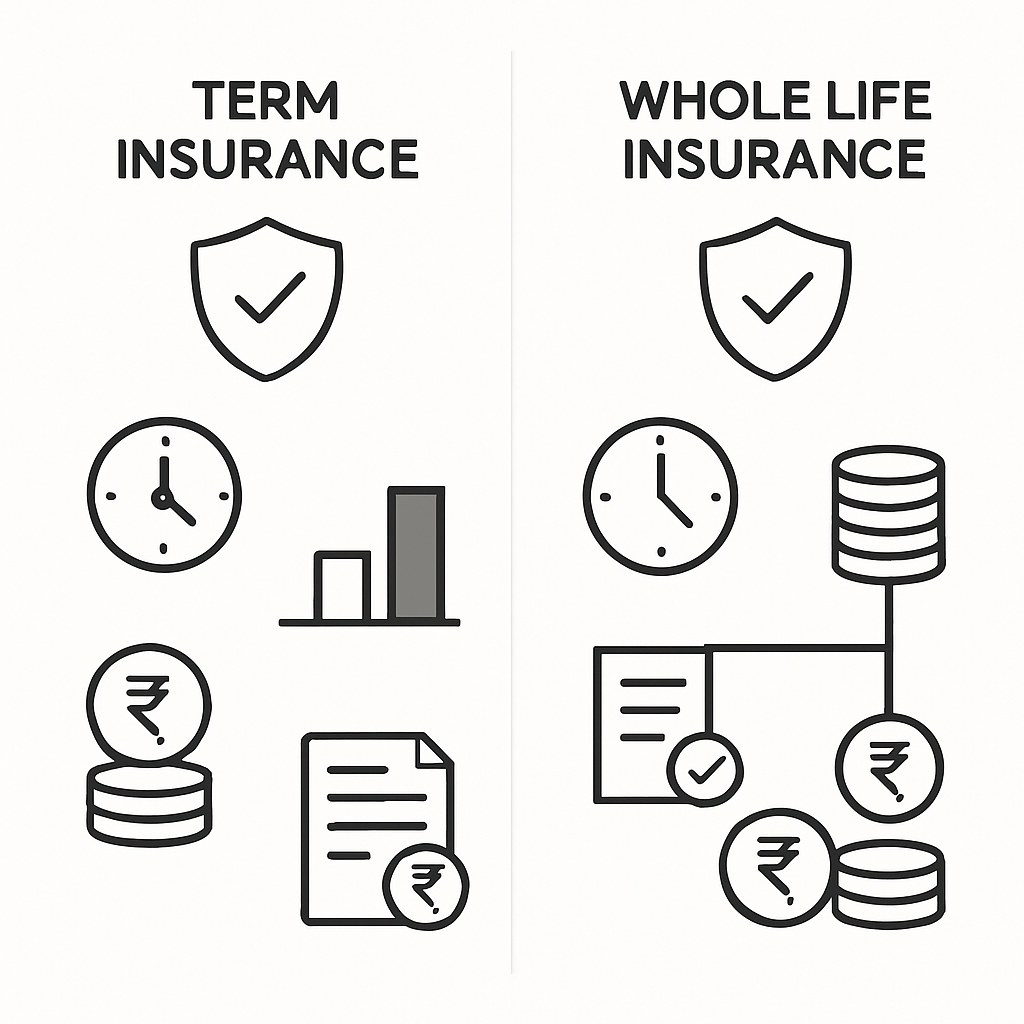
The most important difference is duration. Term life insurance covers a defined period, such as years when children are young or while a loan remains outstanding. Whole life insurance is meant to stay in place for the insured person’s lifetime, provided the policy requirements are met.
Cost is another major difference. Term life insurance usually offers a larger death benefit for a lower initial premium, which can make it appealing for families who need significant protection on a limited budget. Whole life insurance costs more because it combines permanent coverage with a cash value feature.
The cash value feature is unique to whole life insurance and some other permanent life policies. Term life insurance is generally pure insurance protection and does not build savings inside the policy. Whole life insurance can accumulate cash value based on the policy terms, but it should not be treated as a simple substitute for a savings account or investment plan without reviewing the details with a qualified professional.
When term life insurance may be the better choice
Term life insurance may be a better fit when the primary need is temporary protection. Many people buy it to cover the years when dependents would be most financially vulnerable. This can include the period before children finish school, before a mortgage is paid off, or before a surviving spouse could comfortably support household expenses alone.
Term coverage may also make sense when affordability is the priority. Because term policies usually cost less upfront than whole life policies, buyers may be able to purchase a death benefit that more closely matches their family’s real financial needs. This can be useful for people who need income replacement but do not want a permanent policy or cannot comfortably afford higher premiums.
Another advantage of term life insurance is simplicity. The buyer pays premiums for a chosen period and receives coverage during that period. There is no cash value to track, no policy loan feature to manage, and fewer moving parts for someone who wants basic protection rather than a long-term financial planning tool.
When whole life insurance may be the better choice
Whole life insurance may be a better fit when the need for coverage is permanent rather than temporary. Some people want a policy that can help beneficiaries with final expenses, estate-related costs, or long-term family support no matter when death occurs. Since whole life insurance is designed to last for life, it may provide reassurance for buyers who do not want coverage to expire after a set term.
Whole life insurance may also appeal to people who value fixed premiums and predictable lifelong coverage. In many whole life policies, premiums are structured so the policyholder knows what to expect over time. This predictability can be attractive for someone who wants a permanent plan and is comfortable paying higher premiums for that stability.
The cash value component may be another reason to consider whole life insurance. Cash value can grow over time according to the terms of the policy, and the policyholder may be able to borrow against it or withdraw from it. These features can be useful in some situations, but they add complexity, so buyers should review the policy carefully and consult a financial advisor before using life insurance as part of a broader financial plan.
How to compare coverage needs
The right choice starts with the reason you are buying life insurance. If your goal is to protect your family during a specific stage of life, term insurance may match that need more closely. If your goal is to maintain coverage for your entire lifetime, whole life insurance may be more appropriate.
Think about the people who depend on your income or support. A parent with young children may need enough coverage to help replace income, pay for childcare, handle debts, and support education goals if they die unexpectedly. Someone with no dependents may need less coverage, or may focus on final expenses and long-term planning instead.
Also consider how long those needs will last. A mortgage, childcare costs, and income replacement needs often decrease over time. Permanent obligations, such as support for a dependent with lifelong needs or a desire to leave a guaranteed death benefit, may point toward permanent coverage.
How budget affects the decision
Budget is one of the clearest dividing lines between term and whole life insurance. Term life insurance generally provides lower-cost coverage for a limited period, which can help buyers obtain meaningful protection without straining monthly finances. Whole life insurance generally requires higher premiums because it is built to last for life and includes cash value.
A life insurance policy only helps if it can be maintained. Choosing a policy with premiums that are difficult to afford can create the risk of losing coverage later. For that reason, a smaller permanent policy is not automatically better than a larger term policy, and a larger term policy is not automatically better than a permanent policy.
The practical question is whether the policy fits both your protection needs and your cash flow. If a term policy allows you to cover your family adequately during the years they need it most, it may be the stronger choice. If you can comfortably afford whole life premiums and have a permanent coverage need, the higher cost may be acceptable.
What to know about cash value
Cash value is often the feature that makes whole life insurance sound more attractive than term insurance. It can grow inside the policy and may provide options later in life. However, cash value is governed by policy rules, and accessing it can affect the death benefit or the policy’s long-term performance.
Policy loans are not the same as free money. If a loan is not repaid, the outstanding balance and interest may reduce what beneficiaries receive. Withdrawals can also lower the policy’s value, and in some situations there may be tax or policy consequences.
For these reasons, the cash value feature should be evaluated carefully. It may be useful for some people, but it is not necessary for everyone. Before choosing whole life insurance mainly because of cash value, compare the costs, guarantees, limitations, and alternatives with a licensed insurance professional or consult a financial advisor.
Common mistakes to avoid
One common mistake is choosing a policy only because it has the lowest premium. A cheap policy may not provide enough coverage or may end before the need for protection is gone. Price matters, but it should be weighed against the amount of coverage, length of coverage, and financial purpose of the policy.
Another mistake is buying whole life insurance without understanding the long-term commitment. Higher premiums can be manageable at the start but harder to maintain if income changes or expenses rise. Since whole life insurance works best when kept for the long term, buyers should be realistic about affordability before signing.
A third mistake is assuming one type is always superior. Term insurance and whole life insurance solve different problems. The better choice depends on your family situation, budget, coverage timeline, and whether you need temporary protection or lifelong coverage.
Can you use both term and whole life insurance
Some people use both types of life insurance together. A smaller whole life policy may provide lifelong coverage, while a larger term policy may cover the years of highest financial responsibility. This blended approach can help address both permanent and temporary needs.
For example, a family might want permanent coverage for final expenses while also needing substantial temporary coverage until children are grown. In that situation, relying only on whole life insurance could be too expensive, while relying only on term insurance could leave no coverage later. Combining policies may offer flexibility, but it also requires careful review of total premiums and policy terms.
Using both policies is not necessary for everyone. Some households can meet their needs with term insurance alone, while others may prefer one permanent policy. The best structure is the one that provides suitable protection, remains affordable, and matches the reason the coverage is being purchased.
How to choose between term and whole life insurance
Start by defining the financial problem the policy must solve. If the problem has an end date, such as a mortgage payoff date or the years until children become independent, term insurance may be the more direct option. If the problem does not have an end date, such as lifelong dependent support or a desire for permanent coverage, whole life insurance may deserve consideration.
Next, compare premiums for the coverage amounts you actually need. Term life insurance may allow for a higher death benefit at a lower initial cost, which can be important for income replacement. Whole life insurance may offer lifelong protection, but the higher premium must fit comfortably into your budget for many years.
Finally, review policy features rather than relying only on labels. Term policies may include renewal or conversion options, and whole life policies may differ in guarantees, cash value growth, loan provisions, and fees. Before making a final decision, read the policy documents, ask questions, and consult a financial advisor if the choice affects your long-term financial plan.
Who should consider term life insurance
Term life insurance may suit people who need high coverage during a specific period. Parents, homeowners, and people with shared debts often use term policies to protect loved ones from financial strain if income is lost. The policy can be aligned with the years when the household would face the greatest risk.
It may also suit people who want simple life insurance without a savings component. Since term coverage does not build cash value, the purpose is easier to understand. You pay for protection, and the policy pays a death benefit only if death occurs during the covered term.
Term insurance can also be useful for buyers who are early in their careers or managing competing expenses. Lower upfront premiums may leave room in the budget for emergency savings, debt repayment, or other priorities. Those broader decisions should be made based on personal circumstances, and complex planning questions should be discussed with a financial advisor.
Who should consider whole life insurance
Whole life insurance may suit people who want coverage that does not expire after a set number of years. This can be valuable for someone who wants a guaranteed death benefit for beneficiaries, subject to the policy’s terms and continued premium payments. It can also help people who prefer the discipline of a permanent policy with fixed premium expectations.
Whole life insurance may also be considered by people with long-term planning goals. The cash value feature can create options that term insurance does not provide. Even so, those options come with rules, costs, and trade-offs that should be reviewed before purchase.
This type of policy is usually better for people who can comfortably afford the premiums. If the cost would force a buyer to reduce coverage below what the family needs, whole life insurance may not be the best first choice. The policy should support the overall plan rather than create financial pressure.
FAQ
The following questions address common concerns about term insurance and whole life insurance. They are meant to help clarify the decision, not replace personalized advice. Your health, age, family responsibilities, budget, and long-term goals can all affect which policy makes sense.
Is term life insurance better than whole life insurance
Term life insurance is better for many people who need affordable coverage for a limited period. It is often used to protect dependents during working years or while major debts remain. Whole life insurance may be better when the goal is lifelong coverage and the buyer can afford the higher premiums.
What happens if I outlive my term life insurance policy
If you outlive a standard term life insurance policy, the coverage usually ends and no death benefit is paid. Some policies may allow renewal, but the premium may be higher based on age or other factors. Some term policies may also offer conversion to permanent coverage, so it is useful to check those options before the term ends.
Does whole life insurance always build cash value
Whole life insurance is generally designed to build cash value over time. The exact growth, guarantees, and access rules depend on the policy. Borrowing or withdrawing cash value can reduce the death benefit or affect the policy, so the feature should be used carefully.
Can I switch from term life to whole life insurance
Some term life insurance policies include a conversion option that allows the policyholder to move to permanent coverage without starting from scratch. The rules, deadlines, and available permanent products vary by insurer and policy. If conversion matters to you, review it before buying the term policy rather than waiting until the term is almost over.
How much life insurance do I need
The right amount depends on your income, debts, dependents, future expenses, and how long your family would need support. A useful starting point is to list the obligations your beneficiaries would face if you were no longer there to provide income or care. For a more tailored estimate, work with a licensed insurance professional or consult a financial advisor.
Disclaimer: The information above is for educational purposes only and does not constitute financial advice.
5 Comments