


Why a US-Iran peace deal matters for Indian markets
A possible US-Iran peace deal matters to Indian markets because it would reduce one of the biggest geopolitical risks hanging over global energy prices. India imports a large share of its crude oil needs, so any easing of tension in West Asia can quickly change expectations around inflation, corporate margins, currency stability, and investor sentiment. When traders believe that oil supply routes may remain open and conflict risk is declining, they often become more willing to take exposure to emerging markets such as India.
The immediate market reaction to peace-deal signals is usually driven by relief rather than by a sudden change in company earnings. Investors price in the possibility that crude oil prices may soften, the rupee may stabilise, and foreign investors may return to risk assets. That is why Indian equities can rally even before a formal agreement is signed, especially if the news flow suggests lower energy risk and calmer global markets.
Lower crude oil prices are the biggest transmission channel
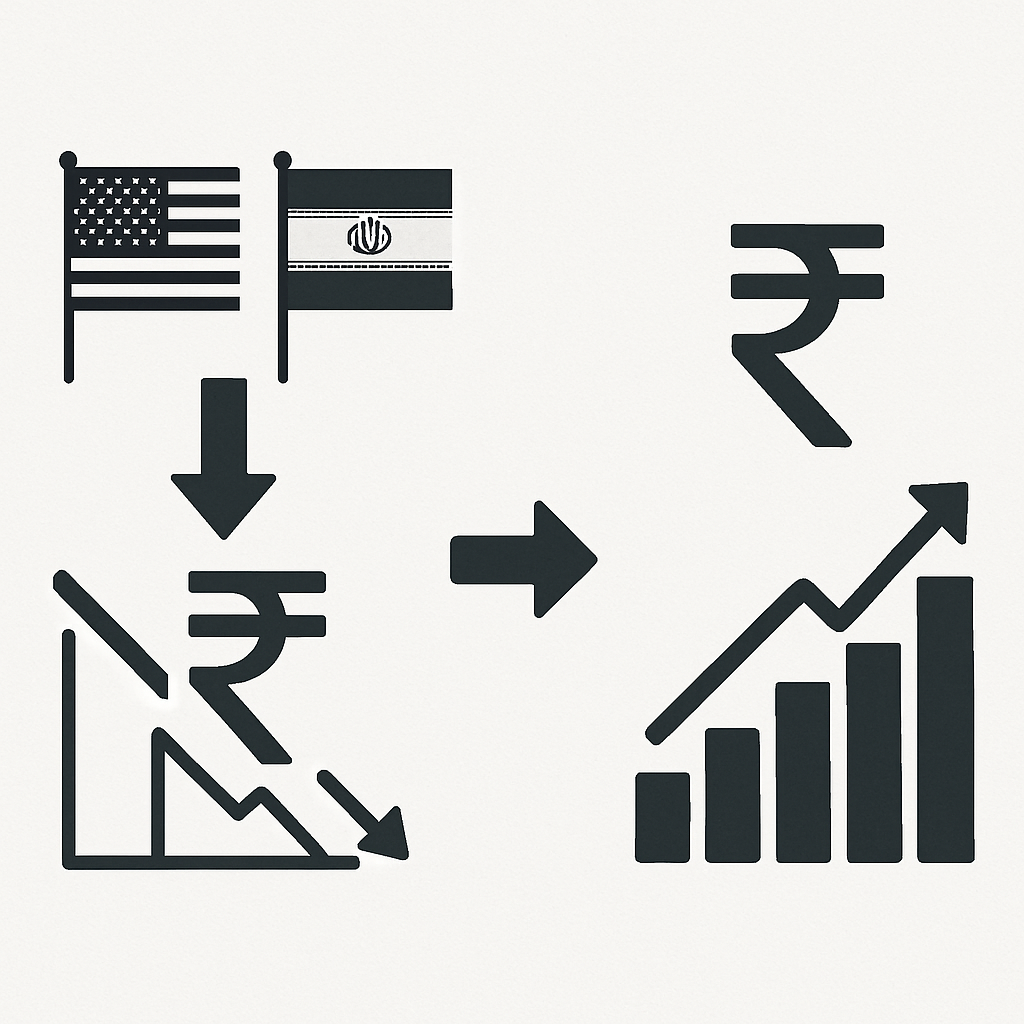
Crude oil is the clearest link between a US-Iran peace deal and Indian equities. If tensions ease, markets may expect fewer disruptions around West Asian supply routes, including key shipping lanes that are watched closely by oil traders. A fall in crude prices can improve India’s macro picture because the country spends heavily on imported energy.
Lower oil prices can help reduce input costs for companies that use crude derivatives, fuel, freight, packaging, or energy-intensive production processes. This can support margins in sectors such as paints, chemicals, cement, aviation, logistics, tyres, and consumer goods, although the benefit may vary from company to company. The effect is not automatic, because companies may also face demand weakness, competitive pricing, currency movements, or higher non-oil costs.
Why the rupee could also benefit
A softer crude oil environment can reduce pressure on India’s import bill, which may support the rupee. When the rupee appears more stable, foreign investors often become more comfortable with Indian equities because currency losses can reduce their returns. This is one reason market participants watch oil and the rupee together during geopolitical events.
A stronger or more stable rupee can also help companies that rely on imported raw materials. It may reduce the cost of purchases priced in dollars and improve visibility for businesses that have foreign currency exposure. However, exporters can face a different impact, because a stronger rupee may reduce the value of overseas earnings when converted into Indian currency.
How market sentiment can create a quick rally
Markets frequently move before confirmed economic benefits appear in company results. If investors believe a peace deal will lower energy costs and reduce global risk, they may start buying sectors that are seen as beneficiaries. This can create a short-term rally driven by sentiment, liquidity, and positioning rather than by immediate earnings upgrades.
Reports and market commentary have suggested that Indian equities may react positively when US-Iran peace-deal progress appears credible. The logic is simple: lower geopolitical stress can lift risk appetite, reduce safe-haven demand, and improve confidence in emerging markets. Still, a relief rally can fade if the agreement is delayed, the details disappoint investors, or crude oil prices do not fall meaningfully.
Sectors that may benefit from cheaper oil
Paint companies are often discussed as possible beneficiaries because crude-linked derivatives can be important inputs in their cost structure. If input prices fall and demand remains steady, operating margins can improve. The benefit depends on inventory cycles, pricing decisions, competition, and whether companies pass savings to consumers.
Chemical companies may also benefit from lower feedstock and energy costs, although the sector is diverse. Some chemical businesses gain from cheaper raw materials, while others are influenced more by global demand, Chinese supply, and export pricing. Investors should avoid treating the entire sector as a single trade and should consult a financial advisor before making decisions.
Cement, aviation, logistics, hotels, and select consumer companies may also see indirect support from lower fuel and transport costs. Aviation is particularly sensitive to fuel prices, while hotels and travel-related businesses can benefit if lower inflation supports discretionary spending. These links are plausible, but they are not guarantees of stock performance.
Consumer stocks could get a sentiment boost
Consumer companies can benefit when inflation expectations cool and household purchasing power improves. Lower fuel prices may reduce transport costs and ease pressure on everyday expenses, which can help demand for discretionary and staple products. Market strategists often view consumer stocks as potential beneficiaries of a peace-driven improvement in sentiment.
That does not mean every consumer stock becomes attractive at any price. Valuations, earnings growth, rural demand, urban spending, competition, and management execution still matter. Investors should avoid chasing short-term moves without understanding whether the business fundamentals justify the price.
Gold may react differently from equities
Gold often performs well when geopolitical risk is high, but its reaction to peace news can be mixed. If a US-Iran deal reduces fear in global markets, some safe-haven demand for gold may ease. At the same time, gold can still attract interest if investors expect lower interest rates, currency volatility, or broader uncertainty in the financial system.
Some global market commentary has included gold among assets that investors may still consider in a peace scenario, alongside consumer stocks and emerging-market currencies. The reason is that gold plays more than one role in portfolios, including diversification and protection against unexpected shocks. Investors should consult a financial advisor to decide whether gold fits their risk profile and time horizon.
Why foreign investors may pay attention to India
Foreign institutional investors often compare emerging markets based on growth, currency stability, valuation, and global risk appetite. If West Asia tensions ease and crude oil prices fall, India’s relative position may improve because lower oil can support inflation, the current account, and corporate margins. This can make Indian equities appear more attractive in global allocation decisions.
Emerging-market currencies that had been under pressure can also recover when geopolitical stress declines. A more stable rupee can strengthen the case for foreign inflows, especially if domestic earnings remain resilient. However, global investors also watch US interest rates, dollar strength, valuations, and policy signals, so peace-deal optimism is only one part of the equation.
Why investors should be careful about stock-specific claims
Some market reports may mention individual companies, target prices, and potential upside in sectors linked to lower oil prices. These numbers are research opinions and can change quickly when crude prices, earnings assumptions, or market conditions shift. They should not be treated as guaranteed outcomes or as instructions to buy a stock.
Stock-specific investing requires deeper analysis than simply identifying a favourable macro trend. A company may operate in a sector that benefits from cheaper oil, but it may still face weak demand, high debt, poor governance, expensive valuations, or execution problems. Investors should consult a financial advisor before acting on any company-specific idea.
The rally could become a bull trap if expectations run too far
A peace-deal rally can be powerful, but it can also become fragile if prices move ahead of fundamentals. Markets may initially celebrate headlines, only to reassess when details of the agreement, implementation timelines, or compliance risks become clearer. If traders have already priced in a major improvement, even a modest disappointment can trigger volatility.
Oil prices may also fail to fall as much as investors expect. Global demand, OPEC decisions, inventory levels, shipping risks, and currency movements can all influence crude prices even after a diplomatic breakthrough. This is why investors should separate a short-term relief rally from a durable improvement in earnings.
What this means for long-term investors
For long-term investors, the most useful approach is to view a US-Iran peace deal as a macro tailwind rather than a complete investment thesis. Lower oil prices and a calmer geopolitical backdrop can support Indian equities, but they do not remove the need for valuation discipline and portfolio diversification. A strong market day should not replace a structured investment plan.
Investors may review whether their portfolios are overly exposed to one theme, one sector, or one market outcome. A peace deal may help some sectors and hurt others, especially if currency movements affect exporters differently from import-dependent companies. Anyone considering portfolio changes should consult a financial advisor who can assess risk tolerance, goals, and asset allocation.
What short-term traders should watch
Short-term traders may focus on crude oil prices, the rupee, foreign investor flows, bond yields, and index levels. These indicators can show whether the market is treating peace-deal headlines as a lasting shift or only a temporary relief trade. Volume, breadth, and sector rotation can also reveal whether the rally is broad-based or concentrated in a few names.
Traders should also watch for reversals if headlines become uncertain or if officials provide conflicting signals. Geopolitical negotiations can move in stages, and markets may react sharply to both optimism and disappointment. Risk controls matter because news-driven rallies can change direction faster than fundamental trends.
How to think about asset allocation
A balanced portfolio should not depend entirely on one geopolitical outcome. Equity exposure can benefit from lower oil and stronger sentiment, but debt, cash, gold, and other diversifiers may still play important roles. The right allocation depends on age, income stability, liabilities, investment horizon, and ability to handle volatility.
Investors who already own quality equities may not need to make aggressive changes simply because of a peace-deal headline. Those sitting on cash may feel pressure to enter quickly, but rushing into overheated sectors can create avoidable risk. A financial advisor can help convert the macro story into a plan that fits personal circumstances.
Key risks that could limit the market upside
The first risk is that the peace deal may not materialise or may take longer than markets expect. Diplomatic announcements can be complex, and the final terms may be less comprehensive than headlines suggest. If uncertainty returns, crude oil and safe-haven assets can move quickly in the opposite direction.
The second risk is that Indian equities may already be pricing in a large amount of optimism. If valuations are stretched, even good news may not lead to sustained gains. Earnings growth, domestic demand, policy decisions, and global liquidity will still decide whether a rally can continue.
The third risk is that lower oil alone cannot fix every corporate challenge. Companies still need demand, pricing power, efficient operations, and strong balance sheets. Investors should avoid assuming that a macro benefit will automatically translate into higher share prices for every related business.
Practical takeaway for investors
A US-Iran peace deal could support Indian markets by lowering perceived geopolitical risk, easing crude oil pressure, and improving sentiment toward the rupee and emerging-market assets. Sectors linked to fuel, transport, crude derivatives, and consumer spending may attract attention. The opportunity is real, but it must be viewed with caution because markets often move faster than fundamentals.
The better response is to review portfolios calmly rather than react emotionally to headlines. Investors should check diversification, valuation comfort, time horizon, and exposure to sectors that may benefit or suffer from lower oil and currency changes. Before making investment decisions, they should consult a financial advisor instead of relying on headline-driven market commentary.
FAQ
This section answers common questions investors may have about a potential US-Iran peace deal and its impact on Indian markets. The answers are meant to provide general educational context, not personal investment advice. For decisions involving specific stocks, funds, or asset allocation, investors should consult a financial advisor.
Can a US-Iran peace deal really trigger a rally in Indian markets?
Yes, it can trigger a rally if investors believe the deal will reduce oil supply risks and improve global risk appetite. Indian markets are sensitive to crude oil because India is a major oil importer, so lower oil prices can improve sentiment around inflation, margins, and the rupee. However, the rally may not last if the deal is delayed, crude prices remain firm, or valuations look stretched.
Which Indian sectors are most likely to benefit?
Sectors that use fuel, crude-linked inputs, or transport services may benefit from lower oil prices. Paints, chemicals, aviation, logistics, cement, hotels, and consumer companies are commonly discussed in this context. The impact differs across companies, so investors should not treat sector-level benefits as automatic stock-specific gains.
Should investors buy stocks immediately after peace-deal news?
Investors should avoid making rushed decisions based only on headlines. A peace-deal announcement can improve sentiment, but stock prices may already reflect much of the expected benefit. Anyone considering fresh investments should consult a financial advisor and evaluate valuation, fundamentals, risk tolerance, and time horizon.
What happens to gold if geopolitical tensions ease?
Gold may face some pressure if safe-haven demand falls after tensions ease. At the same time, gold can still remain relevant as a portfolio diversifier, especially during periods of currency volatility or broader economic uncertainty. Whether gold is suitable depends on the investor’s goals, portfolio mix, and risk profile.
What indicators should investors track after the deal?
Investors can track crude oil prices, the rupee, foreign institutional investor flows, inflation expectations, and sector-wise market breadth. These signals can help show whether the rally is supported by improving macro conditions or only by short-term optimism. Company earnings and management commentary will also matter because lasting gains require real improvement in business performance.
Disclaimer: The information above is for educational purposes only and does not constitute financial advice.
6 Comments