

Why Rising Crude Prices Matter for Indian Households
Global crude oil prices are rising again, and Indian families may soon feel the pinch at petrol pumps, LPG counters, grocery stores, and bus stops. If the West Asia conflict keeps energy markets nervous, your monthly budget could get tighter even without a major change in your lifestyle. Rising crude prices and West Asia conflict risks are not just global headlines because they can affect your scooter fuel, office commute, food bill, credit card dues, and savings plan.
India depends heavily on imported crude oil, so any disruption in major supply routes can quickly become a domestic inflation risk. As reported by ETAuto on rising fuel prices and household budgets, economists have warned that higher petrol and diesel costs may strain Indian households if crude stays elevated. This matters for salaried families, small business owners, farmers, cab drivers, students, and retirees because fuel costs often spread into many other expenses.
How West Asia Conflict Drives Up Crude Oil Prices
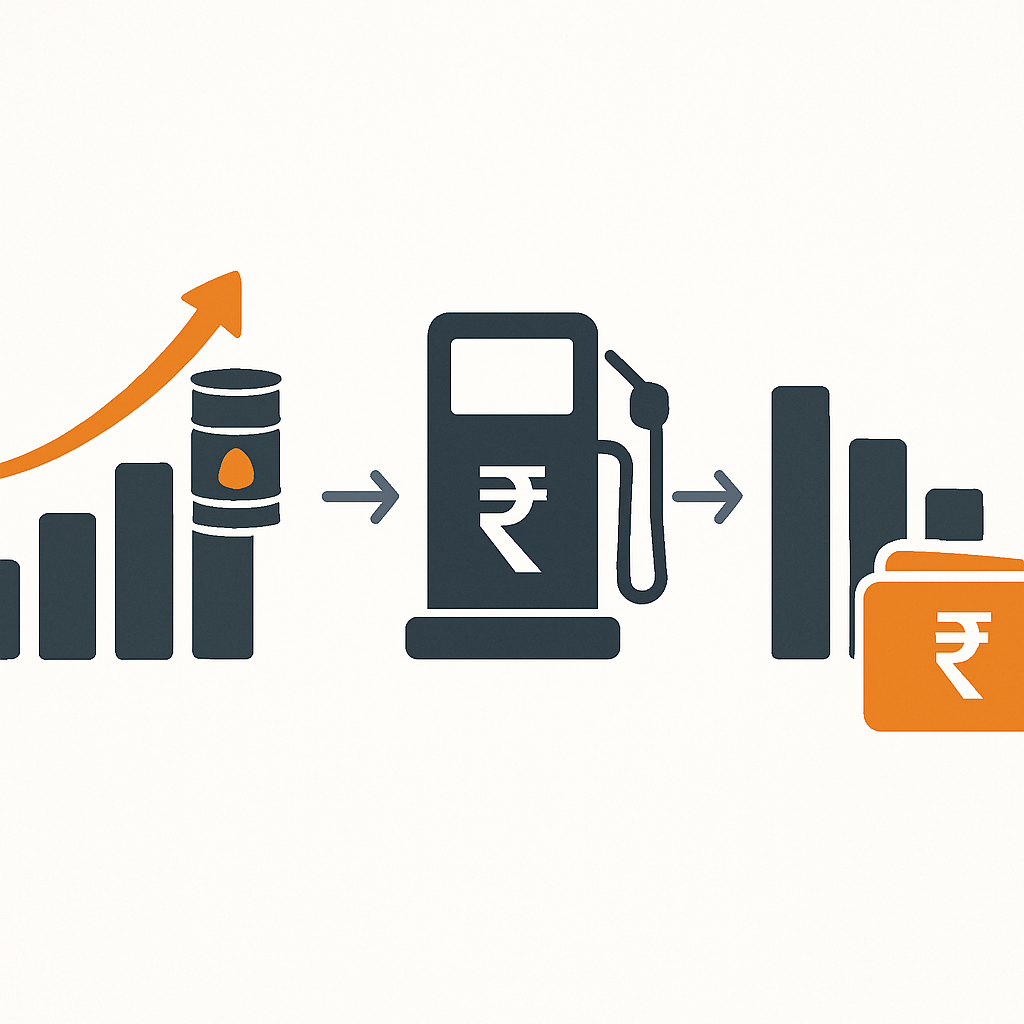
West Asia is central to global oil trade, so conflict in the region often makes energy markets more volatile. The Strait of Hormuz is especially important because it is a major route for crude oil and gas exports, and even the fear of disruption can make traders nervous. When shipping looks risky, tanker delays, insurance costs, and supply worries can push crude prices higher.
Oil markets react quickly to fear because supply cannot always adjust at short notice. If traders expect tankers to avoid risky routes, crude prices can jump even before a lasting shortage appears. The Open Magazine report on West Asia and oil markets explains why investors closely watch the Strait of Hormuz during regional tensions.
India’s Exposure to Imported Oil
India’s fuel supply chain starts far away from your neighbourhood petrol pump. Crude arrives through ports, moves to refineries, and then reaches retail outlets through pipelines, tankers, and depots. If West Asia supply gets disrupted, refiners may have to pay more for cargoes or look for alternate sources.
A weaker rupee can make this pressure worse because crude is largely priced in dollars. If oil prices rise and the rupee weakens at the same time, import costs can climb faster for India. You can read more about this link in PocketPlanGuru’s guide on why the rupee’s drop affects your wallet.
From Crude Oil Prices to Petrol and Diesel Costs in India
Petrol and diesel prices in India do not depend only on crude oil. They also include refining costs, freight, dealer commissions, central excise duty, and state-level taxes. This is why the price you pay can differ across Delhi, Mumbai, Bengaluru, Jaipur, and other cities.
When crude rises, oil marketing companies face pressure on margins and retail pricing decisions become more difficult. The government may use tax changes or other measures to soften the blow, but that depends on fiscal space and policy priorities. Higher fuel prices can also influence the Reserve Bank of India’s inflation outlook because transport and energy affect many goods and services.
Why Fuel Price Increases May Lag in India
Fuel price increases may not appear immediately after crude rises. The government and oil marketing companies often manage pass-through in phases, especially during periods of high volatility. This can protect consumers for a short period, but pressure may build if elevated crude prices continue.
Subsidy patterns can also affect timing, especially for LPG and targeted welfare schemes. If the government absorbs part of the shock, the fiscal cost may rise. If costs are passed on to consumers, household budgets can feel the impact sooner.
Ripple Effects on LPG, Food Inflation, and Public Transport
Fuel inflation rarely stays limited to petrol and diesel. LPG cylinder prices can face pressure when global energy costs rise, although subsidy decisions affect the final price paid by households. Food prices can also increase because trucks, tractors, cold chains, and warehouses depend on fuel.
For lower-income households, these ripple effects can hurt even when the family does not own a car. A household may still pay more for vegetables, milk, school transport, LPG, and delivery charges. A small shopkeeper may also face higher wholesale freight costs and pass some of that burden to customers.
LPG Prices as a Household Cost Multiplier
LPG is a key cooking fuel for many Indian homes, so any increase can directly disturb monthly budgets. The Down To Earth report on fuel taxes and cooking energy notes India’s vulnerability because the clean cooking transition has relied heavily on LPG. If cylinders become more expensive, families may cut back on other essentials to manage cooking costs.
Subsidies can reduce the immediate burden for some users, but they may not remove the risk entirely. Frequent price revisions can make budgeting harder for households with fixed incomes. Families should track LPG spending separately instead of mixing it with general grocery expenses.
Fuel Price Influence on Food and Essentials
Diesel powers trucks that move food from farms to mandis, warehouses, and cities. Higher diesel prices can raise freight costs for grains, pulses, vegetables, fruits, milk, and packaged goods. Retailers may absorb some costs for a while, but sustained fuel inflation often reaches shoppers.
Forbes has also reported how higher oil prices ripple through household budgets by affecting many parts of the economy. The same logic applies in India, where logistics costs matter across rural and urban markets. Families using credit cards for groceries should avoid rolling over balances because interest charges can make inflation feel worse.
Public Transport and Commuter Impact
State buses, private vans, shared autos, school transport, and many last-mile services depend on fuel. When diesel costs rise, operators may seek fare revisions or reduce service frequency. Metro fares may not change quickly, but feeder transport can become costlier.
Workers living far from offices may spend a larger share of income on travel during a fuel shock. Informal workers and students often have fewer flexible commute options. This makes transport inflation a serious issue for both urban and semi-urban households.
Household Budgeting Tips to Mitigate Rising Fuel Costs
You cannot control Brent crude, but you can control some daily choices. Start by tracking your fuel spend for one full month, including petrol, diesel, cab rides, delivery fees, LPG, and commute passes. This gives you a clear number to review instead of guessing where the money is going.
Next, divide expenses into essentials, flexible spends, and avoidable costs. Keep rent, groceries, school fees, term insurance, emergency savings, and loan EMIs as priority items. Cut back on extra trips, impulse shopping, and high-cost convenience spends before touching long-term savings.
Optimising Daily Travel Expenses
Carpooling can reduce fuel costs quickly, especially for office-goers with predictable routes. If metro, bus, or local train access exists, compare monthly pass costs with petrol or diesel expenses. Cycling or walking can work for short trips when the route is practical and safe.
Families with two vehicles can plan usage more carefully during fuel price spikes. Use the more fuel-efficient vehicle for longer routes and combine errands into one trip. Maintaining tyre pressure, servicing vehicles on time, and avoiding unnecessary idling can also improve mileage.
Energy Conservation at Home
Energy savings at home can offset some indirect pressure from fuel inflation. Use pressure cookers, efficient appliances, and clean LPG burners because poor flame quality wastes gas. Turn off appliances fully instead of leaving them on standby for long periods.
Electricity bills may also become a concern when energy costs rise across the economy. Use fans wisely, maintain air-conditioners, and choose energy-rated devices when replacing old appliances. These steps do not solve crude inflation, but they can soften the monthly hit.
Alternate Energy and Long-Term Financial Planning
Rising fuel prices are also a reminder to plan for long-term energy costs. Rooftop solar, fuel-efficient vehicles, and stronger cash buffers can help some families manage future shocks. The right choice depends on your city, income, home ownership, roof access, and travel needs.
Investors may see market reactions when crude rises because different sectors respond differently to energy costs. If you invest through mutual funds, SIPs, or direct equities, avoid reacting only to one news cycle. For portfolio decisions, tax planning, insurance changes, or loan restructuring, consult a financial advisor.
Solar Power Benefits and Costs
Rooftop solar can reduce electricity bills for eligible households. Government subsidies may lower upfront costs, depending on scheme rules and state-level support. The payback period depends on your power use, roof space, tariff, financing cost, and maintenance needs.
Solar may not directly replace petrol or diesel for every family. Yet it can reduce the broader household energy burden over time. If you plan to buy an electric vehicle later, home solar may improve long-term economics, but you should calculate total costs carefully.
Fuel-Efficient Transportation Choices
Fuel-efficient two-wheelers, hybrids, and electric vehicles can reduce running costs for some users. The savings depend on daily kilometres, charging access, resale value, battery life, and loan interest. Do not buy a new vehicle only because petrol prices rose for a few weeks.
Families should protect long-term goals from short-term inflation shocks. Keep emergency funds separate from PPF, NPS, EPF, and children’s education savings. If your income is variable, maintain a larger cash buffer and consult a financial advisor before making major financial commitments.
Expert Insights and Data-Backed Price Trend Analysis
Indian economists have warned that higher fuel prices can stress middle and lower-income households. Manoranjan Sharma, Chief Economist at Infomerics Ratings, was cited by ETAuto in its report on how rising petrol and diesel prices may pressure household budgets. The concern is straightforward because energy costs spread through transport, retail prices, and daily essentials.
MUFG Research has estimated that a US$10 per barrel rise in crude can worsen Asia’s current account by 0.2% to 0.9% of GDP. Its Asia oil price shock scenario analysis also flags India’s external account sensitivity. If imports become costlier, the rupee may face pressure, which can further raise the rupee cost of oil imports.
What Households Should Watch Next
Crude-to-pump price transmission in India often comes with a lag. Oil marketing companies may hold prices steady during short spikes, but sustained high crude can increase pressure on retail prices. State-level taxes and local transport costs can also change the final impact across regions.
Households should watch petrol prices, diesel prices, LPG revisions, grocery inflation, and commute costs together. Floating-rate loan borrowers should also stay alert because persistent inflation can influence future interest-rate expectations. Small business owners should review delivery charges, supplier terms, and margins carefully before costs squeeze cash flow.
Frequently Asked Questions
Why do petrol and diesel prices change in India?
Petrol and diesel prices reflect global crude rates, exchange rates, refining costs, dealer commissions, and taxes. India may also see delays or pauses in price changes during sensitive periods. This means global crude movements do not always appear instantly at the petrol pump.
How does the West Asia conflict affect my fuel bills?
West Asia is a major energy-producing region and an important part of global oil shipping. If conflict disrupts shipping routes or increases supply fears, crude can become costlier. Indian refiners may then face higher input costs, which can later affect petrol, diesel, and LPG prices.
What practical steps can reduce my fuel expenses?
Start with carpooling, public transport, and fewer unnecessary trips. Use metro, buses, shared rides, cycling, or walking where practical and safe. Maintain tyre pressure and service vehicles on time because better maintenance can improve fuel efficiency.
Will LPG cylinder prices rise along with petrol?
LPG prices can face pressure when global energy costs rise. The final household price depends on government pricing decisions and subsidy support. Families should still budget for possible cylinder price changes if crude prices remain high for a long period.
How can I prepare my household budget for inflation?
Review expenses and protect essentials first, including food, rent, insurance, EMIs, and education. Build an emergency fund that covers at least a few months of basic costs. Avoid high-interest credit card debt and consult a financial advisor before making major investment, insurance, or loan decisions.
Protect Your Budget Before the Next Fuel Shock
Rising crude prices and West Asia conflict risks can affect your money in many small ways before one big bill appears. Petrol, diesel, LPG, groceries, fares, and loan stress can all add pressure together. A calm budget review today can help prevent panic later.
Focus on travel savings, energy discipline, and a stronger emergency fund. Track fuel, LPG, and grocery costs for the next few months so you can respond early. Subscribe to PocketPlanGuru for more practical guides on how global events affect Indian household budgets, taxes, loans, and savings.
Disclaimer: The information above is for educational purposes only and does not constitute financial advice.
10 Comments