

Understanding ICRA’s Downgrade of Utkarsh Small Finance Bank
ICRA downgraded Utkarsh Small Finance Bank’s long-term rating on subordinated debt from [ICRA]A+ (Negative) to [ICRA]A (Negative). The short-term rating on certificates of deposit was reaffirmed at [ICRA]A1+, according to the agency’s rating rationale for Utkarsh Small Finance Bank. The downgrade reflects weaker asset quality, rising non-performing assets, and continued stress in the bank’s microfinance-focused loan book.
This rating action does not mean the bank has failed, and it does not cancel its banking licence. It does signal that the rating agency sees higher credit risk than before in the rated long-term instrument. For savers, borrowers, and investors, the main lesson is to track bank health, deposit concentration, and loan discipline more carefully.
What the downgrade technically means
A lower long-term rating can affect how a bank raises funds from the market. If investors demand higher returns for taking more risk, the bank’s cost of borrowing may rise over time. That can influence profitability, lending appetite, and the way the bank prices riskier loan products.
The downgrade is linked mainly to asset quality pressure, not to a sudden change in deposit insurance rules or RBI regulation. Small finance banks continue to operate under RBI supervision and must meet regulatory requirements. Still, customers should avoid treating all banks as identical simply because they offer similar deposit products.
Why the microfinance segment is most affected
ICRA had earlier flagged higher slippages in the microfinance portfolio due to adverse climatic conditions, operational challenges, weaker credit discipline, and borrower overleveraging. The bank’s May 2025 ICRA update shared by Utkarsh also pointed to high exposure in Bihar and Uttar Pradesh. When a large share of borrowers is concentrated in a few regions, local shocks can affect repayments across many accounts at the same time.
Microfinance loans often support small shops, livestock activity, farming-linked income, tailoring, transport work, and daily household cash flow. These borrowers may not always have stable monthly income or large savings buffers. If floods, droughts, weak rural demand, or business disruption reduce cash inflows, even small instalments can become difficult to pay on time.
Impact of Rising Microfinance Risks on Your Savings
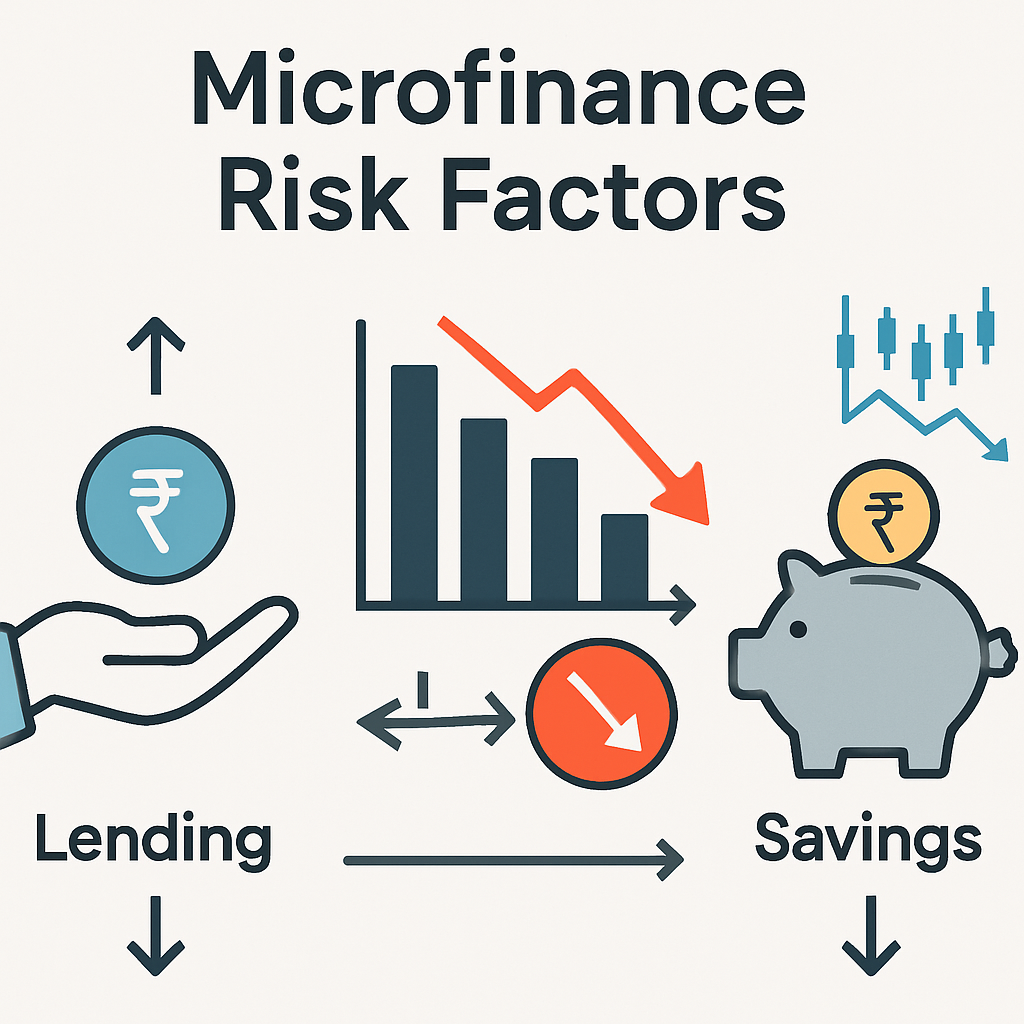
For depositors, the practical question is whether a rating downgrade should trigger panic. The answer is no, but it should trigger a calm review of exposure. A single downgrade does not decide deposit safety, yet it can be a useful warning sign about profitability, asset quality, and market confidence.
Deposit safety depends on several factors, including capital, liquidity, governance, RBI supervision, and the bank’s ability to manage stressed loans. It also depends on how much money one depositor keeps with one bank. Retail customers should read rating updates, audited financial statements, and bank disclosures before chasing a higher fixed deposit rate.
Should retail depositors worry about their money?
Deposits in Indian banks are insured up to ₹5 lakh per depositor per bank under DICGC rules. This insurance limit includes both principal and interest within the prescribed ceiling. RBI’s official public resources provide broader information on banking regulation, customer safeguards, and financial awareness.
If your total deposits with one bank are within the insured limit, the risk picture is different from someone holding a much larger amount in the same bank. If your exposure is above the insured limit, review it without making hurried decisions. For large deposits, complex family holdings, or retirement savings, consult a financial advisor before changing your banking arrangements.
Interest rates and returns after a downgrade
A bank facing market concern may offer competitive deposit rates, maintain existing rates, or adjust rates depending on liquidity and funding needs. Savers should compare returns with risk instead of choosing only the highest number advertised online. A slightly higher rate may not be worth excessive concentration in one institution.
Borrowers may also see changes if the bank becomes more cautious about risk. Loan appraisal, income checks, credit bureau review, and collection discipline may become tighter in stressed segments. For broader context on bank funding and customer rates, read PocketPlanGuru’s guide on what Yes Bank’s fundraise means for savings and loan rates.
Broader Microfinance Sector Challenges Affecting Banks
Microfinance plays an important role in India because it gives formal credit to borrowers who may not have traditional collateral. It can support self-employment, rural trade, small services, and women-led household businesses. The risk rises when income becomes unstable and debt grows faster than repayment capacity.
Overleveraging remains one of the biggest concerns in rural and semi-urban lending. A borrower may take loans from more than one lender, including microfinance institutions, informal lenders, app-based lenders, or local credit networks. When household costs rise or income drops, multiple repayment obligations can quickly become unmanageable.
Borrower behaviour and credit discipline issues
Rating updates have linked microfinance stress to weakening credit discipline among some borrowers. This can mean delayed instalments, missed payments, or a lower willingness to prioritise formal loan obligations. For lenders, these delays can turn into higher slippages and eventually non-performing assets if the stress continues.
Credit discipline is not only a borrower issue; it also reflects underwriting quality and lender monitoring. If lenders disburse loans without fully checking total borrower debt, the risk of repayment stress increases. Better use of credit bureau data, field verification, and income assessment can reduce the chance of lending to already stretched households.
Climatic and regional stress factors
Climate stress has become a financial risk for banks that lend heavily to rural and semi-urban borrowers. Floods, droughts, heat waves, crop losses, and seasonal disruptions can reduce cash flow across an entire area. When many borrowers in one geography are hit together, the problem is no longer an isolated default.
Bihar and Uttar Pradesh are important microfinance markets, but regional concentration can amplify losses when local repayment capacity weakens. Shops, farm workers, transporters, and self-employed households can all be affected by the same local slowdown. This is why rating agencies pay close attention to geographic diversification in microfinance portfolios.
Practical Steps for Deposit Holders and Borrowers
Deposit holders should track ratings, but they should not react only to headlines. A downgrade is one signal among many, along with capital position, profitability, liquidity, management commentary, and audited results. Utkarsh’s FY2024-25 annual report can help readers understand the bank’s business model and operating environment.
Borrowers should treat the downgrade as a reminder to use credit responsibly. A loan can help build income only when repayment remains manageable. If income becomes stretched, it is better to speak with the lender early instead of waiting until missed payments damage your credit record.
How to safeguard your savings amid uncertainty
Keep emergency money in simple, liquid, and easily accessible products. Savings accounts, fixed deposits, post office products, and government-backed options can serve different needs, but the right mix depends on your situation. For allocation decisions, tax impact, and large balances, consult a financial advisor.
Review whether your deposits in one bank exceed the insured limit. Also compare the bank’s public disclosures, rating updates, and financial performance before renewing a large fixed deposit. Avoid putting all savings in one institution only because it offers a slightly higher interest rate.
For microfinance borrowers managing credit
Borrow only for productive or necessary purposes, and avoid using new loans merely to repay old loans. Maintain a written list of instalments, due dates, lenders, and total monthly repayment. This simple habit can show whether the debt burden is still manageable.
Timely payment protects your credit history and future access to formal finance. A clean repayment record can help when applying later for a home loan, education loan, vehicle loan, or small business loan. If income falls due to illness, crop loss, job disruption, or business slowdown, contact the lender before defaulting.
Alternative Options for Risk-Averse Savers
Risk-averse savers can look beyond bank fixed deposits, but every product has trade-offs. Government-backed schemes such as PPF, NSC, Sukanya Samriddhi Yojana, EPF, and NPS differ in safety, lock-in, liquidity, and tax treatment. These products should be evaluated with your goals in mind, and you should consult a financial advisor before making investment decisions.
Debt mutual funds and bond products also need careful review because low risk does not mean no risk. SEBI requires mutual funds to disclose portfolio details, scheme risks, and expense ratios through its investor framework at SEBI’s official website. Investors should understand credit risk, interest rate risk, taxation, and time horizon before choosing any debt product.
Government-backed savings schemes
PPF is popular because it has sovereign backing, tax benefits, and long-term compounding potential. NSC can suit some conservative savers who prefer fixed-return post office products. Sukanya Samriddhi Yojana is designed for long-term savings for a girl child, subject to scheme rules.
These products are not suitable for every short-term need because many have lock-ins or withdrawal restrictions. Near-term expenses and emergency funds should not be trapped in long-lock-in products. A balanced approach usually separates emergency liquidity, medium-term goals, and long-term savings.
Debt funds and market-linked instruments
Some investors use overnight funds, short-duration funds, or gilt funds to manage different types of risk. Gilt funds invest in government securities, but their prices can still move when interest rates and bond yields change. Repo rate trends, inflation expectations, and liquidity conditions can affect debt fund returns.
If you follow bonds, PocketPlanGuru’s explainer on why smart investors watch India bonds rally now can help explain the market backdrop. Equity investors may also track Nifty, Sensex, BSE, and NSE data for broader market sentiment. You can check broad market information through the NSE website, but market excitement should not be confused with deposit safety.
Regulatory Landscape and Future Outlook
RBI monitors banks and non-bank lenders closely because microfinance touches financially vulnerable households. If stress continues across the sector, lenders may face pressure to strengthen underwriting, borrower assessment, and collection practices. Banks may also invest more in early warning systems, field monitoring, and portfolio diversification.
CARE Ratings also downgraded Utkarsh’s long-term instruments, citing continued stress in its micro-banking segment in its August 2025 rating release on Utkarsh Small Finance Bank. This provides another independent view of the broad risk affecting the bank. Multiple rating actions can shape how investors, depositors, and wholesale lenders view future risk.
Expected regulatory and lender responses
Lenders may strengthen checks on total borrower debt before approving fresh loans. Better use of credit bureau data can help identify borrowers who already have multiple obligations. Stronger internal controls can also reduce aggressive lending in areas where repayment stress is visible.
Climate and regional risk may receive greater attention in microfinance lending models. If floods, droughts, or local disruptions repeatedly affect repayment, lenders need better stress testing and wider geographic diversification. This may improve sector stability, but it could also make credit less easily available for higher-risk borrowers.
Utkarsh’s potential recovery path
Utkarsh can reduce risk by diversifying its loan book and limiting excessive concentration in vulnerable regions. It can also improve borrower engagement, strengthen credit checks, and focus on disciplined collections. Recovery will depend on asset quality trends, profitability, capital comfort, and management execution.
The ICRA downgrade of Utkarsh Small Finance Bank will remain relevant until asset quality shows sustained improvement. Depositors should watch future quarterly results, rating updates, and management commentary instead of relying on one headline. For broader financial stability themes, read PocketPlanGuru’s article on why RBI’s FCNR(B) and ECB swap windows matter now.
Frequently Asked Questions
The questions below address common concerns from savers, borrowers, and first-time investors. They are general in nature and should not replace personal financial advice. For decisions involving large deposits, loans, or investments, consult a financial advisor.
Is my deposit in Utkarsh Bank safe after the downgrade?
Deposits up to ₹5 lakh per depositor per bank are insured under DICGC rules. The downgrade does not mean customers must withdraw money in panic. If your deposits exceed the insured limit, review concentration risk and consult a financial advisor before making changes.
Will loan approval become stricter for microfinance borrowers?
Loan approvals may become stricter if the bank tightens underwriting in response to asset quality stress. Borrowers with timely repayment records and manageable debt may still have access to credit. Borrowers with multiple loans, weak cash flow, or missed instalments may face more questions during appraisal.
How can I track changes in my bank’s credit rating?
You can check rating agency websites such as ICRA and CARE Ratings for rating rationales and press releases. Banks also publish rating updates, annual reports, and investor disclosures on their websites. RBI announcements and public notices can provide additional context for depositors.
What safer saving options exist during banking sector stress?
Conservative savers can review insured bank deposits, post office schemes, government-backed products, and other low-risk options. Each product has different rules for liquidity, taxation, lock-in, and returns. For the right mix across products, consult a financial advisor.
How does regional concentration increase microfinance risk?
Regional concentration means many borrowers come from the same states, districts, or local economic clusters. If floods, droughts, job losses, or local business stress affect that area, repayments can fall together. This can raise non-performing assets faster than in a well-diversified loan book.
Key Takeaway for Savers and Borrowers
The ICRA downgrade of Utkarsh Small Finance Bank is a reminder to stay alert, not afraid. Savers should track bank health, spread large deposits wisely, and avoid choosing a bank only because it offers a higher rate. Borrowers should avoid excessive debt, pay on time, and speak with lenders early if repayment stress begins.
Microfinance remains useful for financial inclusion, but rising stress shows why responsible lending and borrowing matter. Rating actions can influence funding costs, lending policies, and depositor confidence over time. Keep following PocketPlanGuru for practical guides on Indian banking, savings, borrowing, and financial planning.
Disclaimer: The information above is for educational purposes only and does not constitute financial advice.
4 Comments