


Why Axis Bank’s Wider Business Banking Model Matters
Axis Bank is moving beyond a loans-only relationship with businesses and positioning itself as a broader financial services partner. For Indian MSMEs, startups, and growing enterprises, this means business banking may now include payments, treasury, cash management, trade finance, digital tools, and investment access under one ecosystem. The shift matters because many businesses need more than credit; they need better control over cash flow, risk, compliance, and surplus funds.
Many Indian business owners still think of a bank mainly as a place for current accounts, working capital, and the occasional business loan. That view is changing as banks add digital platforms, transaction banking, advisory-led support, and investment-linked services. The practical question is whether your business can use this wider setup to save time, improve visibility, reduce financial friction, and plan growth more confidently.
Axis Bank’s Strategic Shift From Lending to Holistic Financial Solutions
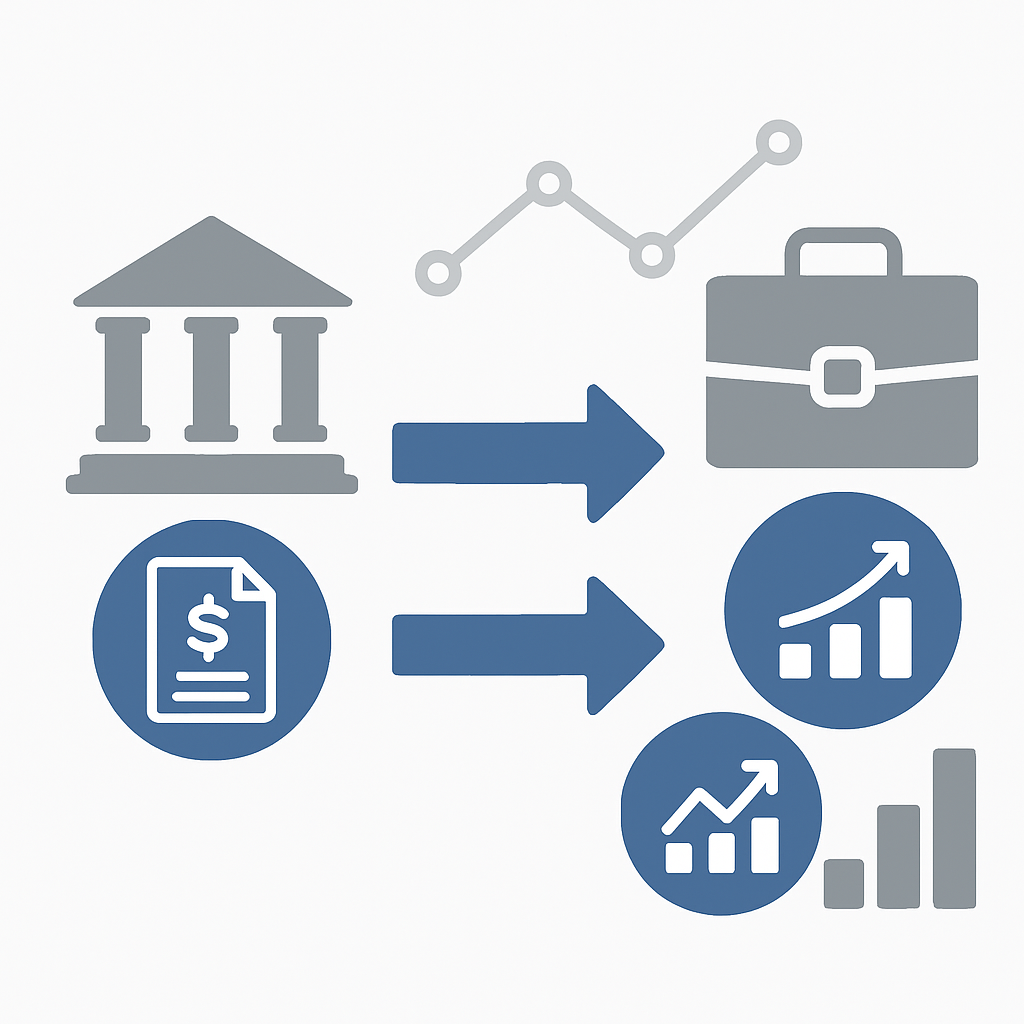
Axis Bank now presents itself as more than a lender for Indian businesses. Its broader approach includes business banking, investment products, treasury support, transaction banking, payments, and digital tools. The Axis Bank Business Model Canvas by GrowthShareMatrix describes a comprehensive financial ecosystem that goes beyond basic accounts and loans.
This shift matters because businesses rarely need only one financial product. A textile unit in Surat may need trade finance, supplier payments, and working capital support, while a SaaS startup in Bengaluru may need collections tracking, payroll visibility, and short-term surplus planning. Axis Bank’s shift beyond loans aims to bring more of these needs into one banking relationship instead of forcing firms to coordinate across several disconnected providers.
Traditional Banking Compared With Newer Axis Bank Offerings
Earlier, many businesses mainly used banks for current accounts, overdrafts, term loans, cheque payments, and basic deposits. These services remain useful, especially when firms need working capital, asset finance, or routine payment infrastructure. Modern businesses, however, also need digital collections, treasury tools, investment access, cash flow reporting, and quicker data-driven decision support.
Axis Bank’s newer model adds services such as treasury, cash management, trade finance, and investment-linked solutions. Its business banking services page shows a wide range of products for business users, including digital lending products. This wider mix helps owners think about liquidity, returns, compliance, and risk as part of one financial plan rather than as separate decisions.
Serving MSMEs, Startups, and Larger Enterprises
Axis Bank appears to organise its business around different customer and product verticals. The Axis Bank strategy and business model profile by Umbrex lists areas such as business banking, commercial banking, corporate banking, transaction banking, treasury, cards, and payments. This structure allows the bank to serve different business stages with more focused products and operating models.
A startup may need quick onboarding, payment collections, expense visibility, and basic credit access. An MSME may need invoice discounting, GST-linked cash flow checks, supplier payments, or trade finance. A large enterprise may need treasury support, custodial services, capital account services, and structured transaction banking across multiple locations in India.
Integrated Investment Products for Indian Businesses
Axis Bank’s shift beyond loans also has an investment angle for businesses that carry temporary surplus funds. Many firms park extra cash in savings accounts or fixed deposits without reviewing whether the choice matches their cash flow timing, risk comfort, and internal policy. A more planned approach can help owners separate operating liquidity from funds that may be evaluated for other regulated options after proper advice.
Businesses should not treat investments as casual add-ons to a current account relationship. Any product must align with RBI rules, SEBI regulations, company policies, board approvals, tax treatment, and the firm’s working capital needs. Before committing business surplus funds to any product, consult a financial advisor and confirm suitability with qualified tax and compliance professionals.
Investment Avenues Within a Broader Banking Ecosystem
Axis Bank’s financial ecosystem may include access to investment avenues such as mutual funds, corporate deposits, and government securities through appropriate channels. Business owners may also explore wealth management services for personal and promoter-level planning, depending on eligibility and suitability. These options should be evaluated carefully because business treasury decisions are different from personal investing decisions.
Indian markets offer many choices, from debt-oriented products to G-Secs and equity-linked investments connected to broader Nifty and Sensex sentiment. Readers interested in fixed-income themes can also read PocketPlanGuru’s guide on why long-dated G-Secs are gaining investor attention. Since returns, risks, liquidity, tax treatment, and regulations differ across products, consult a financial advisor before choosing any investment.
Using Surplus Cash Without Weakening Business Liquidity
Surplus cash can support business growth when owners first map money to clear time horizons and obligations. Funds needed for salaries, rent, GST, vendor payments, debt servicing, and emergency expenses should be treated differently from money that is not required immediately. This mapping helps avoid a common mistake where a firm invests cash for return but later needs expensive borrowing to meet routine obligations.
Business owners also need to separate company cash from personal goals. Personal products such as PPF, NPS, EPF, SIPs, term insurance, and retirement plans serve different needs from business treasury planning. A tax professional can explain income tax, ITR, Section 80C, and entity-level implications where relevant, while a financial advisor can help assess investment suitability.
Digital Innovation Through Axis Bank NEO for Business
Digital banking now plays a central role in business finance. Axis Bank’s NEO for Business platform shows how banks are moving from branch-led servicing to digital-first business banking. According to IBS Intelligence’s report on NEO for Business, the platform currently caters to sole proprietorship entities and individuals, with expansion planned for companies, partnerships, and LLPs.
This is relevant for Indian MSMEs that want faster payment handling, easier data access, and smoother banking journeys. A small business cannot afford delays in basic account updates, collection tracking, documentation, or working capital decisions. Axis Bank’s shift beyond loans becomes more practical when digital tools reduce daily friction and improve the owner’s visibility over cash movement.
Features and Potential Benefits of the NEO Platform
NEO for Business aims to give MSMEs a digital business banking experience through a single interface. Features can include payment handling, transaction views, cash flow support, and access to banking products, depending on eligibility and platform availability. These tools may help owners view money movement without switching between too many disconnected systems.
Digital dashboards can also support better tracking of receivables and payables. For example, a trader can check pending collections before placing a large inventory order, while a service firm can review delayed client payments before hiring additional staff. When data quality improves, decisions on credit, investments, and operating expenses become less dependent on guesswork.
Example of a Startup Optimising Cash Flow With Digital Banking
Consider a small D2C startup in Pune that sells through online marketplaces and direct orders. Its cash may get stuck between inventory purchases, advertising spends, refunds, platform settlements, and courier payments. A digital platform like NEO can help the founder view inflows and outflows more clearly in one place.
If the firm qualifies, faster digital credit processes may support short working capital requirements. Any surplus cash should still be reviewed carefully with a financial advisor before it is moved into investment products. The founder may track market sentiment through NSE and BSE updates, but business cash should not chase stock market moves without a documented policy and professional guidance.
Optimising Working Capital With Axis Bank’s Expanded Suite
Working capital is the lifeblood of many Indian businesses. Even profitable firms can struggle if customers delay payments, raw material prices rise, or inventory cycles become longer than expected. A broader banking suite can help owners manage liquidity through a mix of financing, collections, payments, digital tracking, and transaction support rather than relying only on loans.
Axis Bank offers business and corporate banking services that include financing and transaction solutions. Its corporate banking services page highlights cash management, trade finance, custodial and capital account services, government banking, and wider business transaction solutions. These tools can support firms with complex payment, collection, and operating needs across different business stages.
Working Capital Tools and Digital Tracking
Common working capital tools include overdrafts, invoice discounting, trade finance, and commercial vehicle or equipment loans. These products can help businesses fund inventory, receivables, transport assets, or daily operations when used responsibly. The right option depends on cash cycles, margins, collateral, documentation, borrowing cost, and repayment ability.
Digital tracking adds another layer of control to working capital management. Owners can monitor receivables, payables, account balances, and recurring payments more frequently. If interest rates change after an RBI repo rate move, businesses should review borrowing costs with their banker and avoid assuming that older loan terms remain optimal.
Managing Seasonal and Sectoral Cash Flow Pressures
Seasonal businesses need different cash flow planning from steady service firms. An agriculture-linked firm may see income after harvest cycles, while a manufacturing unit may need funds before festive demand. A consulting business may face delayed client payments despite having low inventory needs.
Customised banking support can help match repayment patterns with actual income cycles. Trade finance may suit import-export firms, while invoice-based products may support B2B suppliers that face delayed collections from larger buyers. Owners should compare costs, fees, documentation needs, covenants, and risks before selecting any facility.
Risk Mitigation and Financial Resilience Through Axis Bank
Growth without risk control can hurt a business quickly. Rising credit costs, margin pressure, customer defaults, inflation, and market volatility can affect cash flow even when sales appear healthy. A bank that offers credit, treasury, digital, and advisory-linked support can help firms build a more resilient finance stack.
Risk planning is not only for large companies. MSMEs also need account alerts, insurance reviews, guarantees, disciplined borrowing, clean records, and regular cash flow checks. Axis Bank’s shift beyond loans may encourage owners to view business finance as a full risk system rather than as a single loan account.
Credit Risk Management for Business Owners
Credit risk starts with knowing how much exposure your business carries at any point in time. This includes bank loans, vendor dues, customer receivables, guarantees, credit card usage, and informal payment commitments. Digital alerts and regular account reviews can help owners spot pressure early before small delays become larger defaults.
Some firms may also need insurance-linked or guarantee-backed products, depending on their sector, contracts, and customer profile. Exporters, contractors, and suppliers often face payment risk from larger buyers or overseas counterparties. Before signing any risk product, read the terms carefully and consult a qualified advisor who understands your business context.
Market Risk and Diversification of Surplus Funds
Market risk affects business cash when owners invest surplus funds without a clear plan. Equity markets can move sharply with Nifty, Sensex, global cues, inflation, interest rates, and policy changes. Debt products also carry risks, including interest-rate risk, liquidity risk, and credit risk.
Diversification can reduce dependence on one product or asset class, but it does not remove risk. SEBI-regulated products offer disclosures and rules that support investor protection, and readers can review investor resources on the SEBI website. For market awareness, business owners can track listed securities and indices through the NSE website, but they should consult a financial advisor before investing.
How Indian Businesses Can Use Axis Bank’s Broader Offerings
Start by mapping business money into three practical buckets based on timing and purpose. One bucket can cover daily operations, another can cover near-term commitments, and a third can identify surplus funds that may be reviewed professionally. This simple framework can guide conversations about loans, deposits, investments, cash management, and digital banking tools.
Then review your existing banking setup with fresh eyes. Ask whether your current account, credit lines, payment tools, compliance records, and investment choices work together or create extra effort for your team. Axis Bank’s shift beyond loans gives businesses a reason to evaluate banking as an integrated operating system rather than as a set of isolated products.
Building a Financial Strategy Around a Banking Ecosystem
A sound strategy may combine working capital support with suitable cash management and professionally reviewed investment options. Business owners can discuss sector needs, transaction flows, and credit requirements with a relationship manager. Investment decisions should be made only after consulting a financial advisor who can assess risk, liquidity, tax treatment, and suitability.
Promoters should also connect business planning with personal finance. A home loan, personal loan, credit card, term insurance policy, and retirement plan can affect family cash flow and business decision-making. For market context, readers may review PocketPlanGuru’s note on why Raamdeo Agrawal’s 15 percent return forecast matters now, while remembering that forecasts are not guarantees.
Maximising the Value of Digital Banking Tools
Digital tools work best when teams use them consistently. Businesses can automate payment reminders, track receivables, download statements, review cash flow reports, and monitor account activity at regular intervals. This discipline can reduce missed payments, idle cash, last-minute borrowing, and avoidable administrative delays.
Businesses should also keep compliance records clean. Updated KYC, GST data, income tax filings, ITR records, and board approvals can support smoother banking discussions. If your firm deals with cross-border investors or NRIs, PocketPlanGuru’s article on SEBI’s digital onboarding framework for NRIs offers useful background on the direction of digital compliance.
FAQs About Axis Bank’s Broadened Business Banking and Investment Services
Business owners often feel unsure when a bank offers more than loans. That caution is sensible because every product has costs, rules, eligibility conditions, and risks. These FAQs address common questions in a simple Indian business context.
How does Axis Bank’s NEO platform improve MSME banking?
NEO for Business aims to give MSMEs a digital-first banking experience. It can support payments, transaction tracking, cash flow visibility, and access to banking products, depending on eligibility and platform scope. This may reduce manual work and help owners review business finance decisions with better data.
What investment options can Indian businesses access through Axis Bank’s ecosystem?
Axis Bank’s broader ecosystem may include access to mutual funds, corporate deposits, government securities, and wealth solutions through suitable channels. Product availability and suitability can vary based on entity type, risk profile, regulations, liquidity needs, and internal approvals. Businesses should consult a financial advisor before investing surplus funds.
Can startups customise banking solutions based on growth stage?
Yes, Axis Bank serves different business segments, including startups, MSMEs, mid-sized companies, and larger enterprises. A startup may focus on payments, onboarding, and working capital, while a mature firm may need treasury, trade finance, and cash management support. Founders should speak with a relationship manager to match products with their growth stage and operating model.
How are RBI and SEBI norms relevant to business banking and investments?
Banks and market intermediaries must operate within Indian regulatory frameworks. RBI regulates banking activities, and businesses can track official policy updates through the RBI website. SEBI regulates securities market products, mutual funds, and investor protection rules, so regulated investment products should be evaluated with proper disclosures and advice.
What steps can businesses take to reduce financial risks?
Businesses can start with credit monitoring, cash flow dashboards, diversified banking relationships, suitable insurance reviews, and disciplined borrowing. They should also review loan costs when interest rates, repo rate signals, inflation trends, or sector conditions change. For investments, guarantees, insurance-linked products, and risk management tools, businesses should consult qualified advisors before acting.
Final Takeaway for Indian Business Owners
Axis Bank’s move beyond traditional lending reflects a larger change in Indian business banking. Companies now need integrated support across credit, payments, investments, treasury, compliance, digital operations, and risk management. Axis Bank’s shift beyond loans can help owners think beyond borrowing and build a stronger finance stack for daily operations and long-term growth.
The best approach is practical and phased. Review your current banking setup, identify cash flow gaps, and ask which digital, transaction, credit, or investment-related tools may improve control. Explore Axis Bank’s integrated financial solutions with a relationship manager, consult a financial advisor before making investment decisions, and subscribe to PocketPlanGuru for more clear, India-focused money insights.
Disclaimer: The information above is for educational purposes only and does not constitute financial advice.
158 Comments