

Why the AI Bubble Warning Matters Now
CEA’s AI Stock Bubble Warning matters because the excitement around artificial intelligence has moved beyond technology news and into personal finance. AI-linked shares, global technology funds, and large market indices can all react when investors start questioning whether prices have risen too far. For Indian households, that can affect mutual fund returns, SIP confidence, retirement portfolios, and even career planning in technology-linked sectors.
What an AI Stock Bubble Means
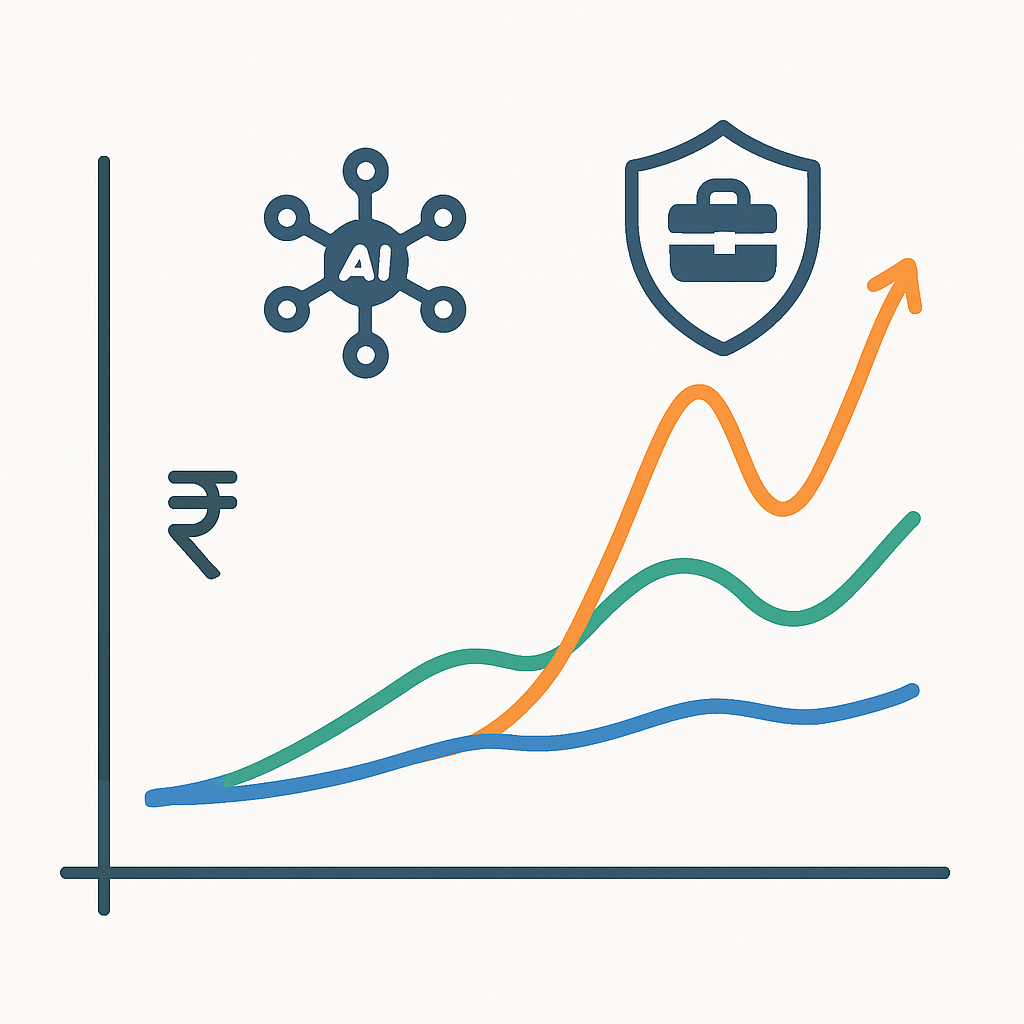
An AI stock bubble happens when investors pay very high prices for companies because they expect artificial intelligence to create huge future profits. A bubble does not mean AI is useless, and it does not mean every AI company is weak. It means the market price may already assume near-perfect growth, strong demand, and smooth execution, even though real earnings may take longer to appear.
The AI bubble overview on Wikipedia explains that technology shares can rise sharply because of AI hype even when profitability and monetisation remain uncertain. This is similar to buying property at a price that assumes perfect rent, perfect resale value, and no slowdown. The asset may still be valuable, but the buyer carries extra risk if the future is less perfect than expected.
Why Global Institutions Are Worried
Financial institutions have started warning that AI-led stock valuations may have moved too far ahead of business fundamentals. As reported by AP News on AI bubble warnings, the Bank of England said the risk of a sharp market correction had increased. The same report noted that doubts about the economic promise of artificial intelligence were becoming important enough for major institutions to raise public concerns.
CNBC also reported that IMF chief Kristalina Georgieva pointed to worrying signs, including stretched stock market valuations during AI-led euphoria and strong demand for gold as a sign of investor anxiety. You can read more in this CNBC report on IMF and Bank of England AI bubble concerns. These warnings do not predict an exact crash date, but they do remind investors that optimism can turn into volatility when expectations become too high.
AI Can Be Real Even If Prices Are Risky
A useful way to understand CEA’s AI Stock Bubble Warning is to separate the technology from the valuation. Artificial intelligence may improve software, customer support, healthcare, finance, logistics, education, and many other areas. Even so, a good technology theme can still become a poor investment if investors pay too much for uncertain future profits.
INSEAD’s discussion on bubbles explains that a bubble is not just about prices being higher than today’s fundamentals. It can also mean prices are higher than what future fundamentals can realistically deliver. That distinction is important because investors can be right about AI changing the world and still lose money on overvalued stocks.
How Indian Investors Can Feel the Impact
For Indian investors, an AI stock correction would not remain only a Wall Street event. Global technology shares influence foreign portfolio investor flows, market sentiment, and risk appetite in emerging markets. If large AI-linked stocks fall sharply abroad, the mood can affect Nifty, Sensex, Indian IT stocks, and equity mutual funds even when domestic companies continue reporting stable results.
Many Indian portfolios also have indirect global technology exposure. International mutual funds, feeder funds, global exchange-traded funds, NPS equity options, and diversified equity schemes may all hold companies linked to the AI theme. This means an investor may carry AI-related risk even without buying a single pure AI stock directly.
What Could Happen to Nifty, Sensex, and IT Stocks
A global AI correction can affect Indian indices through sentiment, foreign flows, and sector rotation. Foreign portfolio investors may reduce exposure to riskier assets when US technology shares fall, which can put pressure on broader Indian markets. This pressure may be temporary or deeper depending on valuations, earnings, currency movement, and the scale of the global correction.
Indian IT and digital services companies may face extra scrutiny during such periods. Investors may ask whether AI will improve margins, reduce traditional outsourcing demand, or change billing models. For market context, you can track index behaviour on the NSE India website and company disclosures through the SEBI website before reacting to market noise.
What It Means for Mutual Funds and SIPs
Mutual funds can be affected differently depending on their sector exposure and investment style. A technology-heavy equity fund may move more sharply during an AI-led correction than a diversified hybrid fund. A broad index fund may also feel pressure if the largest index constituents are influenced by global risk-off sentiment.
SIPs are designed to handle market ups and downs over long periods, but that does not mean every investor should ignore risk concentration. Review whether multiple funds in your portfolio are holding similar technology or growth stocks. Before stopping, increasing, or restructuring SIPs, consult a financial advisor who can consider your goals, time horizon, income stability, and risk profile.
Red Flags to Watch Before Investing
The first red flag is valuation rising much faster than revenue, profit, and cash flow. A company can have an exciting AI story, but investors should still ask whether real customers are paying for its products. Growth stories need financial evidence, not only presentations, headlines, and social media excitement.
Fidelity’s guide on five signs of an AI bubble highlights concerns such as valuations above historic norms, rapid capital spending, and circular financing. Circular financing means money can move in a loop among a small group of companies, making demand look stronger than it really is. Heavy spending on chips, data centres, cloud capacity, and power can support future growth, but it can also hurt shareholders if returns do not arrive.
Why Job Security Is Part of the Same Warning
AI bubble fears are not limited to portfolios because market confidence also affects hiring, bonuses, startup funding, and project approvals. When investors question valuations, companies may slow spending and demand clearer returns from AI initiatives. Projects that sound exciting but do not reduce costs, increase revenue, or improve customer experience can face tougher review.
In India, this matters for IT services, product startups, data teams, digital marketing, finance operations, and customer support roles. It does not mean every AI-related job is unsafe, and it does not mean companies will stop using AI. Workers who combine domain knowledge with practical AI skills may be better placed than workers who depend only on tool familiarity.
Steps Salaried Professionals Can Consider
Salaried professionals should connect investment risk with income risk. If your job, bonus, employee stock options, and portfolio are all linked to the same technology boom, your overall exposure may be higher than it looks. A downturn in the AI theme could then affect both your salary confidence and your investment value at the same time.
Emergency savings, insurance, and manageable debt become more important in such an environment. A liquid emergency fund can provide breathing room during layoffs, delayed appraisals, or job changes. Term insurance, health insurance, home loan EMIs, car loan EMIs, and credit card dues should be reviewed carefully, and major financial changes should be discussed with a financial advisor.
How to Review Your Portfolio Without Panic
CEA’s AI Stock Bubble Warning should be treated as a reason to review exposure, not as a trigger for panic selling. Start by checking how much of your money depends on one theme, one sector, one country, or a small group of mega-cap technology companies. Your direct stocks, mutual funds, retirement accounts, and international funds may have more overlap than you expect.
Match each investment with a goal and time frame. Money needed in the next one to three years generally should not depend heavily on volatile equity themes, while long-term money can tolerate more short-term movement. If you are unsure how to judge allocation, read our guide on understanding the foundation of personal finance and consult a financial advisor before making portfolio changes.
Do Not Ignore Boring but Useful Options
Exciting market themes can attract attention, but stable financial products also play an important role. PPF, EPF, NPS, fixed deposits, debt funds, and suitable hybrid funds can help balance risk depending on your goals. These products may not create social media buzz, but they can reduce stress when equity markets become volatile.
Tax planning should also support your wider financial plan. Section 80C options such as PPF, EPF, ELSS, and eligible insurance premiums can affect tax planning, but products should not be chosen only for last-minute tax saving. You can track monetary policy updates on the Reserve Bank of India website, and you can read our article on why RBI’s new swap window could lower your home loan for more context on rates and household cash flow.
What Young Investors Should Learn
Many young Indians began investing through SIPs after seeing strong market returns, and that habit can be useful when it is linked to discipline. The risk is that every generation also faces a hot theme that looks impossible to question. AI may be that theme for many new investors today.
The key lesson is simple: great technology does not automatically mean great stock returns. The internet changed the world, but many dot-com stocks still failed because investors paid too much for weak or uncertain businesses. Before buying AI-linked stocks or funds, understand the business model, debt, margins, client base, and repeat revenue, and consult a financial advisor if the decision feels complex.
FAQ on CEA’s AI Stock Bubble Warning
What is CEA’s AI Stock Bubble Warning? It refers to the concern that AI-linked stock prices may have risen faster than business fundamentals can justify. For investors, it is a reminder to review valuation risk, sector concentration, and the link between market themes and personal income.
Should Indian investors stop SIPs because of AI bubble fears? SIPs should not be stopped only because markets become volatile. Review your goals, time frame, and fund exposure first, and consult a financial advisor before making changes.
Can an AI stock correction affect Nifty and Sensex? Yes, it can affect Indian markets through global sentiment, foreign investor flows, and sector rotation. Indian IT stocks and technology-heavy funds may react more sharply if global technology shares correct.
Does AI bubble risk mean AI jobs will disappear? No, it does not mean all AI jobs will vanish. It may mean companies become more selective about hiring, funding, and projects, while workers with useful business-linked AI skills may remain better placed.
Where should investors look if AI stocks appear risky? There is no single answer that suits everyone. Diversified funds, retirement products, debt options, and tax-friendly instruments may suit different goals, so consult a financial advisor before choosing products.
Stay Calm and Stay Informed
CEA’s AI Stock Bubble Warning is not a reason to fear technology. It is a reason to respect valuation risk and avoid blind excitement. AI may create real economic value, but investors still need diversification, patience, and price discipline.
For Indian families, the sensible response is balance. Keep learning, review your portfolio, protect your job income, and avoid debt-funded market bets. If you want more simple guides on markets, loans, tax, and investing, subscribe to PocketPlanGuru and explore our latest personal finance explainers.
Disclaimer: The information above is for educational purposes only and does not constitute financial advice.
1 Comment