


What Is Happening With Vedanta’s Demerger?
Vedanta has shared demerger information through its official investor relations page, saying that independent entities can get greater freedom to grow toward their potential and value. The company’s stated idea is that each entity may have independent management, capital allocation, and a clearer business path. Investors can review the company’s own update on the Vedanta demerger information page before reacting to market chatter.
A demerger usually means one larger company separates selected businesses into different entities. For shareholders, this may result in owning shares linked to more than one business after the process is completed according to the approved structure. This can make a portfolio easier to analyse in some ways, but it can also increase the amount of tracking required from retail investors.
Market interest around the demerger has already drawn attention, including coverage discussing Vedanta’s share movement and investor reactions after the restructuring news. A market video on Vedanta’s share movement after demerger news discussed the stock’s response as investors reacted to the development. Price moves after corporate news can change quickly, so investors should avoid emotional decisions and consult a financial advisor.
Why Demergers Can Change Investor Thinking
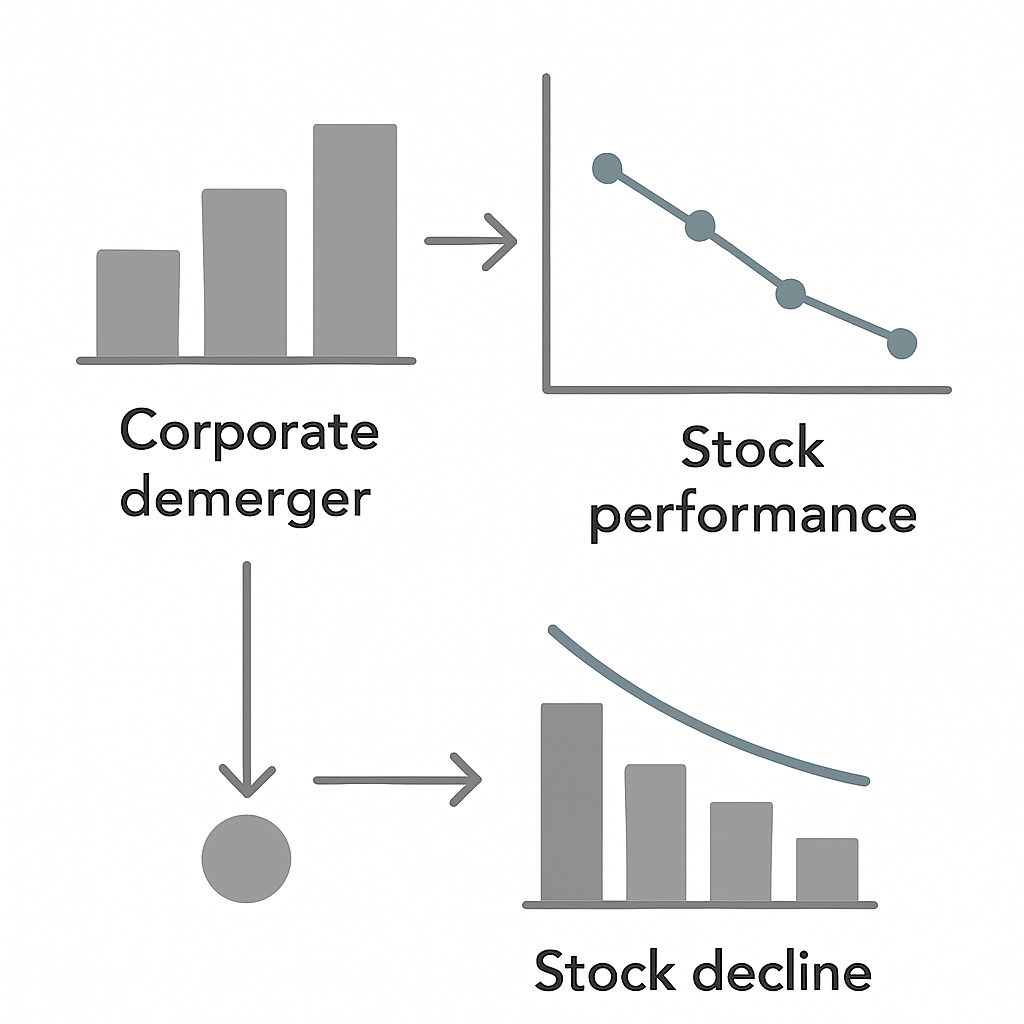
A demerger can create clearer business stories for the market. Instead of valuing one mixed company, investors may start valuing each separate business on its own earnings, debt, cash flow, and growth outlook. That can help analysts and investors compare each new entity with relevant peers on the NSE and BSE.
This clarity can be useful, but it does not automatically remove risk. Each separated business may face different commodity cycles, funding needs, regulatory issues, and competitive pressures. Investors need to study the details rather than assuming that every demerger will unlock value in the same way.
A demerger can also make dividend planning more complex. If cash flows and earnings get split across new entities, the earlier dividend pattern may not continue in the same form. Investors who depend on dividends for income should review the new structure carefully and consult a financial advisor.
Tax treatment also needs attention when corporate actions happen. Indian investors should check demat statements, contract notes, cost of acquisition rules, and ITR reporting requirements before making assumptions. For complex cases, a tax professional can help reduce the risk of errors in income tax filing.
What Is Happening With HFCL’s Stock Dip?
HFCL is a telecom products company with business in India and overseas. According to the HFCL stock analysis on Simply Wall St, the company manufactures and sells optical fiber cables and telecom products. Its product list includes underground, aerial, microduct, FTTH, and micromodule cables, along with radios, Wi-Fi access points, routers, switches, antennas, and network management solutions.
The same source also describes HFCL’s defence-related products, including electronic fuzes, electro optics, high capacity radio relay, and software defined radios. This shows that HFCL is not only a simple cable business, because it operates across telecom and defence-linked product areas. Even so, a falling stock price can raise concern when investors are unsure whether the move reflects sentiment, valuation, or business performance.
Retail investors often ask whether a dip is an opportunity or a warning. A video discussion on HFCL share analysis and the buy-the-dip question frames the issue in simple market language. A lower price alone does not prove value, so investors should study fundamentals and consult a financial advisor.
Why These Two Events Matter For Your Portfolio
Vedanta’s demerger and HFCL’s stock dip show two different sides of investing. Vedanta’s case is about corporate restructuring and possible value discovery, while HFCL’s case is about price weakness and investor confidence. Together, they show why a headline should be connected to your portfolio plan before any decision is made.
The real question is not whether a stock will rise tomorrow. A better question is whether the event changes the risk, return potential, and role of that stock in your overall portfolio. This is why Vedanta’s demerger and HFCL’s stock dip could shape your investment strategy today if you own direct equity or actively track Indian stocks.
If you invest mainly through SIPs in diversified mutual funds, such single-stock events may affect you less directly. If you hold direct equity, the effect may feel stronger because portfolio values can change daily. Your response should depend on asset allocation, time horizon, emergency fund strength, and risk comfort.
Check The Business, Not Just The Buzz
Markets often react quickly to corporate news. The Nifty and Sensex can also move based on global cues, inflation concerns, RBI policy signals, and sector sentiment. A stock-specific event can add another layer of volatility to an already active market.
For Vedanta, investors may want to understand what each demerged entity will own, earn, and owe. Debt, commodity cycles, capital expenditure needs, and dividend capacity can all affect future returns. The company’s official disclosures should remain the first source, followed by exchange filings and financial statements.
For HFCL, investors may want to look beyond the share price chart. Telecom demand, order execution, margins, competition, cash flow, and balance sheet health can matter more than a short-term fall. Investors can use the NSE website to track official market data, company announcements, and exchange filings.
Buzz can be useful because it alerts investors to new developments. It becomes risky when it replaces reading, verification, and planning. Before acting on any stock-related headline, investors should confirm the facts and consult a financial advisor.
How SEBI, RBI, And Market Rules Fit In
Indian investors benefit from using official sources before acting on social media posts. SEBI provides investor education and market rules that help protect retail participants. Investors can read awareness material and regulatory updates on the SEBI website before taking market decisions.
RBI policy also affects stock market mood. Changes in repo rate, liquidity, and inflation outlook can influence borrowing costs, home loan EMIs, business investment, and market sentiment. Investors can follow policy updates through the RBI website to understand the broader backdrop.
Macro signals matter, but they do not replace stock-specific research. A company with weak execution can struggle even during a favourable market, while a strong company can face temporary pressure during difficult conditions. Direct equity investors should connect macro context with business analysis and consult a financial advisor.
Build A Decision Framework Before You React
A simple framework can help investors avoid panic. First, ask whether the event changes the company’s long-term business quality. Second, ask whether the current valuation gives enough comfort for the risk being taken.
Next, check how much of your portfolio is concentrated in one stock. Even a good company can hurt your finances if it becomes too large a holding. Diversification across mutual funds, debt products, EPF, PPF, NPS, and cash can reduce stress during market swings.
If you are new to this process, read our guide on the foundation of personal finance for beginners. It explains why goals, budgeting, and risk control come before stock picking. A strong base can help you avoid rushed decisions during market news cycles.
This framework is especially useful when two different kinds of news appear at the same time. A demerger may require reading official documents, while a stock dip may require studying financial performance and market sentiment. In both cases, the process should be slower than the headline cycle.
Think About Taxes, Goals, And Cash Needs
Stock decisions should fit your wider money life. If you plan a home loan down payment, school fee, or medical expense soon, high-risk equity exposure may not suit that goal. Short-term needs should not depend on a volatile stock price.
Tax planning also matters for Indian investors. Section 80C options such as PPF, EPF, and eligible life insurance premiums can support long-term planning, but they should not replace proper asset allocation. Direct equity gains and dividends need correct reporting in your ITR as per income tax rules.
Debt choices also affect risk appetite. If you carry a credit card balance or personal loan, reducing high-cost debt may help your financial stability more than chasing a market dip. For loan planning basics, see our guide on understanding different types of loans for better money management.
What Retail Investors Can Learn From These Two Stocks
Vedanta’s case teaches investors to study corporate actions carefully. A demerger can create separate business stories, but each business may carry its own risks. Investors should read official documents and avoid relying only on price excitement.
HFCL’s case teaches investors to question every dip. A falling price can happen due to sentiment, weak results, valuation worries, execution concerns, or broader market pressure. Investors need to find the reason before deciding whether the fall changes the investment case.
Both cases also remind investors to avoid herd behaviour. If many people are reacting to the same headline, pause and compare the news with your own plan. Your strategy should depend on goals, risk capacity, and verified information rather than crowd emotion.
Use Asset Allocation As Your Safety Net
Asset allocation decides how much you place in equity, debt, gold, cash, and other options. It can protect you from overreacting to one stock or one sector. A balanced mix also helps when the Nifty or Sensex turns volatile.
For many Indian households, long-term wealth grows through steady habits. SIPs in mutual funds, EPF contributions, PPF discipline, NPS planning, emergency funds, and term insurance can support financial stability. Stock picking should sit inside this larger plan, not replace it.
If you want a more mindful approach, read our article on conscious investment for personal finance growth. It helps connect money choices with goals and values. This mindset can reduce stress when market news feels loud.
Red Flags To Watch Before Any Fresh Move
Before acting on Vedanta-related news, watch for clear details about the new entities. Look for management plans, debt allocation, dividend approach, listing timelines, and business-level disclosures. Also study how each business may perform across commodity cycles.
Before acting on HFCL-related news, check whether the stock dip links to business performance or only sentiment. Review revenue trends, order updates, margins, cash flow, and debt levels through official filings. Do not treat a stock as attractive only because it has fallen from a higher price.
Also avoid taking leveraged bets through borrowed money. A personal loan or credit card cash withdrawal for stock investing can create serious stress if the market moves against you. Equity decisions should be made with discipline, verified information, and guidance from a financial advisor.
FAQ: Should I Invest In Vedanta After The Demerger News?
You should not act only because a demerger sounds exciting. Study the official demerger documents, future business structure, debt allocation, dividend outlook, and your own risk profile. Before making any portfolio decision, consult a financial advisor who can assess your situation.
FAQ: Is HFCL’s Stock Dip A Buying Opportunity?
A dip can be a chance or a warning, depending on the reason behind it. Check the company’s business outlook, financial strength, telecom sector trends, and recent exchange filings. Avoid acting only because the price looks lower than before, and consult a financial advisor.
FAQ: How Can Small Investors Handle Such Stock News?
Small investors should start with asset allocation and goal planning. If direct stocks form only a limited part of the portfolio, one event may not disturb the full plan. SIPs, emergency funds, insurance, and debt control can create a more stable base.
FAQ: Do SEBI Or NSE Announcements Matter For These Stocks?
Yes, official disclosures matter a lot. NSE and BSE filings, SEBI rules, and company investor updates are usually more reliable than rumours or social media clips. Always cross-check news before acting, especially during corporate actions or sharp stock moves.
FAQ: Why Could Vedanta’s Demerger And HFCL’s Stock Dip Shape Strategy?
These events can shape strategy because they force investors to separate news from value. Vedanta’s demerger may change how shareholders view business units, while HFCL’s dip tests discipline during price weakness. Keep learning, verify information, and consult a financial advisor before making major investment decisions.
Disclaimer: The information above is for educational purposes only and does not constitute financial advice.
1 Comment