

Understanding the Rise in Vehicle Loan Amounts in India
Vehicle loan amounts in India are growing, and many families now feel the pinch through higher EMIs. Cars and two-wheelers often support work, school runs, family travel, and small-business mobility, so avoiding a vehicle purchase is not always realistic. The real challenge is choosing a loan that fits your monthly cash flow without weakening your credit health or long-term financial goals.
Vehicle prices have moved up due to inflation, higher input costs, stricter safety rules, emission norms, and added features. Higher insurance costs, registration costs, accessories, and dealer add-ons can also increase the final on-road price. When the vehicle price rises faster than income, borrowers often take bigger loans or stretch the tenure to keep the EMI manageable.
Global research points to a similar pattern in auto finance. The Federal Reserve study on rising auto loan delinquencies found that average loan size rose 26% for subprime borrowers and just under 20% for prime borrowers since 2020. Indian borrowers should treat this as a warning that bigger loans, higher rates, and longer repayment periods can put pressure on household budgets.
Factors Driving Bigger Vehicle Loans
Higher vehicle costs are the main reason behind bigger borrowings. Indian car loans can carry a wide range of interest rates, and the final rate depends on the borrower profile, vehicle type, loan-to-value ratio, lender policy, and credit history. When policy rates and funding costs change, lenders may adjust loan pricing over time, which can affect new borrowers and some existing borrowers depending on loan terms.
Affordability pressure also pushes borrowers toward longer loan tenures. A seven-year loan may look easy because the EMI is lower, but the total interest cost usually rises as the repayment period expands. If fuel, maintenance, parking, tolls, and insurance costs also rise, the total monthly cost of owning the vehicle can become much higher than the EMI alone.
Role of NBFCs, Banks, and Digital Lenders
Banks often offer competitive rates to salaried borrowers with strong credit scores, stable employment, and clean repayment records. They may ask for stricter income proof, bank statements, job history, and documentation before approving the loan. This can help lower the EMI for eligible borrowers, but approval may take more checks and time.
NBFCs may offer faster and more flexible vehicle loans, especially for self-employed buyers, first-time borrowers, used vehicle buyers, or customers in smaller towns. That flexibility can come with higher rates, processing fees, documentation charges, insurance-linked conditions, or stricter recovery practices. Digital lenders make approvals quick, but borrowers should check the lender’s RBI registration status, read every fee line, and avoid giving unnecessary phone or data permissions.
How Bigger Vehicle Loans Affect Your EMIs
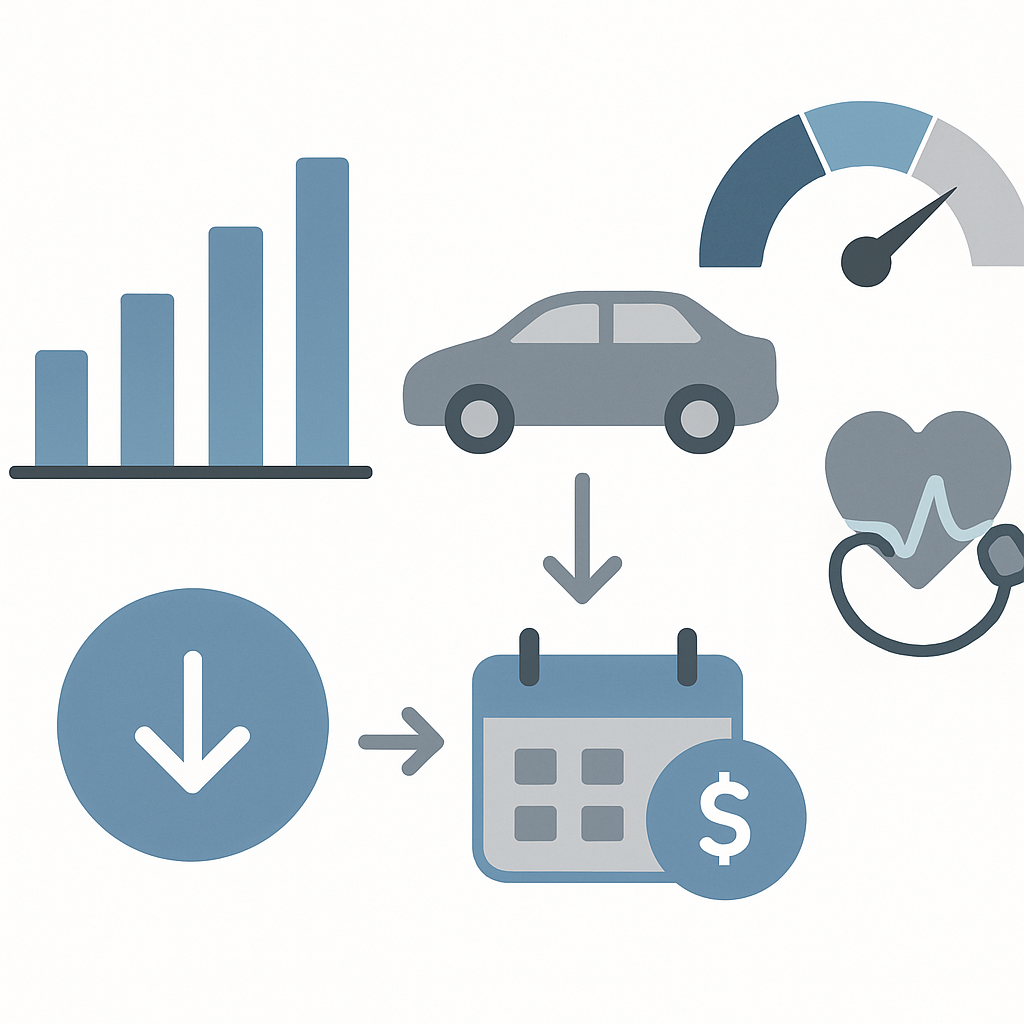
A higher loan principal directly raises your EMI because the lender is financing a larger amount. Higher interest rates add a second layer of pressure, especially when the loan is spread across many years. This is why rising vehicle loans can quietly disturb a monthly budget even when the showroom EMI looks affordable at first.
The Consumer Financial Protection Bureau’s market monitoring note links high vehicle costs with larger loan amounts and higher monthly payments. The lesson applies to Indian borrowers because the same basic loan math affects households everywhere. If income grows slower than EMIs and vehicle running costs, repayment stress can build quickly.
Calculating Sustainable EMIs Based on Income
A practical approach is to compare all EMIs with your net monthly income before committing to a vehicle loan. This includes vehicle loans, home loans, personal loans, credit card EMIs, education loans, and consumer durable finance. Many borrowers prefer keeping total EMIs well below half of take-home income so that rent, groceries, school fees, healthcare, insurance, and savings do not get squeezed.
Use an online EMI calculator before visiting the showroom or accepting a dealer-arranged loan. Test different down payments, interest rates, tenures, and on-road prices with your actual take-home pay rather than your gross salary. Also leave room for annual insurance renewals, repairs, tyres, fuel, servicing, medical costs, tax payments, and irregular family expenses.
Impact of Loan Tenure on EMI and Total Interest
Longer tenures reduce the monthly EMI, so they look comfortable at first glance. The trade-off is that interest is charged for a longer period, which can increase the total amount paid over the loan life. A lower EMI is useful only when it improves cash flow without creating a bigger long-term burden.
Shorter tenures raise the EMI but can reduce total interest if the borrower can handle the higher monthly payment. This works better for borrowers with steady income, low existing debt, and a strong emergency fund. If you are unsure about the right tenure or down payment, consult a financial advisor before making the decision.
Impact of Rising Vehicle Loans on Indian Credit Scores
Your credit score reflects how well you manage borrowed money. The Upgrade guide on credit scores and auto loan rates explains that lenders use credit scores to assess repayment risk and decide loan offers. In India, credit bureaus such as CIBIL, Equifax, Experian, and CRIF High Mark perform a similar role in helping lenders evaluate borrowers.
Rising vehicle loans do not automatically damage your score. Timely EMIs can build a solid repayment record over time and may strengthen your credit profile. The risk starts when the EMI becomes too large compared with income, other debts, and essential expenses.
How Large EMIs Influence Credit Scores
A large EMI reduces your monthly surplus and leaves less room for unexpected expenses. Lenders may view this as a higher repayment risk when you apply for another loan, especially if your bank statements show repeated low balances or bounced payments. This can affect future approvals for a home loan, personal loan, credit card limit, business loan, or education loan.
Good repayment behaviour still matters the most. If you pay every EMI on time, a vehicle loan can improve your credit history by showing disciplined repayment over several months or years. Trouble starts when you juggle too many loans, delay payments, or rely on credit cards to cover regular living costs.
Effects of EMI Defaults and Delinquencies
Subprime and first-time borrowers can face higher default risk when EMIs rise sharply. The Federal Reserve research links high monthly payments with rising auto loan delinquencies in the United States, especially among weaker credit profiles. Indian borrowers with thin credit files, irregular income, or high existing debt should treat this as a serious caution.
One missed EMI can reduce your credit score and remain visible in your credit report. Repeated delays can make future loans more expensive or harder to obtain because lenders may see a pattern of repayment stress. Banks, NBFCs, and many digital lenders report repayment behaviour to credit bureaus, so choosing a different lender type does not protect your credit record.
Practical Steps to Manage Bigger Vehicle Loans and Protect Credit
Start with a realistic budget before choosing the model, variant, and accessories. A higher down payment can reduce the principal and lower the EMI, but it should not empty your emergency fund. Keep at least a basic cash buffer for medical needs, job loss, repairs, and other urgent expenses before locking money into a vehicle purchase.
Keep your broader financial responsibilities in view before signing the loan papers. Your household essentials, insurance needs, emergency savings, and long-term goals should not suffer because of one large vehicle EMI. If you are balancing debt repayment with investments or retirement planning, consult a financial advisor for personalised guidance.
Pre-EMI Planning and Early Cash Flow
Pre-EMI is more common in some loan products than in standard vehicle loans. Still, some lenders may offer advance EMI, interest-only billing, step-up repayment, delayed first EMI, or promotional payment structures. Ask the lender to explain the exact cash flow, total cost, due dates, and penalties before you agree.
Any repayment option that lowers the early EMI should be reviewed carefully. It may help you align payments with salary dates, business receipts, bonus income, or seasonal cash flow. Always confirm whether the option changes the total interest, processing cost, insurance bundling, or final repayment schedule.
Using Balance Transfers and EMI Restructuring
A balance transfer can help if another lender offers a clearly lower rate and reasonable charges. Compare the new interest rate, processing fee, foreclosure charge, stamp duty, documentation cost, and remaining tenure before switching. A lower EMI is not always cheaper if the loan term becomes much longer or the transfer fees are high.
EMI restructuring can extend the tenure and reduce monthly stress when income falls or expenses rise. The downside is that the total interest outgo can increase across the loan life. Before changing terms, read the lender’s written offer carefully and check the latest RBI guidance on regulated lending practices.
Regulations and Guidelines Impacting Vehicle Loans in India
RBI influences vehicle loans through policy rates, banking rules, NBFC supervision, digital lending norms, and fair disclosure expectations. When the repo rate changes, bank funding costs and retail lending rates may move with a lag. Borrowers should track rate cycles, compare offers, and understand whether their loan has fixed, floating, or reset-linked pricing.
RERA does not generally regulate vehicle financing because it mainly covers real estate projects. For vehicle loans, consumer protection comes from loan contracts, RBI-regulated lender rules, credit bureau reporting norms, grievance channels, and consumer forums. If a dealer or agent misleads you on loan pricing, document the conversation, collect written terms, and raise a written complaint with the lender.
RBI’s Role in Auto Loan Interest and Credit Monitoring
RBI does not usually set one maximum vehicle loan rate for every borrower. Instead, it sets the policy framework, supervises banks and NBFCs, and promotes fair disclosure in regulated lending. This framework helps borrowers compare offers with more confidence, although the final rate still depends on lender policy and borrower risk.
Lenders must monitor asset quality and classify stressed loans under applicable rules. They also need to communicate key terms, charges, repayment schedules, and recovery practices clearly. Responsible lending matters because weak underwriting can hurt both borrowers and lenders when EMIs become unaffordable.
Consumer Protection in Vehicle Financing
Borrowers can demand transparency in interest rate, processing fee, documentation charge, insurance bundling, foreclosure charges, late payment penalties, and repayment dates. If any add-on is optional, ask the lender or dealer to state that clearly in writing. Do not rely only on verbal promises made at the showroom or during a loan call.
Digital lending needs special care because approvals can happen quickly and consent screens may be skipped without attention. Check whether the lender or loan service provider follows RBI digital lending rules and whether repayment mandates are clearly explained. Avoid apps that ask for unnecessary access to contacts, photos, messages, or unrelated device data.
Choosing the Best Vehicle Loan Option in India
Compare the annual interest rate, processing fee, tenure, foreclosure rules, late payment charges, and compulsory add-ons before choosing a loan. Also compare insurance, extended warranty, roadside assistance, and service packages separately instead of accepting every bundled cost. A cheap-looking EMI may hide a higher total cost if the tenure is long or the fees are heavy.
Do not focus only on the vehicle’s ex-showroom price. The on-road cost, down payment, loan amount, interest rate, insurance renewal, fuel use, maintenance, and resale value all affect affordability. A vehicle that fits your lifestyle but damages your monthly cash flow can create stress long after the excitement of purchase fades.
Comparing Banks and NBFCs for Vehicle Loans
Banks may suit borrowers with strong salaries, good CIBIL scores, stable documents, and a clean repayment history. They can offer lower rates to eligible customers, but they may reject weak credit profiles or ask for additional proof. This makes planning, documentation, and credit discipline important before applying.
NBFCs may suit borrowers who need faster approval, flexible underwriting, or finance for used vehicles. They can be useful for self-employed buyers, first-time borrowers, and customers in smaller towns where bank processing may be slower. Still, compare the final cost carefully because convenience should not become an excuse for accepting an unaffordable loan.
Advantages and Risks of Digital Lending Platforms
Digital platforms make vehicle loans fast and paper-light. You can upload documents, receive offers, complete verification, and get approvals without many branch visits. This convenience helps busy professionals, small business owners, and borrowers who want quick comparisons.
The risk lies in hidden fees, variable pricing, careless consent, and unclear recovery practices. Read the sanction letter, key fact statement, repayment schedule, and privacy permissions before accepting the offer. If the loan terms are not clear, pause the application and ask for written clarification.
Frequently Asked Questions
These questions cover common concerns for Indian borrowers facing higher vehicle EMIs. Use them as a starting point before finalising a car loan or two-wheeler loan. For decisions based on your income, debts, and goals, consult a financial advisor or speak to your lender.
How much EMI is safe relative to my income?
A safe EMI depends on your income stability, family expenses, other loans, and emergency fund. Many borrowers try to keep total EMIs at a level that leaves enough room for rent, groceries, school fees, insurance, healthcare, and savings. If your income is irregular, choose a lower EMI and keep a larger cash buffer.
Can I switch my vehicle loan to another lender to lower EMIs?
Yes, many lenders allow balance transfers if your repayment record is clean and the new lender approves your profile. Compare the new rate, processing fee, foreclosure cost, documentation charges, and remaining tenure before shifting. A transfer makes sense only when the total cost falls, not merely when the monthly EMI looks smaller.
How do longer loan tenures affect overall loan cost?
A longer tenure reduces the EMI and may ease short-term cash flow. It also keeps the loan active for more months, which usually increases total interest paid over the full period. Choose a tenure that balances comfort, total cost, job stability, and emergency savings.
Are pre-EMI payments mandatory or optional?
Pre-EMI payments are usually linked to the lender’s repayment structure and are not a standard feature in every vehicle loan. Some lenders may instead offer advance EMI, delayed first EMI, or step-up repayment options. Ask for a written schedule that shows due dates, interest cost, principal repayment, and total payable amount.
What is the impact of missed vehicle loan EMIs on my credit score?
Missed EMIs can lower your credit score and weaken your repayment history. They may also raise future borrowing costs because lenders can treat missed payments as a sign of higher risk. Pay before the due date, maintain an emergency buffer, and contact the lender early if repayment trouble appears likely.
Stay Ahead of Your EMI and Credit Health
Rising vehicle loans make it more important to borrow with care. A bigger car or bike loan should fit your income, goals, and risk comfort instead of being driven only by showroom offers. Do not let one EMI weaken your credit health, emergency savings, or future borrowing ability.
Assess your vehicle loan carefully, compare lenders, use EMI tools, and read the fine print before signing. If the numbers feel tight, delay the purchase, choose a lower-cost model, increase the down payment, or consult a financial advisor. Subscribe to PocketPlanGuru for simple Indian personal finance guides, credit tips, and budget-friendly loan insights.
Disclaimer: The information above is for educational purposes only and does not constitute financial advice.
6 Comments