


Understanding the Current IPO Surge in India
India’s IPO market is drawing fresh attention from retail investors after reports of a renewed fundraising push. A Rediff Money report on India’s IPO market rebound says six companies, including The Leela owner, are set to raise over ₹11,000 crore in May. Separate market watchlists also mention larger upcoming names such as Jio, SBI Mutual Fund, PhonePe, OYO, Zepto, Zetwerk, and PayU, so investors should distinguish between confirmed near-term offers and broader pipeline speculation.
This renewed activity suggests that companies and merchant bankers are again seeing room for public fundraising. Retail participation has remained strong in India, but market volatility, foreign investor flows, interest rates, and global cues can still affect listing outcomes. If you are tracking how institutional selling can affect your portfolio, read our guide on what the FII selloff means for your investments now.
Market Context and Growth Drivers
The IPO discussion is not limited to one sector. Hospitality, fintech, telecom, quick commerce, consumer brands, and asset management are all part of the wider watchlist being discussed by investors. That variety creates more choice, but it also makes comparison harder because a hotel business cannot be assessed in the same way as a payments platform or a mutual fund company.
Quick commerce has become one of the most watched themes in the primary market conversation. Zepto’s confidential IPO filing, discussed by IMPACT magazine in its post on Zepto’s IPO plans, points to growing investor appetite for rapid delivery businesses, with the company linked to a $7 billion valuation in the source summary. High valuations can reflect strong growth expectations, but they also require careful checks on profitability, competition, and cash burn.
Market infrastructure has also made IPO participation easier for individuals. SEBI-regulated disclosures, ASBA, UPI-based applications, broker platforms, and exchange updates have reduced process friction for many investors. The NSE’s IPO platform is one place where investors can understand the exchange-side process, but offer documents remain the key source for company-specific facts.
Key Players and Funding References
The near-term verified fundraising reference is the reported May cluster of six companies seeking to raise over ₹11,000 crore. The Leela owner is one of the marquee names mentioned in that cluster, which has brought hospitality back into the IPO discussion. Investors should avoid assuming that every company named in broader watchlists is part of the same fundraising round or has filed final issue documents.
A LinkedIn post on India’s 2026 IPO pipeline highlights a large expected pipeline and names Jio, SBI Mutual Fund, PhonePe, Hindustan Coca-Cola Beverages, OYO, Zepto, Zetwerk, and PayU. Such lists can help investors build a watchlist, but they should not be treated as final IPO terms. Issue size, timing, valuation, promoter selling, and fresh capital components can change before a company launches an offer.
Jio remains one of the most watched potential listings because of its scale and reach across telecom and digital services. A video report on Jio’s IPO valuation discussion referred to a possible valuation revision ahead of a mega listing. Valuation changes matter because even a strong business can disappoint investors if the offer price already builds in very high future growth.
Sector-wise View of the Major IPO Watchlist
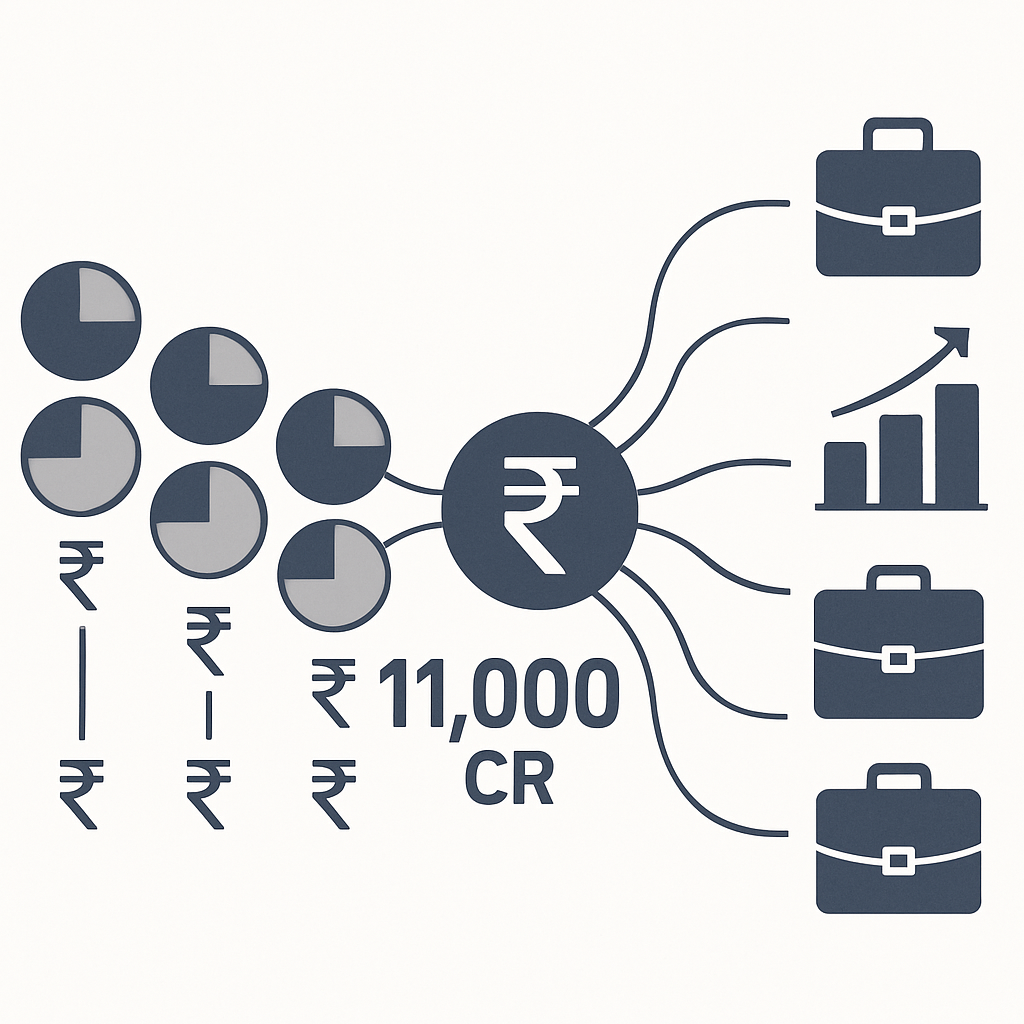
The current IPO conversation covers several different business models, and each requires a different review framework. Hospitality depends on occupancy, room rates, travel demand, and operating leverage, while fintech depends on regulation, customer acquisition, transaction volumes, and monetisation. Telecom and digital platforms require checks on capital expenditure, competition, subscriber economics, and long-term cash flows.
Investors should first understand the sector cycle before looking at company-level details. A cyclical business may look attractive during an earnings upturn but can face pressure when demand slows. A fast-growing technology company may post strong revenue growth while still needing more capital to reach sustainable profitability.
Hospitality and Real Estate Linked Businesses
The Leela owner has brought attention to India’s premium hospitality recovery. Hotels benefited after travel, weddings, corporate events, and tourism improved from pandemic lows, but the sector remains sensitive to economic cycles. Investors should read the prospectus to understand debt, ownership structure, lease commitments, revenue concentration, and planned use of funds.
Hospitality businesses can carry high fixed costs, which can magnify both gains and losses. Land ownership, regulatory permissions, maintenance costs, and expansion plans can materially affect future returns. Retail investors should consult a financial advisor before deciding whether a hospitality IPO suits their risk profile and investment horizon.
Quick Commerce, Fintech, and Digital Platforms
Zepto and PhonePe represent different parts of India’s digital consumer story. Zepto is associated with quick commerce and fast delivery, while PhonePe is linked with payments and broader fintech use cases. Both categories can grow rapidly, but they also face intense competition, regulatory scrutiny, and pressure to convert scale into profits.
Quick commerce platforms must manage delivery costs, discounting, inventory availability, warehousing, and city-level unit economics. Fintech companies must pay close attention to RBI rules, data protection expectations, merchant relationships, fraud controls, and compliance systems. For wider technology-sector context, you can also read our article on what the critical US visa suspension means for Indian IT jobs.
Finance, Asset Management, and Telecom Scale
SBI Mutual Fund represents the growth of formal financial savings in India. SIP adoption has made mutual funds a common household investment route, alongside EPF, PPF, NPS, and tax-planning products. An asset management company can benefit from rising assets under management, but its earnings may still be sensitive to market levels, fee pressure, and investor behaviour.
Jio brings a different investment question because scale can be both a strength and a valuation challenge. Telecom and digital platform businesses require large capital commitments, continued network investment, and careful assessment of competition. Investors should study revenue mix, debt, cash flow, regulatory exposure, and peer valuations before forming a view.
Fundamental Checks Before Applying for an IPO
Retail investors should treat an IPO as a business decision rather than a lottery for listing gains. The starting point is the company’s business model, customer base, competitive position, revenue quality, and ability to generate cash. If the company has listed peers, comparison with NSE and BSE peers can help investors judge whether the price looks reasonable.
Grey market premiums often attract attention, but they are not formal market data and do not guarantee listing performance. Social media posts, unofficial subscription claims, and forward-looking excitement should not replace SEBI-filed offer documents. If the analysis feels complex or the risks are unclear, investors should consult a financial advisor before applying.
Metrics to Review Across Different Sectors
For profitable companies, common metrics include price-to-earnings ratio, return on equity, debt-to-equity ratio, operating margin, and cash flow from operations. For loss-making or high-growth technology companies, investors may need to examine revenue growth, contribution margin, customer acquisition costs, retention, and the path to profitability. For hospitality companies, occupancy, average room rate, operating leverage, and debt servicing ability deserve close attention.
Cash flow should be checked carefully because revenue growth alone can be misleading. A company may show strong top-line expansion while repeatedly using cash to fund discounts, expansion, or working capital. Debt levels also matter when interest rates move, and our guide on why RBI’s repo rate hike is critical for your home loan explains how rate changes affect households and businesses.
Risk Assessment and Market Volatility
Market volatility can affect subscription demand, allotment sentiment, and listing-day prices. A sharp move in the Nifty or Sensex during the issue period can change investor behaviour quickly. Global cues, crude oil prices, inflation, currency movements, and US interest rate expectations can also influence Indian market sentiment.
Sector-specific risks should be reviewed separately for each company. Technology firms face data, competition, and monetisation risks, while finance-related businesses face regulatory and market-cycle risks. Hospitality and consumer businesses can be affected by discretionary spending, input costs, local approvals, and broader economic confidence.
Strategic Choices for Retail Investors
The IPO rush does not mean every investor needs to apply for every offer. A selective approach may suit some investors, while others may prefer to observe listings first and study post-listing performance. The right choice depends on financial goals, existing equity exposure, time horizon, liquidity needs, and risk tolerance, so investors should consult a financial advisor for personalised guidance.
IPO money should not disturb core financial priorities. Emergency funds, term insurance, health insurance, home loan EMIs, education savings, and retirement contributions need to be planned separately from short-term market excitement. IPOs can be considered within the equity portion of a portfolio, but they should not replace a balanced financial plan.
Portfolio Fit and Concentration Risk
Many investors already own banks, technology companies, telecom, and consumer businesses through mutual funds or direct equities. Adding more IPO exposure from the same sectors can increase hidden concentration without the investor noticing it. Before applying, investors should review whether the new issue actually improves diversification or simply adds more of the same risk.
Portfolio balance matters because different sectors react differently to economic cycles. FMCG and asset management may behave differently from hospitality, quick commerce, or telecom during periods of slowdown or high interest rates. Investors who are unsure about sector overlap should consult a financial advisor before making allocation decisions.
Short-term Listing Gains Versus Long-term Holding
Some investors enter IPOs hoping for listing gains, while others want to hold a business for several years. Both approaches carry risk because a listing can open below the issue price, and a long-term holding can underperform if growth expectations fail. A clear plan before applying can reduce emotional decisions on listing day.
Long-term investors should be especially careful about valuation. A strong brand, large market opportunity, or popular sector does not automatically make an IPO attractive at any price. If the company’s future profit assumptions appear aggressive or difficult to verify, investors should consult a financial advisor before taking a decision.
How to Apply and Participate in Indian IPOs
Applying for an IPO in India is now relatively simple through broker apps, bank ASBA, and UPI-supported platforms. Investors generally select the issue, choose the lot size, enter the bid, and approve the payment mandate where applicable. Funds remain blocked until allotment, and they are released if shares are not allotted according to the issue schedule.
Retail category rules, lot sizes, price bands, and payment limits can vary by issue. Oversubscription can lead to lottery-style allotment, so application does not guarantee shares. Investors should verify dates, price bands, registrar details, and allotment timelines through the prospectus, stock exchanges, registrar websites, or regulated broker platforms.
Application Methods and Documentation
UPI-based applications are commonly used by retail investors through broker platforms. ASBA through net banking is also widely used because it blocks funds in the bank account rather than transferring them immediately. In both cases, investors should ensure that PAN, demat, bank, and UPI details are accurate to reduce the risk of application rejection.
Investors should avoid unofficial links, forwarded messages, and unverified payment requests. The IPO process should be completed only through recognised broker platforms, bank channels, or other authorised routes. Investor protection resources are available on the SEBI website, and they can help investors understand regulated market processes.
Allotment and Post-listing Decisions
After an IPO closes, the registrar finalises allotment based on demand and applicable rules. Investors can usually check allotment status using PAN, application number, or demat details. If shares are allotted, they are credited to the demat account before listing, and if not allotted, the blocked funds are released as per the schedule.
Post-listing action should not be driven only by the first few minutes of price movement. Some investors may sell, some may hold, and some may wait for more financial disclosures after listing. Because the right choice depends on personal goals and company fundamentals, investors should consult a financial advisor before deciding what to do after listing.
Regulatory and Economic Factors Shaping IPO Outcomes
SEBI regulates IPO disclosures, offer documents, merchant banker responsibilities, allotment rules, and market supervision. This framework improves transparency, but it does not remove business risk or valuation risk. Investors still need to read the offer document, understand the risk factors, and compare the company with relevant alternatives.
RBI policy and broader economic conditions also influence IPO outcomes. Interest rates affect borrowing costs, liquidity, consumer spending, and financial sector sentiment. Inflation, GST changes, FDI rules, government spending, and global capital flows can all influence how investors respond to new listings.
SEBI Disclosures and Investor Protection
Offer documents provide details on financial history, promoters, risk factors, related-party transactions, litigation, use of proceeds, and business strategy. These disclosures help investors compare company claims with documented information. They are especially useful when a company is part of a popular sector where excitement can run ahead of fundamentals.
Grey market premium discussions should be treated with caution because they operate outside the formal exchange system. A high premium can disappear quickly if market sentiment changes or if pricing appears stretched. Regulated documents, exchange updates, and registrar information are more reliable than informal chatter.
Macro Trends to Monitor
Inflation can reduce consumer spending and raise input costs for companies. Higher borrowing costs can affect leveraged businesses, real estate-linked companies, and consumer demand. Lower rates may improve sentiment, but they cannot compensate for weak fundamentals or excessive IPO pricing.
India’s long-term themes, including urban consumption, digital adoption, formal savings, and infrastructure expansion, continue to support investor interest. Even so, markets rarely move in a straight line, and IPO cycles can bring both quality opportunities and overpriced offers. A disciplined process is more useful than reacting to every new issue with urgency.
FAQs: IPO Questions for Retail Investors
How much money should I allocate to IPO investments? The answer depends on your portfolio size, liquidity needs, risk appetite, and financial goals. Because IPOs carry equity risk and can list below issue price, investors should consult a financial advisor before deciding their allocation.
Can retail investors apply for all upcoming IPOs? Retail investors can apply when an IPO has a retail quota and when they meet the issue’s application rules. Each offer has its own lot size, price band, category limits, and payment requirements, so investors should verify the details from official documents before applying.
What valuation metrics are useful before investing in an IPO? Investors can review PE ratio, price-to-sales ratio, margins, debt, cash flow, and return ratios where applicable. For new-age or loss-making companies, user growth, unit economics, contribution margin, and path to profitability may be more relevant than traditional PE ratios.
Should I sell on listing day or hold for the long term? The answer depends on company fundamentals, listing valuation, market conditions, and personal financial goals. A weak business may not suit long-term holding even after a good listing, while a strong business can still be risky if purchased at an expensive valuation.
How do SEBI regulations protect IPO investors? SEBI rules require structured disclosures, defined processes, and supervision of market intermediaries. These rules improve transparency and fairness, but they do not guarantee profits or protect investors from poor business performance or valuation mistakes.
Final Word for Smart IPO Investors
The IPO market’s renewed energy is exciting because it brings large brands, emerging sectors, and fresh business stories to investors. Verified reports point to a May fundraising wave of over ₹11,000 crore from six companies, while separate watchlists discuss a broader pipeline that includes names such as Jio, SBI Mutual Fund, PhonePe, OYO, Zepto, Zetwerk, and PayU. Investors should separate confirmed issue details from market speculation before making decisions.
Use IPOs as one part of a broader wealth plan rather than the centre of your financial strategy. Study fundamentals, compare valuations, read SEBI filings, check your existing portfolio exposure, and understand your own risk limit. When in doubt, consult a financial advisor before applying, and stay informed with PocketPlanGuru for practical money guides and market insights.
Disclaimer: The information above is for educational purposes only and does not constitute financial advice.