


How RBI’s Expected Repo Rate Hike Affects Your Home Loan
An expected RBI repo rate hike matters because it can raise the cost of borrowing for banks and, in turn, for home loan customers. Floating-rate home loan borrowers are usually affected first because their rates are linked to an external benchmark or lender reset cycle. A small increase in the policy rate can become a higher monthly EMI or a longer loan tenure. Preparing early helps you protect your monthly budget before the revised debit begins.
For many Indian households, the home loan EMI sits alongside school fees, insurance premiums, SIPs, rent support for parents, groceries, and medical costs. When inflation remains high, RBI may use the repo rate to manage price pressure in the economy. That policy action can flow into home loan rates, especially for borrowers on floating rates. Knowing how the link works helps you respond calmly instead of making a rushed decision.
Understanding Repo Rate and Its Link to Home Loans
The repo rate is the rate at which the Reserve Bank of India lends short-term funds to commercial banks. Banks treat this rate as an important signal while pricing many lending products, including repo-linked home loans. A guide from PNB Housing on repo rate and home loans explains that repo rate changes can affect home loan EMIs, particularly for floating-rate borrowers.
When RBI raises the repo rate, banks may revise their lending rates upward after the applicable reset period. When RBI cuts the repo rate, floating-rate borrowers may benefit through a lower EMI or a shorter effective tenure, depending on the lender’s process. The change is not always instant for every borrower because reset dates, spreads, and loan terms differ. This is why reading your loan agreement and lender notifications is essential.
Real-Life Example: Impact on a ₹30 Lakh Floating-Rate Home Loan
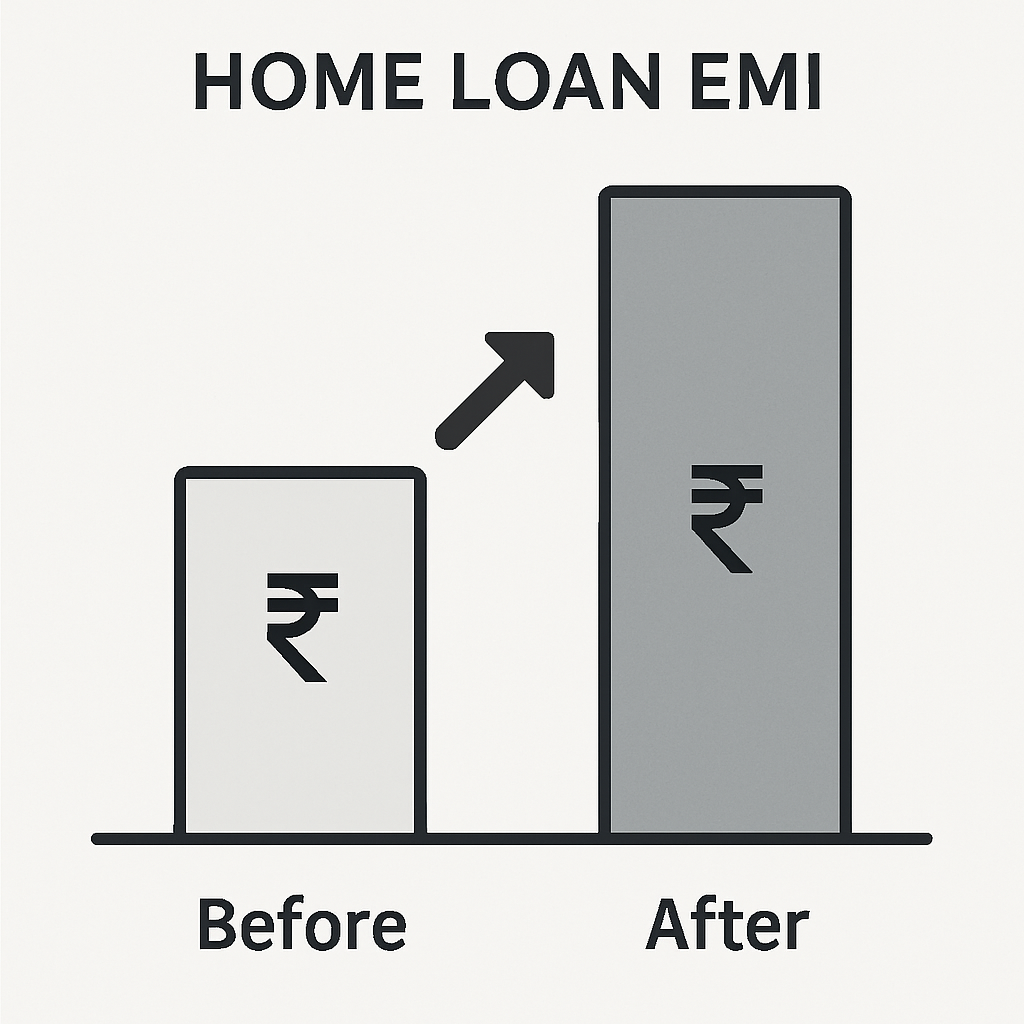
A simple example shows why even a modest rate increase can matter. As explained by Easy Home Finance on repo rate changes and EMI impact, a ₹30 lakh floating-rate home loan at 8.5% may have an EMI of around ₹26,000. If the repo rate rises by 0.50% and the borrower’s rate moves to 9%, the EMI may rise to ₹27,000 or more, depending on the tenure. That can mean an additional outflow of about ₹12,000 to ₹15,000 in a year.
The exact impact depends on your outstanding principal, remaining tenure, reset date, and lender rules. A longer remaining tenure can increase the total interest burden over time, even if the monthly increase looks manageable at first. Some lenders may extend the tenure instead of sharply increasing the EMI, which can reduce immediate pressure but increase total interest. Borrowers should check both the revised EMI and the revised repayment schedule.
Floating vs Fixed Rate Home Loans: Which Suits You Post-Hike?
After an expected RBI repo rate hike, many borrowers wonder whether they should remain on a floating-rate loan or move to a fixed-rate option. Floating rates can rise during periods of tighter monetary policy, but they can also fall when the rate cycle turns. Fixed rates offer EMI stability, which may help households with tight monthly cash flow. However, fixed-rate loans may carry different pricing, lock-in terms, or conversion conditions.
Your choice should depend on income stability, risk comfort, remaining tenure, and the cost of switching. A borrower with stable salary income may be able to handle some EMI movement better than someone with variable income. A borrower close to the end of the loan may assess the decision differently from someone with many years left. Before switching, compare the rate difference, conversion fee, processing cost, reset terms, and future flexibility.
Key Differences in Interest and EMI Fluctuations
Floating-rate loans change with the benchmark and lender spread, so the EMI or tenure can move during the loan period. Fixed-rate loans keep repayment more predictable, which can make household budgeting easier. The trade-off is that fixed-rate borrowers may not automatically benefit if rates fall later. This makes the decision less about guessing the next policy move and more about matching the loan structure with your cash flow.
Interest rate cycles also affect wider markets because they influence liquidity, sentiment, and borrowing costs. Market indicators such as Nifty, Sensex, BSE, and NSE can react to policy expectations, though home loan borrowers should focus first on their own repayment ability. Rising global yields can also influence domestic borrowing conditions, and readers may find this PocketPlanGuru guide on why rising global bond yields matter for your home loans useful. Avoid panic switching and review the total cost over the remaining tenure.
Decision-Making Framework for Indian Borrowers
Start by checking your current rate, outstanding principal, remaining tenure, reset date, and monthly surplus after essential expenses. If your income is steady and your emergency buffer is healthy, a floating-rate loan may still be manageable. If uncertainty affects your budget or causes stress, a fixed-rate or conversion option may be worth comparing. The right answer depends on the full cost, not only the headline rate.
Also review your broader financial commitments, including EPF, PPF, NPS, term insurance, health insurance, and emergency savings. Tax benefits under Section 80C and home loan deductions can matter during ITR filing, but they should not be the only reason to keep an expensive loan structure. If you are considering a major switch, consult a financial advisor and speak with your lender before signing new terms. This is especially important when the outstanding loan amount is large.
Refinancing, Balance Transfers and Top-Up Loans to Manage Higher EMIs
Refinancing can help when another lender offers a lower effective rate and reasonable charges. A balance transfer moves your outstanding home loan from your current lender to another bank or housing finance company. This can reduce EMI pressure only if the savings exceed transfer costs. A lower advertised rate is useful only after you calculate the full cost of moving.
Top-up loans may help during a temporary cash crunch, but they add more debt to your monthly obligations. They should not be used casually for lifestyle spending or to cover unpaid credit card dues. If higher EMIs are already stretching your budget, adding another repayment can increase financial stress. Consult a financial advisor before using debt to solve a cash-flow problem.
Understanding Home Loan Refinancing in India
To refinance a home loan, lenders usually check your credit score, income stability, repayment track record, and property documents. A clean repayment history can improve your chances of receiving better terms. You should compare interest rates, processing fees, legal charges, valuation costs, insurance-linked conditions, and reset rules. The final decision should be based on net benefit over the remaining tenure.
Some lenders may offer a conversion option that reduces the spread on your existing loan for a fee. Floating-rate home loans for individuals often have borrower-friendly prepayment norms, but the exact terms should still be verified. Read your sanction letter and loan agreement before making a transfer request. For wider policy awareness, PocketPlanGuru readers can also explore why the Sebi-RBI collaboration is essential for FPIs, since policy coordination can affect capital flows and market conditions.
Stepwise Guide for Balance Transfers and Top-Ups
First, ask your current lender for a rate review before moving the loan. Many banks may offer a lower spread or a conversion option to retain good borrowers. If the revised offer still looks costly, compare at least two or three lenders. This gives you a better view of whether a balance transfer is truly useful.
Next, calculate net savings after adding processing fees, documentation charges, legal costs, valuation charges, stamp duty where applicable, and any insurance cost. Submit income proof, property papers, repayment records, and KYC documents only after you are comfortable with the terms. Use top-ups carefully and only after checking whether your monthly budget can support the extra EMI. If the decision is complex, consult a financial advisor before borrowing more.
Adjusting Your Monthly Budget After a Repo Rate Hike
An expected RBI repo rate hike becomes real for borrowers when the bank sends a revised EMI message or extends the loan tenure. Do not wait for an EMI debit to fail before reviewing your cash flow. Recalculate your monthly outflow as soon as your lender communicates a change. Early action gives you more choices and reduces the chance of late payments.
Many households can absorb a higher EMI by identifying smaller leaks across the budget. Food delivery, unused subscriptions, impulse purchases, and credit card interest can quietly reduce monthly savings. Debt repayments and essential expenses should stay ahead of lifestyle spending. A written budget makes the trade-offs easier to see.
Creating a Revised Budget to Handle EMI Increase
List your income sources first, including salary, business income, rent, and any stable side income. Then write down fixed expenses such as EMI, school fees, insurance, rent, utilities, groceries, and transport. Add flexible spending categories such as eating out, entertainment, shopping, and subscriptions. This structure shows how much room you have before the revised EMI begins.
Cut discretionary spending before disturbing emergency savings or long-term goal contributions. If your EMI rises, create a monthly buffer that is slightly higher than the expected increase. Bank statements, UPI history, credit card bills, and budgeting apps can help you see where money actually goes. Review the budget again after one or two billing cycles because spending patterns can change.
Tips to Boost Savings and Manage Shortfalls
If your EMI increase creates pressure, review all non-essential expenses before changing long-term investments. SIPs, insurance premiums, and retirement savings should not be altered without understanding the impact on your goals. Consult a financial advisor before increasing, reducing, or stopping investment contributions. A short-term budget problem should not become a long-term wealth problem.
Extra income can also help if the EMI rise affects your budget for several months. Freelancing, weekend assignments, tuition, or selling unused items may support temporary cash flow. Avoid taking a personal loan or rolling over credit card dues unless you fully understand the cost. High-interest debt can make a home loan burden harder to manage.
Long-Term Financial Planning Amid Repo Rate Volatility
Repo rates move because RBI responds to inflation, growth, liquidity, and broader economic risks. A Moneycontrol report on expected repo rate hikes discussed how inflation near the upper tolerance band can shape policy expectations. Such reports show why borrowers should track policy direction without overreacting to every forecast. Rate changes are part of long-term loan management.
Past policy actions also show why home loan awareness matters. A news explainer on RBI repo rate hike and home loan impact highlighted that bank home loans linked to repo rates can affect both existing and new borrowers. The lesson is simple: know your benchmark, spread, reset date, and repayment options. That knowledge helps you prepare before the next policy announcement.
Strategies to Mitigate Interest Burden Over Time
Lump-sum prepayments may reduce principal and long-term interest when used carefully. Bonuses, arrears, tax refunds, or maturity proceeds can be considered only after protecting your emergency fund. Check your lender’s rules before making any prepayment. Consult a financial advisor if you are unsure whether to prepay or invest surplus funds elsewhere.
You may also ask your lender how EMI changes compare with tenure changes. A shorter tenure can reduce total interest, but it may increase monthly pressure if income falls. A lower EMI can ease cash flow, but it may keep the loan running longer. Review lender emails, RBI policy updates, and your repayment schedule every few months.
Investments and Insurance to Safeguard Your Finances
Your home loan plan should sit inside a broader financial plan. Adequate term insurance can help your family manage the loan if something happens to the main earner. Health insurance can protect your budget from medical shocks that may otherwise disrupt EMI payments. These protections are especially important when loan obligations are large.
Diversification across suitable savings and investment products can reduce dependence on one source of returns. Mutual funds, EPF, PPF, NPS, and fixed deposits serve different goals, time horizons, and risk levels. Consult a financial advisor before choosing or changing investment products. For regulatory awareness around funds, read PocketPlanGuru’s guide on why SEBI’s new PRIM route matters for your portfolio.
FAQs on RBI Repo Rate Hike and Home Loans
Borrowers often feel confused because repo rates, spreads, reset dates, EMIs, and tenures sound technical. The basics are easier to understand when you connect policy changes to your own loan statement. These questions address common doubts Indian home loan borrowers may have after an expected RBI repo rate hike. Use them as a starting point before speaking with your lender.
Will my fixed-rate home loan EMI increase after RBI’s repo rate hike?
No, a fixed-rate home loan EMI usually remains unchanged after RBI changes the repo rate. Your rate stays fixed according to the agreement you signed with the lender. However, you should check whether your loan is fully fixed or fixed only for an initial period. Some products may change terms after the fixed period ends.
How quickly do banks change home loan rates after repo rate hikes?
Banks may revise floating rates after RBI policy announcements, but the timing depends on reset dates and internal processes. Your lender may inform you through email, SMS, app notification, or account statement. Some borrowers may see an EMI change, while others may see a tenure change first. Always confirm the revised schedule directly with your lender.
Can I switch from floating to fixed rate amid rising repo rates?
Yes, many lenders offer conversion options or fixed-rate products, but the terms vary. Compare the new rate, conversion fee, lock-in conditions, tenure impact, and future flexibility before deciding. A fixed option can improve predictability, but it may not always be cheaper over the full loan period. Consult a financial advisor if the outstanding amount is large or the decision affects other goals.
Is refinancing a good option to lower EMIs after a repo rate hike?
Refinancing can help if the new lender offers a lower effective rate and the transfer costs are reasonable. Calculate total savings after including processing fees, legal costs, valuation charges, documentation costs, and any insurance requirement. Do not switch only because the headline rate looks attractive. Ask both the existing lender and the new lender for written terms before proceeding.
What budgeting steps help manage higher EMIs effectively?
Start by recalculating your EMI, checking the revised tenure, and listing fixed monthly expenses. Cut discretionary spending, avoid new high-cost debt, and protect a practical emergency buffer. Review your home loan terms, speak with your lender, and consult a financial advisor before making major changes. Explore more practical money guides on PocketPlanGuru to stay prepared for future RBI rate moves.
Disclaimer: The information above is for educational purposes only and does not constitute financial advice.