

Understanding RBI’s Rate Hike and Rupee Depreciation
When the rupee weakens and the RBI raises the repo rate, Indian households can feel the impact through loans, savings, fuel costs, groceries, and investment sentiment. The repo rate influences how expensive it is for banks to borrow money, and banks may pass higher costs to borrowers over time. A weaker rupee can also raise the cost of imported goods because many global purchases, including crude oil and electronics, are priced in dollars.
Rupee depreciation means one rupee buys fewer dollars than before. Since India imports important items, a weaker currency can add pressure to inflation and business costs. The RBI MPC rate hike explainer notes that if the RBI raises rates, floating rate home loans, car loans, and personal loans could become more expensive.
Why the RBI Increased Rates Now
The RBI usually raises rates when inflation risks look persistent or when price pressure may spread across the economy. Rising crude oil prices, geopolitical tensions, and a weakening rupee can all add to inflation concerns. The Livemint explainer on RBI repo rate hikes explains that higher borrowing costs can discourage new loans and reduce spending.
For families, a rate hike does not mean every bill rises immediately. It means budgets may tighten gradually as loan rates, transport costs, packaged goods, and imported items react to higher costs. You can follow policy statements and official updates directly through the Reserve Bank of India website.
Effect of Rupee Slide on Indian Economy
A falling rupee creates different effects across the economy. Exporters and some technology firms may benefit when they earn in dollars and convert that income into rupees. At the same time, households may face imported inflation through fuel, travel, electronic goods, and other dollar-linked costs.
The Rupee slide analysis frames currency weakness as a redistribution of gains and losses rather than a simple disaster or benefit. That view is useful for households because the impact depends on where income, loans, and spending are exposed. A family with overseas education expenses may feel the rupee slide differently from a family earning foreign currency income.
Impact on Your Loans and Borrowing Costs
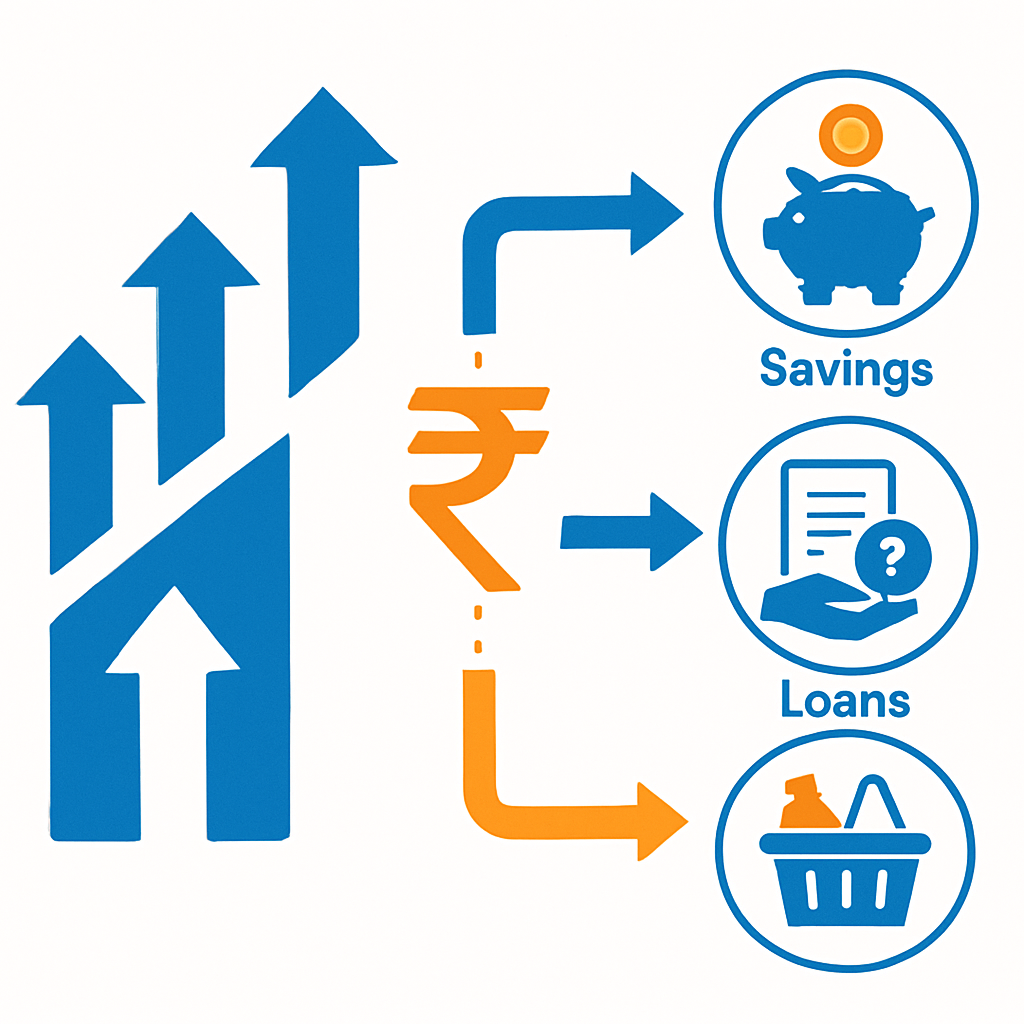
Rupee’s slide and RBI’s rate hike can affect borrowers quickly, especially when loans are linked to floating rates. Banks often link home loan rates to external benchmarks, so repo rate changes may flow into lending rates after reset dates. Existing borrowers may face higher EMIs or longer repayment periods, depending on how their lender transmits the rate hike.
New borrowers may also find home loans, car loans, and personal loans costlier than before. Credit card debt remains especially risky because interest rates are usually high even before policy rates rise. If you want a deeper home loan view, read PocketPlanGuru’s guide on why RBI’s repo rate hike is critical for your home loan.
Managing Existing Loans
Start by checking your latest loan statement, current interest rate, reset date, and remaining tenure. Ask your bank whether the EMI will rise or whether the repayment tenure will become longer after the next reset. A longer tenure may reduce immediate pressure, but it can increase the total interest paid over the life of the loan.
Refinancing can be considered only after comparing the full cost, including processing fees, legal charges, documentation costs, reset conditions, and foreclosure rules. A lower advertised rate may not always lead to meaningful savings once all charges are included. Consult a financial advisor before refinancing a large loan, especially if the decision affects tax planning, liquidity, or long-term financial goals.
Prepayment can reduce interest pressure, but it should not weaken your emergency fund. If you use all spare cash to reduce debt, you may have to borrow again during a medical emergency, job loss, or family need. Review cash flow carefully and consult a financial advisor before making a large prepayment decision.
Planning New Loans in High Rate Conditions
If you are planning a new home loan, compare fixed and floating rate options carefully. Fixed rates may offer comfort, but they can come with conditions, higher initial pricing, or limited flexibility. Floating rates may fall later, but the RBI’s hawkish stance suggests borrowers should not assume quick rate cuts.
Use EMI calculators to test different interest rates, loan amounts, and repayment tenures before signing loan papers. A longer tenure can reduce the monthly EMI, but it can also raise total interest over time. Avoid borrowing the maximum amount approved by the bank if the EMI would leave little room for savings and emergencies.
How Rate Hikes Affect Savings and Investments
Savers may get some relief when banks raise deposit rates after RBI rate hikes. Higher fixed deposit rates can help retirees, conservative investors, and families saving for near-term goals. However, post-tax returns matter because income tax can reduce the actual benefit received by the investor.
Rupee’s slide and RBI’s rate hike may also affect equity market sentiment. Higher borrowing costs can pressure companies that depend heavily on loans, while a weak rupee can affect import-heavy businesses differently from exporters. You can track market updates through the NSE and also follow broader Sensex and BSE movements.
Reviewing Fixed Income Options
Fixed deposits, RBI bonds, PPF, EPF, and debt-oriented products can serve different roles in a financial plan. FDs may suit short and medium-term needs, while PPF and EPF are commonly used for longer-term savings. Section 80C decisions should be based on goals, lock-in periods, liquidity needs, and tax suitability rather than only last-minute tax filing pressure.
Do not shift all savings into one product only because rates look attractive for a short period. Deposit laddering may help manage reinvestment risk, but the right structure depends on your cash flow and goals. Consult a financial advisor before changing large fixed-income allocations or moving money from long-term investments.
Global bond yield movements can also influence Indian borrowing costs and debt market sentiment. If you want broader context, read PocketPlanGuru’s explainer on why rising global bond yields matter for your home loans. This can help connect RBI policy, global interest rates, and household borrowing costs.
Navigating Equity and Mutual Fund Risks
Equity markets may become volatile when interest rates rise and the rupee weakens. Import-heavy sectors may face cost pressure, while exporters may benefit in some situations. Review your mutual fund portfolio for concentration risk, but avoid sudden exits based only on headlines.
SIP investors should focus on time horizon, asset mix, and the purpose of each goal. A short-term fall in Nifty or Sensex does not automatically require action if the investment is meant for a long-term goal. For stock market rules and investor protection updates, the SEBI website is a useful reference.
If you are unsure whether to continue, pause, increase, or redeem investments, consult a financial advisor. Investment decisions should consider risk profile, time horizon, taxation, liquidity, and family responsibilities together. A rate hike or rupee slide is only one part of that larger financial picture.
Inflation and Daily Expenses
Inflation hurts most when household income does not rise at the same pace as expenses. A weaker rupee can make fuel, transport, edible oil, imported goods, and some manufactured products costlier over time. Even small monthly increases can disturb a tight budget if EMIs and fixed commitments are already high.
Rupee’s slide and RBI’s rate hike can also change spending behaviour. Higher EMIs reduce free cash flow, while higher prices reduce purchasing power. This makes a practical monthly budget more useful because it shows where money is going before stress builds up.
Tracking and Reducing Daily Expenses
Track fuel, grocery, school, medicine, insurance, rent, EMI, and utility expenses every month. You do not need a complex spreadsheet to begin this habit. A simple notes app, budgeting app, or bank statement review can reveal spending patterns and avoidable leaks.
Look for savings that do not harm health, safety, education, or essential family needs. You may review subscriptions, food delivery habits, impulse shopping, unused memberships, and frequent small card spends. Planned purchases, comparison shopping, and reduced wastage can help without making daily life unnecessarily restrictive.
Setting Up a Flexible Budget Framework
Divide expenses into essential, useful, and avoidable categories. Essentials may include rent, EMI, food, school fees, insurance, medicines, and basic utilities. Useful spending can include skill development, family travel, preventive healthcare, and support for dependents.
Build a small inflation buffer into your monthly budget if cash flow permits. This buffer can help absorb sudden increases in fuel, groceries, repairs, or school-related costs. Keep it separate from your emergency fund so that short-term price shocks do not disturb long-term financial safety.
Reassessing Financial Goals During Economic Changes
High interest rates can change the timing and affordability of large goals. Buying a house, upgrading a car, taking a personal loan, or funding a lifestyle purchase may need fresh calculations. Your affordability should reflect current EMI levels and future reset risks rather than older interest rate assumptions.
Investment goals also need a calm review during volatile periods. NPS, PPF, EPF, SIPs, insurance premiums, and emergency savings should fit your family’s risk profile and cash flow. Do not stop essential protection or long-term planning only because markets look uncertain for a few weeks.
Adjusting Loan and EMI Goals
Delay non-essential borrowing if the EMI would strain your monthly budget. A larger down payment can reduce the loan amount and interest burden, but it should not empty emergency savings. This is especially relevant for cars, gadgets, holidays, and lifestyle purchases that can be postponed.
Recalculate EMI affordability whenever income, expenses, or family responsibilities change. Include school fees, medical costs, insurance premiums, annual maintenance, travel, and irregular expenses in the calculation. Keep total obligations at a level that allows savings, emergency planning, and basic comfort.
Balancing Savings and Growth Targets
During rate hikes, some investors may feel attracted to fixed-income products because returns can look more stable. That does not mean equities lose their role in long-term wealth creation. The right balance depends on age, goals, income stability, risk comfort, tax position, and investment horizon.
Avoid panic selling equity mutual funds during market swings. Review asset allocation instead of reacting to every rupee movement or policy headline. Consult a financial advisor before making major portfolio changes, especially if the decision affects retirement, children’s education, or home purchase goals.
Actionable Steps for Indian Readers
Rupee’s slide and RBI’s rate hike call for practical action, not fear. Monitor RBI policy updates, rupee movement, crude oil headlines, and bank lending rate changes. These signals can help you plan loans, savings, and spending with better awareness.
Review tax and investment documents before the ITR season instead of waiting until the last minute. Check whether Section 80C investments still match your goals, lock-in comfort, and liquidity needs. If your portfolio has high stock exposure, read PocketPlanGuru’s explainer on why SEBI’s probe matters for your stock market decisions.
Tools to Manage Loans and Investments
Loan calculators can help compare EMI, tenure, and interest impact under different rate scenarios. Many bank websites provide basic calculators for home loans, car loans, and personal loans. Use them before borrowing so that you understand how even a small rate change can affect monthly cash flow.
Portfolio trackers can help monitor SIPs, mutual funds, FDs, PPF, NPS, and EPF in one place. Budgeting tools can show spending patterns across UPI, cards, and bank accounts. Tools are useful, but discipline and regular review make the biggest difference.
When to Consult Financial Advisors
Speak to a qualified financial advisor before refinancing a large home loan or restructuring major debt. Also seek guidance when rebalancing a complex portfolio across equity, debt, insurance, and retirement products. This matters more if your goals include children’s education, retirement, business funding, or overseas expenses.
Professional advice becomes useful when decisions involve tax, risk, liquidity, and family responsibilities together. A loan switch may save interest but create charges, paperwork, or short-term cash flow pressure. A financial advisor can help compare choices using your full financial picture rather than one headline rate.
Frequently Asked QuestionsWill RBI rate hikes make all loans more expensive
Rate hikes usually affect floating rate loans first because they are linked to benchmarks that can move with policy rates. Fixed rate loans may not change immediately unless the contract allows a reset. New home loan, car loan, and personal loan rates can also rise when banks pass on higher borrowing costs.
How can savers benefit from higher interest rates
Savers can compare fixed deposits, RBI bonds, and other fixed-income products when rates move higher. The final choice should consider tax impact, lock-in period, liquidity, and goal timing. Consult a financial advisor before shifting a large amount from existing investments.
Does rupee depreciation mean I should avoid equity funds
No, rupee depreciation alone is not a reason to exit equity funds. Different sectors react differently because exporters, importers, lenders, and consumer companies have different exposures. Review your portfolio and consult a financial advisor if you are unsure about risk, time horizon, or asset allocation.
When should I consider refinancing my home loan
Refinancing may be considered when another lender offers meaningful savings after all charges are included. Compare processing fees, legal costs, reset terms, foreclosure rules, and remaining tenure before making a decision. Consult a financial advisor before switching a large home loan because the lowest rate may not always be the best overall deal.
How can I control rising daily expenses effectively
Track monthly spending on fuel, groceries, utilities, subscriptions, school fees, and medical needs. Prioritize essentials and reduce avoidable expenses without compromising health, safety, or education. Build a small inflation buffer so that routine price increases do not disturb your entire budget.
Stay Proactive With PocketPlanGuru
A weaker rupee and a higher repo rate can affect daily life, but planning can reduce stress. Review loans, protect savings, track expenses, and avoid rushed investment moves based only on headlines. Subscribe to PocketPlanGuru and explore more practical guides to keep your money plan ready for changing RBI policies.
Disclaimer: The information above is for educational purposes only and does not constitute financial advice.