

Understanding the Rupee’s Depreciation and Oil Price Surge
The Indian rupee has been trading close to its record-low zone against the US dollar, and that matters for household budgets. A WION Pulse report on the rupee near 97 said the currency touched 96.96 to the dollar in May and later moved in a range around 96.20 to 96.90. The report also noted that market watchers were focused on whether continued oil and dollar pressure could push the rupee closer to 100.
A weaker rupee makes imports costlier because India must pay more rupees for the same dollar-priced goods. Crude oil is one of the biggest pressure points because India relies heavily on imported oil. When global crude prices rise, India’s import bill can increase, dollar demand can rise, and the rupee can come under more pressure.
Why Crude Oil Prices Matter to India
Crude oil affects far more than petrol pumps because fuel is used across transport, farming, manufacturing, and delivery networks. Higher crude prices can raise costs for petrol, diesel, aviation fuel, and freight movement. This is why a currency headline can quickly become a household finance issue.
A LinkedIn post discussing India’s hidden oil risk highlighted the connection between crude prices, dollar demand, inflation concerns, and pressure on an import-heavy economy. That link is also relevant for investors because a weaker rupee can affect companies that depend on imported inputs. If you track Nifty, Sensex, BSE, or NSE-listed stocks, oil-linked inflation is worth monitoring with guidance from a financial advisor.
Geopolitical Risks Driving Market Volatility
Tensions in West Asia can lift crude prices because the region is important for global energy supply and shipping routes. The Strait of Hormuz is closely watched by oil traders, and any threat around it can increase price volatility. A Reuters report carried by Yahoo Finance said renewed Middle East conflict and Iran’s claim about closing the Strait of Hormuz pushed oil prices higher.
The IMF Global Financial Stability Report explains that geopolitical risk can affect commodity prices, sovereign risk, yields, and exchange rates. It also notes that commodity-importing countries can face stronger pressure during such events. India fits that risk profile because imported crude oil remains a major economic sensitivity.
Impact on Indian Household Budgets: From Fuel to Food
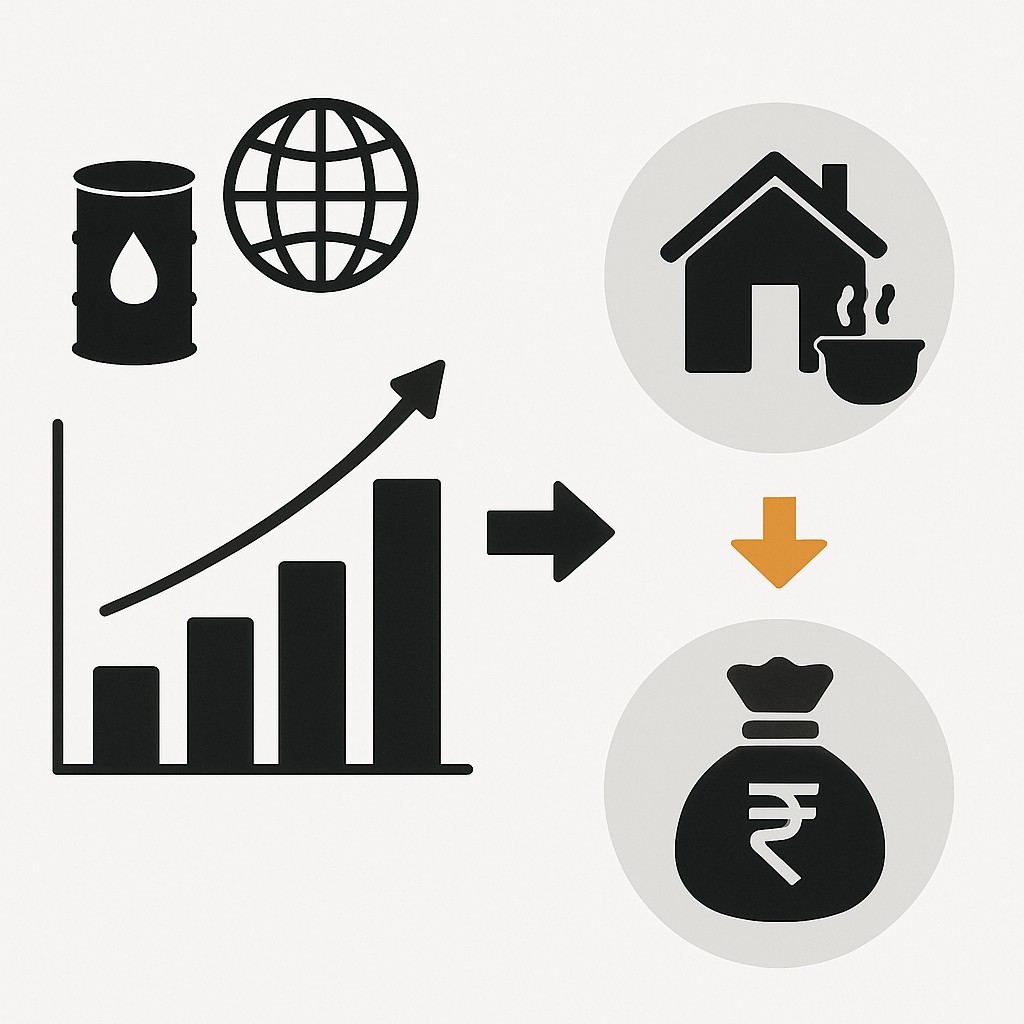
When oil rises and the rupee weakens, families may feel the effect in stages. Petrol and diesel costs can affect commute budgets first, but the pressure does not stop with personal vehicles. Trucks, buses, tractors, cold chains, and delivery fleets all use fuel, so higher transport costs can enter the price of everyday products.
Costlier logistics can affect vegetables, fruits, packaged foods, medicines, and daily-use goods. Families with home loan EMIs, personal loan EMIs, or credit card dues may feel tighter cash flow if inflation stays high. A weak rupee can also make imported electronics, spare parts, and some medical items more expensive.
Transportation and Fuel Expenses in Daily Life
Higher petrol and diesel costs directly affect office commutes, school drops, business travel, and weekend travel. Even families that use public transport can feel the effect if operators face higher fuel bills and revise fares over time. App-based taxi fares, delivery fees, and intercity bus prices can also become less affordable when fuel costs remain elevated.
Small changes in fuel bills can hurt because they repeat every week and quietly reduce savings. A practical response is to track fuel spending along with groceries, electricity, subscriptions, and delivery charges. This gives you a clearer view of where inflation is entering your budget before it turns into credit card stress.
Ripple Effects on Food and Healthcare Prices
Food prices can rise when farms and supply chains face higher fuel costs. Diesel is used for pumps, tractors, transport vehicles, cold storage support, and market movement. If fuel stays expensive, the cost can travel from farms to mandi yards and then to retail stores.
Healthcare can also become costlier when the rupee weakens because some medical equipment, devices, and specialised drugs are imported. Hospitals and diagnostic centres may face higher replacement and maintenance costs for imported machines. Families should review health insurance, term insurance, and emergency savings with professional guidance before inflation reduces their comfort zone.
Personal Finance Strategies to Manage Rising Costs
A weak currency does not mean panic, but it does call for discipline. Start by separating essential spending from lifestyle spending and identifying expenses that cannot be delayed. Groceries, rent, EMIs, medicines, school fees, and insurance premiums should come before shopping, dining out, or upgrades.
Budgeting helps because inflation often hides in small bills rather than one dramatic expense. Track fuel, food, electricity, subscriptions, school-related costs, healthcare, and credit card spends for a few months. If you file ITR regularly, review tax-saving choices with a qualified professional rather than buying products only for last-minute deductions.
Effective Budgeting Amid Inflation and Currency Weakness
Use the RBI website and its inflation updates to understand the broader price trend. You do not need to become an economist to use this information for household planning. If inflation remains sticky, keep a reasonable buffer in your monthly plan and consult a financial advisor before making major financial changes.
Create a simple rule for your household budget and review it every month. Pay fixed bills first, keep money for essentials next, and then assign a limited amount for lifestyle spending. This approach is easier to sustain than cutting everything suddenly and then feeling frustrated within a few weeks.
Reducing Fuel Consumption and Transport Costs
Carpooling, public transport, metro travel, and route planning can reduce fuel use for many city families. If you own a vehicle, regular servicing, tyre pressure checks, and smooth driving can improve fuel efficiency. For some households, two-wheeler pooling or occasional work-from-home days may also reduce monthly transport pressure.
Electric vehicles may reduce running costs for some users, but the decision needs careful planning. Compare charging access, battery warranty, insurance, resale value, and loan cost before making a switch. If you plan to finance an EV with a personal loan or vehicle loan, consult a financial advisor and check whether the EMI fits your monthly budget.
Investment Planning During Inflation
Inflation can reduce the real value of idle money, so savings need a clear purpose. Some households discuss gold, mutual funds, SIPs, fixed-income options, EPF, PPF, and NPS with financial advisors during inflationary periods. No product suits every family, so consult a financial advisor before changing your portfolio.
Gold often gets attention when geopolitical risk rises, but its price can move sharply in both directions. Equity mutual funds and SIPs may suit some long-term goals, yet they carry market risk and should be chosen with proper advice. For context on market-linked income events, read why smart investors watch Wipro and UltraTech ex-dates before reacting to dividend headlines.
Sectoral Impact: Agriculture, Transportation, and Healthcare
The rupee’s weakness affects more than forex traders and importers. It can shape costs in agriculture, transport, healthcare, aviation, and manufacturing. These sector costs can eventually show up in household budgets, company earnings, and government policy choices.
A Reuters report on the rupee and oil supply worries said Brent crude rose to over $95 per barrel as hostilities escalated. The report also said the rupee ended near 96.5650, moving toward its 96.96 record low. Such moves can affect investor sentiment in Nifty and Sensex because many companies depend on fuel, imported inputs, or dollar-linked costs.
Agriculture: Rising Costs of Inputs and Logistics
Agriculture faces pressure when fuel and imported inputs become costlier. Fertilizer import costs can rise when the rupee depreciates against the dollar. Farmers may then face higher working capital needs during sowing, irrigation, transport, and harvest cycles.
Logistics also matter because food often travels long distances before reaching urban consumers. Diesel costs affect trucks, cold-chain vans, wholesale movement, and local delivery vehicles. If these costs rise for long enough, consumers may pay more for vegetables, grains, milk products, and packaged foods.
Transportation Sector Challenges and Consumer Costs
Transport companies face direct pressure from fuel costs because diesel and petrol are core operating expenses. Freight operators may raise charges if fuel remains expensive and margins shrink. Passenger transport firms may also review fares when their cost structure changes.
These changes can raise prices for both goods and services. Even online shopping can become costlier if delivery, warehousing, and last-mile transport expenses rise. For a deeper view of crude-linked risks, read PocketPlanGuru’s guide on why rising crude prices are a critical hit to your budget.
Healthcare Inflation and Access Issues
Healthcare inflation becomes painful because families cannot always delay treatment. Imported machines, surgical tools, diagnostic equipment, and some drugs can become costlier when the rupee weakens. Hospitals may not pass every cost to patients at once, but sustained pressure can still raise bills over time.
Families should review health cover, emergency funds, and out-of-pocket limits with an advisor. Term insurance can also protect dependents if the main earner faces a sudden risk. Do not buy policies only for tax saving under Section 80C, because cover should match real family needs.
How RBI and Market Regulators Are Responding
RBI watches currency markets, inflation, liquidity, and growth while making policy choices. During sharp rupee moves, traders often look for signs of forex intervention through state-run banks. The Yahoo Finance Reuters report said state-run banks were seen offering dollars, likely on behalf of RBI, which helped limit the rupee’s fall.
RBI can use tools such as forex market operations, liquidity steps, and the repo rate to manage financial conditions. Rate changes can affect home loan EMIs, personal loan costs, fixed deposit rates, and bond yields. Borrowers should track policy updates because even small rate moves can affect long-term interest outgo.
Monetary Measures by RBI
RBI’s policy framework focuses on inflation control and financial stability. If inflation rises because of fuel and imports, RBI may adjust liquidity or policy rates based on its assessment. These steps can influence bank FD rates, loan pricing, bond yields, and market expectations.
Forex intervention can reduce sudden rupee volatility, but it cannot remove global oil risk. India still needs dollars to buy crude oil, and markets understand that link. This is why rupee weakness remains a household finance topic, not only a treasury desk concern.
SEBI’s Role During Market Uncertainty
SEBI protects investors by regulating securities markets and improving transparency. During volatile phases, clear disclosures and fair market conduct become even more important. Investors should avoid rumours on social media and check official company filings on NSE or BSE platforms.
SEBI also supports investor education, which helps people understand risk before buying stocks, mutual funds, or derivatives. Market swings can tempt investors into quick trades, but rushed decisions can hurt wealth. For investor protection updates, see PocketPlanGuru’s explainer on what SEBI’s new fast-track transmission means for your family.
Long-Term Financial Planning in Volatile Times
Volatile times reward families that plan before stress arrives. Build a budget that can handle higher food, fuel, school, healthcare, and debt repayment costs. Keep your financial plan flexible because inflation, oil prices, and currency moves can change quickly.
Review your asset mix with a qualified financial advisor instead of reacting to headlines. EPF, PPF, NPS, fixed deposits, mutual funds, gold, and equities play different roles in a financial plan. Your mix should match your age, goals, income stability, risk comfort, tax position, and emergency needs.
Emergency Fund Importance During Inflation
An emergency fund protects you when prices jump, income slows, or medical costs arrive unexpectedly. Keep this money separate from your investment portfolio so it remains available when needed. Consult a financial advisor to decide the right size and suitable instruments for your household situation.
Do not use emergency funds for vacations, gadgets, or speculative trades. During inflation, cash discipline gives your family confidence and time to make better choices. A clearly separated reserve can also prevent you from breaking long-term investments at the wrong time.
Income Diversification to Hedge Risks
Extra income can reduce pressure when monthly costs rise. Freelancing, tutoring, consulting, small online services, or rental income may support your main salary if they suit your skills and time. Any side income should also be planned for taxes, documentation, and long-term sustainability.
NRIs and families with dollar income may view rupee weakness differently because dollar savings can rise in rupee terms. However, goals, tax rules, remittance costs, and investment regulations still matter. If your family has overseas income, consult a tax expert before planning transfers or investments.
FAQs on Rupee Depreciation and Household Finance
Rupee depreciation can feel complex, but the household impact is easier to understand when you follow the oil-import-inflation chain. A weaker rupee raises the rupee cost of dollar-priced imports, and crude oil is a major pressure point. The answers below focus on practical money steps for Indian families.
Why is the Indian rupee falling against the US dollar?
The rupee is under pressure because rising oil prices increase India’s dollar demand and import bill. Geopolitical tensions in West Asia also make crude oil markets more uncertain. Foreign fund flows, global dollar strength, and market sentiment can add more pressure during volatile phases.
How do rising oil prices affect my daily expenses?
Rising oil prices can increase petrol, diesel, transport, and logistics costs. These costs can then affect groceries, medicines, school transport, delivery services, and some manufactured goods. Even if your own fuel use is low, supply-chain costs can still affect your monthly budget.
What are practical ways to manage my household budget now?
Start by tracking expenses and prioritising essentials such as food, rent, EMIs, medicines, and insurance. Reduce fuel use through carpooling, public transport, better route planning, and regular vehicle maintenance. Cut discretionary spending before touching emergency funds or long-term investments.
Which investments are safer during rupee depreciation?
No investment is completely risk-free, and safety depends on your goal, time horizon, and liquidity needs. Some families discuss fixed-income products, gold, mutual funds, SIPs, PPF, NPS, and EPF with advisors during currency volatility. Consult a financial advisor before changing your portfolio based on rupee movement alone.
How do geopolitical risks indirectly affect consumer prices?
Geopolitical risks can disrupt oil supply routes and raise crude price volatility. Higher crude prices can increase India’s import bill and add pressure on the rupee. That chain can raise transport, food, healthcare, and imported goods costs for consumers over time.
Stay Ready, Not Worried
When the rupee nears a record low, the best response is calm action rather than panic. Review your budget, reduce wasteful fuel use, protect emergency savings, and avoid rushed investment decisions. Stay informed and adjust your finances early so inflation and currency risks do not surprise your family.
For more simple Indian money guides, keep reading PocketPlanGuru and explore our explainers on markets, savings, tax, and family finance. Subscribe to PocketPlanGuru for timely updates that help you plan smarter in uncertain times. Your budget cannot control global oil prices, but your plan can reduce their impact.
Disclaimer: The information above is for educational purposes only and does not constitute financial advice.