


Why This Margin Squeeze Matters for Borrowers
Indian private banks are facing pressure on their lending margins, and borrowers may feel the impact through future loan pricing. If you have a home loan, personal loan, credit card balance, or SME borrowing, this trend deserves attention before your next reset or renewal. A private banks’ margin squeeze can move slowly from bank balance sheets to household EMIs and business cash flows, so early planning can reduce stress.
Margin pressure does not mean every loan rate will rise immediately or by the same amount. Banks reprice different products at different speeds, and existing fixed-rate loans may not change until the agreed period ends. Still, when banks face sustained pressure on profitability, they often review lending spreads, fees, approval standards, and discounts for new borrowers.
What Is Margin Squeeze and Why Are Indian Private Banks Facing It?
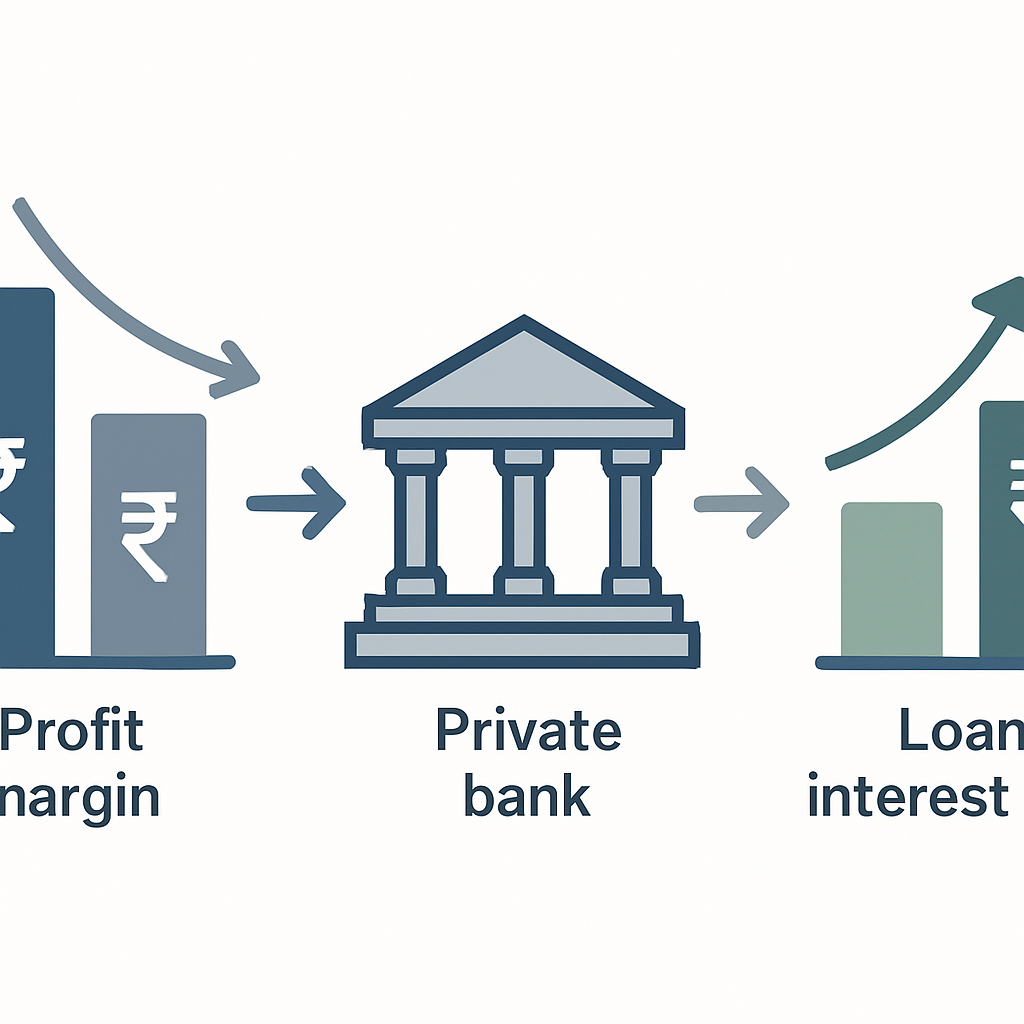
Margin squeeze happens when a bank earns a smaller gap between what it pays for funds and what it earns from borrowers. Banks call this gap net interest margin, or NIM, and it is a key measure of lending profitability. When NIM falls, banks earn less on each rupee they lend, which is why a private banks’ margin squeeze matters even if you never read bank results.
In simple terms, banks collect deposits, borrow from markets, and then lend money through home loans, business loans, personal loans, and credit cards. If deposit costs or wholesale funding costs rise faster than loan income, margins shrink. Research from the Reserve Bank of Australia on interest rates and bank profitability explains how low-rate environments can compress bank margins when deposit rates cannot fall much further.
Explaining Margin Squeeze in Simple Terms
Think of a bank like a shop that buys funds and sells loans. Its profit depends on the spread between the buying cost and the selling price. When that spread narrows, the bank can accept lower profits, raise loan rates, reduce discounts, increase fees, or tighten credit standards over time.
This change does not always happen overnight because loan books have different reset dates and benchmark links. Some Indian loans are linked to the repo rate, while others may be linked to MCLR or another internal benchmark. Once pressure stays for a few quarters, borrowers may begin to see higher spreads, stricter underwriting, or fewer promotional rates.
Why Private Banks May Feel the Pressure Faster
Indian private banks compete intensely for quality retail deposits, especially when credit growth is strong and customers seek better returns on savings. They may also use wholesale funding, which can become more expensive when liquidity tightens. When savers demand higher fixed deposit rates, banks cannot always protect margins without changing loan pricing.
Private banks may also adjust loan pricing faster than some other lenders because their loan mix and benchmark composition can differ. A sector note on Indian banking observed that private banks have a lower share of MCLR-linked loan books than PSU banks, which can affect how quickly yields respond. This means a private banks’ margin squeeze may first affect new borrowers and then reach existing floating-rate borrowers through reset dates or spread reviews.
How Margin Squeeze Can Translate Into Higher Loan Interest Rates
When funding costs rise, banks usually try to pass at least part of that pressure to borrowers. They may increase lending spreads, revise MCLR, raise processing fees, or reduce discounts offered to strong customers. RBI’s repo rate decisions also influence lending rates, and borrowers can follow policy signals through the RBI press release page.
The link between margin pressure and lending behaviour appears in global research as well. The ECB working paper on banks and negative interest rates discusses how squeezed net interest margins can influence bank lending incentives and screening behaviour. In India, this may show up through higher pricing for unsecured personal loans, tighter SME approvals, or less aggressive home loan offers.
From Bank Pressure to Borrower Cost
The mechanism is simple but powerful. If a bank pays more for deposits and market funds, it needs more income from loans to protect profitability. If it cannot reduce costs quickly enough, it may raise lending rates, reduce concessions, or become more selective about which borrowers receive the best pricing.
New loans usually become costlier first because banks can price them immediately. Existing floating-rate loans may move later, depending on their benchmark, reset cycle, and contract terms. Home loan borrowers may first see longer tenures, while SME borrowers with working capital limits may face quicker rate reviews.
Who May Be Most Affected in India?
Home loan borrowers with floating rates should watch reset dates and benchmark changes closely. Even a modest rise can either increase EMI or stretch the repayment tenure, depending on how the lender structures the loan. Borrowers planning a top-up loan or balance transfer should compare the effective cost, not only the advertised rate.
Personal loan and credit card borrowers may face a sharper impact because unsecured credit carries higher risk for lenders. Credit card revolvers are already exposed to high finance charges, so any additional borrowing can strain monthly budgets quickly. SMEs may face a tougher combination of higher rates, stricter documentation, and closer cash-flow checks.
Current Signals from Indian Banks and Markets
Recent lender updates show that private banks continue to discuss deposit growth, funding costs, and margins in their results and investor presentations. Large lenders such as HDFC Bank, ICICI Bank, and other private banks regularly provide commentary on NIM trends and loan pricing. Borrowers do not need to track every quarterly result, but these updates can offer early clues about future lending behaviour.
Market signals can also provide context, though they should not be treated as borrowing advice. If bank stocks or the Nifty Bank index react sharply to margin commentary, investors may be pricing concerns about profitability or funding costs. For broader market context, the NSE website provides index and sector updates that can help borrowers follow the financial environment.
What to Watch in Bank Disclosures
Borrowers should focus on a few practical indicators rather than trying to analyse every bank ratio. Useful signals include changes in MCLR, repo-linked lending spreads, processing charges, and minimum credit score requirements. Bank websites usually publish product rate cards, and a quick quarterly check can reduce surprises before a reset, renewal, or top-up request.
RBI’s financial stability updates also help borrowers understand system-wide risks related to liquidity, credit growth, and stress points. SEBI shapes the wider financial market environment through disclosure and investor protection rules, which can influence confidence and funding conditions. Key circulars are available on the SEBI circulars page.
Why Global Credit Conditions Still Matter
India’s banking system has its own drivers, but global credit conditions can still affect sentiment, funding costs, and lender risk appetite. A Federal Reserve paper on bank lending to private credit found that tighter monetary policy can be associated with higher interest rates for borrowers relying more on bank loans. The Federal Reserve has also discussed potential risks from bank lending to private credit vehicles during stress through its note on bank lending to private credit.
Private credit stress can matter because banks, NBFCs, and market lenders often interact through funding lines and risk sentiment. CNBC has reported that higher-for-longer rates are squeezing private credit borrowers, especially where debt is floating-rate. Indian borrowers should not assume global events will directly set their EMI, but they should understand that credit markets are connected.
What This Means for Your EMI and Borrowing Costs
For households, the first impact may appear when applying for a new home loan, car loan, or personal loan. Banks may quote a higher spread, reduce promotional discounts, or ask for stronger income documentation. Existing floating-rate borrowers may see tenure extensions or EMI increases after reset dates, depending on the lender’s policy.
Rising EMIs can disturb monthly budgets quickly if there is no buffer. Families may reduce discretionary spending, delay purchases, or struggle to maintain savings goals when debt payments rise. This is why loan planning should sit alongside emergency funds, term insurance, tax planning, and long-term investments after you consult a financial advisor.
Impact on Individual Borrowers
A higher EMI reduces free cash each month and can create stress if the household budget is already tight. Missed repayments can damage your credit score and make future borrowing more expensive. Lenders may also approve a smaller loan amount if your debt-to-income ratio worsens.
Home loan borrowers should ask their bank how rate resets work before the next revision date. Some banks extend tenure first, while others raise EMI after a limit or after borrower consent. If you are considering part-prepayment, refinancing, or a change in repayment structure, consult a financial advisor before making a major decision.
Impact on SME Loan Costs and Cash Flow
SMEs often depend on working capital loans, equipment finance, invoice-linked credit, cash credit, and overdraft facilities. Higher interest costs can reduce operating margins and weaken cash buffers, especially for firms with seasonal revenue. A business with thin margins may need to delay hiring, inventory purchases, expansion plans, or supplier payments.
Business owners should prepare cash-flow forecasts under higher-rate scenarios. They should also keep GST, income tax, and ITR compliance clean because lenders value reliable records and transparent accounts. If banks tighten credit, clean books and timely repayment history can improve negotiation power with existing and new lenders.
How Borrowers Can Prepare for Higher Loan Costs
Borrowers can reduce the impact by acting before rates rise sharply. Start by listing all loans, interest rates, reset dates, outstanding balances, fees, and prepayment rules. Then compare your current rate with written offers from other lenders, because a simple review can show whether refinancing is worth exploring.
Do not switch loans only because another lender advertises a lower headline rate. Check processing fees, legal charges, insurance bundling, valuation charges, and any prepayment conditions before deciding. A lower EMI today can become costly later if the loan has unfavourable reset terms or hidden charges.
Refinancing and Negotiation Strategies
Refinancing can help if your current rate is meaningfully higher than the market rate available to you. Home loan balance transfers are common in India when the remaining tenure is long enough for savings to offset transfer costs. SME borrowers can also negotiate with existing lenders before moving accounts, especially if repayment history and financial records are strong.
Before refinancing, calculate the break-even point carefully. Add all transfer costs and compare them with expected interest savings over the period you realistically plan to keep the loan. If you are unsure whether the switch is worthwhile, consult a financial advisor and ask the lender for a written cost comparison.
Fixed Versus Floating Rates
Fixed rates can protect you from future hikes for the fixed period specified in the loan agreement. They may start higher than floating rates, so the borrower is paying for certainty. Floating rates may look cheaper initially, but they can move when benchmarks, spreads, or reset terms change.
The right choice depends on income stability, risk comfort, loan tenure, and cash-flow flexibility. Many Indian borrowers choose floating home loans because long tenures pass through several rate cycles. If rising EMIs would seriously affect your household or business, consult a financial advisor before choosing between fixed, floating, or partially fixed options.
Budgeting Tips for a Higher EMI Environment
Build an emergency fund that covers at least a few months of EMIs and essential expenses. Keep this money in safe and liquid options instead of chasing high returns with money needed for repayments. Avoid rolling over credit card dues while borrowing costs are rising, because high-cost debt can quickly weaken your finances.
Review insurance, taxes, and investment commitments together instead of looking at the loan in isolation. Tax-saving options such as EPF, PPF, eligible insurance premiums, and home loan principal repayment can support planning, but liquidity should not be ignored. Before changing SIPs, mutual funds, insurance products, or retirement contributions, consult a financial advisor.
Regulatory and Market Factors That May Influence Future Loan Rates
RBI’s repo rate remains one of the biggest signals for Indian lending rates. If inflation stays sticky, policy may remain tight for longer, and banks may keep facing elevated funding costs. Global oil prices can add pressure because India imports a large share of its crude oil needs, which can affect inflation and household budgets.
Currency movements and energy costs can also influence borrower confidence and bank risk appetite. A weaker rupee may raise import costs and feed inflationary pressure, which can indirectly affect the rate environment. For more context, read PocketPlanGuru’s guide on why the rupee’s drop affects your wallet and its article on how rising crude oil prices can strain your budget.
Role of RBI and Lending Benchmarks
When RBI changes the repo rate, repo-linked loans can reset faster than older benchmark loans. Banks also consider liquidity, deposit competition, credit demand, and risk when setting lending spreads. That combination affects households, SMEs, and financial markets such as Sensex and Nifty.
Borrowers should not try to predict every policy meeting perfectly. A better approach is to keep the loan-to-income ratio sensible and build room in the budget for possible EMI increases. If your finances already feel stretched, delay non-essential borrowing and consult a financial advisor before taking on new debt.
Private Credit and NBFC Dynamics
Private credit and NBFC lending can also influence bank loan pricing. If NBFCs face tighter liquidity, they may raise rates for their borrowers or rely more on bank funding. Banks that lend to NBFCs or private credit vehicles may price risk more carefully when financial conditions become uncertain.
India’s private capital market is growing, and businesses now have more funding choices than before. Still, cheaper money is not always safer money, especially when covenants, collateral terms, and repayment schedules are strict. If you follow business funding trends, PocketPlanGuru’s article on Carnelian Capital’s ₹2,000 crore PE fund explains how private capital can affect growing Indian companies.
Frequently Asked Questions
Why are private banks in India experiencing margin squeeze?
Private banks face margin pressure when deposit and wholesale funding costs rise faster than lending income. They cannot always raise loan rates instantly across the full loan book because different products have different reset dates and benchmark rules. This narrows net interest margin, which is the gap between what banks earn from lending and what they pay for funds.
How soon can loan interest rates rise due to margin squeeze?
Loan rates can adjust within months if margin pressure remains high, but the timing depends on the product and lender. New loans usually reflect higher pricing first because banks can quote fresh rates and spreads immediately. Existing floating-rate loans may change at reset dates, while fixed-rate loans may not change until the fixed period ends.
Should I switch to a fixed-rate loan to avoid rising EMIs?
A fixed-rate loan can reduce uncertainty for the fixed period, but it may start at a higher rate than a floating loan. The decision depends on your income stability, remaining tenure, cash-flow comfort, and the difference between fixed and floating offers. Before switching a large loan, compare written terms and consult a financial advisor.
Can refinancing help reduce my interest cost?
Refinancing can help if another lender offers a lower effective rate and the savings exceed transfer costs. You should include processing fees, legal charges, valuation charges, insurance requirements, and prepayment costs in the calculation. A balance transfer usually works best when the remaining tenure is meaningful and the rate difference is large enough.
What can SMEs do to manage rising borrowing costs?
SMEs should prepare cash-flow forecasts that include higher interest-rate scenarios and slower customer collections. They should maintain clean tax records, updated financial statements, and timely repayment history because lenders value reliable documentation. Alternate credit sources may help in some cases, but business owners should compare total cost and consult a financial advisor before taking expensive debt.
Stay Ahead of Rising Loan Costs
A private banks’ margin squeeze may sound like a banking-sector issue, but it can become a household and business issue through loan pricing. Higher funding costs can move into home loan rates, personal loan offers, SME credit, and credit card borrowing behaviour. The best response is calm preparation, not fear or rushed decisions.
Review your loans, understand reset dates, compare written offers, and speak with your bank before the next revision. If a major refinancing, prepayment, or loan-switching decision is on the table, consult a financial advisor. Staying informed today can protect your EMI, cash flow, and long-term financial goals tomorrow.
Disclaimer: The information above is for educational purposes only and does not constitute financial advice.
10 Comments