

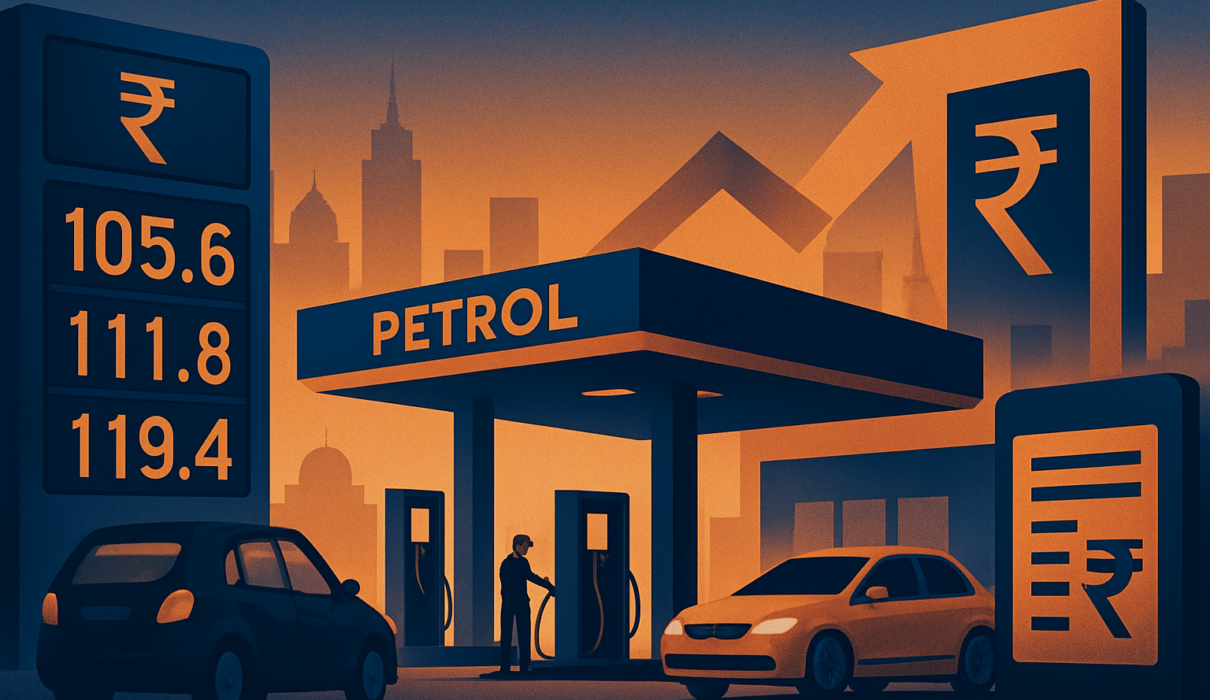
Why Crude Oil Prices Matter for Indian Households
Rising crude oil prices affect Indian households because fuel is connected to many everyday expenses. Petrol, diesel, LPG, groceries, school transport, cab fares, delivery charges, and some utility costs can all become more expensive when energy costs rise. Even if your family does not drive every day, higher transport and production costs can still show up in your monthly budget.
The pressure is not limited to the fuel pump. When households spend more to maintain the same routine, less money may remain for SIPs, PPF, NPS, EPF, term insurance, emergency savings, and other financial goals. India imports a large share of its crude oil, so global price movements can quickly become a domestic budget issue.
How Crude Oil Prices Influence Fuel Costs in India
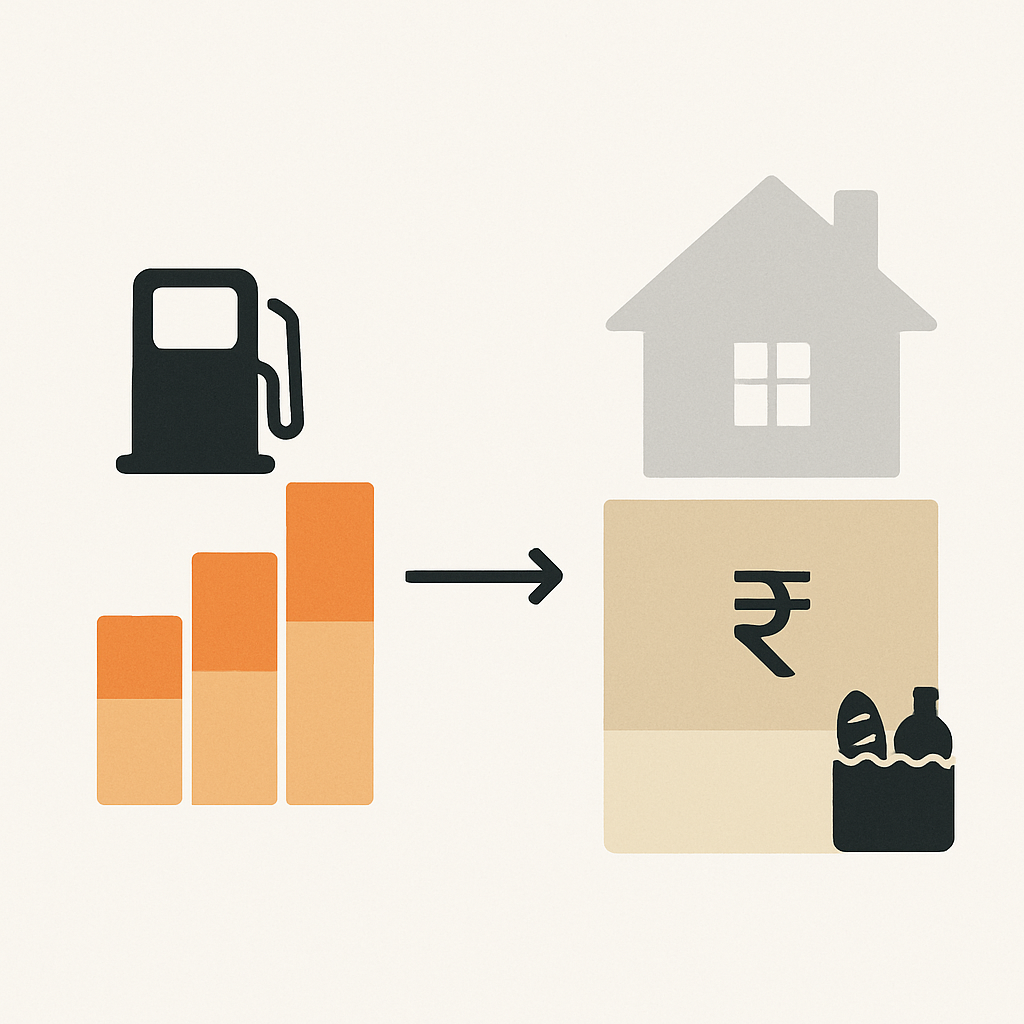
India buys crude oil from global markets and then refines it into petrol, diesel, aviation fuel, LPG, and other petroleum products. When global crude prices rise, oil marketing companies face higher input costs, and part of that pressure can reach consumers over time. Households feel the impact through daily commuting, school runs, delivery fees, weekend travel, and business transport costs.
Fuel prices also vary across cities and states. A family in Mumbai may pay a different price from a family in Delhi, Bengaluru, Jaipur, or Kolkata. This happens because local taxes, freight, dealer margins, and state-level policies differ across India.
India’s Complex Fuel Pricing Mechanism
The retail fuel price includes several layers before it reaches the consumer. It starts with the base price linked to crude and refining costs, then adds freight, central excise duty, dealer margin, and state VAT. These layers explain why petrol and diesel prices do not always move exactly in line with crude prices on the same day.
State VAT creates a major difference between regions. Some states apply higher taxes, while others may adjust rates during sharp price moves to give temporary relief. As a result, two households with similar driving habits can still face different monthly fuel bills.
Role of Government Subsidies and Taxes
Fuel taxes are an important revenue source for central and state governments. These collections help fund public spending, so tax cuts can reduce pump prices but may also affect government finances. This is why policy responses to rising oil prices often involve a trade-off between consumer relief and fiscal pressure.
LPG subsidies can reduce cooking fuel pressure for eligible households. Schemes such as Pradhan Mantri Ujjwala Yojana support low-income families, especially where clean cooking fuel improves health and convenience. Still, subsidies may not remove the full impact of global price changes when crude prices remain elevated for long periods.
Direct and Indirect Effects on Household Budgets
Fuel expenses form a visible part of many Indian budgets. People who use two-wheelers, cars, tractors, commercial vehicles, or delivery vehicles feel the change quickly. Families without private vehicles may still pay indirectly through food prices, utility bills, transport-linked services, and household goods.
Research and financial analysis from sources such as Investing.com and Yahoo Finance highlight this wider effect. Higher oil prices can make households spend more just to maintain the same routine, including commuting, school travel, grocery purchases, and basic services. This reduces discretionary spending and can make it harder to continue savings and investment plans consistently.
Fuel Costs and Commuting Expenses
Daily commuting is often the first pain point for salaried workers, students, small business owners, and gig workers. In many Indian towns, public transport remains limited, crowded, or poorly connected to residential areas. This keeps families dependent on scooters, motorcycles, cars, autos, cabs, and shared transport.
Diesel also affects the cost of buses, trucks, and other transport services. When diesel becomes expensive, transporters often pass part of the burden to customers. That can raise fares, delivery fees, logistics charges, and the prices of goods moved across states.
Inflation Effects on Groceries and Utilities
Food reaches your kitchen through a long chain of farming, storage, transport, wholesale trade, and retail distribution. Farmers may use diesel for pumps, tractors, and local transport, while traders pay freight to move produce from farms to markets. Higher fuel costs can therefore increase the price of vegetables, fruits, milk, packaged food, and other essentials.
Utility bills can also face pressure when energy costs rise. Some power generation, backup systems, and service operations depend on fuel-linked inputs. When inflation pressure builds, the Reserve Bank of India monitors price trends while reviewing monetary policy and the repo rate.
Tracking Fuel Expenses With Recent Household Data
The best way to understand rising crude oil prices is to track your own monthly numbers. Note how much your household spends on petrol, diesel, CNG, LPG, metro cards, cab rides, school transport, parking, and delivery charges. Then compare that total with rent, groceries, EMIs, credit card bills, insurance premiums, and savings contributions.
Official inflation trends can be followed through the Reserve Bank of India and government data releases. Market-focused readers may also track crude price movements along with Nifty, Sensex, BSE, and NSE trends. Energy prices can influence corporate margins in sectors such as transport, aviation, paints, consumer goods, logistics, and power.
Household Fuel Consumption Patterns in India
Fuel spending differs by income level, location, job type, family size, and access to public transport. Rural families may spend on diesel pumps, tractors, motorcycles, and LPG cylinders. Semi-urban households may rely more on personal vehicles because bus, metro, and rail options are often weaker than in large cities.
Urban households may spend on petrol, metro cards, app-based cabs, delivery apps, tolls, and parking. A small rise per litre can look manageable at first, especially if the vehicle tank is filled in small amounts. Over a full month, however, the increase can reduce money available for SIPs, mutual funds, EPF top-ups, Section 80C planning, or emergency savings.
Impact on Inflation and Consumer Prices
Fuel price increases can push consumer inflation upward through direct and indirect channels. Direct pressure appears in household energy and transport costs. Indirect pressure appears when freight, production, storage, packaging, and delivery costs rise across the economy.
IMF research has found that gasoline price increases reduce household purchasing power across income groups. This matches the experience of many families during costly fuel cycles. When everyday costs rise, people may delay purchases, reduce outings, postpone upgrades, or pause savings goals.
Government Policies and Relief Measures
Governments use taxes, subsidies, and targeted support to manage fuel price shocks. They may adjust excise duty, VAT, LPG subsidy support, public transport pricing, or electric mobility incentives. These measures can soften household pressure, but they cannot fully control global crude prices.
India’s policy choices also affect public finances because the country imports much of its oil. Research on India’s fuel pricing highlights the fiscal challenge of holding down prices during global shocks. Relief can help families in the short term, but it may create budget pressure for governments if support is broad and prolonged.
Key Government Subsidies and Schemes
Pradhan Mantri Ujjwala Yojana helps eligible households access LPG connections. This support matters because cooking fuel is a basic need, not a luxury. Subsidy design can protect poorer families when market-linked fuel prices rise.
State-level policies can also change final household costs. Some states may offer exemptions, reduced levies, targeted transport benefits, or temporary tax adjustments at different times. Always check your state government portal before assuming the same relief applies everywhere.
Transport and Energy Sector Relief Initiatives
Metro cities often use public transport planning, fare controls, or commuter support to reduce household pressure. Better buses, metro lines, suburban rail, and last-mile connectivity can reduce dependence on petrol vehicles. Over time, reliable public transport gives families a practical hedge against fuel shocks.
India also promotes electric mobility through central and state policies. Households should compare incentives, charging access, vehicle cost, battery warranty, insurance, and resale value before making a purchase. If an EV decision affects loans, savings, or investments, consult a financial advisor.
Money-Saving Strategies for Indian Households
Rising crude oil prices require practical changes, not panic. Start with a monthly fuel log and split it by commute, errands, school travel, leisure, delivery, and business use. This simple record shows where small changes can create meaningful savings.
Planning protects your wider financial life when costs rise suddenly. Pathview explains that fuel prices depend on crude, refining, transport, marketing, and taxes, not crude alone. This is why a strong household budget works better than reacting emotionally to every price movement.
Practical Tips to Reduce Fuel Spending
Carpooling can cut petrol costs quickly for office routes, school drops, and regular errands. You can also combine multiple tasks into one trip instead of making several short rides. Correct tyre pressure, steady driving, and regular servicing can improve mileage and reduce avoidable fuel waste.
CNG or LPG vehicles may help in cities where fuel stations are reliable and accessible. Public transport, cycling, and walking can work well for shorter routes when safety and convenience allow. If you use a credit card for fuel, compare fees, surcharge waivers, and rewards before assuming it saves money.
Adjusting Household Budgets Amid Rising Costs
Review your budget when fuel prices stay high for more than a few weeks. Protect essentials such as rent, groceries, insurance, home loan EMIs, school fees, and medical costs first. Then reduce dining out, impulse shopping, unused subscriptions, and non-urgent upgrades.
Do not stop important protection products without careful thought. Term insurance, health cover, and an emergency fund protect your family from bigger financial shocks. If you are unsure whether to change insurance, savings, or investment contributions, consult a financial advisor.
Preparing Financially for India’s Energy Transition
India’s energy transition may change household expenses over time. Electric vehicles, rooftop solar, better batteries, and cleaner public transport can reduce dependence on petrol and diesel. However, every option needs a clear cost check before you commit money.
Families should compare upfront cost, maintenance, loan interest, charging access, subsidy eligibility, warranty terms, and resale value. A personal loan for an EV may look convenient, but the EMI can hurt cash flow if the purchase is not planned well. Always compare total cost of ownership, not just monthly fuel savings.
Benefits and Costs of Switching to Renewable Energy
Rooftop solar can lower long-term electricity bills for some households. The benefit depends on roof space, sunlight, state rules, net metering, subsidy access, and maintenance quality. Families should collect multiple quotes and check warranty terms before signing any contract.
Electric vehicles can reduce running costs for high-mileage users. However, upfront prices, charging gaps, battery life, insurance costs, and resale uncertainty still matter. If the purchase affects your investments, loans, or emergency fund, consult a financial advisor.
Investment Considerations in India’s Energy Future
Energy shifts can affect listed companies in oil, gas, power, batteries, transport, and infrastructure. Investors may see opportunities in electric mobility, renewable energy, logistics, and power themes, but market risks remain. No sector theme guarantees returns, so consult a financial advisor before investing.
Crude oil can also influence foreign flows, inflation expectations, currency pressure, and market sentiment. These links can affect household portfolios through equity, debt, and mutual fund performance. If macroeconomic changes make you anxious about your portfolio, consult a financial advisor before making major changes.
FAQs on Crude Oil Prices and Household Budgets
These common questions can help you respond faster when fuel prices rise. The answers focus on Indian households and simple money decisions. Use them as a starting point, then check your own city prices, state rules, and family budget.
Why do fuel prices vary so much across Indian states?
Fuel prices vary because each state sets its own VAT and local levies. Transport costs, dealer margins, and supply logistics can also differ by location. This is why petrol and diesel prices can change sharply across state borders.
How do rising crude oil prices affect LPG and cooking gas?
Higher crude prices can raise the cost of LPG and other petroleum products. Government subsidies may cushion part of the burden for eligible households. However, some cost pass-through can still reach consumers over time if global prices remain high.
What can Indian households do to reduce fuel expenses?
Households can use carpooling, public transport, CNG, or LPG vehicles where practical. They can also plan weekly errands together and avoid unnecessary short trips. Tracking fuel spending every month helps identify waste before it becomes a bigger budget problem.
Are there government schemes to ease fuel price shocks?
Yes, subsidies and incentives can reduce pressure for many families. LPG support, public transport benefits, and EV incentives can help in different ways. The exact relief depends on income, state rules, eligibility conditions, and current government policy.
Should Indian consumers consider electric vehicles now?
EVs can make sense for some users, especially those with high daily travel and reliable charging access. Upfront cost, battery warranty, insurance, loan terms, and resale value still need careful review. If the purchase affects savings, SIPs, or long-term goals, consult a financial advisor.
Start Budgeting Smarter Today
Rising crude oil prices can strain fuel bills, groceries, utilities, transport costs, and savings. You cannot control global oil markets, but you can control tracking, planning, and spending choices. A simple fuel budget can protect your household from sudden shocks.
Start by reviewing your fuel expenses, checking alternate transport, and exploring cleaner energy options only after comparing total costs. Keep your emergency fund strong and avoid risky investment moves during inflation stress. Subscribe to PocketPlanGuru and explore more guides to protect your money with confidence.
Disclaimer: The information above is for educational purposes only and does not constitute financial advice.
3 Comments