


How Foreign Investor Withdrawals Affect Indian Mutual Funds
Foreign investors pulling money out of markets can affect your mutual fund NAV before you even open your portfolio app. For Indian investors, the key question is practical: what does this mean for SIPs, savings, and long-term goals? The answer is not panic, but a clearer understanding of how global flows influence Indian equities, debt funds, currency movements, and household portfolios.
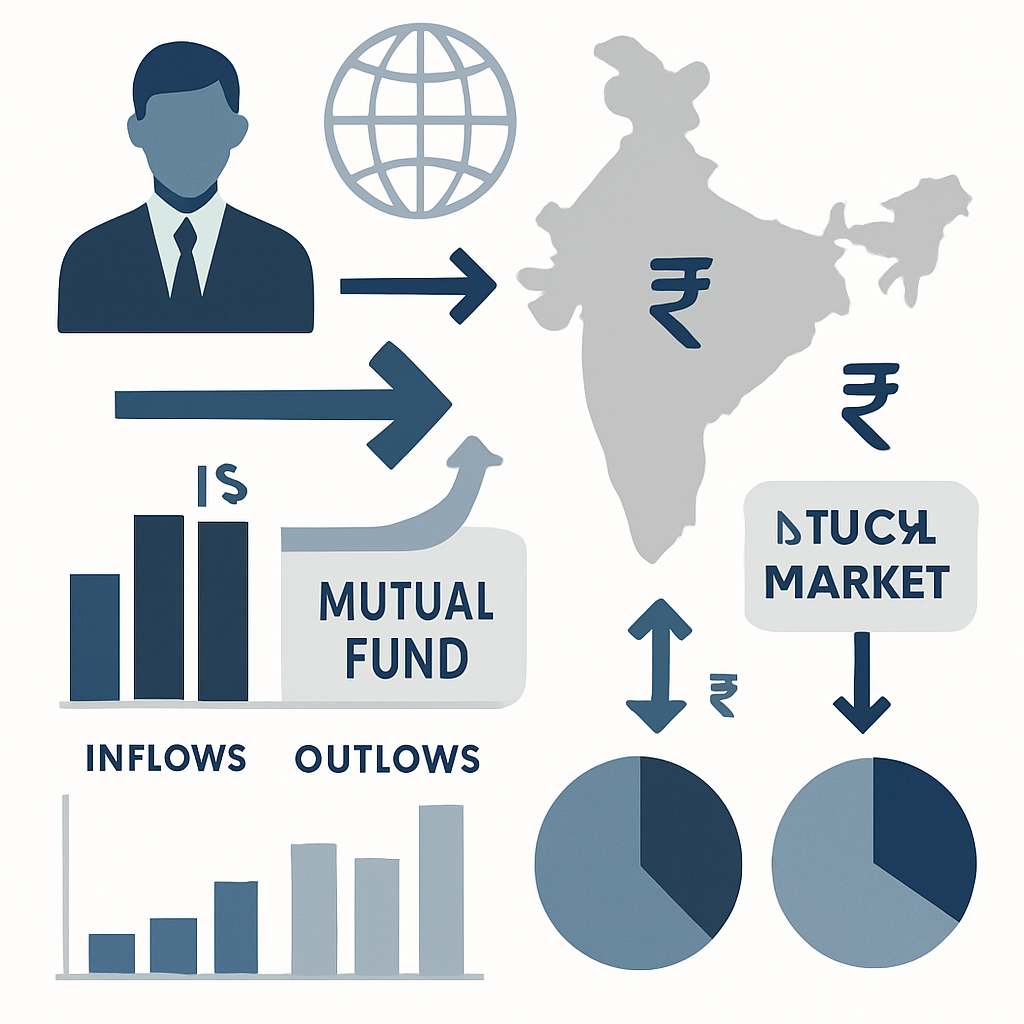
Foreign institutional investors and foreign portfolio investors bring large sums into Indian equities and debt markets. When they sell heavily, the Nifty, Sensex, NSE, and BSE can see sharp short-term moves because large institutional trades affect liquidity and valuations. Equity mutual funds may see temporary NAV pressure when the stocks they hold fall due to broad selling rather than company-specific weakness.
Debt funds can also feel the impact when global bond yields move quickly. The EveryCRSReport summary on foreign ownership of U.S. financial assets explains that a withdrawal by foreign investors from U.S. financial assets could raise U.S. interest rates and weaken the dollar. Such shifts can make global investors reassess emerging markets, including India, which means SIP returns may fluctuate even when your fund manager has not changed the portfolio.
Foreign Capital Flows and Indian Market Dynamics
Foreign money does not control India’s market alone, but it does influence daily price action. When FIIs sell, large index stocks can fall quickly because they are easier to trade in size. You can track broad market movement through the NSE live market data, but short-term index moves should not be treated as a complete signal about your financial plan.
Global outflows can also affect sentiment toward India compared with other emerging markets. A Reuters report on emerging market outflows said foreign investors pulled nearly $27 billion from emerging market portfolios in May. This shows how quickly money can move across borders, and India may face selling pressure even when domestic growth indicators remain steady.
Direct Impact on Mutual Fund NAV and SIP Investors
Your mutual fund NAV reflects the value of the assets held by the scheme. If large foreign sell-offs push stock prices down, equity fund NAVs can also drop. This does not automatically mean the fund is poor, because the fall may reflect market-wide selling rather than a failure of the fund’s strategy.
For long-term investors, volatility can be uncomfortable but normal. SIPs buy units at different market levels, so falling markets may result in more units being purchased at lower NAVs. If a goal is close or your risk tolerance has changed, consult a financial advisor before making fund changes.
Portfolio Rebalancing and Risk Management for Indian Investors
Risk management matters most when markets feel noisy. A portfolio built only on equity funds may swing more when foreign money exits and valuations reset. Diversification across suitable asset classes can reduce stress, but the right mix depends on age, income stability, liabilities, tax position, and goal timelines.
Rebalancing means reviewing whether your portfolio still matches the asset mix you originally planned. A sharp equity rally may leave you with more risk than intended, while a correction may reduce your equity exposure below your comfort level. Before moving money across equity, debt, hybrid, or savings products, consult a financial advisor.
Strategies to Mitigate Volatility in an Outflow Environment
Some investors consider debt or hybrid funds during unstable markets, but suitability depends on the investor’s goals and risk profile. Debt funds can have lower volatility than equity funds, while hybrid funds spread money across asset classes. No category is risk-free, so decisions should not be based only on recent returns or one week of market movement.
Panic withdrawals can damage long-term wealth creation if they turn temporary volatility into a permanent exit. Stopping SIPs after a fall may mean missing lower purchase prices, but continuing blindly without reviewing your situation is also not ideal. PocketPlanGuru has covered related global rate risks in Why Smart Indian Investors Watch Fed Rate Hikes Now, which explains why U.S. yields can influence Indian market flows.
Role of Asset Diversification Beyond Equity Funds
Indian families often use gold, real estate, bank deposits, EPF, PPF, NPS, and mutual funds for different goals. These assets do not all behave like equities, so they may help reduce portfolio stress during market volatility. International funds can add another layer of exposure, but they also carry currency, country, and regulatory risks.
Balanced advantage and hybrid funds may cushion some market falls, but they cannot remove market risk. Gold can react differently during global uncertainty, though its price can also move sharply. Real estate may suit some long-term needs, but it is less liquid than market-linked funds or bank deposits.
India’s Policy Environment and Its Influence on Foreign Investor Sentiment
Foreign investors watch India’s tax rules, SEBI norms, RBI policy, and fiscal numbers closely. Changes in capital gains tax, compliance rules, or market regulation can affect how attractive Indian assets look after costs and taxes. A public discussion on why foreign investors are moving from India to other emerging markets highlighted concerns around taxation and policy signals, which can influence short-term flows.
India’s policy strength also matters because investors prefer stable and predictable rules. SEBI’s focus on transparency supports trust in the market over time. You can review investor protection updates on the SEBI website, but retail investors should still consult a financial advisor before changing portfolios based on regulatory headlines.
Effect of Tax Policies and Regulatory Amendments
Capital gains tax rules can affect both local and foreign investors. When LTCG or STCG rules change, investors reassess expected returns after tax and may adjust allocations. Indian savers should also track their own income tax, ITR filing, and Section 80C planning without allowing tax considerations to dominate every investment decision.
SEBI norms shape how foreign funds operate in India and how information is disclosed to the market. Clearer disclosure and transparency rules can build trust, even if compliance costs rise for some participants. For related market safety context, read PocketPlanGuru’s note on what SEBI’s crackdown means for investors.
Macro Factors: Inflation, RBI Actions, and Fiscal Deficit
Inflation affects both household budgets and market valuations. If inflation remains high, the RBI may keep the repo rate tighter for longer, which can influence bonds, home loan EMIs, business profits, and stock valuations. You can follow policy direction through the RBI official website, but portfolio decisions should be made after considering your full financial situation.
Fiscal deficit concerns can also reduce foreign appetite for a market because investors care about credibility and repayment capacity. The CRS report on the implications of a withdrawal states that foreign investor shifts can complicate U.S. deficit financing and affect interest rates. Similar confidence issues can matter across global markets, although each country’s situation is different.
Understanding the U.S. Dollar and Interest Rate Effects on Indian Savings
U.S. interest rates influence global capital flows more than many Indian investors expect. When U.S. yields rise, some foreign investors may prefer dollar assets over emerging market exposure. This can pressure Indian equities, debt markets, and the rupee, which is why foreign investor withdrawals can become relevant for household savings.
A weaker dollar can create mixed effects for India. It may affect import costs, export earnings, currency values, and global fund flows in different ways. Currency moves can influence international funds, gold, and companies with foreign earnings, even if your main exposure is through Indian mutual funds.
Why Rising U.S. Rates Matter to Indian Investors
Higher U.S. rates can make dollar-denominated assets more attractive to global investors. Investors then compare India’s expected returns with alternatives that may appear safer or more liquid. If the risk-reward balance looks less attractive, they may sell Indian stocks or bonds and cause short-term NAV pressure.
Debt funds with longer maturity can react when bond yields change. Funds with foreign exposure may also face currency effects, which can add another layer of return variation. Investors with near-term goals should consult a financial advisor before taking duration, credit, or currency risk.
Currency Fluctuations and Their Impact on Mutual Fund Returns
INR depreciation can affect returns from international equity funds. It may boost rupee returns when foreign assets rise in dollar terms, but it can also work against investors if asset prices fall or currency moves reverse. Currency gains should not be confused with stock selection skill or fund quality.
Foreign investors also consider repatriation risk when they invest in India. If the rupee weakens sharply, their dollar returns may fall even if Indian asset prices are stable in rupee terms. Some institutions use hedging, while retail investors usually encounter currency management through fund structures and should read scheme documents carefully.
Separating Myths from Facts: Foreign Outflows vs Domestic Economic Strength
Foreign outflows do not always mean India’s economy is weak. Investors may sell due to global rates, currency needs, risk limits, or better short-term options elsewhere. India can still show domestic demand and corporate earnings growth while foreign funds reduce exposure for reasons outside India.
Domestic institutional investors and retail SIP flows have become an important stabilising force. Indian households now invest through mutual funds, NPS, EPF, insurance products, and direct equity. This local base can soften the impact of foreign selling, though it cannot eliminate market volatility during global stress.
Common Misconceptions Indian Retail Investors Have
One common myth says foreign withdrawal proves India is in trouble. That is not always true because money often moves for global reasons such as rates, currency movements, and risk limits. Another myth says investors should stop SIPs immediately during outflows, which may harm long-term discipline if markets recover later.
Market corrections can create opportunities for patient investors, but opportunity does not mean blind investing. Smallcap funds and thematic funds can fall harder during stress because they may be more sensitive to liquidity and sentiment. For more context, see PocketPlanGuru’s coverage of why India’s smallcap stocks are rallying.
Domestic Factors That Counterbalance Foreign Capital Volatility
RBI policy, government reforms, domestic savings, and SEBI oversight all support market stability over time. Strong tax compliance systems and clearer rules can improve investor trust. These factors do not stop volatility, but they help build long-term confidence in the market structure.
Indian investors should also protect their broader financial base before reacting to market headlines. Emergency funds, insurance coverage, debt obligations, and goal timelines should be reviewed along with mutual fund performance. If your portfolio feels difficult to assess, consult a financial advisor before taking action.
Actionable Advice: What Indian Investors Should Do Now
Start with a calm portfolio review rather than a quick exit. Check your asset mix, goal dates, fund overlap, and comfort with volatility. If you are unsure whether your current funds still match your goals, consult a financial advisor.
Foreign investors may withdraw billions, but your response should depend on your personal plan. A long-term retirement goal and a near-term home down payment need different treatment. Long-term money may tolerate more volatility than short-term savings, but only if the portfolio matches your risk capacity.
Steps to Protect Your Mutual Funds and Savings
Avoid making decisions based only on daily headlines. Review fund quality, expense ratio, mandate, portfolio concentration, and performance against the correct benchmark. If a fund has changed style, risk level, or role in your portfolio, consult a financial advisor.
Systematic withdrawal plans may help some retirees manage cash flow, but they require careful planning. Short-term goals may need lower-risk options than equity funds, depending on the investor’s situation. EPF, PPF, bank deposits, and high-quality debt funds may play different roles, but selection should reflect goals, tax position, and advice from a qualified professional.
Using SIPs Effectively During Market Downturns
SIPs work best when investors stay disciplined through market ups and downs. During falls, your SIP buys more units at lower NAVs, which can support rupee cost averaging over long periods. This does not guarantee profit, so SIPs should be aligned with suitable time horizons and risk tolerance.
You may review SIP amounts when income, expenses, and emergency savings change. Do not stretch your budget or ignore insurance and loan obligations only to invest more during a correction. If foreign investor withdrawals return to the headlines, use your goal map and consult a financial advisor before reacting.
Frequently Asked QuestionsHow do foreign investor withdrawals affect my mutual fund NAV?
Foreign investor withdrawals can create selling pressure in Indian equities and debt markets. When the prices of securities held by a mutual fund fall, the fund’s NAV may also fall. The impact is usually more visible in equity funds with large exposure to stocks affected by institutional selling.
Should I stop my SIP during foreign fund outflows?
Stopping SIPs during market stress can hurt long-term discipline. SIPs help spread purchases across different market levels, but they do not remove risk. If your income, goal timeline, or risk tolerance has changed, consult a financial advisor before stopping or increasing SIPs.
Can Indian government policies attract foreign investment back?
Yes, stable reforms, clear tax rules, and transparent regulation can improve foreign investor sentiment. RBI actions, inflation control, fiscal discipline, and market transparency also matter. Foreign investors usually reassess markets when risk, valuation, and policy signals become more attractive.
Does a weak dollar help or hurt Indian investments?
A weak dollar can have mixed effects on Indian investments. It may influence exports, imports, currency values, commodity prices, and foreign fund flows. International mutual funds may also see return changes because of currency movement, not only because of stock performance.
How can I protect my portfolio from global market risks?
Review diversification, goal timelines, fund overlap, and liquidity needs. Keep short-term goals separate from high-volatility exposure where suitable for your circumstances. Before making major changes, consult a financial advisor who understands your complete financial picture.
Stay Prepared, Not Panicked
Foreign fund volatility can feel scary, but it should not control your financial life. Review your portfolio, understand how global flows affect Indian markets, and make sure your savings match your goals. Speak with a qualified financial advisor before making big moves, and keep learning through PocketPlanGuru’s simple Indian finance guides.
Disclaimer: The information above is for educational purposes only and does not constitute financial advice.
10 Comments