


Why Smallcaps Are Back in Focus
India’s smallcap stocks have returned to the spotlight after a sharp rebound from their March lows. Reports on the Nifty Smallcap 250 show that the index advanced about 20% from those lows, putting it close to a fresh bull-market phase for the broader market segment. The move has revived interest among retail and domestic investors who often treat smallcaps as a signal of improving risk appetite.
The rally has not been limited to a handful of well-known companies. ETMarkets reported that seven smallcap stocks delivered multibagger returns in just 60 days after the market correction, showing how quickly sentiment can shift in this part of the market. That speed is attractive, but it also reminds investors that smallcaps can move sharply in both directions.
The current rebound appears to be driven by a mix of improved risk appetite, stabilizing crude oil prices, and stronger quarterly earnings from select companies. Domestic investors have also returned to selective buying after a period of caution. This does not mean every smallcap is attractive, but it does mean the market is once again rewarding businesses that show credible growth and improving fundamentals.
What Is Driving the Latest Rally
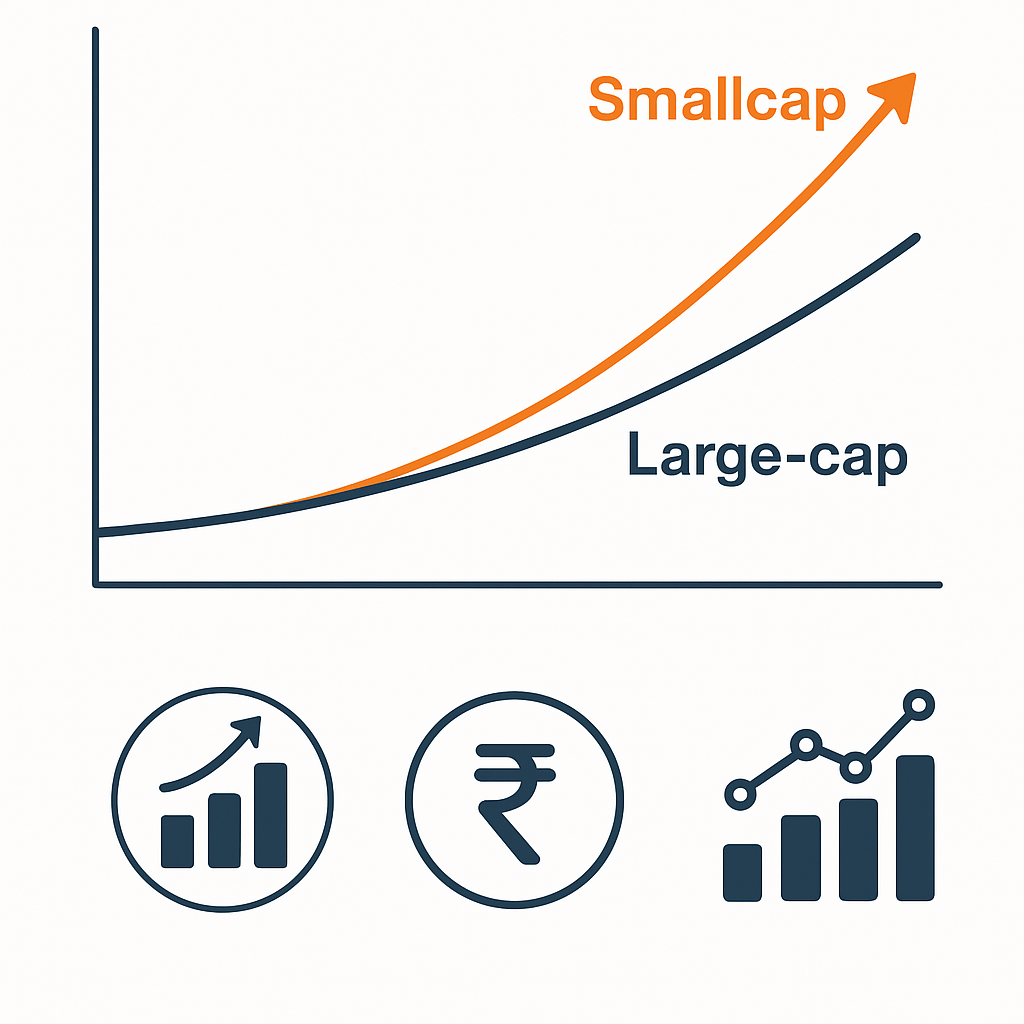
Smallcap rallies usually begin when investors become more comfortable taking risk. After a bruising correction, many smaller companies had fallen from earlier highs and started to look more reasonable to investors searching for growth. When sentiment improved, buyers returned first to companies where earnings, balance sheets, or business momentum still looked intact.
Stabilizing crude oil prices have also helped sentiment because India is sensitive to energy costs. Lower pressure from crude can support margins for many businesses and reduce macroeconomic anxiety for investors. This creates a more favorable backdrop for smaller companies, especially those that depend on domestic demand, logistics, manufacturing, or consumption.
Quarterly earnings have played a key role as well. In smallcaps, even a few quarters of stronger revenue growth, margin improvement, or debt reduction can change how the market values a company. When investors see evidence that a business is not merely surviving but improving, the stock can re-rate quickly from depressed levels.
Why Smallcaps Can Become Multibaggers
Smallcap companies can produce multibagger returns because they begin from a smaller base. A company with a modest market value does not need to become a giant overnight to create meaningful shareholder wealth. If its revenue, profits, and market share compound steadily, the stock can rise many times over across a full business cycle.
This is why investors often search for the next multibagger in the smallcap universe. Smaller companies may operate in under-researched niches, regional markets, emerging sectors, or specialized manufacturing areas that large institutional investors have not fully studied. When the market eventually recognizes the company’s progress, valuation can expand along with earnings growth.
That opportunity comes with a clear warning. Many smallcaps never scale into durable midcap or largecap businesses, and some lose value permanently because of weak governance, excessive debt, poor capital allocation, or cyclical downturns. A multibagger search must therefore begin with risk control rather than excitement.
The Difference Between a Rally and a Durable Opportunity
A broad smallcap rally can lift many stocks at the same time, including companies with weak fundamentals. This often happens when liquidity improves and investors become more willing to speculate. Price momentum alone is not enough to prove that a company has become a durable wealth creator.
A durable opportunity usually has business improvement behind the stock move. Investors can look for evidence such as consistent revenue growth, better operating margins, lower debt, stronger cash flows, and management commentary that matches reported numbers. These signs are more meaningful than a sudden price spike with no visible change in the underlying business.
The best smallcap analysis separates market mood from company quality. A rising market may create attention, but fundamentals decide whether the rally can last. Investors should treat the current rebound as a reason to research carefully, not as a reason to chase every fast-moving stock.
How to Read Smallcap Earnings
Earnings are one of the most useful filters in a smallcap rally. A company that reports higher sales but falling profits may be growing without pricing power or cost control. A company that improves both revenue and margins may be showing signs of operating leverage, which can be powerful when demand is rising.
Cash flow deserves equal attention because accounting profits can sometimes look better than the actual money generated by the business. Investors can compare net profit with operating cash flow over several periods to see whether earnings quality is improving. If profits are rising while cash flow remains weak, the company may need closer scrutiny.
Debt is another key factor. Small companies with high leverage can look attractive during good markets but become vulnerable when rates rise, demand weakens, or working-capital needs increase. A cleaner balance sheet gives management more flexibility and gives investors more protection during difficult phases.
Management Quality Matters More in Smallcaps
Management quality is especially important in smallcaps because these companies are often controlled by promoters or small leadership teams. Good management can allocate capital wisely, communicate clearly, and avoid unnecessary debt or unrelated diversification. Weak management can destroy value even in a promising industry.
Investors can study promoter shareholding trends, related-party transactions, auditor remarks, pledging of shares, and the consistency of corporate disclosures. These details may not be exciting, but they often reveal whether leadership is aligned with minority shareholders. A company with rapid growth but poor transparency deserves extra caution.
Communication also matters. Reliable management teams generally explain business performance in plain language and avoid making unrealistic promises. If company commentary repeatedly sounds promotional while results fail to follow, investors should consult a financial advisor before making any decision.
Valuation Still Counts After a Sharp Rebound
Smallcap rallies can quickly push valuations from attractive to demanding. A stock that looked reasonable near the bottom may become risky if the price rises faster than earnings. Investors need to distinguish between a company becoming better and a stock simply becoming more expensive.
Valuation should be compared with the company’s growth rate, return on capital, debt level, and earnings visibility. A higher valuation may be justified for a business with strong margins, clean governance, and a long runway for growth. The same valuation may be dangerous for a cyclical company whose profits are near a temporary peak.
No single valuation ratio is enough. Price-to-earnings, price-to-sales, enterprise value to operating profit, and free-cash-flow yield can all provide different clues depending on the sector. When the picture is unclear, investors should consult a financial advisor rather than relying on social media excitement or short-term price charts.
Signals That a Smallcap May Have Multibagger Potential
A potential multibagger usually has a business model that can scale without destroying margins. This may involve a company gaining market share, expanding capacity, improving distribution, or benefiting from a long-term industry shift. The key is that growth should be repeatable rather than dependent on one lucky quarter.
Another signal is improving return on capital. When a business earns more from each rupee invested, it can compound faster and rely less on outside funding. Rising returns combined with manageable debt often suggest that the company is becoming stronger, not just larger.
Market opportunity is also important. A small company can grow for years if it operates in an expanding industry and has a clear competitive edge. Investors should ask whether the company has pricing power, customer stickiness, technical capability, brand strength, regulatory advantage, or cost leadership that competitors cannot easily copy.
Red Flags Investors Should Not Ignore
Some smallcaps rally because of speculation rather than fundamentals. Unusual price moves without meaningful disclosures, sudden spikes in trading volumes, or repeated market rumors can be warning signs. Investors should avoid assuming that every fast-rising stock is backed by genuine business progress.
Weak cash flows, frequent equity dilution, heavy promoter pledging, and opaque related-party dealings can also signal risk. These issues may not matter during a euphoric rally, but they often become painful when market sentiment turns. A stock can rise sharply and still be a poor long-term investment if governance is weak.
Another danger is narrative investing. Themes such as manufacturing growth, consumption recovery, infrastructure spending, or export opportunity can be real, but not every company linked to a theme will benefit equally. Investors should verify whether the company’s actual numbers support the story before treating it as a serious candidate.
How to Build a Sensible Research Process
A sensible process begins with screening, but it should not end there. Investors can create a watchlist based on revenue growth, profitability, debt levels, return ratios, and cash-flow quality. After that, each company needs deeper reading through annual reports, quarterly results, investor presentations, and exchange filings.
Sector comparison is helpful because smallcaps should be judged against relevant peers. A company may look impressive in isolation but weak compared with competitors that have better margins, lower debt, or stronger growth. Peer analysis also helps investors understand whether a stock is rising because the whole sector is strong or because the company has unique strengths.
Position sizing and risk awareness are part of the research process too. Even a well-researched smallcap can face liquidity problems, earnings disappointments, or valuation corrections. Investors should consult a financial advisor to align smallcap exposure with their goals, risk tolerance, and time horizon.
What Retail Investors Should Remember
Retail participation is often high in smallcap rallies because the possibility of large gains is emotionally powerful. This can create quick moves, especially in stocks with limited floating supply. The same structure can create sharp declines when buyers disappear or when profit booking begins.
Patience is often more valuable than speed. Many true multibaggers take years to develop, even if some stocks double or triple during short bursts of market excitement. Investors who focus only on a 60-day move may miss the deeper question of whether the business can compound for several years.
Discipline matters because smallcaps can be unforgiving. A strong checklist, diversified exposure, and professional guidance can reduce the chance of being trapped in poor-quality names. Anyone uncertain about valuation, risk, or portfolio fit should consult a financial advisor before acting.
FAQ
Why are India’s smallcap stocks rallying again? India’s smallcap stocks are rallying because risk appetite has improved after a correction, and investors are returning to selective buying. Reports also point to stabilizing crude oil prices and stronger quarterly earnings as supportive factors. The rebound in the Nifty Smallcap 250 from its March lows has strengthened confidence in the broader smallcap space.
Does a smallcap rally mean every smallcap stock is attractive? No, a broad rally can lift strong and weak companies at the same time. Investors need to separate price momentum from business quality by studying earnings, cash flow, debt, governance, and valuation. A rising stock price alone is not proof that a company can become a durable multibagger.
What are the main signs of a possible multibagger smallcap? A possible multibagger often shows scalable revenue growth, improving margins, clean governance, manageable debt, and a large market opportunity. Strong cash flows and improving returns on capital can add confidence that the business is becoming more efficient. Investors should still consult a financial advisor because even promising companies can carry high risk.
What are the biggest risks in smallcap investing? The biggest risks include weak governance, low liquidity, high debt, earnings volatility, and speculative price movements. Smallcaps can fall sharply when sentiment changes or when results fail to match expectations. Investors should be cautious with companies that rely heavily on hype, vague announcements, or repeated market rumors.
How should investors approach smallcaps after a strong rebound? Investors should approach smallcaps with a research-first mindset rather than chasing short-term winners. A watchlist based on fundamentals, valuation, and governance can help identify companies worth deeper study. Before making allocation decisions, investors should consult a financial advisor to ensure smallcap exposure suits their financial goals and risk tolerance.
Disclaimer: The information above is for educational purposes only and does not constitute financial advice.
6 Comments