

Understanding US Fed Rate Hikes and Their Ripple Effect on India
The US Federal Reserve sets policy rates for the world’s largest economy, but its influence does not stop at America’s borders. When US rates rise, global investors often compare Indian returns with safer US debt returns, which can affect capital flows, the rupee, and market sentiment. As explained in this guide on how US Federal Reserve monetary policy impacts India, Fed hikes can influence Indian interest rates, borrowing costs, and savings returns. For Indian households, the effect may show up through floating home loan EMIs, personal loan costs, fixed deposit rates, and short-term mutual fund volatility.
How Fed Monetary Policy Influences RBI Decisions
RBI does not automatically copy the Fed, but it watches global rates closely while setting Indian monetary policy. If the Fed raises rates and the rupee comes under pressure, RBI may keep domestic rates tighter to manage inflation expectations and reduce capital outflows. If the Fed cuts rates, RBI may get more room to ease rates, provided Indian inflation, food prices, crude oil costs, GDP growth, and banking liquidity also support that move. You can follow official updates through the RBI monetary policy press releases before making loan or savings decisions.
Impact on Currency and Capital Flows
Higher US rates can make dollar assets more attractive for global investors, especially when investors want comparatively safer returns. This can pull money away from emerging markets, including India, and raise demand for the US dollar. The video explainer on what the Fed interest rate decision means for India describes this movement of capital in simple terms. When the dollar strengthens, the INR may face pressure, which can affect imported goods, foreign education costs, international travel budgets, and global investment returns.
US Fed Rate Hike Effects on Indian Loans
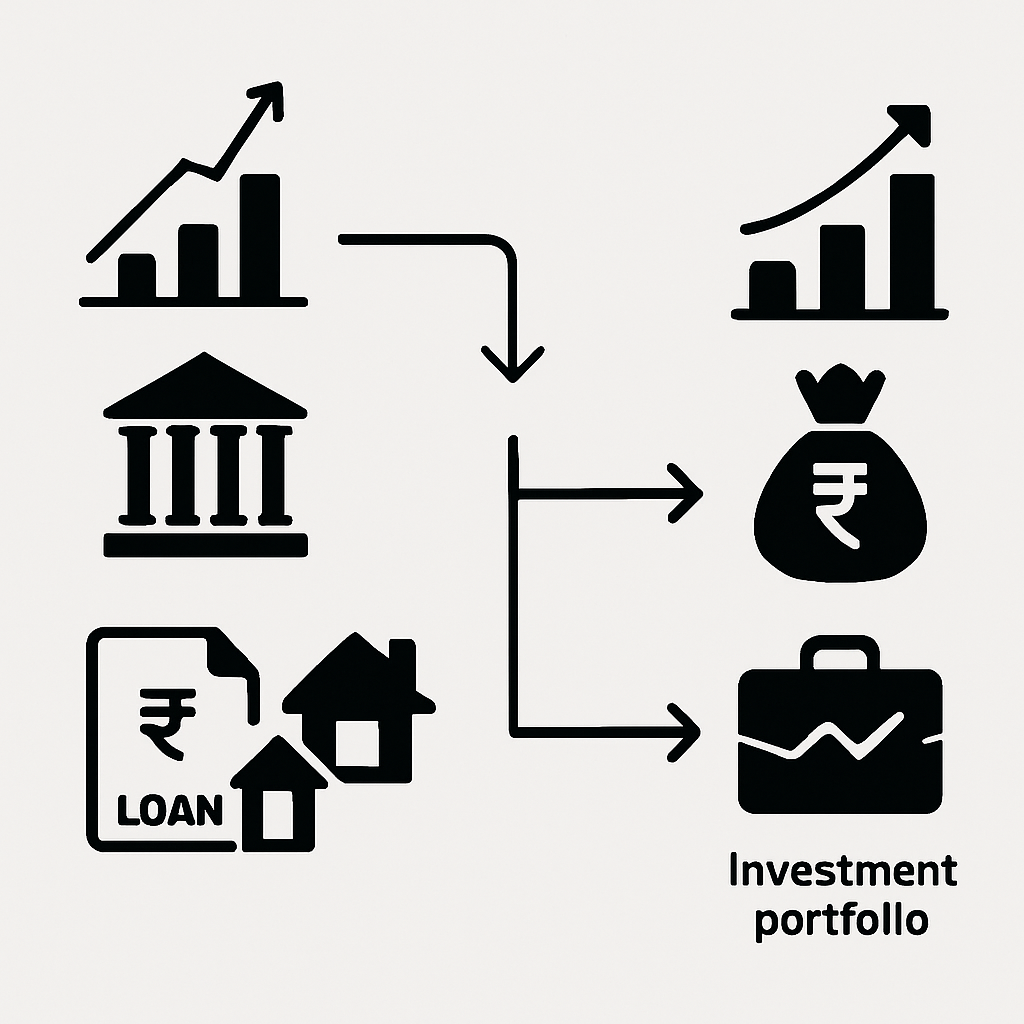
A US Fed rate hike can affect Indian borrowers when RBI or banks tighten rates in response to global and domestic conditions. The clearest impact usually appears in floating-rate loans linked to the repo rate, MCLR, or other lending benchmarks. According to Kotak Bank’s explainer on how US Fed rate hikes impact Indian borrowers, higher US rates can encourage foreign investors to move money away from Indian assets. For borrowers, the practical issue is cash flow, because a higher EMI can reduce monthly surplus and make other financial goals harder to manage.
Differentiating Floating and Fixed Rate Loans
Floating-rate loans move with external benchmarks or lender-linked rates, so they can become costlier when domestic interest rates rise. If RBI increases the repo rate, banks can raise lending rates over time, and this often affects home loan borrowers because home loans have long tenures and large principal amounts. Fixed-rate loans can offer more EMI stability in the short run, but they may start at a higher rate than floating loans or include strict terms. Before switching loan types, compare conversion fees, reset clauses, remaining tenure, and total interest cost with a financial advisor.
Loan Management During Rate Hike Phases
During a rate-hike phase, review your loan statement every few months and check whether your lender has increased EMI, tenure, or both. Banks may increase tenure instead of EMI, which can make the monthly payment look manageable while raising total interest paid over the full loan period. Ask your lender for a written break-up of the revised EMI, remaining tenure, interest rate, and total repayment estimate. If you are unsure whether to prepay, refinance, or change loan terms, consult a financial advisor before making a large decision.
Investment Portfolio Recalibration Amid Fed Rate Changes
A US Fed rate hike can make Indian equity markets more volatile because foreign portfolio investors may reduce exposure to emerging markets when US yields look attractive. This can affect the Nifty, Sensex, BSE-listed stocks, and NSE trading sentiment in the short term. Market reactions can differ across sectors, debt funds, gold, and global assets, so one headline should not drive your entire portfolio decision. The more practical approach is to review asset allocation, risk level, liquidity needs, and time horizon with a financial advisor.
Equity Market Impact and Sectoral Shifts
Fed hikes can pressure equity valuations because investors often demand higher returns when interest rates rise. Mid-cap and small-cap stocks may see sharper swings than large caps, while export-heavy firms can react differently depending on currency movement and hedging policies. Defensive sectors may hold up better during uncertain phases, but outcomes vary across companies and market cycles. Track company fundamentals, corporate announcements, and market disclosures through NSE market updates before taking any portfolio action.
Debt Funds, Government Bonds and Interest Rate Cycles
Rising interest rates usually hurt existing bond prices in the short term, especially when bonds have longer duration. This matters for debt mutual funds because longer-duration portfolios can be more sensitive to yield movements. Government securities may offer stronger credit quality, but their prices also move with interest rates and market expectations. A video discussion on why one US decision can affect India’s markets explains how government borrowing costs can influence wider loan rates, but investors should consult a financial advisor before changing debt fund exposure.
Managing Forex Risks in Global Investments
Many Indian investors now hold global mutual funds, ETFs, or US stocks, which adds currency exposure to their portfolios. If the dollar rises against the rupee, foreign assets may gain in INR terms, but fresh investments into dollar assets can become more expensive. Currency risk can cut both ways, so diversification should be planned according to goals rather than short-term exchange-rate moves. Some investors consider currency-hedged products, but these can be complex and should be reviewed with a financial advisor after checking fund documents, SEBI rules, and tax treatment.
Reassessing Savings and Tax Planning for Indian Salaried Individuals
Fed hikes can influence Indian deposit rates through broader monetary tightening, even though banks also consider domestic credit demand and liquidity. When banks raise fixed deposit rates, savers may feel tempted to lock money for long periods, but inflation and income tax can reduce real returns. Salaried individuals should view savings, tax planning, emergency funds, insurance, and loan repayments as connected parts of the same financial plan. For household budget pressure linked to rates and fuel costs, read how rising oil prices and RBI hike affect your budget.
Savings Instruments in an Inflationary and Rate-Hike Environment
Fixed deposits can offer certainty, but they may not always beat inflation after tax. Recurring deposits can support disciplined saving, yet tenor matters when rates keep changing and goals have different timelines. PPF remains popular because it combines long-term saving with Section 80C benefits, while EPF helps salaried workers build retirement savings through regular contributions. Since liquidity differs across products, keep enough money in easy-access accounts and consult a financial advisor before locking large sums into any one product.
Optimizing Tax-Advantaged Investments
ELSS mutual funds offer equity exposure with Section 80C tax benefits, but they carry market risk and may not suit short-term goals. PPF offers stability for long-term savers, while NPS may support retirement planning for eligible investors who understand lock-in rules and withdrawal conditions. Tax-saving choices should be reviewed before the financial year ends rather than during rushed ITR filing. Your income tax slab, loan interest, insurance needs, cash flow, and family responsibilities matter, so consult a financial advisor or tax professional before choosing products.
Practical Financial Planning Tips for Different Indian Demographics
Different people feel rate hikes in different ways because income stability, loan size, savings level, and family responsibilities vary widely. A young salaried person may worry about rent, SIPs, and a bike loan, while a family with a large home loan may worry more about EMI increases and school fees. A seasoned investor may focus on asset allocation, forex risk, and valuation changes across Indian and global markets. Across groups, the core rule is to keep enough liquidity, avoid over-borrowing, and diversify across suitable assets after consulting a financial advisor.
Salaried Professionals
Salaried professionals should build a buffer for possible EMI increases and unexpected household expenses. Essential expenses, insurance premiums, loan payments, rent, and savings contributions should be visible in one monthly budget. SIPs can continue if they match your risk profile and goal timeline, but cash-flow stress should not be ignored. If income becomes uncertain or liabilities rise, consult a financial advisor before pausing investments, taking new loans, or changing long-term savings plans.
Home Loan Borrowers
Home loan borrowers should track repo rate moves, loan reset dates, and lender communication during rate-hike phases. If rates remain high, some borrowers may compare fixed and floating options, but the better choice depends on spreads, fees, remaining tenure, and income stability. Lump-sum prepayment can reduce principal in some cases, but draining emergency savings can create fresh risk if medical, job, or family expenses arise. Before refinancing or making a major prepayment, consult a financial advisor and request a full cost comparison from your lender.
Experienced Investors
Experienced investors may review exposure across equity, debt, gold, cash, and global assets when US rates change. Rate-hike phases can reward patience more than quick trades because markets often price in expectations before policy effects reach the real economy. International diversification can reduce India-only risk, but currency moves add another layer that needs careful review. For market structure changes, read PocketPlanGuru’s explainer on what SEBI’s new closing auction means for your trading and consult a financial advisor before making allocation changes.
Monitoring Macroeconomic Signals and RBI Policy Movements
Indian investors should not track the Fed alone because domestic factors can be equally important. RBI policy, CPI inflation, fiscal deficit, crude oil prices, external debt, banking liquidity, and government borrowing all shape market direction. A US Fed rate hike becomes more important for India when domestic inflation is already high or the rupee is under pressure. Watch market reactions across the Nifty, Sensex, bond yields, currency markets, and bank lending rates, but use official sources before relying on market rumours.
Key Indicators to Follow
The repo rate is the first indicator borrowers should track because many floating-rate loans are linked directly or indirectly to it. CPI inflation tells you whether RBI has room to cut rates or may need to stay cautious for longer. Fiscal deficit and external debt help explain pressure on government borrowing and the rupee, while crude oil prices can affect inflation and trade balances. Bank deposit rates, home loan spreads, bond yields, FII activity, and sector rotation give practical signals, but no single indicator gives the full picture.
Using Official Sources and Expert Analysis
Start with RBI policy statements for rate decisions, inflation views, and growth commentary. Use NSE and BSE data to check actual market moves rather than relying on rumours or social media posts. SEBI’s investor alerts and circulars can help you avoid risky products and misinformation. News platforms can add useful context, but headlines can exaggerate fear, so read the source and consult a financial advisor when a decision affects your loans, taxes, or family goals.
Frequently Asked Questions
The Fed does not directly set Indian loan rates, but its decisions can influence Indian financial conditions through capital flows, currency movements, and global yields. RBI may respond to both global and local conditions by changing the repo rate or maintaining a tighter policy stance. This is why Indian borrowers, savers, and investors should watch both Fed and RBI signals. The answers below are educational and should not replace advice from a qualified financial advisor.
How does a US Fed rate hike affect my home loan EMI?
A Fed hike can increase pressure on RBI and Indian banks to keep rates higher if inflation, currency movement, or capital flows become a concern. If your home loan has a floating rate, your EMI or tenure may rise after lender resets. The change may not happen immediately, because lenders follow their own reset schedules and benchmark rules. Ask your bank for a written break-up of EMI, tenure, interest rate, and total interest impact.
Should I switch from floating to fixed-rate loans during Fed hikes?
A fixed rate may help borrowers who want EMI stability, but it is not automatically better during every rate-hike phase. Fixed loans can carry higher rates, conversion fees, reset clauses, or stricter terms. Floating loans can also become cheaper later if rates decline, depending on the benchmark and lender spread. Compare both options with a financial advisor before switching.
How can I protect my investment portfolio from Fed-induced volatility?
Diversification is one of the most practical ways to manage rate-driven volatility. A portfolio spread across suitable equity, debt, cash, gold, and global exposure may behave more steadily than a concentrated portfolio, but suitability depends on your goals. Avoid changing your entire portfolio only because of one Fed decision or one market fall. Consult a financial advisor before rebalancing or using hedging strategies.
Do fixed deposits remain a good saving option during high US rates?
Fixed deposits can still suit short-term goals, emergency planning, and low-risk savings needs. The key is to compare post-tax returns with inflation and your liquidity requirements. Higher nominal FD rates may look attractive, but real returns can still be modest after tax. Consider alternatives such as PPF, EPF, or other suitable products only after reviewing your goals with a financial advisor.
What tax-saving investments are useful amid fluctuating interest rates?
ELSS, PPF, EPF, NPS, and tax-saving fixed deposits serve different purposes and carry different risks, lock-ins, and liquidity rules. ELSS has equity market risk, PPF offers long-term stability, and NPS may suit retirement planning for eligible investors who understand withdrawal conditions. Term insurance protects family finances, but it should not be treated as an investment product. Review Section 80C limits, income tax impact, and ITR needs with a financial advisor or tax professional.
Stay Ready, Not Reactive
A US Fed rate hike can affect Indian loans, savings, and investment portfolios, but it should not control every financial decision. Focus first on cash flow, emergency funds, sensible debt use, adequate insurance, and diversified investments aligned with your goals. Use official sources, avoid panic-driven moves, and consult financial advisors when decisions involve large loans, taxes, or long-term investments. PocketPlanGuru’s practical guides can help you stay informed and plan smarter through global rate changes.
Disclaimer: The information above is for educational purposes only and does not constitute financial advice.