

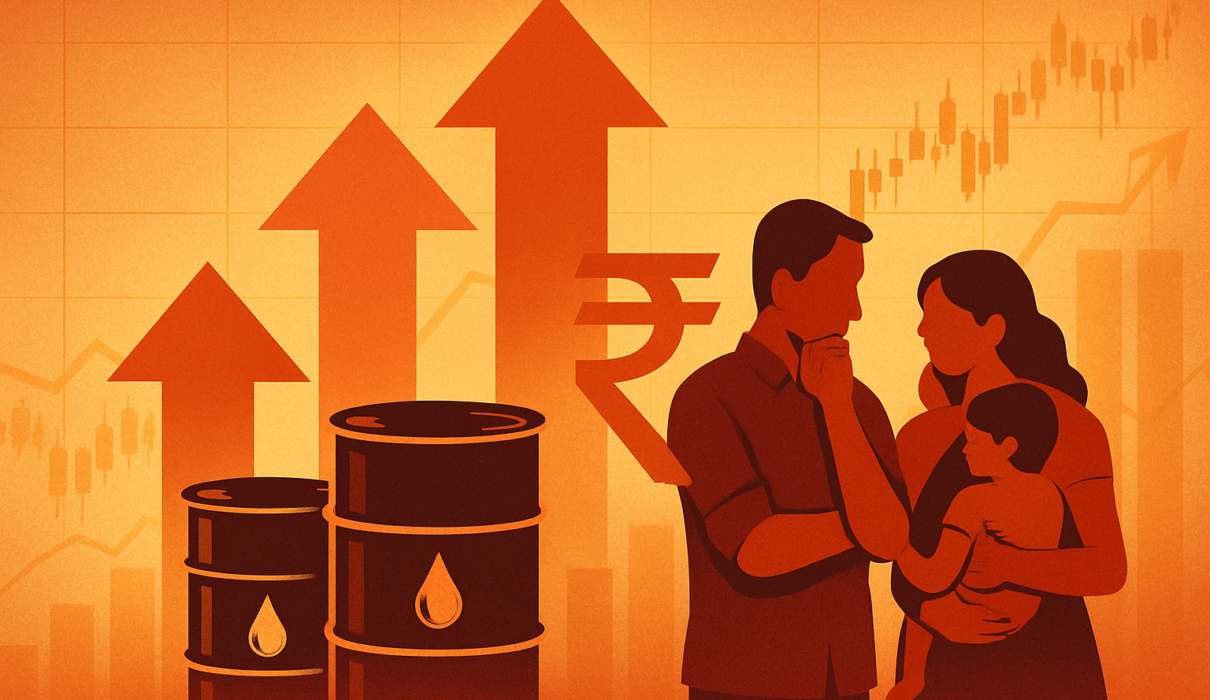
How Rising Oil Prices Drive Inflation and Household Costs
Rising crude prices can quietly raise your grocery bill, fuel spend, and loan EMI pressure in the same month. India depends heavily on imported crude, so global oil shocks can quickly affect transport, logistics, manufacturing, and household expenses. Rising Oil Prices and Inflation now matter not only to traders, but also to salaried families, small business owners, borrowers, and retirees.
Petrol, diesel, and LPG prices affect daily life because fuel costs sit inside food delivery, goods transport, school transport, and business operations. A useful explainer on how rising crude prices can impact inflation, rates, and debt explains this chain clearly. When fuel costs climb, companies often pass part of that burden to consumers through higher prices.
Households feel this pressure because essentials take priority over savings and investments. A family may first notice higher commute costs, then higher vegetable, milk, delivery, school transport, and medicine-related expenses. For a deeper household angle, read our guide on why rising crude oil costs squeeze your household budget.
Direct Impact on Fuel and Cooking Gas Expenses
Petrol and diesel hikes increase the cost of office travel, school drops, weekend errands, and small business deliveries. Families using two-wheelers may feel the pinch sooner because fuel refills happen frequently. LPG price changes also affect daily cooking budgets, especially in homes that rely fully on gas cylinders.
You can control this part better than many other costs if you track it carefully. Combine trips, use public transport where practical, and carpool for fixed routes. If you use a credit card for fuel, check the surcharge, rewards, and repayment discipline because rewards help only when you pay the full bill on time.
Indirect Effect on Food and Daily Essentials
Diesel affects trucks, cold chains, and last-mile delivery, so grocery prices can rise even if your own fuel use stays low. Fruits, vegetables, packaged foods, medicines, and household goods all depend on transport at some stage. When logistics costs rise, retailers may increase prices to protect margins, which is how inflation spreads beyond the petrol pump.
Daily essentials create the biggest stress because families cannot fully avoid them. You can delay a new phone, but you cannot delay milk, cooking oil, medicines, rent, or school fees. Our related explainer on how rising oil prices drive up your monthly expenses now shows how these hidden costs build up over time.
Why RBI Rate Hikes Become Necessary Amid Rising Inflation
The RBI uses the repo rate as one of its key tools to manage inflation and credit demand. When inflation remains sticky, the RBI may raise rates to make borrowing costlier and slow excess demand. Market discussions such as Rate cuts over, hikes ahead: What the RBI is signalling show how inflation concerns can limit room for rate cuts.
Higher interest rates do not directly reduce petrol or diesel prices. They can, however, cool spending and borrowing by making loans more expensive. If consumers postpone big-ticket purchases such as homes, cars, and appliances, demand pressure may reduce across parts of the economy.
Key Economic Indicators RBI Monitors
The RBI does not look at oil prices alone before changing policy rates. It studies consumer inflation, GDP growth, employment trends, industrial production, and credit demand. A clear overview from LT Finance on RBI rate decisions and loan impact explains these domestic and global inputs.
For households, consumer inflation is the most visible number because it affects the monthly budget directly. GDP and industrial data matter because they show the broader health of jobs, salaries, and business activity. Credit demand tells the RBI whether people and firms are borrowing aggressively, which can influence future policy decisions.
Global Factors Affecting RBI Decisions
Global crude price volatility can influence India’s import bill, trade deficit, currency movement, and imported inflation. The RBI also watches global inflation, major central bank decisions, geopolitical risks, and foreign capital flows. You can follow official policy updates on the Reserve Bank of India website to avoid reacting to rumours or incomplete social media posts.
Global factors also affect Indian markets such as the Nifty, Sensex, BSE, and NSE. Foreign investor flows may shift when global rates rise or crude prices jump. Investors should avoid sudden moves in mutual funds, SIPs, or stocks based only on oil headlines and should consult a financial advisor before making portfolio changes.
Impact of RBI Rate Hikes on Different Loan Types in India
An RBI rate hike can raise borrowing costs, but the speed of impact depends on your loan type and lender. Floating-rate home loans often reset after a defined period, while personal loans and auto loans may follow different structures. Bajaj Finserv explains that lenders may pass on hikes when the RBI monetary policy trend turns upward in its note on how the RBI rate hike is likely to affect your loans.
Rising Oil Prices and Inflation can hurt twice if you carry large debt. First, monthly expenses rise because of fuel, groceries, utilities, and essentials. Next, EMIs may rise if your loan is linked to an external benchmark or if you borrow fresh money during a higher-rate cycle.
Home Loans and Rate Reset Impact
Many home loans in India use floating rates linked to external benchmarks. When the RBI raises the repo rate, lenders may increase lending rates after the applicable reset date. The actual EMI impact depends on your outstanding loan amount, tenure, spread, benchmark, and lender policy.
After a rate rise, your lender may increase the EMI, extend the tenure, or offer a mix of both. A longer tenure can reduce immediate pressure but may increase the total interest paid over the life of the loan. Ask your bank for a written amortisation schedule before deciding how to handle the change.
Personal and Auto Loan Impact
Personal loan rates are usually higher because these loans are unsecured. If you plan to borrow during a rate hike cycle, compare offers from banks and NBFCs carefully. Avoid taking fresh loans for lifestyle spending when inflation is already putting pressure on your monthly cash flow.
Auto loan rates may also rise when lenders face higher funding costs. If fuel prices are already hurting your monthly budget, a new car EMI can add more stress. Check insurance, maintenance, parking, repairs, and fuel costs before buying because the EMI is only one part of ownership.
Using EMI Calculators for Accurate Budgeting
Online EMI calculators help you test rate and tenure changes before speaking to a lender. Enter the outstanding principal, interest rate, and remaining tenure to estimate the revised EMI. Then add your actual fuel, grocery, rent, school fees, insurance, utility, and medical costs to see the real monthly picture.
Use calculators from your bank or trusted financial portals, but verify final numbers with the lender. Also check prepayment rules, part-payment limits, processing charges, and reset conditions. If you invest through SIPs or long-term products, do not stop them blindly to manage EMI hikes and consult a financial advisor before making changes.
Managing Your Household Budget Amid Inflation and Rate Hikes
A household budget should change when inflation changes. Start by tracking fuel, groceries, electricity, school costs, rent, medicines, insurance, and EMIs for at least one full month. Then separate essential expenses from wants such as dining out, subscriptions, gadgets, and short trips.
Rising Oil Prices and Inflation need quick action because delays can reduce your savings buffer. Give priority to rent, food, EMIs, health insurance, term insurance, medicines, and children’s education. Pause or reduce non-essential spending until your cash flow stabilises and avoid carrying credit card balances because interest costs can be high.
Budgeting Strategies for Indian Families
Create an inflation-adjusted monthly tracker with categories for fuel, food, loans, savings, taxes, utilities, and medical expenses. Include annual costs such as school fees, insurance premiums, income tax payments, and ITR-related expenses. Many households forget yearly costs and then rely on credit cards or personal loans when those payments arrive.
Review tax-saving commitments with cash flow in mind. Products such as EPF, PPF, ELSS, life insurance premiums, home loan principal repayment, and NPS can have different roles, risks, and lock-ins. Consult a financial advisor before choosing tax and investment products, especially when inflation and EMIs are already stretching the budget.
Reducing Fuel and Utility Consumption
Fuel savings start with small route and habit changes. Use metro, buses, office transport, or carpooling where it saves both time and money. Maintain tyre pressure, avoid unnecessary idling, plan errands together, and review whether every trip is needed.
Utility savings also help because electricity bills can strain summer budgets. Use energy-efficient appliances, switch off standby devices, service air conditioners regularly, and plan cooking or laundry in batches. These steps will not solve inflation completely, but small cuts across fuel and utilities can protect your emergency fund.
Refinancing and Loan Restructuring Options to Lower EMI Pressure
Refinancing can help when another lender offers a lower rate or better terms. Home loan balance transfer is common because large outstanding amounts can make rate differences meaningful over time. Personal loan refinancing can also help, but only if processing fees, foreclosure charges, and other costs do not wipe out the savings.
Borrowers with strong credit profiles have better negotiation power. Pay EMIs on time, keep credit card use controlled, and avoid frequent loan applications. If you work with a bank relationship manager, ask for a rate review because a clean repayment history may support your request.
Home Loan Balance Transfer Benefits and Process
A home loan balance transfer means shifting your outstanding loan to another lender. The aim is usually a lower interest rate, lower EMI, improved service, or more flexible repayment terms. Before switching, check processing fees, legal charges, valuation costs, reset rules, and any insurance-related costs.
Ask both your current and new lender for written offers. Compare the benchmark, spread, reset frequency, part-payment terms, foreclosure rules, and total repayment cost. Do not move only because one headline rate looks attractive, because the lowest rate today may not remain the cheapest later.
Personal Loan Refinancing and Negotiation Tips
Personal loan refinancing needs extra caution because rates and fees can vary widely. Check offers from banks and NBFCs, but avoid applying everywhere at once. Too many hard enquiries may affect your credit profile and make future borrowing more difficult.
If you cannot refinance, ask your lender about restructuring or a temporary repayment plan. Lenders may review cases based on policy, income, repayment history, and the reason for stress. Never skip EMIs without informing the lender because missed payments can hurt your credit score and future borrowing ability.
Practical Financial Planning Steps Backed by RBI and Banking Insights
Rate cycles and oil prices can change quickly, so build a cushion before stress peaks. Aim to keep emergency money liquid in savings, sweep-in deposits, or other low-risk options suitable for your needs. Do not chase high returns with emergency money because this fund is meant for stability, not aggressive growth.
Review your investments with inflation in mind, but avoid knee-jerk changes. Mutual funds, SIPs, PPF, NPS, EPF, and fixed deposits serve different purposes and carry different risks. Equity markets tracked through NSE and BSE can be volatile when crude prices and interest rate expectations move, so consult a financial advisor before changing your portfolio.
Monitoring Inflation and Interest Rate Trends
Follow RBI monetary policy reviews and inflation commentary directly from official sources. You can also track market data through the NSE website and regulatory updates from the SEBI website. Trusted financial news portals can help with daily context, but avoid messages that claim to predict exact rate moves without evidence.
Watch how rate expectations affect bank stocks, bond yields, lending rates, and debt mutual funds. Rising rates can influence both debt fund returns and borrowing costs. If you follow banking and debt markets, our article on why Canara Bank’s bonds matter for your investments adds useful context, but personal decisions should still depend on your goals and risk profile.
Building a Cushion Against Economic Uncertainty
A strong cushion starts with insurance, liquidity, and controlled debt stress. Keep term insurance and health insurance active if dependents rely on your income. Avoid using emergency savings for vacations, gadgets, or discretionary purchases during inflation spikes.
Next, review every EMI against monthly income and essential expenses. If EMIs feel heavy, pause new borrowing and explore prepayment, refinancing, or restructuring options. Maintain documents such as salary slips, bank statements, loan schedules, insurance papers, and ITR copies because these records help when you negotiate with lenders or consult an advisor.
FAQ: Common Questions About Oil Prices, RBI Hikes, and Household Finance
Rising Oil Prices and Inflation can create confusion because they affect many parts of money life at once. Fuel bills, grocery prices, EMIs, savings, and investments can all come under pressure together. The answers below cover common questions Indian households ask during a possible rate hike cycle.
How will RBI rate hikes affect my existing loans?
Floating-rate loans may see EMI increases after the reset period. Home loan borrowers often feel the change through a higher EMI, longer tenure, or a mix of both. Personal loan impact depends on the loan agreement, rate type, and lender policy, so ask for a fresh repayment schedule.
What immediate budget changes should Indian households make?
Prioritise essentials such as food, rent, EMIs, insurance, medicines, and school fees. Cut discretionary spending such as frequent dining out, impulse shopping, and unused subscriptions. Track fuel and grocery expenses weekly so you can act before the monthly budget slips.
Can refinancing help offset increased loan EMIs?
Refinancing can help if the new rate is lower and fees are reasonable. Compare processing charges, legal costs, insurance costs, reset rules, and tenure changes before switching. A balance transfer works best when savings are clear over the remaining loan period.
Why do rising oil prices worsen inflation in India?
Fuel is linked to transport, logistics, manufacturing, and delivery costs. When crude prices rise, many goods become costlier to move and produce. These costs can reach consumers through higher prices for food, essentials, and services.
How can I stay updated on RBI policy changes and protect my budget?
Follow RBI policy announcements, trusted financial news, and your lender’s rate updates. Use EMI calculators and a monthly expense tracker to test your budget after rate changes. Review loans, savings, and insurance before inflation forces rushed decisions, and consult a financial advisor for personalised action.
Disclaimer: The information above is for educational purposes only and does not constitute financial advice.