


Understanding FPI Selling: Market Event, Not Personal Crisis
Foreign portfolio investors often grab headlines when they sell heavily in Indian markets. Their activity can create sharp moves in the Nifty, Sensex, BSE, and NSE because large institutional trades affect liquidity and investor mood. For everyday investors, however, FPI selling in Indian equities is usually a market event rather than a personal financial emergency.
FPI outflows can pressure prices for days, weeks, or longer, but they do not directly change the number of mutual fund units or shares you already own. A diversified portfolio linked to long-term goals depends on earnings growth, asset allocation, savings discipline, and risk management, not only on foreign flows. Market corrections are normal, and they often test investor behaviour more than they test the long-term case for quality investments.
Recent research explains why the headlines feel worrying. Kotak Neo reported a record FPI selloff of $18.4 billion in Indian equities, while also highlighting that domestic institutional investors absorbed much of the pressure. The key message for retail investors is that foreign selling can influence prices, but it does not automatically mean India’s investment case has broken.
Who are FPIs and Why Do They Sell?
FPIs are overseas investors who invest in Indian equities, bonds, and other listed market assets. They include foreign funds, asset managers, pension pools, and institutions that compare India with many other global opportunities. When US bond yields rise, the dollar strengthens, geopolitical risk increases, or earnings expectations weaken, FPIs may reduce exposure to Indian equities.
A note on FPI sell-off reasons and impact points to triggers such as US rates, dollar strength, geopolitical uncertainty, and lacklustre earnings trends. These concerns can be real, but they are often global or cyclical rather than a direct judgement on every Indian company. A sell order from an overseas fund does not mean India’s long-term growth drivers have disappeared.
Why Retail Investors Should Stay Calm
Short-term volatility does not become a permanent loss unless an investor exits at an unfavourable time and abandons the plan. If your goals are many years away, temporary market value declines are part of equity investing. Before changing SIPs, equity allocation, debt allocation, or any major investment plan, consult a financial advisor.
India’s long-term equity returns depend on corporate earnings, domestic growth, household savings, governance, and business quality. FPI selling in Indian equities can affect prices in the short term, but it does not decide the complete outcome of a long-term portfolio. If you want more context on foreign outflows, read PocketPlanGuru’s guide on why smart investors watch Rs 23,000 crore FII outflows.
The Rising Role of Domestic Institutional Investors
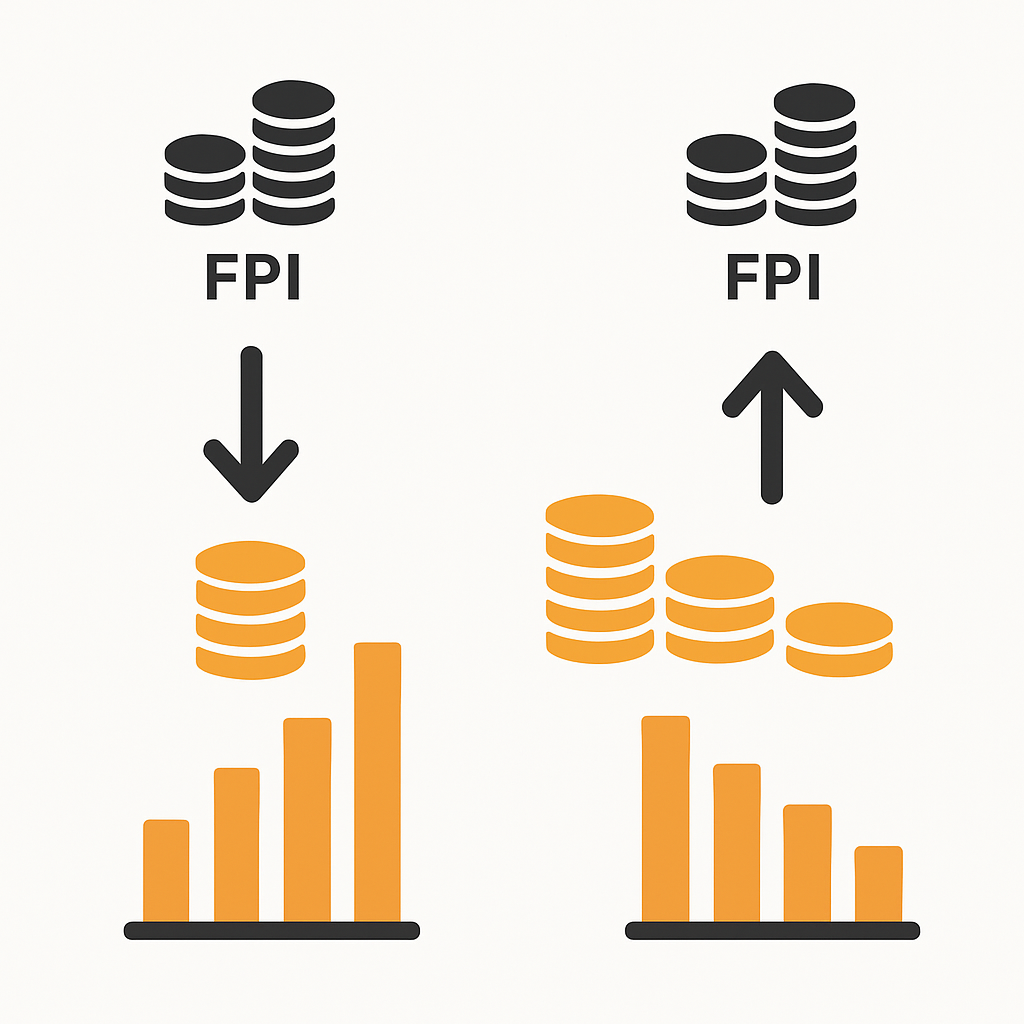
Domestic institutional investors have become an important support for Indian markets. They include mutual funds, life insurers, pension funds, and other large pools of Indian capital. During periods of FPI selling, these institutions can absorb part of the selling pressure and help reduce the risk of disorderly market moves.
This change matters because Indian equities are no longer dependent only on foreign money for stability. Regular domestic savings through mutual funds and insurance-linked investment pools have deepened the market over time. The research summary for this article shows that strong domestic institutional inflows helped cushion the impact of recent FPI outflows.
Who are DIIs and How Do They Support Markets?
DIIs invest money collected from Indian savers, policyholders, and retirement accounts. Mutual funds, insurance companies, pension funds, EPF-linked entities, and NPS managers all play different roles in the market. Their decisions often focus on Indian earnings, valuations, long-term growth prospects, and domestic financial conditions.
When FPIs sell, DIIs may become buyers if they find valuations reasonable and liquidity adequate. This does not prevent every correction, but it can reduce the severity of selling pressure. A LinkedIn market note on FPIs selling while mutual funds buy Indian equities reflects this important shift in market participation.
Recent Trends in Domestic Institutional Flows
The verified research used for this article shows that domestic institutional investors remained resilient during the recent FPI sell-off. Their inflows helped absorb much of the pressure from foreign selling and supported market stability. This is one reason FPI selling in Indian equities has not turned into a broader crisis for disciplined long-term investors.
Retail participation through mutual funds has also added depth to Indian equities. Regulatory oversight and better awareness of investment products have improved confidence in formal market channels. For readers tracking fund regulation, PocketPlanGuru has explained why SEBI’s new PRIM route matters for your portfolio.
Structural Growth Drivers Supporting Indian Equities
Indian equities do not move only because of FPI buying or selling. They also respond to domestic consumption, corporate earnings, policy reforms, credit growth, business investment, and household savings. These structural factors help explain why market weakness caused by foreign outflows does not automatically become a long-term crisis.
India’s investing base has matured over time as more households learn about mutual funds, SIPs, term insurance, PPF, NPS, and tax-saving options under Section 80C. Better financial awareness can help investors avoid panic-driven decisions during periods of volatility. Market risk remains, but a more informed domestic investor base can make the system more resilient.
Long-Term Demographic and Consumption Trends
India has a large working-age population that supports demand for goods and services. Consumption continues across areas such as mobile data, housing, travel, healthcare, financial services, and everyday household products. When listed companies convert this demand into sustainable earnings, it can support long-term equity market performance.
The rising middle class also saves and invests through more formal channels than before. Many households now file ITRs, plan income tax more carefully, and use SIPs to build long-term wealth. These trends broaden market participation and reduce dependence on short-term foreign flows.
Key Reforms and Economic Initiatives
Reforms such as GST have changed the way many businesses manage taxation and compliance. Manufacturing initiatives and infrastructure spending can support domestic supply chains and business activity over time. These developments do not remove equity risk, but they can improve the long-term business environment.
Market reforms also matter because investor trust depends on transparency and enforcement. The Securities and Exchange Board of India regulates disclosures, intermediaries, mutual funds, and investor protection frameworks. Better oversight helps retail investors participate with more confidence, although all market-linked investments still carry risk.
How FPI Selling Affects Liquidity and Valuations
Market liquidity means how easily investors can buy or sell assets without causing unusually large price moves. When FPIs sell heavily, the supply of shares available for sale can rise in stocks where foreign ownership is significant. This can increase volatility in major indices and sectors, especially when domestic buyers wait for better prices.
DII buying can help maintain market functioning during such periods. Prices may still correct, and some sectors may remain under pressure for longer than others. That is why FPI selling in Indian equities should be viewed with context rather than fear.
Market Liquidity in the Indian Context
On the NSE and BSE, liquidity comes from many types of participants. These include retail investors, mutual funds, insurance firms, FPIs, proprietary desks, market makers, and long-only institutions. When one group sells, another group may buy if the price, valuation, and risk-reward balance look attractive.
FPI selling can reduce foreign participation for a period and make market sentiment weaker. Still, strong domestic flows can help keep markets functional and reduce panic. You can track market-wide activity and index data through the official NSE website for cleaner information.
Understanding Valuations During FPI Outflows
Outflows can push stock prices down in the short term. Lower prices may improve valuations for patient investors, but valuation alone is never enough to judge an investment. Earnings quality, balance sheet strength, governance, cash flows, and sector outlook also matter.
Some FPIs may also shift from equities to debt when global risk-reward conditions change. A market explainer on why FPIs are shifting from equities to Indian bonds explains how bond demand can rise during such phases. Retail investors should understand the trend and consult a financial advisor before making portfolio changes.
Practical Steps for Retail Investors During FPI Outflows
During FPI selling in Indian equities, the first step is to review your plan calmly. Frequent portfolio checking can increase stress and lead to emotional decisions. A sound plan connects investments with goals, time horizon, emergency funds, insurance needs, and risk appetite.
Do not treat FPI selling as an automatic signal to exit equities. If your asset mix has drifted or your cash-flow situation has changed, consult a financial advisor before rebalancing. Also review debt funds, fixed deposits, PPF, EPF, NPS, and insurance needs as part of the full financial picture.
Using SIPs During Volatile Periods
SIPs spread investments across different market levels. When markets fall, the same SIP amount can buy more units, which may help average costs over time. This feature can support disciplined investing, but it does not guarantee returns or remove market risk.
Disciplined investing can reduce the chances of emotional timing decisions. It can also help salaried investors align monthly savings with goals such as education, retirement, and home loan repayment. If inflation, repo rate changes, job risk, or family needs affect your cash flow, consult a financial advisor before changing SIP amounts.
Diversification and Portfolio Rebalancing
Some sectors may fall more sharply when FPIs sell. Banks, technology, financial services, and large-cap stocks can be sensitive if foreign ownership is high. Diversification across sectors and asset classes can reduce dependence on one market theme.
Balanced funds, index funds, and ETFs may offer broader exposure than concentrated stock positions. They are still market-linked products and can decline during volatile phases. For global risk context, read PocketPlanGuru’s article on why the US Fed rate hike matters for your loans.
Regulatory Safeguards and Policy Support
Indian markets operate under a regulatory framework designed to improve transparency and discipline. SEBI oversees listed companies, mutual funds, brokers, exchanges, and FPI registration norms. These safeguards cannot prevent losses, but they help markets function in a more orderly way.
RBI also plays a key role in financial stability. It manages liquidity, currency conditions, inflation policy, and banking system health. You can follow official policy updates through the Reserve Bank of India website.
SEBI’s Role in Market Stability
SEBI enforces disclosure rules, monitors intermediaries, and acts against unfair market practices. It also strengthens investor protection through grievance systems, compliance norms, and supervision of regulated entities. These measures help markets operate better during periods of stress.
FPI rules require registration and reporting under defined frameworks. This gives regulators visibility into foreign investor activity and market participation. Retail investors still need caution, but they are not participating in an unregulated market.
RBI and Government Measures
RBI manages liquidity through tools linked to the repo rate and banking system operations. When inflation, currency movement, or global shocks rise, RBI policy becomes more important for financial markets. These actions can influence loans, deposits, bonds, and equity sentiment.
The government also supports market development through fiscal reforms, infrastructure spending, and capital market initiatives. Policies that encourage domestic savings and investment can deepen the investor base over time. A wider domestic base can reduce the shock from sudden foreign outflows.
Frequently Asked Questions
Many retail investors worry when they see large foreign selling numbers in the news. The concern is natural, especially when portfolio values decline at the same time. These answers can help separate market noise from useful action.
What triggers FPI sell-offs in Indian markets?
FPI sell-offs are often triggered by global and domestic factors. Rising US bond yields, a stronger dollar, geopolitical stress, profit booking, high valuations, and weaker earnings expectations can all influence foreign investor decisions. These triggers can pressure Indian equities, but they do not always signal a long-term crisis.
Should retail investors sell when FPIs sell?
Retail investors should not treat FPI selling as the only reason to sell investments. Panic selling can turn short-term volatility into a permanent setback if it breaks a long-term plan. Before making major changes to equity, debt, or mutual fund holdings, consult a financial advisor.
How do Domestic Institutional Investors support markets?
DIIs support markets by investing money collected through mutual funds, insurers, pension pools, and other domestic channels. Their steady participation can absorb part of the selling pressure created by FPIs. This can help stabilise prices, although it cannot remove market risk completely.
Are Indian markets safe from global volatility?
Indian markets are not fully insulated from global volatility. They remain linked to oil prices, US rates, currency movement, geopolitical events, and foreign flows. However, a stronger domestic investor base and regulatory oversight provide a better cushion than in earlier market cycles.
How can I protect my portfolio during FPI outflows?
You can reduce risk by staying diversified and avoiding emotional decisions. Your investment mix should match your goals, risk profile, time horizon, emergency fund, and cash-flow needs. Before changing equity, debt, insurance, or tax-saving allocations, consult a financial advisor.
Stay Calm and Keep Investing with Discipline
FPI selling in Indian equities can feel alarming when headlines focus on large outflows. Yet domestic institutions, mutual fund flows, and India’s maturing investor base have helped cushion recent pressure. Your investment plan should depend on your goals and financial situation, not only on foreign buying or selling.
Stay calm, keep learning, and review money decisions with care. Market volatility is uncomfortable, but it is part of equity investing and should be handled with planning rather than panic. For practical Indian finance explainers on markets, tax, loans, insurance, and investing, subscribe to PocketPlanGuru and continue your disciplined investing journey with confidence.
Disclaimer: The information above is for educational purposes only and does not constitute financial advice.