


Overview: Why Gold Is Back in Focus
Gold has moved back into the spotlight after reaching a seven-week high, helped by falling US interest-rate expectations, a softer dollar, and renewed concern about inflation. For Indian investors, the move matters because domestic gold prices are influenced by global bullion prices, the rupee-dollar exchange rate, import costs, and local festive or wedding demand. The headline is important, but it should be read as a signal to review your portfolio rather than a reason to make hurried decisions.
A Firstpost Live report on gold’s seven-week high said gold finished the week nearly 2% higher after investors reacted to US rate cuts and expectations of further easing. The report also linked the rally to a softer dollar, global tensions, and stronger safe-haven demand. These factors can support gold, but they do not remove the risk of short-term price corrections.
For Indian households, gold is more than a market asset because it is also linked to jewellery, savings habits, family events, and emergency liquidity. A rally can raise the value of existing holdings, but it can also make fresh purchases expensive. Before changing allocations, investors should review goals, liquidity needs, tax impact, and consult a financial advisor.
Global Triggers Behind the Gold Rally
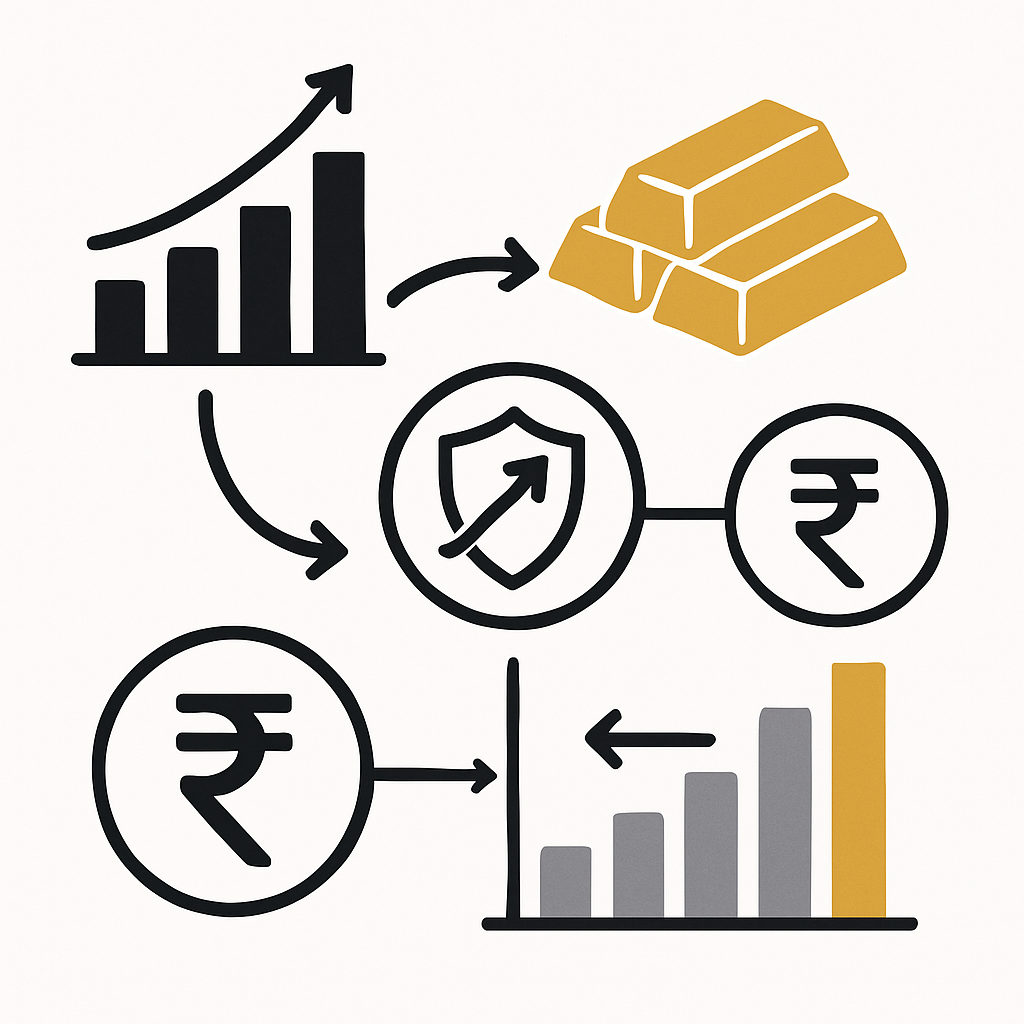
Gold does not pay interest, so lower interest rates can make it more attractive compared with cash and bonds. When US yields fall or investors expect rate cuts, the opportunity cost of holding gold tends to decline. This is one reason gold often gains attention during periods of monetary easing and economic uncertainty.
A Shafaq News report said spot gold was up 1.1% at $4,285.89 per ounce after touching a seven-week high. The same report noted that US gold futures also rose, showing that both spot and futures markets were reacting to the broader shift in sentiment. Such price references are useful for context, but Indian investors should remember that local returns also depend on the rupee.
Geopolitical stress can also support gold because investors often treat it as a store of value during uncertain periods. Concerns about oil supply, trade routes, conflict, and inflation expectations can increase demand for safer assets. A CNBC report on gold near a seven-week peak linked the move to changing expectations around inflation and higher-for-longer interest rates.
Why This Matters for Indian Investors
India imports a large share of its gold requirement, so the rupee-dollar exchange rate plays a major role in domestic pricing. If the rupee weakens, gold can become costlier in India even when international prices are stable. This currency layer makes gold returns different for Indian investors compared with investors who track prices only in US dollars.
RBI policy, domestic inflation, and banking system liquidity can also influence how savers compare gold with fixed deposits, debt funds, PPF, EPF, and other products. When deposit rates look attractive, some conservative savers may prefer predictable income over gold exposure. When inflation concerns rise or rate-cut expectations build, gold can regain attention as a diversification tool.
Investors who track broader interest-rate trends may also want to understand how RBI decisions affect loans and savings. PocketPlanGuru’s guide on RBI rate pauses, borrowers, and investors explains this connection in a practical Indian context. Gold should be assessed within the same wider financial picture, not separately from EMIs, emergency funds, insurance, and long-term goals.
Gold as an Inflation Hedge in India
Gold has a strong reputation as an inflation hedge, but the relationship is not always simple in the short term. A Reuters analysis on gold as a strategic inflation hedge explains that US CPI alone does not fully explain gold prices. It also notes that outside the US, investors often use gold to protect against severe inflation and currency stress.
In India, families often see gold as protection against the falling purchasing power of money. This view comes from long experience with food inflation, fuel costs, education expenses, healthcare bills, and currency changes. Over longer periods, gold may help preserve value, but it does not rise every time monthly CPI data moves higher.
Gold prices are affected by many forces at once, including the dollar, crude oil, global rates, central-bank buying, investment flows, and geopolitical risk. This means a short-term rally may be driven more by US rate expectations than by Indian household inflation. Investors should consult a financial advisor before treating gold as a complete inflation solution.
Gold Investment Options in India
Indian investors can access gold through jewellery, coins, bars, Sovereign Gold Bonds, Gold ETFs, and digital gold. Each option has different costs, liquidity features, tax treatment, and operational risks. The best choice depends on whether the purchase is for family use, investment exposure, emergency liquidity, or long-term diversification.
Physical gold suits cultural needs and can be useful in emergencies, but it comes with making charges, storage concerns, purity issues, and resale spreads. Hallmarking and proper bills are important because resale value depends on trust and certification. If the purpose is purely investment, investors should compare physical gold with market-linked products and consult a financial advisor.
Sovereign Gold Bonds offer exposure to gold prices without storing metal at home. Investors should verify current terms only through official sources such as the RBI Sovereign Gold Bond page. SGBs may suit longer holding periods, but liquidity before maturity can be limited in the secondary market.
Gold ETFs trade on exchanges and may suit investors who already use demat and brokerage accounts. They avoid making charges, purity concerns, and physical theft risk, but they still carry market risk, expense ratios, and tracking differences. Investors can compare listed products through the NSE or their broker platform and consult a financial advisor before investing.
Digital gold allows small app-based purchases and can appeal to younger investors who prefer convenience. However, investors need to check custody arrangements, pricing spreads, storage fees, sell-back rules, and redemption conditions. PocketPlanGuru’s guide on digital gold regulation in India explains why platform risk and oversight matter.
Portfolio Role of Gold
A seven-week high can tempt investors to increase gold exposure quickly, but portfolio decisions should not be based only on recent price movement. Gold can act as a diversifier because it may behave differently from equities, bonds, deposits, and real estate during stressful periods. It should be reviewed as part of the whole portfolio rather than as a standalone bet.
For equity-heavy investors, gold may reduce emotional stress when Nifty or Sensex volatility rises. For conservative investors, too much gold may reduce regular income because gold does not generate coupons, dividends, rent, or business cash flow. The right balance depends on income stability, liabilities, time horizon, and advice from a financial advisor.
Gold should not automatically replace EPF, PPF, NPS, fixed deposits, emergency funds, or adequate term insurance. Each product has a different purpose in a household financial plan. A disciplined review can help investors avoid overconcentration in any single asset class.
Timing and Risk Management
Timing gold perfectly is difficult because prices react quickly to global data, currency movements, and market sentiment. Buying only after sharp rallies can lead to regret if prices cool soon after. A staggered approach may reduce timing risk, but investors should consult a financial advisor before choosing any purchase strategy.
Short-term gold prices can move sharply when US rate-cut expectations change. A stronger dollar can pressure gold, while rupee weakness can support Indian gold prices even when global prices pause. These moving parts make short-term returns uneven and hard to predict.
Gold also lacks cash flows, which makes valuation more difficult than for bonds, stocks, or rental assets. A Forbes discussion on gold and short-term inflation hedging highlights this challenge by noting that gold is valued largely as a store of value. Investors should treat it as a diversifier, not as a guaranteed short-term profit source.
Physical Gold Risks and Practical Checks
Physical gold carries risks that are often ignored during price rallies. Theft, loss, impurity, high making charges, and resale deductions can reduce actual returns. Buyers should keep bills, check hallmarking, and understand the difference between ornament value and investment value.
Storage is another real cost that affects physical gold ownership. Bank lockers, home safes, insurance, and security arrangements all involve effort or expense. Investors should include these costs when comparing physical gold with ETFs or SGBs.
Gold loans also need careful review because pledged jewellery can create emotional and financial pressure if repayment becomes difficult. Interest rates, processing fees, renewal terms, and auction rules should be understood before borrowing against gold. Families facing liquidity stress should consult a financial advisor before using gold as collateral.
Investor Segments in India
Rural households often prefer physical gold because it is familiar, locally accepted, and connected to social occasions. It may also serve as an emergency asset during crop stress, medical needs, or family events. The main concerns are pricing transparency, purity, making charges, and borrowing costs when gold is pledged.
Urban middle-class investors often combine traditional jewellery with financial gold products. This can help separate family-use gold from investment exposure and make portfolio tracking easier. Tax records, demat statements, and bank-linked transactions may also simplify financial reviews.
Millennial investors often prefer digital platforms because they allow small and frequent purchases. Convenience can support a savings habit, but it can also encourage impulsive buying during trending market headlines. Platform credibility, custody details, spreads, and grievance processes should be checked carefully before relying on digital gold.
Complementary Inflation Hedges
Gold is not the only asset that may help during inflationary periods. Real estate can offer protection through potential rent growth and long-term appreciation, although it requires large capital and patience. It also carries costs such as maintenance, property tax, stamp duty, and liquidity risk.
High-quality debt products, inflation-linked instruments where available, and regulated income-generating assets can also support portfolio stability. REITs and InvITs offer exposure to real assets, but they carry market and distribution risks. Investors can read PocketPlanGuru’s guide on SEBI rules for REITs and InvITs before comparing them with gold or property.
The core idea is diversification rather than prediction. Gold may help in some inflation and uncertainty cycles, while other assets may perform better in different environments. A financial advisor can help align the mix with goals, risk tolerance, and cash-flow needs.
FAQs on Gold Investment and Inflation Hedging
Is gold a reliable inflation hedge in India?
Gold can help protect purchasing power over longer periods, but it is not a perfect short-term inflation hedge. Prices may rise because of rate cuts, geopolitical tension, rupee weakness, or safe-haven demand rather than CPI alone. Investors should use gold as part of a diversified plan and consult a financial advisor.
Should I choose physical gold, SGBs, or Gold ETFs?
Physical gold may suit family use, ceremonies, and local liquidity needs. SGBs and Gold ETFs may suit investors seeking cleaner investment exposure without storing metal at home. The right option depends on liquidity needs, holding period, tax position, and guidance from a financial advisor.
How much gold should I hold in my portfolio?
There is no single allocation that fits every investor. The suitable level depends on age, income stability, loans, emergency savings, existing jewellery, and exposure to equities or debt. Investors should consult a financial advisor before increasing gold exposure after a rally.
What are the main risks of Gold ETFs compared with physical gold?
Gold ETFs avoid storage, theft, and purity risks linked to physical gold. They still carry market price risk, expense ratios, tracking differences, and brokerage-related costs. Physical gold may be useful for family needs, while ETFs may be better suited for investment tracking.
Can real estate complement gold as an inflation hedge?
Real estate can complement gold because it may benefit from rent growth and long-term property appreciation. It also needs large capital, involves transaction costs, and is less liquid than financial products. Investors should compare property with gold, debt products, REITs, and cash-flow needs before deciding.
Final Takeaway for Your Portfolio
Gold’s seven-week high reflects a mix of falling US rates, inflation concerns, currency movements, and safe-haven demand. For Indian investors, the rally is a useful reminder to review gold exposure, not a reason to chase prices blindly. Gold can support diversification, but it cannot replace a complete financial plan.
Investors should compare gold with equities, debt, deposits, retirement products, emergency funds, insurance, and real estate before making changes. Existing jewellery, tax rules, liquidity needs, and family goals should also be part of the review. Consult a financial advisor before buying, selling, or increasing gold exposure based on recent headlines.
Disclaimer: The information above is for educational purposes only and does not constitute financial advice.
3 Comments