


Overview of Tata Steel’s ₹33,873 Crore Capex Plan
Tata Steel’s ₹33,873 crore capex is a major growth plan focused on capacity expansion, technology upgrades, and long-term competitiveness. The spending is significant because steel is closely linked to infrastructure, autos, railways, housing, engineering goods, and capital goods. For investors, the central question is whether this capex can improve future cash flows enough to offset the pressure that higher spending may place on debt metrics.
The verified research indicates that Tata Steel’s net debt-to-EBITDA ratio may rise as the capex cycle gathers pace. At the same time, the company’s strong liquidity may help it manage this phase better than a weaker balance sheet would. This makes the capex neither an automatic positive nor an automatic warning sign, because the final outcome will depend on execution, demand conditions, steel prices, and balance sheet discipline.
Breakdown of Capex Allocation
The capex is expected to support domestic growth, value-added steel production, modernisation, and cleaner technology initiatives. A significant focus remains on India, where steel demand is tied to public infrastructure spending and private manufacturing activity. In a related update, Sahi Markets reported Tata Steel’s ₹20,000 crore capex plan for FY27, with ₹12,000 crore directed toward Indian operations.
Tata Steel has also guided for large capital spending in earlier periods, which shows that the ₹33,873 crore number should be viewed as part of a broader expansion path. Tata Steel’s own newsroom highlighted that Tata Steel’s capex guidance was ₹15,000 crore for FY25-26, with a major share linked to India and projects such as Kalinganagar. These disclosures support the view that the company is building scale gradually rather than relying on a single one-time spending burst.
Expected Timeline and Financial Impact
Investors should not expect immediate returns from such a large expansion programme. The verified research suggests that return on investment from the expansion is expected in the medium term, typically over three to five years. This timeline is reasonable because steel projects need approvals, construction, commissioning, stable operations, demand support, and efficient capacity utilisation before they fully contribute to earnings.
Recent operating performance offers some support for the growth case, especially from Indian operations. According to ScanX’s report on Tata Steel Q1FY27 results, consolidated EBITDA rose 25% year-on-year to ₹9,370 crore, led by robust performance in India. European operations remain a key watchpoint, however, because regulatory and operational hurdles continue to affect the full restart of Tata Steel Netherlands’ Direct Sheet Plant and the pace of European EBITDA recovery.
Capex and India’s Broader Economic Goals
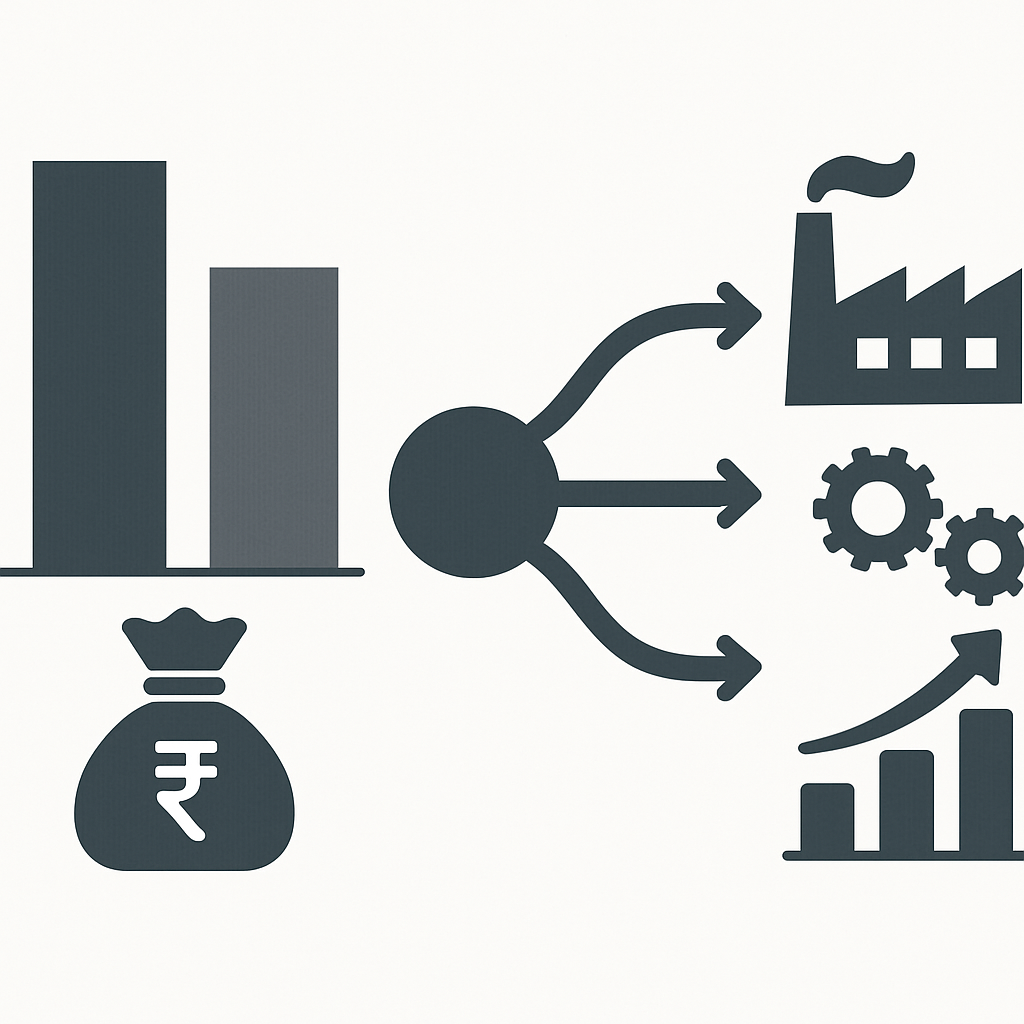
Tata Steel’s ₹33,873 crore capex fits into India’s wider push to strengthen domestic manufacturing and reduce dependence on imported industrial inputs where possible. Steel is a base material for roads, bridges, factories, metro rail, renewable energy equipment, defence manufacturing, and real estate. When a large domestic steelmaker expands capacity and improves value-added production, the effect can extend beyond one company and influence the wider industrial ecosystem.
India’s growth story depends on reliable supply of core materials at competitive costs. Deeper domestic steel production can help manufacturers plan better, especially when global prices, currency movements, or trade restrictions create uncertainty. The benefit is not guaranteed, because steel remains a cyclical business, but higher local capacity can improve resilience if demand growth remains steady.
Alignment with Make in India
The capex broadly supports the spirit of Make in India by adding domestic capacity and improving the availability of value-added steel products. More local steel output can support sectors such as autos, appliances, construction equipment, engineering goods, and infrastructure. For investors, this policy alignment matters because government priorities, public capital expenditure, import rules, and trade measures can influence sector cycles over time.
Policy support can improve the long-term demand environment, but it does not remove business risk. Investors still need to track steel prices, project execution, debt levels, and quarterly disclosures instead of relying only on the Make in India theme. Reliable market updates and filings can be checked through platforms such as the NSE, company announcements, and exchange disclosures.
Contribution to India’s Infrastructure Development
Steel is a basic input for national infrastructure projects, including highways, ports, railways, industrial corridors, and urban development. Higher domestic capacity can help meet future demand if projects are completed on time and the broader investment cycle remains healthy. Better supply may reduce some pressure during demand spikes, although steel prices will still be influenced by global cycles, raw material costs, and trade flows.
Households may not buy steel directly in large quantities, but they can still feel the effect of steel prices through construction costs and real estate activity. A home loan borrower, for example, is indirectly affected when developers face higher input costs for steel, cement, labour, and financing. The same macro environment also includes the RBI repo rate, inflation, and credit conditions, which influence both corporate capex and household budgets.
Investor Insights: What Tata Steel’s Capex Means for Your Portfolio
Tata Steel’s ₹33,873 crore capex can influence market expectations around future capacity, EBITDA growth, dividends, and leverage. If the capex improves operating performance after commissioning, investors may assign more value to the company’s future earnings visibility. If debt rises faster than cash flows or project execution is delayed, the market may remain cautious even if the long-term strategy appears sound.
Retail investors should avoid making portfolio decisions based only on a large capex headline. Steel is cyclical, and prices can move sharply because of China demand, global trade conditions, currency movements, energy costs, and domestic policy decisions. Before buying, selling, averaging, or increasing exposure to Tata Steel or any steel stock, investors should consult a financial advisor who understands their goals, risk profile, time horizon, and asset allocation.
For Retail Investors
Retail investors should view Tata Steel as a cyclical business with long-term growth potential and near-term balance sheet considerations. The capex can support future earnings if capacity is commissioned well and demand remains supportive, but it may also reduce free cash flow during the build-out phase. Dividend expectations should be assessed carefully because payouts depend on cash generation, debt comfort, management priorities, and the broader commodity cycle.
If you invest through SIPs or mutual funds, you may already have indirect exposure to Tata Steel or other metal stocks. Many diversified equity funds linked to BSE and NSE-listed companies hold cyclical sectors in varying proportions, so it is useful to review fund factsheets before adding direct stock exposure. You can also read our guide on why investors track dividend ex-dates in stocks like Wipro and UltraTech to understand payout timing and income expectations better.
For Institutional and Mutual Fund Investors
Institutional investors may view this capex as exposure to India’s industrial metals cycle and long-term manufacturing growth. Fund managers are likely to track debt levels, EBITDA growth, project timelines, return on capital, and the performance gap between Indian and European operations. They may also compare Tata Steel with peers across integrated steel, mining, value-added products, and downstream steel businesses.
ESG factors are also becoming more relevant for large investors, including pension funds, insurance companies, and global institutions. SEBI’s disclosure framework has increased focus on governance, sustainability, and risk reporting across listed companies. Investors can follow relevant market rules and investor protection updates through the SEBI website and through company sustainability disclosures.
Tata Steel’s Commitment to Sustainability and ESG
The capex has a sustainability angle because steelmaking is energy-intensive and faces increasing pressure to reduce emissions. Cleaner technology, efficient processes, and better resource use can support long-term competitiveness if they are implemented effectively. Green capex can appear expensive at first, but it may help reduce future compliance costs, improve customer acceptance, and support resilience in markets with tighter environmental standards.
Carbon Emission Reduction Efforts
Tata Steel’s spending includes technology upgrades that can support cleaner and more efficient steelmaking over time. These efforts matter because India is trying to balance industrial growth with climate commitments and resource efficiency. If the company reduces energy use per unit of output, it may support margins over the long term, although the benefits will depend on execution, technology choices, and cost control.
European operations add another layer to the climate and transition story. Tata Steel has previously linked spending to greener transitions in the UK, including electric arc furnace-related work in past guidance. Investors should track execution closely because green transitions often involve approvals, high upfront costs, phased benefits, and regulatory uncertainty.
Waste and Resource Optimization
Steel plants create byproducts, so waste management and resource optimisation are important parts of sustainable operations. Better recycling, byproduct use, and process efficiency can reduce landfill pressure and lower dependence on fresh raw materials. These efforts can also support global benchmarks for responsible steel production and improve the company’s standing with ESG-focused investors.
Resource efficiency becomes especially important when raw material prices are volatile. Coal, iron ore, freight, power, and currency movements can affect steel margins quickly. Indian investors already understand similar cost pressures from household budgets, where oil prices, rupee moves, and inflation can affect monthly planning, as explained in our article on how rising oil prices and the rupee impact your budget.
Challenges and Risks Associated with the Capex
No large capex programme comes without risk, and Tata Steel is no exception. Execution delays, cost overruns, weak steel prices, and slower demand growth can reduce expected returns from the expansion. A higher net debt-to-EBITDA ratio may also worry investors if cash flows do not improve in line with management expectations.
European operations remain an important challenge for consolidated performance. The verified research highlights regulatory and operational hurdles around the full restart of Tata Steel Netherlands’ Direct Sheet Plant, which can affect European EBITDA recovery. This means strength in Indian operations may support the group, but Europe can still create earnings volatility and delay the full benefit of the capex cycle.
Regulatory and Operational Hurdles
Restarting, ramping up, or modernising steel assets requires approvals, compliance, stable operations, and coordinated project execution. Environmental norms in Europe can be strict, and delays may push back recovery timelines or increase costs. These issues can affect EBITDA even when Indian operations are performing well and domestic demand remains supportive.
Investors should track management commentary after quarterly results and compare it with actual progress on debt, EBITDA, and project timelines. The Anand Rathi Institutional Equities discussion on Tata Steel’s capex plan highlights the domestic growth angle, but execution remains central to the investment case. Market participants should balance optimism with hard data from earnings calls, investor presentations, exchange filings, and audited financial statements.
Market and Financial Risks
Steel prices can rise or fall because of global demand, exports, imports, geopolitical developments, and changes in raw material costs. Currency movements also matter because trade flows, imported inputs, overseas earnings, and foreign obligations may be affected. If the rupee weakens sharply, imported costs and certain foreign-linked obligations can become more expensive for companies with international exposure.
Debt servicing is another factor to watch during a heavy capex cycle. Higher interest rates can raise borrowing costs, especially if inflation keeps monetary policy tighter for longer. For households, the same rate cycle affects home loans, personal loans, and credit card costs, so macro conditions matter for both companies and families.
How This Capex Fits Within India’s Steel Industry Landscape
Tata Steel’s ₹33,873 crore capex places the company firmly within India’s industrial growth story. It also keeps the company competitive against large domestic and global steel players that are investing in scale, technology, and value-added products. The final value created will depend on whether Tata Steel can convert spending into higher capacity utilisation, stronger margins, healthier cash flows, and manageable leverage.
India’s steel industry is tied to public capex, private manufacturing, real estate activity, and export demand. If government infrastructure spending and private-sector investment remain strong, domestic steelmakers could benefit from better demand visibility. Investors should still track the Sensex, Nifty Metal trends, steel price cycles, global risk appetite, and company-level execution before judging sector momentum.
Comparison with Competitor Capex Plans
Tata Steel’s capex is among the larger corporate spending plans in the Indian steel space. Peers such as JSW Steel, SAIL, and other private players also continue to invest in capacity, technology, and downstream capabilities. This competition can improve quality and efficiency over time, but it can also increase supply, which makes demand growth and pricing discipline important.
For investors, the key question is not only which company spends the most. The better question is which company converts capex into cash flows, margins, and lower balance sheet risk over a full cycle. If you track new market opportunities, our note on why Juniper Green Energy IPO matters for investors shows how sector themes can shape portfolio thinking without replacing proper risk assessment.
Implications for Supply Chain Development
Large steel capex can support mining, logistics, equipment makers, engineering contractors, and downstream processors. Local suppliers may benefit when a major steelmaker expands production, upgrades plants, and requires specialised inputs or services. This creates a multiplier effect beyond the steel company itself, although the size of the benefit depends on project execution and domestic sourcing.
Downstream industries such as auto components, construction materials, pipes, appliances, and fabrication can also gain from better steel availability. Improved supply can help manufacturers plan production, manage inventories, and reduce uncertainty during periods of strong demand. Over time, this can support industrial depth, employment opportunities, tax revenues, and regional economic activity around major steel hubs.
FAQs on Tata Steel’s Capex and Investment Impact
Investors often have similar questions when a large company announces major capital spending. The answers depend on execution, steel prices, debt levels, demand growth, and market conditions. Use these FAQs as a starting point, and consult a financial advisor before making portfolio decisions.
How will the ₹33,873 crore capex affect Tata Steel’s stock price?
The stock may benefit over the medium term if the capex improves capacity, EBITDA, and long-term cash flows. In the short term, investors may remain cautious if leverage rises, project execution slows, or steel prices weaken. Share prices on NSE and BSE can also react to quarterly results, global commodity cues, currency movements, and broader market sentiment.
Is Tata Steel’s capex aligned with government initiatives?
Yes, the plan broadly supports Make in India and domestic steel self-reliance goals. Higher domestic capacity and value-added production can support infrastructure, manufacturing, and industrial supply chains. The real impact will depend on timely execution, demand growth, policy stability, and the company’s ability to manage costs.
What risks should investors watch closely?
Investors should watch regulatory delays, operational hurdles, cost overruns, market volatility, and debt movement. The European business remains important because hurdles around the full restart of Tata Steel Netherlands’ Direct Sheet Plant can delay EBITDA recovery. Steel price swings, currency moves, interest rates, and raw material costs can also affect margins and investor sentiment.
How does sustainability factor into this capex?
Sustainability is relevant because steelmaking is energy-intensive and faces rising climate-related scrutiny. Cleaner technology, recycling, and better resource use can improve long-term resilience if implementation is disciplined. ESG progress may also help Tata Steel appeal to investors who focus on governance, emissions, and climate transition risk.
Should retail investors increase Tata Steel holdings now?
Retail investors should not increase holdings only because the capex number is large. They should review asset allocation, risk appetite, time horizon, tax needs, emergency funds, insurance, and existing mutual fund exposure before taking any stock-specific action. For buying, selling, averaging, or increasing exposure, they should consult a financial advisor.
Final Takeaway for Indian Investors
Tata Steel’s ₹33,873 crore capex is a major bet on India’s growth, steel demand, and long-term manufacturing strength. It can support the economy through capacity addition, supply chain activity, value-added production, and infrastructure inputs. At the same time, investors must track debt, EBITDA, European operational hurdles, steel price cycles, and project execution with care.
For your portfolio, the best approach is balanced and data-led. Avoid chasing short-term moves, and compare any Tata Steel exposure with your broader goals, mutual funds, SIPs, emergency needs, and risk tolerance. Stay updated on Tata Steel and India’s steel sector, consult a financial advisor for personalised decisions, and use PocketPlanGuru’s practical finance guides to strengthen your investment process.
Disclaimer: The information above is for educational purposes only and does not constitute financial advice.
3 Comments