


Why Midcaps Matter for Indian Portfolios
Indian midcap stocks can add growth potential to a portfolio when they are selected with care and held with patience. They sit between large, established companies and smaller, less proven businesses, which gives them a useful middle position in the equity market. For investors using mutual funds, SIPs, EPF, PPF, NPS, and direct equity, midcaps can play a role, but the right allocation depends on personal goals and risk capacity.
The case for midcaps is not based on excitement alone. Verified research from global markets shows that midcap companies have historically delivered strong long-term returns because many are still expanding revenue, earnings, and market share. Indian investors can use this broad lesson with local context, while remembering that midcaps can be volatile and that they should consult a financial advisor before changing their portfolio.
Historical Performance of Midcap Stocks
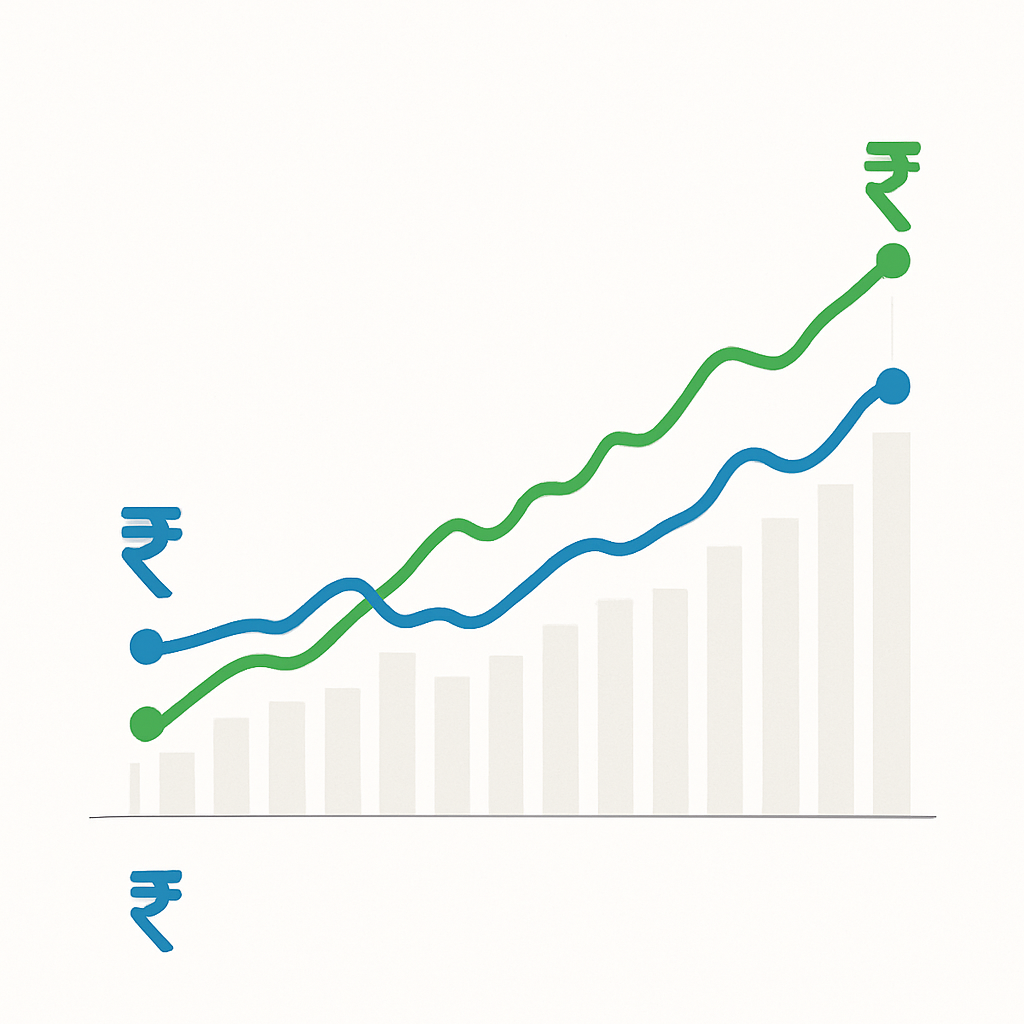
Midcap stocks have often rewarded patient investors during periods when earnings growth broadened beyond the largest companies. Research from Touchstone on mid-cap investing notes that midcaps in the US have shown a long record of outperformance compared with both large caps and small caps. The same source also warns that midcap stocks may face more erratic market movements than larger and more established companies.
Growth is the main reason midcaps attract attention. Investopedia’s guide to analysing mid-cap companies highlights revenue and earnings growth as key drivers of long-term returns. In India, this matters because many midcap companies serve domestic markets that can expand with rising incomes, credit access, infrastructure spending, and digital adoption.
Comparing Midcaps With Large and Small Caps
Midcaps are usually more agile than large caps, but they are often more established than small caps. This combination can create a useful balance between growth potential and business stability. Research from Boston Partners on mid-cap stocks describes midcaps as having delivered strong returns without the same level of volatility typically associated with small caps.
Investors should avoid judging midcaps only by one-year returns. Midcap indices can underperform during market stress, rate shocks, liquidity tightening, or periods when investors prefer large, defensive businesses. Over longer periods, they may recover strongly when earnings growth returns, but that outcome is never guaranteed and requires a disciplined approach.
Sectors Supporting Midcap Growth in India
Indian midcaps are present across sectors such as healthcare, technology, consumer goods, financial services, industrials, infrastructure, and renewable energy. Some companies benefit from domestic consumption, while others benefit from exports, manufacturing growth, or government-backed capital spending. A promising sector can support growth, but it cannot protect investors from weak governance, high debt, poor execution, or stretched valuations.
Before investing, investors need to study the company rather than rely only on a theme. Annual reports, quarterly results, auditor comments, pledge disclosures, and exchange announcements can reveal important risks. Useful starting points include company filings on the BSE, the NSE, and regulatory updates from SEBI.
Why Midcaps Can Be a Portfolio Sweet Spot
Midcaps can offer a middle path between the stability of large caps and the high-risk growth profile of small caps. Many midcap companies have already built products, customers, distribution, and management systems, yet still have room to expand. This makes them attractive for long-term investors who can handle volatility and who understand that returns may come in uneven phases.
Research from State Street on US midcaps as quiet outperformers points to valuation, earnings recovery, and broader market leadership as possible reasons midcaps may regain investor attention. Indian investors should not copy US market conclusions directly, but the framework is useful. When earnings growth spreads beyond a small group of mega-cap companies, midcaps can become more relevant in diversified portfolios.
Growth and Risk in the Indian Context
Indian midcap companies can be closely linked to domestic growth trends. A midcap hospital chain, lender, auto component maker, consumer brand, or technology services firm may benefit as household income, formal credit, and business digitisation improve. At the same time, these businesses may face risks from interest rates, currency moves, raw material costs, regulations, and demand cycles.
Liquidity is another important factor in India. Some midcap stocks have lower free float and thinner trading volumes than large-cap stocks. This can make price movements sharper when foreign investors sell, when mutual funds rebalance, or when retail investors crowd into the same trade.
Role of Midcaps in a Diversified Portfolio
Midcaps work best as one part of a broader financial plan. A younger investor with stable income and a long investment horizon may tolerate more equity volatility than someone nearing retirement or saving for a near-term goal. Assets such as EPF, PPF, NPS, debt funds, fixed deposits, emergency savings, and insurance can help balance the risk of equity exposure.
Tax treatment also affects final returns. Listed equity and equity mutual funds are taxed differently depending on the holding period and current income tax rules. For tax filing basics, readers can review PocketPlanGuru’s guide on how to file your ITR online and consult a financial advisor for personalised tax planning.
Practical Portfolio Strategies Using Midcaps
A practical midcap approach starts with process rather than excitement. Investors need to review sales growth, profit growth, margins, debt, cash flow, return ratios, valuation, and management quality. A stock that rises quickly can still damage wealth if the business is weak, the balance sheet is stretched, or the promoter record is poor.
Many Indian investors prefer mutual funds and SIPs because they reduce company-specific risk. Midcap mutual funds provide exposure to several companies and are managed by professionals who track earnings, governance, and portfolio risk. Direct stocks can be considered only after adequate research, and investors should consult a financial advisor before making portfolio changes.
Stock Selection Criteria for Midcap Investors
Revenue and earnings trends are central to midcap analysis. A company that grows sales but fails to grow profits may be facing margin pressure, weak pricing power, or poor cost control. Investors also need to check whether reported growth comes from the core business or from one-time gains that may not repeat.
Governance checks are just as important as growth checks. Clean auditor comments, transparent related-party transactions, low promoter pledging, and consistent communication can improve investor confidence. Sudden auditor exits, unexplained debt growth, aggressive accounting, and repeated management changes deserve careful scrutiny.
Using Mutual Funds and ETFs
Midcap mutual funds offer diversification across many companies. They can help investors participate in the midcap segment without tracking every quarterly result, exchange filing, or management update. However, fund NAVs can still fall sharply during market corrections, so investors need patience and realistic expectations.
ETFs can offer lower-cost index exposure, but they also follow the index without avoiding every weak business. Active funds may try to select stronger companies, but their outcomes depend on the fund manager, investment process, cost, and market conditions. Investors should compare expense ratios, portfolio overlap, benchmark performance, churn, and risk measures before choosing a route.
Managing Tax Implications in India
Equity gains in India are taxed based on the type of instrument and holding period. Short-term capital gains and long-term capital gains rules can change, so investors should verify current rates and exemption limits before filing returns. Dividend income can also affect taxable income, especially for investors in higher tax brackets.
Tax planning should not drive every investment decision. A lower tax bill is useful only when the investment also fits the investor’s goal, time horizon, and risk profile. Investors can combine tax planning with broader decisions on Section 80C, term insurance, home loan interest, retirement savings, and asset allocation after consulting a financial advisor.
Risks Unique to Indian Midcap Stocks
Midcaps can be sensitive to regulatory changes, funding stress, demand shocks, and changes in investor mood. RBI policy moves, inflation, credit conditions, and global risk sentiment can influence valuations. If foreign investors reduce exposure to India or market liquidity tightens, midcaps may react more sharply than larger companies.
Concentration risk is a major concern. Holding too much money in one midcap stock, one sector, or one market theme can expose the portfolio to avoidable damage. Readers who want broader context can review PocketPlanGuru’s article on why foreign investors withdraw billions.
Regulatory and Market Volatility Risks
SEBI, NSE, and BSE rules influence disclosure, trading, surveillance, and investor protection. These rules are necessary for market integrity, but surveillance measures and trading restrictions can affect liquidity in some stocks. Sector-specific regulations can also affect midcaps more sharply when they lack pricing power or financial flexibility.
Different sectors face different risks. Pharma companies may face export inspections, product approvals, and pricing controls, while financial firms may face tighter lending standards or asset quality pressure. Infrastructure businesses can face approval delays, cost overruns, payment cycles, and policy changes that affect cash flow.
Liquidity and Trading Challenges
Liquidity risk means investors may not get a fair price when they want to buy or sell. This risk is higher in stocks with low average daily volumes, limited free float, or heavy promoter holding. It can become worse during corrections, when buyers step back and bid-ask spreads widen.
Investors can reduce trading mistakes by avoiding rushed orders and sudden social media tips. Limit orders may help in less liquid stocks, but they do not remove market risk. Position sizing, diversification, and a clear review process are more important than trying to catch every price move.
Corporate Governance and Due Diligence
Corporate governance can make or break a midcap investment. Investors need to review promoter pledging, auditor changes, debt levels, board independence, cash flow quality, and related-party transactions. A company with strong reported profits but weak operating cash flow deserves extra caution.
Ongoing monitoring matters because risks can emerge after purchase. Sudden resignations by auditors, chief financial officers, or key managers should not be ignored. Exchange disclosures, annual reports, concall transcripts, and regulatory filings can help investors track whether the original investment case still holds.
Sectoral Outlook for Indian Midcaps
The next phase of midcap performance may come from sectors tied to domestic growth, manufacturing, healthcare, technology, infrastructure, and energy transition. These themes are important, but they should not be treated as automatic buy signals. Investors still need to assess balance sheets, valuations, competitive position, and execution quality.
Healthcare and pharma midcaps can benefit from rising demand, insurance penetration, exports, diagnostics, and hospital expansion. Technology midcaps may grow through cloud services, cybersecurity, fintech, AI services, and digital transformation projects. For comparison with another high-growth segment, readers can review PocketPlanGuru’s article on why India’s smallcap stocks are rallying now.
Healthcare and Pharma Midcaps
Healthcare demand in India can rise as incomes improve, insurance coverage grows, and awareness of preventive care increases. Hospitals, diagnostics firms, medical suppliers, and selected pharma companies may benefit from these trends. However, high capital needs, regulation, pricing pressure, and compliance requirements can affect returns.
Pharma investors need to watch research pipelines, product approvals, export markets, and regulatory inspections. USFDA observations, plant compliance, patent issues, and working capital needs can change the investment outlook quickly. A strong brand or product portfolio is useful only when it converts into sustainable cash flow.
Technology and Digital Services
Technology midcaps can serve banks, startups, SMEs, global clients, and public-sector digitisation projects. Some focus on specialised areas such as cloud migration, cybersecurity, data analytics, fintech platforms, and AI-enabled services. These niches may grow faster than traditional IT services, but competition remains intense.
Margins in technology businesses can shift because of salary costs, client concentration, pricing pressure, and currency movements. Large IT companies may win bigger contracts, while midcaps may compete through speed, specialisation, or domain expertise. Investors should track deal wins, order visibility, attrition, client concentration, and cash conversion.
Infrastructure and Green Energy
Infrastructure midcaps may benefit from spending on roads, railways, ports, power, logistics, and urban development. Renewable energy businesses can also find opportunities as India expands solar, wind, transmission, storage, and grid capacity. Policy support can help, but execution and balance sheet discipline remain critical.
Project-based companies carry risks that investors should not ignore. Debt, delays, land issues, input costs, payment cycles, and working capital stress can hurt profitability. A large order book is valuable only when the company completes projects on time and converts revenue into cash.
Building and Rebalancing a Midcap Portfolio
A midcap-heavy portfolio needs regular review because bull markets can lift both strong and weak companies. Investors should track sector exposure, stock weights, fund overlap, valuation risk, and downside risk. A portfolio that looked balanced at the start can become too aggressive after a sharp rally.
Staggered investing can help reduce timing risk. SIPs spread purchases across market levels and can improve discipline during volatile phases. Rupee cost averaging does not guarantee profit or prevent loss, but it can reduce the pressure of investing a large amount at one market level.
Determining Midcap Allocation
Midcap allocation should match age, income stability, goal timing, investment horizon, and risk tolerance. Someone saving for retirement over many years may handle more volatility than someone needing money for education, a home purchase, or retirement income soon. Conservative investors may prefer a lower midcap share supported by large caps, debt instruments, emergency funds, and guaranteed savings products.
Market valuations also matter. When midcaps appear expensive, staggered investing and rebalancing can reduce the risk of committing too much at once. When markets correct, investors still need discipline, cash flow planning, and advice from a financial advisor rather than reacting emotionally.
Rebalancing Techniques
Rebalancing means bringing the portfolio back to its intended asset mix. If midcaps rise sharply, they may become a larger part of the portfolio than originally planned. Trimming exposure, adding to underrepresented assets, or pausing fresh allocations can help control risk, but investors should consult a financial advisor before acting.
A quarterly or semi-annual review works for many long-term investors. Checking prices constantly can encourage emotional decisions and unnecessary trading. Clear rules for review, profit booking, loss control, and fresh investment can make the process more consistent.
FAQs on Investing in Indian Midcap Stocks
Midcaps attract investors because they combine growth potential with a more established business profile than many small caps. They also create questions about timing, risk, taxation, liquidity, and fund selection. The answers below offer general guidance, and investors should consult a financial advisor for advice suited to their situation.
How much of my portfolio should be in midcap stocks
There is no single allocation that works for everyone. The right exposure depends on age, income stability, goal timing, existing assets, and comfort with volatility. Investors should avoid copying another person’s portfolio because their cash needs, risk appetite, and time horizon may be very different.
Are midcap stocks riskier than large caps in India
Midcaps are generally more volatile than large caps, especially during market corrections and liquidity stress. They may offer higher growth potential when earnings improve, but they can also fall sharply when sentiment turns weak. Diversification, position sizing, and periodic review are essential for managing this risk.
Can mutual funds reduce midcap stock risk
Midcap mutual funds can reduce company-specific risk by spreading money across many stocks. Professional fund managers also monitor results, governance, valuations, and sector exposure. Fund investors still face market risk, so they need patience and a suitable investment horizon.
What tax rules apply to midcap investments
Tax rules depend on whether the investor holds direct stocks, equity mutual funds, or ETFs. Short-term and long-term capital gains treatment depends on the holding period and current income tax law. Investors should verify the latest rules before filing returns and consult a financial advisor for personal tax planning.
How can investors handle liquidity risk in midcap stocks
Liquidity risk can be reduced by preferring companies with healthy trading volumes, reasonable free float, and transparent ownership. Investors should avoid rushed trades, social media tips, and sudden price moves that are not supported by business fundamentals. Limit orders, sensible position sizes, and diversification can help reduce trading-related mistakes.
Final Takeaway for Your Portfolio
Indian midcap stocks can help build wealth when investors use them with care, discipline, and realistic expectations. They offer exposure to companies that may still have room to expand revenue, earnings, and market share. The same growth potential comes with volatility, liquidity risk, governance concerns, and valuation risk.
A sensible midcap strategy combines diversification, SIPs, research, tax awareness, and periodic rebalancing. Investors should avoid chasing short-term trends and should consult a financial advisor before making investment decisions. Subscribe to PocketPlanGuru for more practical guides on building a smarter, goal-based money plan.
Disclaimer: The information above is for educational purposes only and does not constitute financial advice.
9 Comments