


Understanding SEBI’s Closing Auction Session CAS
SEBI’s Closing Auction Session, or CAS, changes how the final closing price is discovered for eligible F&O stocks from August 3, 2026. Instead of using trades from the last 30 minutes to calculate the closing price, the market will collect eligible buy and sell orders into a closing auction. The auction will then discover one closing price at which the maximum number of shares can trade.
This matters for expiry-day traders because the final settlement value of eligible stock F&O contracts will come from the CAS-determined closing price. The F&O closing time also shifts to 3:40 PM, so traders will need to understand how regular-session orders, auction orders, and settlement interact. You can read a simple overview of the change in this mStock guide on SEBI CAS and F&O closing prices.
What CAS Is and Why It Was Introduced
CAS is designed to improve price discovery at the end of the trading day. Under the older method, the closing price depended on trades during the final 30 minutes, which could make the closing value sensitive to late-session activity. Under CAS, the closing price is based on a broader pool of auction orders, which can make the final price more representative of actual demand and supply.
The change also aims to reduce the risk of last-minute price distortion near the close. Global markets such as the NYSE and LSE already use closing auctions in different forms, and India’s CAS moves local market structure closer to that approach. Traders should still track exchange notices, broker circulars, and the official NSE website for operational details before trading around the close.
How the CAS Price Is Determined
During CAS, eligible buy and sell orders are pooled for the auction process. The system identifies the price at which the maximum number of shares can be matched. That single discovered price becomes the official closing price for the eligible stock.
Time priority can matter when orders are matched in the auction. For example, if a valid buy limit order was placed before the regular close and remains pending, it may carry into CAS if the price falls within the permitted CAS band. If another trader later places an order at the same price, the earlier valid order may rank ahead, as explained in this Zerodha CAS explainer.
Impact of CAS on Expiry-Day Trading Behaviour
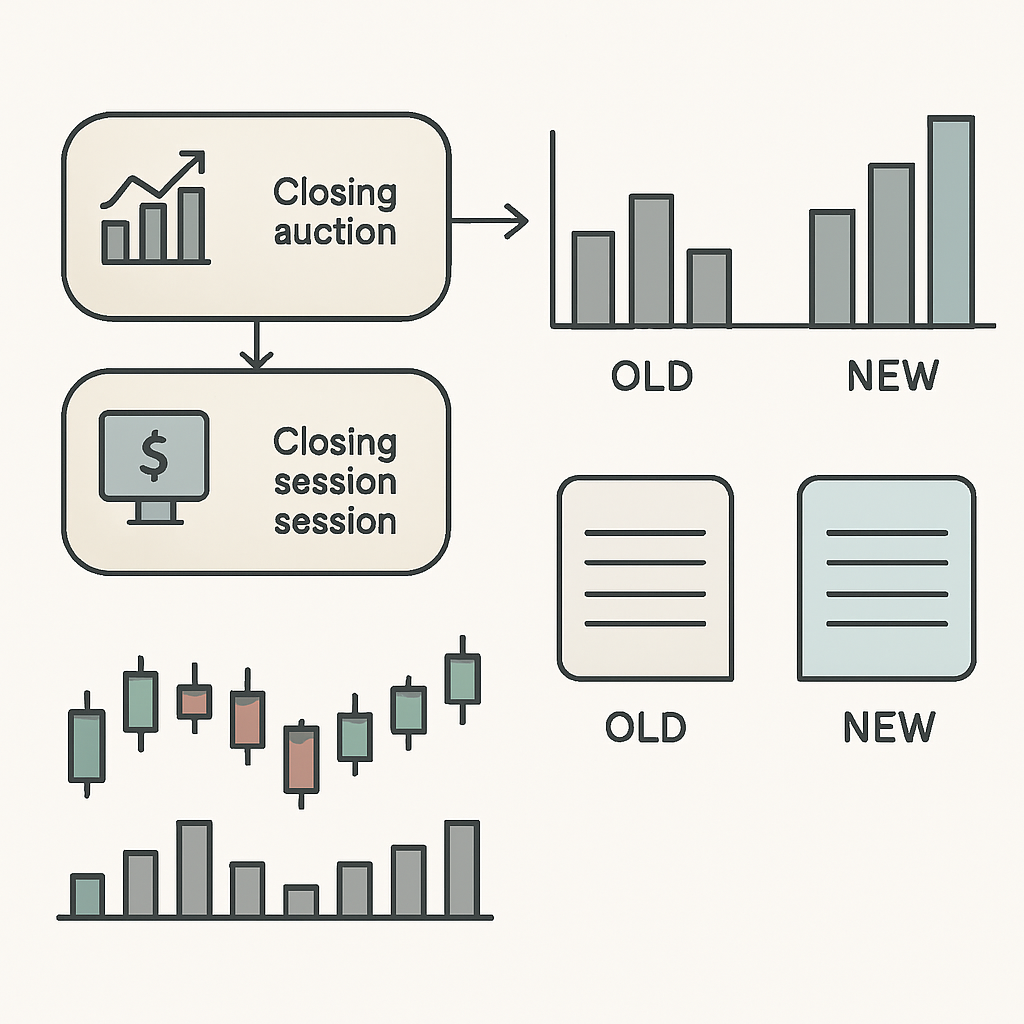
CAS can change expiry-day trading because the final price will depend on auction demand and supply rather than only late-session trades. Traders who relied on last-minute movement may see different settlement outcomes once the auction mechanism applies. The closing minutes may become less about speed and more about understanding order eligibility, price bands, and execution risk.
Order planning may become more important because not every order will necessarily participate in the auction. If a limit price is outside the permitted band, the order may not be eligible for CAS participation. Traders should also consider broader market conditions, including index moves, sector trends, liquidity, and news flow, before taking expiry-day exposure.
Order Types and Timing Under CAS
Limit orders may help traders define acceptable prices when dealing with the closing auction. A limit order sets the maximum price a buyer is willing to pay or the minimum price a seller is willing to accept. This can be useful when the auction price may differ from the last traded price before CAS begins.
Carry-forward treatment can also affect execution priority when a broker and exchange process allow eligible pending orders to move into CAS. A valid pending order placed before the regular close may retain earlier time priority if it enters the auction pool. Traders should check broker-specific CAS rules before expiry day, because operational details can affect how orders are handled.
Managing Open F&O Positions on Expiry Day
Open F&O positions need closer monitoring because the settlement value will be linked to the auction-discovered close. The final settlement price may differ from the price visible shortly before CAS. This difference can matter for stock futures, near-the-money options, and positions where a small price change affects final profit or loss.
Traders should avoid treating the extended closing process as a reason for unplanned risk-taking. Last-minute orders may still face execution uncertainty, slippage, or missed fills. If a position is large, complex, or linked to broader financial goals, consult a financial advisor before changing an expiry-day trading approach.
Risk and Margin Considerations With CAS
Expiry-day risk is not limited to price movement. Margin requirements can also determine whether a trader can continue holding, hedging, or exiting a position smoothly. Market discussions around the new framework indicate that calendar-spread margin benefits may not be available on the stock derivative expiry day, which can increase funding pressure for spread traders.
A calendar spread usually involves positions across different expiries in the same underlying. The offsetting position may reduce price risk in normal conditions, but margin treatment can change when one leg reaches expiry. For official regulatory updates, traders should refer to SEBI announcements and circulars and verify broker margin files before placing expiry-day trades.
Margin Changes on Expiry Day
If calendar-spread margin benefits are withdrawn on expiry day, traders may need more funds to maintain positions. A trade that appeared manageable with reduced margin may become costlier when the benefit is removed. Brokers may ask for additional funds or reduce positions if margin utilization crosses their internal limits.
This risk is especially relevant for traders who hold spread positions close to expiry. The hedge may still reduce price exposure, but it may not reduce cash requirements in the same way on the final day. A basic explanation of this issue appears in this expiry-day margin explainer, but traders should rely on official circulars and broker systems for final margin treatment.
Practical Risk Control for Spread and F&O Traders
Spread traders should review whether a position still fits their risk capacity after margin treatment is considered. Higher margin requirements can change the economics of a trade even if the market view remains the same. This is why funding needs, not just expected profit or loss, should be reviewed before expiry-day exposure is carried forward.
Hedging can reduce price risk, but it does not remove operational risk, margin risk, or execution risk. Keeping a cash buffer may help avoid forced square-offs, but the right buffer depends on the trader’s overall financial situation. If margin pressure could affect savings, investments, or debt obligations, consult a financial advisor before taking fresh F&O exposure.
How CAS Affects Derivatives Pricing and Settlement
CAS directly affects final settlement because eligible stock F&O contracts will use the auction-discovered closing price. This means the final expiry-day value will be connected to the CAS result rather than the older last 30-minute closing-price calculation. A trader’s final profit or loss can therefore change if the auction price differs from the price seen before the auction.
The change can make the closing price more aligned with concentrated end-of-day order interest. It can also reduce reliance on scattered trades during the final part of the regular session. For broader context on Indian market structure and investors, you can read PocketPlanGuru’s guide on why the NSE IPO matters for your portfolio.
Settlement Price Calculation After CAS
After CAS begins, eligible stock F&O contracts will settle using the auction-discovered closing price. The price will be the level at which the maximum quantity can be matched in the closing auction. This makes the settlement price a direct result of auction demand and supply at the end of the day.
Traders should not assume that the last traded price before CAS will be the final settlement level. Large auction orders, order imbalances, and price-band limits can influence the discovered closing price. The difference may be important for near-the-money options, stock futures with tight risk limits, and positions where a small move affects settlement value.
Effect on Profit and Loss and Tax Records
Realized profit or loss on expiry day will reflect the final settlement price if the contract settles through CAS. A small auction shift can change whether a position ends in profit, loss, or near breakeven. This can affect contract notes, broker reports, trading ledgers, and later tax record preparation.
F&O income is commonly treated as business income for many active traders, but tax treatment depends on the facts of each case. Audit requirements, loss set-off, income classification, and ITR reporting can vary based on the trader’s overall profile. Consult a tax professional or financial advisor before making tax decisions based on CAS-related gains or losses.
Lessons From Global Closing Auctions
Many global exchanges use closing auctions because they can improve transparency and reduce end-of-day noise. Markets such as the NYSE, LSE, Nasdaq, Euronext, and SGX use auction-style mechanisms in different forms to determine closing prices. SEBI’s CAS brings India closer to this global practice while still reflecting local market needs.
Indian traders should not copy foreign strategies blindly because India’s single-stock F&O market has its own expiry-day behaviour. Liquidity, margin pressure, stock-specific news, and domestic market structure can all affect the auction close. Broader factors such as RBI policy, inflation, FII flows, and sector sentiment can also influence closing demand and supply.
Comparison With US and European Closing Auctions
Global closing auctions often provide a defined window for entering, modifying, or cancelling eligible orders. Some exchanges also display indicative prices or imbalance information during the auction process. These tools can help traders understand where the final closing price may form, although they do not remove execution risk.
India’s CAS focuses on eligible F&O stocks and the quality of expiry-day settlement. The session design, order rules, and information available to traders may differ from global exchanges. A Paytm Money explainer on CAS also notes that the move aligns India with auction-based closing practices used in major markets.
What Indian Traders Can Learn
Global experience suggests that order planning can matter when time priority is part of the auction process. Traders who wait until the final moments may lose queue position or face execution uncertainty. This lesson is relevant for Indian expiry-day trading under CAS, especially in stocks with concentrated closing interest.
Price bands, auction rules, and broker displays should be understood before trading size near the close. Traders should know whether their platform shows indicative auction information, pending order status, and final execution details clearly. For a broader view of market participation, read PocketPlanGuru’s analysis on why FIIs are returning to Indian stocks.
A Practical Framework for Expiry-Day Preparation
Expiry-day preparation should begin before the final minutes of trading. Traders can review open positions, expected settlement sensitivity, margin utilization, and order eligibility before CAS begins. This reduces the chance of making rushed decisions when auction activity starts.
Risk planning should include both execution risk and funding risk. A trade can be correct directionally but still create problems if margin requirements rise or the final auction price moves unexpectedly. F&O risk should also be kept separate from long-term savings goals such as mutual funds, SIPs, PPF, NPS, and EPF.
Before CAS Begins
Before the closing auction, traders can review whether their planned orders are valid, funded, and within applicable limits. Earlier eligible orders may receive better time priority than later orders at the same price, but execution is never guaranteed. The final result will depend on matching rules, opposite-side interest, price bands, and auction demand.
Open positions should be checked against margin availability and possible settlement outcomes. Traders should avoid funding expiry-day risk through credit card borrowing, personal loans, emergency funds, or money reserved for essential obligations. If an expiry-day trade could affect household finances or long-term plans, consult a financial advisor before taking or increasing the position.
During CAS
During CAS, traders should monitor pending fills and any auction-related information their broker provides. Panic cancellations or frequent cancel-and-replace actions can create execution problems and may affect queue priority. A disciplined plan is more useful than reacting to every short-term indication.
Final settlement surprises are possible, especially in less liquid stock futures or options near the strike price. Traders should keep a clear record of orders, executions, settlement prices, and broker reports for later review. For related regulatory developments, you may also read PocketPlanGuru’s article on what SEBI’s approval means for IPO investors.
Frequently Asked Questions About SEBI CAS
Many traders have questions about CAS because it affects execution, settlement, and expiry-day risk at the same time. The answers below cover the practical issues most relevant to stock F&O traders. Broker-specific procedures can vary, so traders should verify platform rules before relying on any operational assumption.
How does CAS affect the final closing price of F&O stocks?
CAS sets the closing price through a single auction for eligible F&O stocks. The auction discovers the price at which the maximum number of shares can trade. This price can differ from the last traded price before the auction begins.
What should traders understand about order placement under CAS?
Traders should understand how limit orders, price bands, and time priority work in the closing auction. Earlier valid orders at the same price may rank ahead of later orders if they are eligible for CAS participation. Execution still depends on auction matching and available opposite-side interest.
How can CAS affect margin requirements on expiry day?
CAS itself changes the closing-price discovery process, while expiry-day margin rules can separately affect funding needs. If calendar-spread margin benefits are not available on stock derivative expiry day, required margin can rise. Traders should check broker margin updates before carrying spread positions into expiry.
Will CAS affect derivatives settlement and tax records?
Yes, the CAS-determined closing price will affect final settlement for eligible stock F&O contracts. That settlement value will flow into realized profit or loss and broker records. Tax treatment depends on the trader’s overall facts, so consult a tax professional or financial advisor for ITR-related decisions.
How is India’s CAS different from global closing auctions?
Global markets also use closing auctions, but each exchange has its own session design and order rules. India’s CAS is focused on eligible F&O stocks and expiry-day settlement quality. Indian traders should learn the local mechanism rather than applying foreign market habits without adjustment.
Stay Ready for the New Expiry-Day Close
SEBI’s Closing Auction Session can make India’s closing-price process more auction-driven and transparent. It can also make expiry-day trading more dependent on planning, valid limits, order priority, and margin control. Traders who understand the rules before August 3, 2026, will be better prepared for the new closing process.
The key change is that the final minutes may no longer behave like the old closing-price system. The auction price can influence settlement, profit and loss, and post-trade records. Keep learning the rules, verify details with your broker, and consult a financial advisor when expiry-day risk could affect your broader financial plan.
Disclaimer: The information above is for educational purposes only and does not constitute financial advice.