

Ultravolt’s Market Entry: What Changed for the Wires and Cables Sector?
UltraTech Cement has entered India’s wires and cables market through the Ultravolt brand with a planned investment of ₹1,800 crore. According to ETRealty’s report on Aditya Birla Group launching Ultravolt, the business sits under UltraTech Cement and aims to build a national brand. This move matters for households, builders, electricians, dealers, and investors because wires and cables are central to construction, renovation, and electrical safety.
The sector already has strong listed and unlisted names, including Polycab India, KEI Industries, RR Kabel, Havells India, and Finolex Cables. India Infoline reported that UltraTech’s entry has raised concerns about higher competitive intensity in a market led by established players. Ultravolt may not change your electrician’s quote immediately, but it can influence pricing power, dealer incentives, product positioning, and long-term market sentiment.
Overview of Ultravolt’s Business Strategy
Ultravolt appears to be part of UltraTech’s broader building-materials strategy rather than a simple extension into one product line. UltraTech already works with builders, contractors, dealers, and home construction buyers through cement and related channels. That existing network could help Ultravolt reach retail shops, project sites, and construction-focused buyers faster than a completely new entrant.
The Aditya Birla Group’s own update says India’s wires and cables industry has become a large opportunity, supported by construction and electrification demand. You can read the group’s view in its official note on Ultravolt entering the wires and cables business. The company has also highlighted the market size and long-term growth potential of the category, which explains why a major building-materials player would want a presence here.
Immediate Investor Reactions in NSE and BSE
The stock market reacted quickly because investors tried to price in the risk of stronger future competition. The Economic Times reported that listed wire and cable companies lost about ₹21,500 crore in market value over two trading sessions after the announcement. Polycab India, KEI Industries, Havells India, RR Kabel, APAR Industries, and Finolex Cables were among the companies that saw pressure in market capitalisation.
This fall does not mean these companies lost customers overnight. The concern is about future industry dynamics, including pricing, dealer commissions, capacity, distribution, and operating margins. Retail investors tracking NSE and BSE moves should avoid reacting only to a headline and should consult a financial advisor before changing allocations.
What Ultravolt Means for Home Electronics Pricing and Quality
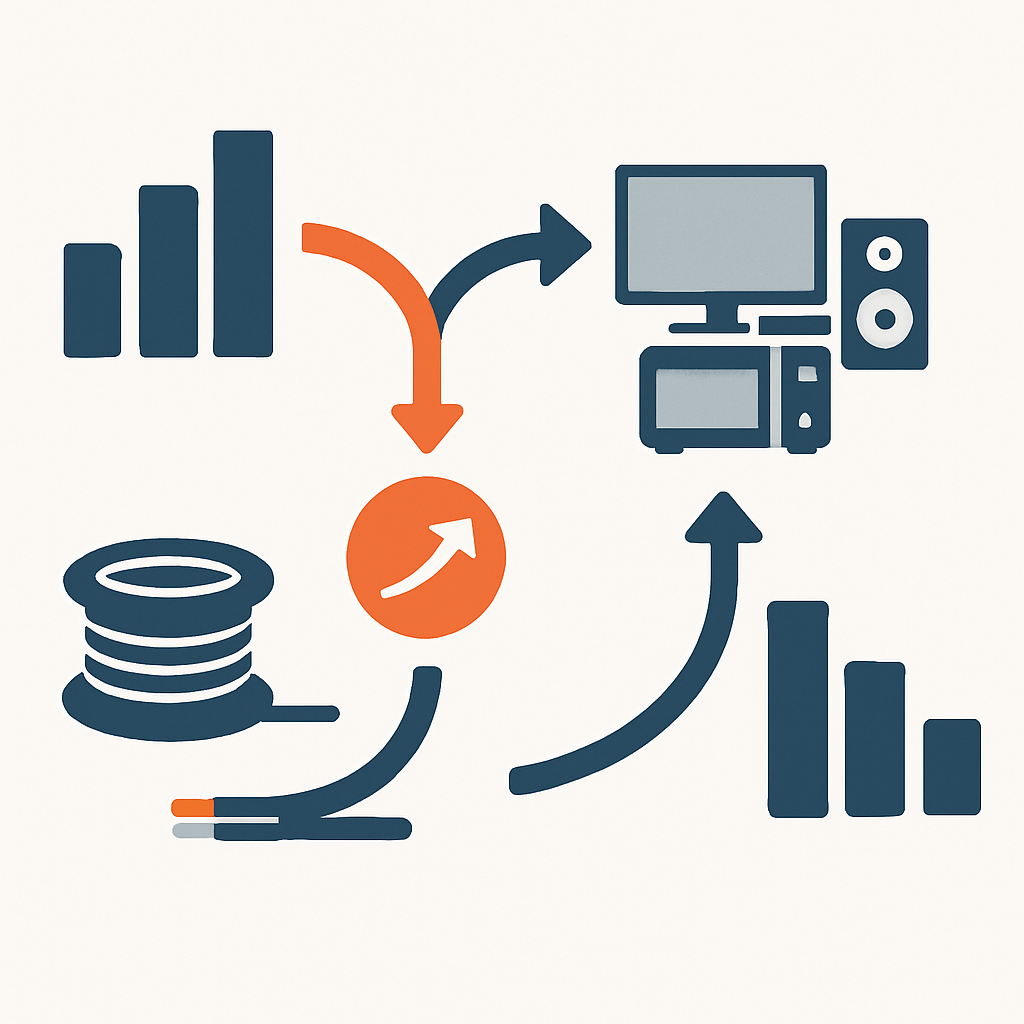
For homeowners, Ultravolt’s entry could mean more choices in house wiring, cables, and related electrical products over time. When a large company enters a category, existing brands may respond through pricing, warranty terms, safety claims, packaging, and dealer support. This can help consumers, although raw material prices will still play a major role in final wire costs.
Good wiring is also important for the safety and performance of home electronics such as televisions, refrigerators, air conditioners, computers, geysers, and kitchen appliances. Faulty or low-quality wiring can raise the risk of overheating, voltage problems, short circuits, and avoidable maintenance costs. A more competitive market may push brands to communicate safety certifications and durability standards more clearly.
Expected Impact on Wiring and Installation Costs
Competitive pricing could reduce retail wire costs in some local markets, especially where dealers carry several branded options. Builders and homeowners may also get more room to compare quotes when large brands compete for shelf space and project orders. However, final installation costs will still depend on labour charges, city location, electrician skill, wire grade, switchgear, conduits, and the overall electrical layout.
Better wire quality can help reduce electrical stress in homes with multiple high-load devices. This matters more as Indian households add air conditioners, washing machines, microwaves, geysers, and smart devices. If you are renovating or building a home, do not choose wiring only on the lowest price because poor electrical infrastructure can become expensive later.
Quality Upgrades and Consumer Benefits
New competition can encourage brands to improve insulation, fire resistance, durability, and consumer communication. Consumers may see clearer packaging, better warranty details, and a stronger focus on safety standards. These improvements can reduce risks from wiring failures and electrical faults when buyers select suitable products and use qualified electricians.
For families using savings or home loans for construction and renovation, wiring quality should be high on the checklist. A small saving from poor wiring can lead to future repair costs, safety risks, and inconvenience. Treat electrical wiring as long-term home infrastructure, similar to plumbing, waterproofing, and structural work.
Investment Opportunities and Risks in the Post-Ultravolt Landscape
Ultravolt’s entry has made the wires and cables sector more closely watched by market participants. Investors are likely to track market share shifts among Polycab, KEI, Havells, RR Kabel, Finolex Cables, and other listed names. The key question is whether incumbents can protect growth and margins while responding to a large new competitor.
Retail investors should not treat a sharp fall as an automatic opportunity or a certain warning sign. Stock prices may move with quarterly earnings, Nifty and Sensex sentiment, commodity costs, broader risk appetite, and company-specific commentary. If you want to understand how market events can affect your portfolio, read our guide on why the NSE IPO is a proven boost for your portfolio and consult a financial advisor before making decisions.
Comparative Analysis: Legacy Players vs New Entrants
Legacy wire and cable companies have advantages built over many years. These include dealer trust, contractor relationships, manufacturing scale, customer recall, product familiarity, and established service networks. Many also sell related electrical products, which helps them cross-sell through existing channels and maintain visibility with electricians and retailers.
Ultravolt benefits from UltraTech’s ecosystem, brand recognition, and building-materials distribution reach. A cement-led network can open doors among builders, contractors, project buyers, and construction-focused dealers. Even with these advantages, Ultravolt still needs consistent product quality, service reliability, pricing discipline, and long-term trust to gain share in a category where safety matters.
Portfolio Strategies for Indian Retail Investors
A balanced portfolio should not depend too heavily on one sector, one stock, or one news event. Mutual funds, SIPs, EPF, PPF, NPS, term insurance, and emergency savings all play different roles in financial planning. Before buying or selling wire and cable stocks, consult a financial advisor who understands your risk profile, time horizon, and existing portfolio.
Investors should track quarterly results, operating margins, volume growth, working capital, dealer commentary, and management guidance. They should also watch FII flows, domestic mutual fund activity, commodity cycles, and changes in market mood because these can influence valuations. For a wider view, explore our article on why FIIs are returning to Indian stocks now.
Supply Chain Dynamics: Raw Materials and Price Stability
Wire and cable makers depend heavily on raw materials such as copper, aluminium, polymers, and insulation compounds. India’s cost structure can shift when global commodity prices, import duties, freight rates, or currency movements change. Financing costs, inflation trends, and broader economic conditions can also affect company margins and expansion plans.
Ultravolt may use UltraTech’s scale and supplier relationships to manage parts of the supply chain more efficiently. A wider distribution network can improve stock availability across regions and reduce some local supply gaps. Still, no company can fully avoid the impact of global copper price swings, logistics disruptions, or currency pressure.
Impact of Raw Material Sourcing on Wire Prices
Copper price volatility affects cable manufacturing costs because copper is a key input for many wire products. When input costs rise, companies must decide how much to pass on to consumers and how much to absorb through margins. This balance directly affects retail prices, profitability, and competitive behaviour.
Polymer costs, import duties, shipping delays, and exchange-rate movements can also shape pricing. If the rupee weakens, imported inputs may become costlier for manufacturers and may eventually affect consumers. Households planning renovation should keep a budget buffer for wiring, just as they do for tiles, paint, sanitaryware, and electrical fittings.
Ultravolt’s Role in Supply Chain and Cost Control
Ultravolt may benefit from UltraTech’s procurement discipline and relationships across the building-materials ecosystem. A larger network can improve product availability for dealers and may reduce distribution gaps in some markets. Stable supply can help consumers avoid sudden local shortages, although it cannot guarantee fixed prices.
Pricing stability will still depend on wider macro trends. RBI inflation updates and policy statements often guide market expectations, and readers can track them through the Reserve Bank of India. Investors should connect company-level margins with raw material cycles before forming a view and should consult a financial advisor before acting on market news.
Long-Term Outlook: How Will This Affect Household Electronics Inflation?
Over the long run, stronger competition can support better product availability and possibly moderate cost savings in home wiring setups. Better wiring quality can also reduce maintenance costs, especially in homes with heavy electrical use. However, broader electronics inflation will still depend on raw materials, imports, taxes, global supply chains, and consumer demand.
Construction costs matter because they affect housing budgets, renovation plans, and home loan decisions. If wiring becomes safer, more reliable, and easier to source, homeowners may save money on repairs and replacements over time. For household budget planning, you may also like our piece on why the oil price surge matters for your household budget.
Cost Implications for Indian Homeowners
Homeowners may benefit if brands compete through better dealer pricing, wider availability, and clearer product information. Any benefit will vary by city, dealer network, product grade, and the scale of the electrical work. Total costs will still include electrician charges, switchgear, conduits, distribution boards, earthing, and other fittings.
Higher quality wiring can improve safety and daily comfort in a household. A stable electrical setup protects appliances from avoidable stress and reduces the chance of recurring faults. Families should ask electricians for certified wire options, confirm the correct wire size for the load, and keep purchase bills for warranty and future reference.
Broader Macro Effects on Electronics and Construction Costs
Supply chain improvements may reduce some pressure in related categories, but they cannot remove inflation risk completely. The cost of metals, polymers, energy, transport, and imported components continues to affect electrical goods and construction inputs. Government policy, tax changes, interest rates, and consumer demand also shape household spending patterns.
Investors can track listed company filings and stock exchange updates through the National Stock Exchange. They should also keep SEBI rules in mind when acting on market news, influencer posts, or social media tips. If any stock move feels too sharp or confusing, pause and consult a qualified financial advisor.
Navigating the Wire Industry’s New Competitive Landscape: Practical Advice
Ultravolt’s entry gives investors and consumers a fresh reason to track the wires and cables sector closely. Stock movements may remain volatile as the market evaluates the impact on margins, capacity, distribution, and growth. Consumers may also notice more brand campaigns, dealer offers, and safety-focused product claims as competition develops.
Do not judge a company only by one trading session, one headline, or one price move. Review balance sheets, cash flows, margins, capacity plans, and management commentary before forming a view. SEBI advises investors to deal with registered intermediaries, and you can check investor resources on the SEBI website.
Key Metrics for Evaluating Wire Stock Investments
Market share growth, operating margin trends, working capital, capacity utilisation, and return ratios deserve close attention. Investors should also watch capex on technology upgrades, product launches, dealer incentives, and supply chain resilience. If companies cut prices too aggressively, volume growth may not translate into strong profits.
Quarterly results can reveal how legacy players respond to Ultravolt and whether competition is affecting margins. Dealer feedback, project orders, rural distribution, and management commentary can also offer useful clues. Always consult a financial advisor before making sector-specific investment decisions because your personal goals and risk capacity matter.
Consumer Tips for Choosing Home Wiring Solutions
Choose certified brands with clear product details, safety ratings, and reliable dealer support. Ask your electrician about wire size, expected load, earthing, and future appliance plans before buying. A slightly higher upfront cost may save money through fewer faults, better durability, and safer daily use.
Keep your purchase invoice, warranty details, and electrician notes in one file. This helps during repairs, resale, insurance claims, or future renovation work. Avoid unknown brands when the price difference looks too large to be realistic, especially for concealed wiring that is difficult to replace later.
FAQs: What Indian Consumers and Investors Should Know
Ultravolt’s entry has raised practical questions for families, builders, electricians, and investors. The answers depend on competition, raw material costs, distribution strength, consumer adoption, and company execution. Here are clear responses to the most common concerns.
How will Ultravolt’s entry affect wire prices for consumers?
Consumers may see moderate price competition as brands fight for dealer space and buyer attention. This can lead to stable or lower retail wire costs in some markets, especially where multiple branded options are available. Raw material prices will still influence final prices, particularly when copper costs move sharply.
Should retail investors buy shares in wires and cables companies now?
Retail investors should avoid rushing into stocks only because prices have fallen or because the sector is in the news. Diversification across sectors and asset classes remains important for long-term financial stability. Consult a financial advisor before buying, selling, or averaging any wire and cable stock.
Will Ultravolt improve the quality of home wiring products?
Ultravolt’s entry can push the sector toward better technology, stronger safety claims, and clearer product communication. Legacy players may also upgrade products or improve dealer support to defend their market positions. Consumers should still verify certifications and choose wiring based on load needs, installation quality, and long-term safety.
How does India’s raw material dependence affect this sector?
Imported inputs and globally priced commodities can make wire prices volatile when rates, freight costs, or currency values change. Copper and polymer price swings can affect manufacturing costs, retail pricing, and company margins. Ultravolt may try to stabilise parts of the supply chain through scale, but it cannot control all global factors.
What does enhanced competition mean for home electronics maintenance costs?
Better wiring quality can reduce electrical faults, overheating risks, and appliance stress. This may lower repair costs over the long term for Indian households that choose suitable products and use proper installation practices. For homeowners, durable wiring should matter more than the lowest upfront quote.
Stay Ahead with PocketPlanGuru
India’s wire industry is entering a new phase, and both investors and homeowners should stay alert. Ultravolt’s entry brings scale, competition, and fresh questions about pricing, margins, product quality, and long-term market share. The smartest approach is to track verified facts, avoid hype, and take professional advice before making money decisions.
Stay informed with PocketPlanGuru for practical insights on wires sector investments and home electronics costs. Subscribe to PocketPlanGuru and explore more guides on markets, household budgets, and long-term wealth planning. Your next smart money move starts with clear, calm, and trusted information.
Disclaimer: The information above is for educational purposes only and does not constitute financial advice.
6 Comments