


Understanding FPI Onboarding and the Sebi-RBI Collaboration
SEBI and RBI’s joint push to simplify foreign portfolio investor onboarding could change how overseas money enters Indian markets. The Sebi-RBI Collaboration matters because foreign flows often influence the Nifty, Sensex, mutual funds, and bond market sentiment. For retail investors, easier access for FPIs can create fresh opportunities, but it can also bring volatility that needs careful handling.
Foreign portfolio investors, or FPIs, invest in Indian shares, bonds, and other listed market instruments. Before they can invest, they must complete registration, submit documents, and pass compliance checks. According to an ETBFSI report on SEBI and RBI’s FPI onboarding work, both regulators are working to reduce registration and onboarding timelines significantly.
The Sebi-RBI Collaboration focuses on simplified processes, standardised documents, and digital onboarding tools. SEBI Chairperson Tuhin Kanta Pandey has highlighted steps to make foreign investor participation easier. The broader aim is to reduce friction for genuine investors without weakening regulatory checks.
What is FPI Onboarding?
FPI onboarding means allowing eligible foreign investors to enter Indian financial markets after completing the required checks. These investors may include global funds, pension funds, sovereign funds, and other institutions. They must meet SEBI rules, complete know-your-customer checks, and follow RBI-linked market norms.
This process protects Indian markets from poor compliance and misuse. At the same time, long paperwork can discourage genuine investors who have other emerging-market choices. A faster and more digital system can help India compete better when global investors compare market access, settlement processes, and regulatory clarity.
Key Features of the New Collaboration
The reform plan includes digital onboarding, fewer manual steps, and standard forms. Reports also mention SWAGAT, a single-window framework meant to improve the onboarding experience. A Univest explainer on FPI onboarding and bond market reforms says regulators want entry to become faster and more seamless.
Media updates have discussed a possible five-working-day onboarding target, which would be a meaningful operational improvement if implemented. A Business Today MoneyToday post on faster FPI registration referred to this push for quick digital registration. SEBI-related social updates have also highlighted digitally signed documents, including this update on simplified FPI onboarding.
Impact of Faster FPI Onboarding on Indian Market Liquidity
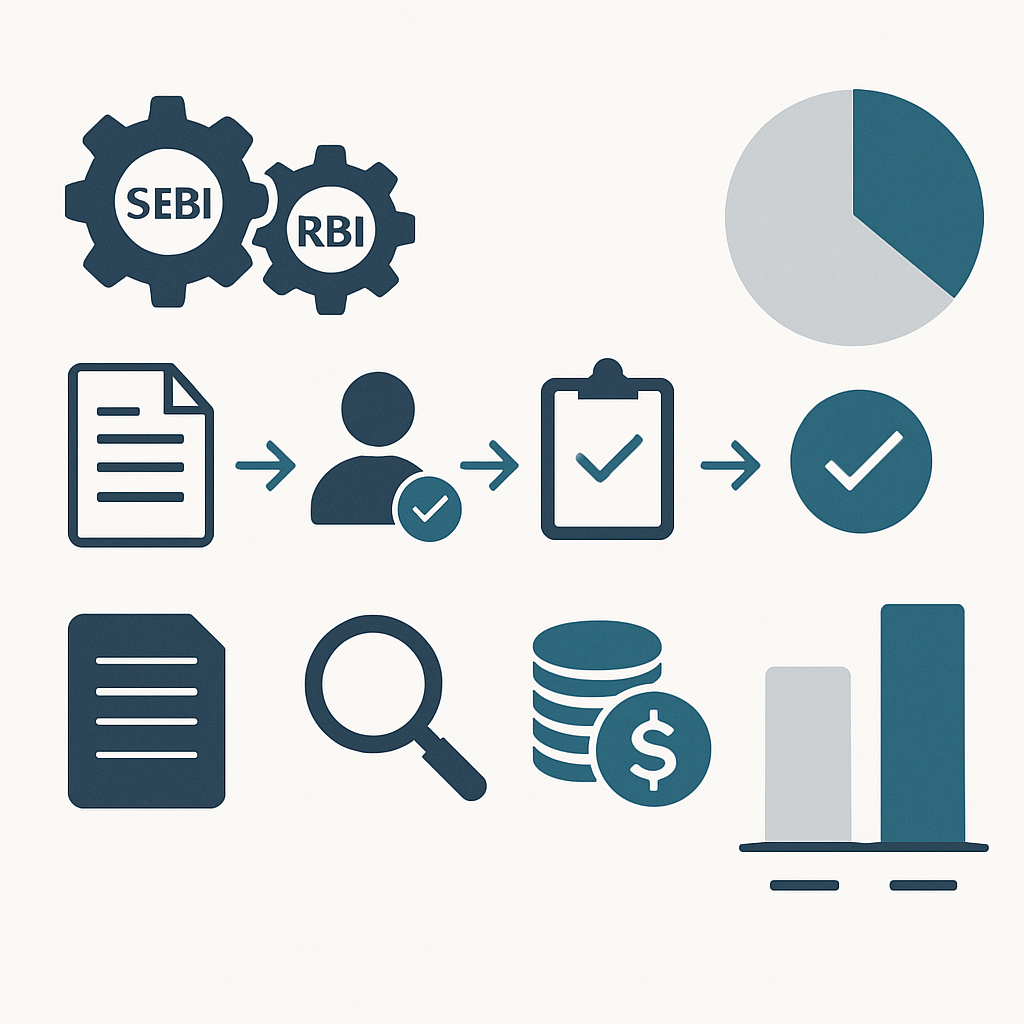
When foreign investors can enter India faster, market liquidity may improve over time. Liquidity simply means how easily investors can buy or sell securities without causing large price moves. Better liquidity can help both large institutions and small retail investors on the NSE and BSE, although it does not remove market risk.
More FPI participation can support trading in equities and bonds. It may also help Indian companies raise funds at better terms when overall demand improves. This does not guarantee gains for investors, so portfolio changes should be made only after you consult a financial advisor.
How Increased Foreign Flows Enhance Liquidity
Foreign inflows can add more buyers and sellers to Indian markets. This can improve depth in Nifty and Sensex stocks, especially large-cap names that are easier for institutions to trade. Better depth may reduce sharp price gaps during normal trading hours, though sudden global shocks can still trigger volatility.
Liquidity also matters in debt markets, where corporate bonds can sometimes be harder to sell than large listed shares. If FPIs participate more actively, trading may become smoother over time in select debt instruments. Investors can track exchange information and market updates through platforms like the National Stock Exchange of India.
Effect on Cost of Capital and Corporate Growth
When more investors are willing to buy Indian securities, companies may find it easier to raise money. Stronger demand can reduce funding pressure for financially sound companies, especially when market conditions are supportive. Lower capital costs can support expansion, hiring, and long-term growth, but the effect varies across sectors and business cycles.
This link is not automatic because global interest rates, inflation, currency moves, and the RBI’s policy stance also matter. Foreign investors may enter quickly when India looks attractive and reduce exposure when global risk appetite changes. Retail investors should not assume that every FPI reform will lift every stock or fund category.
What These Changes Mean for Your Equity Investments
The Sebi-RBI Collaboration can affect your equity portfolio through sentiment, liquidity, and institutional participation. If global funds find India easier to access, they may allocate more money when valuations, earnings, and macro conditions look favourable. This can support select sectors, but it can also create crowded trades that become risky when flows reverse.
FPIs often prefer liquid, well-governed, and large listed companies. Many such companies are part of major indices like the Nifty and Sensex. Retail investors using SIPs in mutual funds may feel the impact indirectly through fund performance, valuation changes, and sector-level movement.
Sectors Likely to Attract FPI Attention
FPIs have often shown interest in banking, IT, pharma, and infrastructure-related companies because these sectors offer scale and market depth. These areas also connect with India’s growth story in different ways, from credit expansion to exports and public investment. Large-cap stocks usually attract more foreign attention because they allow easier entry and exit for bigger funds.
This does not mean small investors should chase these sectors blindly. Sector returns can change due to earnings, valuations, income tax rules, global demand, currency movement, and policy signals. For wider context, read PocketPlanGuru’s guide on why proven strategies matter during FPI selling in India.
How Retail Investors Can Respond to This Trend
Retail investors can review mutual fund factsheets to understand portfolio quality, sector exposure, and concentration risk. They can also follow FPI trend data published by market trackers and regulatory sources. The SEBI website remains a useful place to follow official regulatory updates.
Equity investors should focus on asset allocation rather than headlines alone. A balanced portfolio may include equity funds, debt funds, PPF, NPS, EPF, and emergency savings, depending on the investor’s situation. If you feel unsure about SIP changes, lump-sum investing, or rebalancing, consult a financial advisor.
Opportunities in Debt Markets and Bond Tokenization
The reforms are not only about shares. SEBI and RBI are also working on steps that can make bond markets deeper and more efficient. The verified research mentions derivatives, market-making, net settlement of funds, and improved operational processes as possible support areas.
Bond market reform matters because many Indian investors still rely mainly on fixed deposits and traditional savings products. Corporate bonds can offer additional choice, but they need better liquidity, stronger transparency, and clearer risk signals. If reforms improve trading and settlement, both institutional and retail participation may become more comfortable over time.
Understanding Bond Tokenization and Its Benefits
SEBI has also discussed a pilot for bond tokenization using a shared ledger. In simple terms, a token can represent ownership in a bond or bond-linked record on a digital system. A report on SEBI’s bond tokenisation pilot says smart contracts may automate coupon payments and other servicing events.
This could reduce manual work and settlement delays over time if the pilot develops into a broader framework. The effort aims to bring Indian processes closer to peer emerging-market standards. Retail investors should wait for clear rules, product details, and risk disclosures before treating tokenized bonds as mainstream investments.
How Easier Access Improves Retail Bond Investments
If bond markets become more liquid, retail investors may get better access to corporate debt products. Easier buying and selling can improve confidence in listed bonds and reduce the fear of being unable to exit. Better transparency can also help investors compare credit risk, yield, and maturity before making decisions.
Debt products still carry credit risk, interest rate risk, and liquidity risk. Tax treatment, ITR reporting, and holding period rules can also affect net returns. Before shifting money from PPF, EPF, NPS, deposits, or debt funds into direct bonds, consult a financial advisor.
Risks and Challenges to Consider with Rising FPI Flows
Foreign money can support markets, but it can also leave quickly. FPIs react to global interest rates, currency trends, inflation, oil prices, and geopolitical news. This can create sudden swings in equities, bond yields, and the rupee, even when domestic fundamentals remain steady.
The Sebi-RBI Collaboration can make entry easier, but it cannot force investors to stay invested in India. Policy reforms improve access, while global conditions and relative valuations influence actual flows. PocketPlanGuru has also explained this risk in why smart investors watch Rs 23,000 crore FII outflows.
Volatility Risks from Foreign Capital Movements
Quick inflows can push prices up fast, especially in popular sectors where investor interest is already high. Quick outflows can pressure the rupee, stock prices, and bond yields. The effect may look sharper in smaller market segments with lower liquidity and weaker trading depth.
Retail investors often face stress when markets move fast. Panic selling during FPI exits can damage long-term financial plans and turn temporary volatility into permanent loss. A steady SIP approach can help some investors, but the plan should match risk profile, time horizon, and cash-flow needs.
Regulatory and Macroeconomic Factors to Watch
Investors should watch SEBI rules, RBI policy moves, tax reforms, and debt market changes linked to FPIs. The verified research also mentions tax exemptions for FPIs investing in government securities as a possible factor affecting foreign demand. Such steps can influence bond flows, yields, and sentiment toward Indian debt.
Global events can still dominate local reforms. A change in US yields, oil prices, the dollar, or risk appetite can affect Indian market flows quickly. For a global angle, read why smart Indians should watch US 30-year Treasury Yield.
Practical Strategies for Retail Investors to Benefit Safely
Retail investors can benefit from reforms without trying to predict every FPI move. The safer route is to build a balanced portfolio across equity, debt, and cash based on goals and risk capacity. Your choices should match your age, income stability, investment horizon, emergency fund, and family responsibilities.
Do not invest only because foreign investors are entering a stock or sector. FPIs can be right on one theme and wrong on another, just like any other market participant. Before acting on FPI-related news, consult a financial advisor and review whether the change fits your overall financial plan.
Ways to Assess FPI-Linked Market Opportunities
You can study mutual fund factsheets, exchange disclosures, and SEBI updates to understand broad market behaviour. Look for quality businesses where foreign interest appears to align with strong fundamentals, governance, and earnings visibility. Avoid treating foreign ownership as a stamp of safety because even widely owned stocks can fall sharply.
Investors can also monitor changes in sector flows over time rather than reacting to a single data point. One month of FPI buying or selling may not reveal a durable trend. If you have high-cost debt such as a credit card balance, home loan stress, or personal loan pressure, consult a financial advisor before raising market exposure.
Portfolio Diversification and Risk Mitigation Tips
Diversification helps when foreign flows turn volatile. A portfolio can include large-cap funds, flexi-cap funds, debt funds, and safer fixed-income products, depending on suitability. Section 80C tools like PPF, EPF, and certain ELSS funds may also support tax planning for eligible investors.
Review your portfolio at set intervals instead of reacting daily to FPI headlines. Rebalancing can bring your equity and debt mix back to target levels when markets move sharply. For major changes, consult a financial advisor who understands your income, liabilities, goals, tax situation, and risk tolerance.
Frequently Asked Questions
The Sebi-RBI Collaboration raises many practical questions for Indian retail investors. Most investors want to know whether faster FPI onboarding will affect mutual funds, stocks, and bonds. These answers explain the basics in simple terms and highlight where professional guidance may be useful.
How does faster FPI onboarding affect my mutual funds?
Faster onboarding can help foreign investors enter Indian markets with fewer delays. If inflows improve, equity mutual funds may benefit from better liquidity and stronger sentiment in the stocks they hold. Fund returns still depend on stock selection, valuations, expense ratios, sector exposure, and market cycles.
Can bond tokenization benefit retail investors?
Bond tokenization may improve access, transparency, and servicing over time if the pilot becomes a regulated market framework. Smart contracts could automate coupon payments and other bond events, reducing some operational friction. Retail investors should wait for clear rules and consult a financial advisor before investing in such products.
Should I worry about increased market volatility?
Volatility risk remains real when foreign money moves quickly. Sudden inflows and outflows can affect the Nifty, Sensex, bond yields, and currency sentiment. Diversification, suitable asset allocation, and calm decision-making can reduce emotional mistakes during sharp market moves.
How can I identify stocks favoured by foreign investors?
You can track SEBI data, exchange disclosures, company shareholding patterns, and mutual fund factsheets. Many market platforms also report FPI trends by sector and stock group. Do not buy a stock only because FPIs own it, and consult a financial advisor before making portfolio changes.
What regulatory changes should investors watch related to FPIs?
Watch onboarding rules, tax changes, RBI policy moves, debt market reforms, and government securities access. Changes in these areas can affect foreign bond flows, equity sentiment, and market liquidity. Stay informed on SEBI-RBI reforms and use PocketPlanGuru’s practical guides to build a more disciplined portfolio approach.
Disclaimer: The information above is for educational purposes only and does not constitute financial advice.