

Understanding RBI’s New ₹50,000 Cash NEFT Transfer Rule
RBI’s consolidated domestic money transfer framework allows walk-in customers to make cash NEFT transfers of up to ₹50,000 at bank branches. The sender does not need to hold an account with the same bank, but the money is credited to the beneficiary’s bank account through the National Electronic Funds Transfer system. For ordinary households, RBI’s new ₹50,000 cash NEFT transfer rule mainly means clearer limits, more formal checks, and less confusion when sending cash through a banking channel.
The key point is that RBI has retained the main limits rather than creating a higher new ceiling. Cash pay-out services remain capped at ₹10,000 per transaction and ₹25,000 per month per beneficiary. Reports from The Economic Times on RBI’s domestic money transfer guidelines confirm that the central bank has consolidated the rulebook while keeping the important limits unchanged.
What the Consolidation of Money Transfer Rules Means
The main change is a cleaner rulebook for domestic money transfers. RBI has brought earlier directions into one consolidated framework with updated legal references, which should help banks, business correspondents, and customers follow one set of rules instead of checking older circulars. This matters because cash-based remittances are still used by many workers, traders, and families who may not depend fully on mobile banking or app-based payments.
For users, the consolidated framework should reduce confusion at the counter. A migrant worker, small shop owner, or family member sending emergency cash can ask which limit applies to the chosen channel and plan accordingly. As CorpLawUpdates’ explainer on RBI Domestic Money Transfer Directions notes, the limits for walk-in NEFT and cash pay-outs remain unchanged, while the framework has been updated and consolidated.
Who Can Use Cash NEFT Under the New Limits?
Walk-in customers can use cash NEFT even if they do not have a bank account with the remitting bank. The recipient generally needs a bank account when the transfer happens through NEFT, because NEFT credits money into a bank account. This can help households where the sender earns in cash but the family member receives money in a savings account.
Banks can also support small cash transfers through business correspondents, ATMs, and other permitted channels. For these channels, the cap is ₹5,000 per transaction and ₹25,000 per month per remitter. The RBI cash NEFT limit report explains that cash pay-out arrangements have separate limits, including ₹10,000 per transaction and ₹25,000 per month per beneficiary.
Step-by-Step Guide to Making Cash NEFT Transfers Within the ₹50,000 Limit
If you want to send cash through NEFT, start by checking the channel you plan to use. A bank branch allows a walk-in cash NEFT transfer of up to ₹50,000, while business correspondent, ATM, or other permitted channels have a lower limit of ₹5,000 per transaction and ₹25,000 per month per remitter. This distinction is important because the same amount may be allowed at a branch but rejected through a smaller access point.
Key numbers at a glance
Carry valid photo ID, your mobile number, and the recipient’s correct bank details before you visit the branch or permitted channel. You may need the beneficiary name, account number, bank name, branch, and IFSC, and the bank may reject the transfer if details do not match or verification fails. It is safer to check the account number and IFSC twice before handing over cash, because errors can delay the credit or create follow-up work.
Transferring Cash via Bank Branches
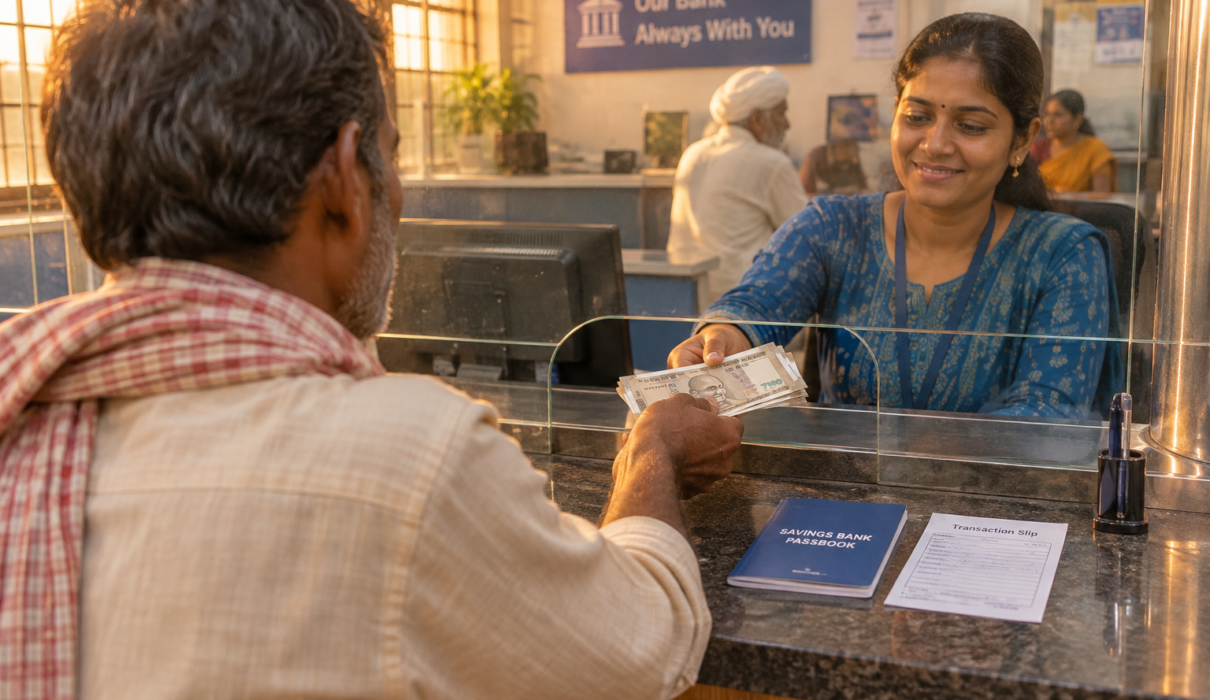
At a bank branch, ask for the NEFT cash remittance form or the relevant cash transfer form used by that bank. Fill in your name, mobile number, ID details, and the beneficiary’s account details, then hand over the cash after the bank verifies the form and your documents. Keep the receipt until the beneficiary confirms that the amount has been credited, because the receipt is your proof if there is a delay or complaint.
You do not need a sender bank account for this route, but the bank must complete its checks before processing the remittance. RBI’s new ₹50,000 cash NEFT transfer rule can be useful when you want a formal trail for a cash remittance to a bank account. You should also check bank timings, NEFT processing practices, charges, and any document requirement before making a special trip.
Using Business Correspondents and ATMs for Transfers
Business correspondents help many rural and semi-urban customers access basic banking services near home. Under RBI’s consolidated rules, these channels can handle limited cash transfers of ₹5,000 per transaction, with a monthly cap of ₹25,000 per remitter. Frequent senders should track both the per-transaction limit and the monthly cap, because a transaction can fail even when the single transfer amount appears small.
Mobile number verification plays a bigger role in these cash pay-in services. Banks and business correspondent outlets may ask for proof of identity and may authenticate the transaction through a verified mobile number. The Moneycontrol report on RBI’s cash transfer caps also highlights registration and verification requirements for cash pay-in services.
Impact on Migrant Workers, Small Traders, and Rural Customers
Many migrant workers still earn wages in cash and send money home to families. For them, the branch cash NEFT route remains useful because it does not require the sender to use UPI, IMPS, or mobile banking. The clear ₹50,000 cap helps them plan transfers for rent, medical expenses, school fees, household support, or emergencies without guessing which rule applies.
Small traders may feel the limits more closely when they handle daily cash collections. A kirana owner or market vendor may need to use a branch route for larger cash NEFT transfers or shift to account-based digital methods where appropriate. These rules also support better record keeping, which can be helpful when discussing taxes, loan applications, credit card dues, or household budgets.
Case Study: Migrant Worker Sending ₹40,000 Home
Suppose Ramesh works at a construction site in Pune and wants to send ₹40,000 to his family in Bihar. He can visit a bank branch, carry valid ID, provide his mobile number, and submit the beneficiary’s bank account details for an NEFT transfer. Since the amount stays below ₹50,000, the branch cash NEFT route fits within the limit.
This method avoids the need for a smartphone, banking app, or internet banking login. It also creates a receipt, which helps if the family asks for proof or if the credit is delayed. Ramesh should still check the bank’s working hours, NEFT processing practices, applicable charges, and verification needs before visiting.
Case Study: Small Merchant Using a Business Correspondent
Consider a small merchant in a village who uses a nearby business correspondent outlet for basic banking services. If he wants to send ₹15,000 through that channel, the ₹5,000 per transaction cap becomes important. He may need multiple transactions, and the monthly ₹25,000 cap per remitter will still apply.
This does not make the service useless, but it makes planning essential. For larger regular payments, a branch transfer or a bank account-based digital mode may work better if the customer has access and is comfortable using it. If cash flow links to business loans, personal loan EMIs, or household obligations, clear receipts and records become even more useful.
Compliance and Procedural Changes for Banks and Business Correspondents
Banks now work with a consolidated domestic money transfer framework. They must register and verify customers for cash pay-in services, especially where walk-in users do not have accounts with the remitting bank. This may add a few minutes at the counter, but it also supports safer and more traceable cash-based remittances.
Business correspondents may face tighter reporting and monitoring duties under the consolidated framework. They must follow limits for cash pay-in, cash pay-out, and customer verification, and they may have to refuse a transaction if the prescribed cap has already been reached. This can affect service speed in remote areas, especially during peak salary periods, festival seasons, or local market days.
Enhanced KYC Norms and Impact on Walk-in Customers
Customers should expect basic identity and verification checks before a cash transfer. Carry Aadhaar, voter ID, PAN, passport, driving licence, or another acceptable government ID as per bank rules. Also carry a mobile number you can access during the transaction, because mobile verification may be part of the process.
Do not assume every bank will ask for the same document format. Some banks may ask for original ID, copies, additional details, or specific forms under their internal policy. If you send money often, ask the branch once about its requirements and keep the necessary details ready before each visit.
Operational Adjustments by Business Correspondents
Business correspondent outlets must track remitter-wise and beneficiary-wise limits carefully. They may refuse a transaction if the monthly cap has already been reached, even if the customer is willing to split the amount. This can surprise customers who earlier focused only on the per-transaction amount and did not track monthly usage.
Customers should ask for a printed or digital receipt after every business correspondent transaction. They should also confirm fees before handing over cash and should not share OTPs, PINs, or passwords with anyone. For broader banking context, you can read PocketPlanGuru’s guide on how RBI liquidity moves can affect festive loans.
Comparing RBI’s Cash NEFT Limits With Digital Payment Options
Cash NEFT is different from UPI, IMPS, and account-to-account NEFT. Digital payments usually depend on bank accounts, mobile access, app literacy, network quality, and secure use of passwords or PINs. Cash NEFT helps when the sender holds cash and wants the money credited through a formal banking route.
UPI and IMPS can feel faster for many urban and digitally active users. Still, cash NEFT remains relevant for families that do not use smartphones, internet banking, or app-based payment systems. Choosing the right mode depends on access, comfort, amount, urgency, documentation needs, and the limits that apply to each channel.
When to Prefer Cash NEFT Over UPI or IMPS
Cash NEFT may suit a sender who receives wages in cash and does not use digital banking. It may also help during network issues or when the sender only has cash but the family member can receive money in a bank account. For amounts up to ₹50,000 at a branch, the process can be straightforward if documents and beneficiary details are ready.
Digital modes may suit salary earners with active bank accounts and secure mobile access. They may also help when you need to transfer small sums quickly and are comfortable using digital payment systems. Always protect OTPs, UPI PINs, and bank passwords, especially when using phones in public places or relying on someone else for help.
Advantages and Limitations Compared to Digital Transfers
Cash transfers offer a formal path for people who are not fully active in digital banking. They also help create a bank receipt for household records, which can be useful when tracking rent, fees, medical support, or family remittances. The limit, branch visit, verification process, and possible waiting time are the main trade-offs.
Digital transfers reduce travel and waiting time for many users, but they require digital awareness and safe phone habits. If a transfer is linked to investments, insurance, or long-term financial planning, payment convenience should not replace proper advice. For personal investment decisions, consult a SEBI-registered investment adviser who can consider your goals, risks, and overall financial situation.
What You Can Do Now to Navigate the New RBI Rules
Start by planning your transfer amount against the correct limit. Use a bank branch for cash NEFT up to ₹50,000, and remember the lower ₹5,000 per transaction limit for business correspondent, ATM, or other permitted channels. RBI’s new ₹50,000 cash NEFT transfer rule becomes easier to follow when you match the amount with the right channel before leaving home.
Keep your documents ready and save the recipient’s account number and IFSC carefully. Check the details twice, because incorrect account information can create delays or failed transfers. If the transfer relates to savings, investments, or family financial planning, avoid making decisions only on the basis of payment convenience and consult a SEBI-registered investment adviser for personal investment advice.
Preparing Documentation for Seamless Transfers
Carry a valid photo ID and a mobile number that you can access during the transaction. Keep the beneficiary’s bank details in writing or on your phone, including the account number, bank name, and IFSC. Ask your bank whether it needs any extra document for walk-in cash NEFT, because internal procedures can differ across banks.
Do not share OTPs with agents, strangers, or people claiming to help you complete the transfer faster. A genuine staff member should not ask for your PIN, password, or confidential banking credentials. If something feels rushed or unclear, pause the transaction and speak directly with an authorised bank official.
Strategies for Frequent Senders Like Traders or Migrants
Frequent senders should track monthly transfers in a notebook, phone note, or simple spreadsheet. This helps avoid failed transactions due to monthly caps and makes it easier to remember how much has already been sent through a particular channel. It also helps during income tax discussions, loan applications, or basic household budgeting.
If you send larger amounts often, consider opening or using a bank account for account-based transfers where suitable. You can still use cash NEFT when digital access fails or when cash is the only available mode at that moment. The aim is not to use one method for every situation, but to choose the safest and most practical route for the amount, urgency, and documentation required.
How This Fits Into Your Wider Money Life
RBI rules affect daily money movement, while SEBI rules govern securities markets and investment-related activities. News about interest rates, inflation, banking liquidity, and payment rules can affect households in different ways. Cash transfer rules, however, mainly focus on safe, traceable, and regulated domestic remittances.
Do not treat payment rules as investment signals. They do not tell you whether to buy, sell, or hold any stock, bond, mutual fund, ETF, or other security. If market news affects your financial plan, consult a SEBI-registered investment adviser and keep your goals, risk capacity, and time horizon clear.
Banking rules also connect with credit behaviour and financial records. A clean money trail can support better documentation when applying for a home loan, personal loan, or credit card. Good records are also useful when families review regular expenses, emergency transfers, school fees, medical payments, or support sent to relatives.
Frequently Asked Questions
Can I transfer more than ₹50,000 in cash via NEFT in a single visit? No, the branch cash NEFT limit for a walk-in cash remittance is ₹50,000. If you need to move a higher amount, ask the bank about account-based options, documentation requirements, and any applicable rules before proceeding.
What documents are required for a walk-in cash NEFT transfer? Banks generally ask for a valid photo ID and a mobile number for verification. The exact document list can differ by bank, so check with the branch before visiting and keep the beneficiary’s bank details ready.
Can a non-account holder send money through cash NEFT? Yes, a sender without an account at the remitting bank can remit cash up to ₹50,000 through a bank branch NEFT transfer. The beneficiary must have a bank account for an NEFT credit, while separate cash pay-out arrangements follow their own limits.
How do RBI’s cash NEFT limits compare with UPI or IMPS? Cash NEFT has specific cash handling limits and usually needs a branch or permitted channel. UPI and IMPS depend on digital access, bank account use, mobile authentication, and the rules of the payment system or bank.
Why do banks require mobile number verification for cash transfers? Mobile verification helps banks authenticate the sender and reduce fraud in cash-based remittances. It also creates a clearer record if a complaint, failed transfer, or delayed credit needs follow-up later.
Stay Ready for the Next Banking Rule Change
RBI’s new ₹50,000 cash NEFT transfer rule gives households a clearer way to send cash through formal banking channels. The main limits are easy to remember: ₹50,000 at a bank branch, ₹5,000 per transaction through business correspondent, ATM, or other permitted channels, and separate caps for cash pay-outs. Keep your ID, mobile number, and beneficiary details ready before you transfer, because preparation can save time at the counter.
Banking rules may sound technical, but they shape how families move money for rent, fees, medical needs, business payments, and emergencies. Stay informed on RBI guidelines and adapt your transfer habits based on the amount, channel, urgency, and documentation required. Subscribe to PocketPlanGuru and explore more practical explainers to manage everyday money decisions with confidence.
Disclaimer: The information above is for educational purposes only and does not constitute financial advice.